Spain · Catalunya
Where to Stay in Granollers, Catalunya
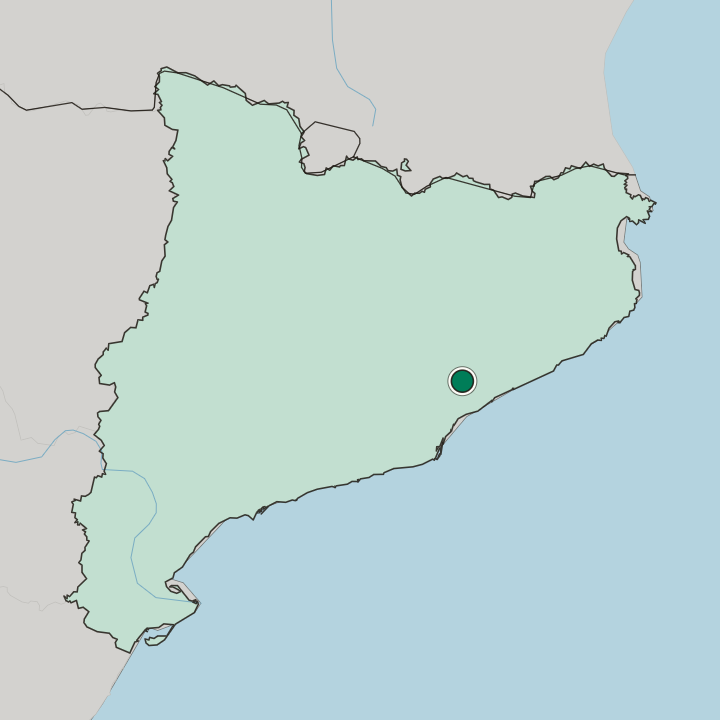
Granollers is the capital of the Vallès Oriental, about 30 kilometres north-east of Barcelona, and La Porxada is its emblem.
Hotel links are affiliate links: booking through them may earn us a commission, at no extra cost to you. It never affects how places are ranked. How this works


Where to stay in Granollers
The practical side of choosing where to sleep.
La Porxada sets the address. Everything a short stay in Granollers needs sits within a few streets of it, from the Granollers Museum to the market squares that give the centre its weekday rhythm, and the walk from one to another takes minutes. Can Jonch is on that circuit.
Rooms in the middle suit you if the plan is markets, museums and an evening on foot rather than a car parked somewhere convenient. Granollers keeps its core tight. Sport pulls people the other way.
The Sport Pavillion Granollers takes the crowds that the old squares never hold, and beds near it suit anyone whose reason for the trip is a fixture rather than a market. Canovelles and La Roca del Vallès are the next options. Sant Feliu de Canovelles and the Castell de la Roca del Vallès give each of those towns something to see, and both lie close enough to Granollers that the choice turns on what is available rather than on distance.
Barcelona stays within reach. The city is roughly thirty kilometres off, which makes Granollers a workable base for the Vallès Oriental without cutting anyone off from it.
Find hotels in Granollers
Direct booking searches for these neighbourhoods.
The Porxada squares
The middle of Granollers, where La Porxada and the squares around it put everything within a few streetsFind hotels in The Porxada squaresFixtures at the Sport Pavillion GranollersAround the Sport Pavillion
The part of Granollers that fills on match nights rather than on market daysFind hotels in Around the Sport PavillionQuieter nights with Sant Feliu de Canovelles nearbyCanovelles
The town beside Granollers, where rooms sit well away from the market squares. Lodging is scarce in this area; reserve in advance.Find hotels in CanovellesDrivers who want the Castell de la Roca del Vallès on the doorstepLa Roca del Vallès
The Vallès Oriental town whose castle gives a reason to sleep outside Granollers. Rooms are few around here — worth securing early.Find hotels in La Roca del VallèsHotel links are affiliate links: booking through them may earn us a commission, at no extra cost to you. It never affects how places are ranked. How this works
Things to do in Granollers
Ranked by global recognition; descriptions from Wikidata (CC0).
Museums & Galleries
2- Granollers Museum Heritage
- Granollers Museum of Natural Sciences
Churches & Religious Sites
6- Sant Feliu de Canovelles Heritage
- Ermita romànica de Santa Justa Heritage
- Santuari de la Mare de Déu de Bellulla Heritage
- Capella dels Sants Metges Heritage
- Capella de Santa Anna (Granollers) Heritage
Show 1 more →
- Capella de Santa Esperança Heritage
Castles & Historic Sites
3- Castell de la Roca del Vallès Heritage
- Monument a en Patufet
- Monument a Jacint Verdaguer
Nature & Outdoors
1- Can Carrencà Heritage
Stadiums & Sports
1- Sport Pavillion Granollers
Landmarks & Notable Places
8- Can Mònic Heritage
- Can Jonch Heritage
- Can Puntes Heritage
- Can Roura Heritage
- Can Paula Pinyol Heritage
Show 3 more →
- Can Relats Heritage
- Can Cunillera Heritage
- Can March Heritage
worth knowingacross 6 categories in Granollers
About Granollers
La Porxada carries the town.
What is Granollers known for?
The covered structure stands at the middle of a market city, and the squares and shops around it are what the city is known by. Sport takes the other half. The Sport Pavillion Granollers draws crowds the old squares never see, and the Granollers Museum and the Granollers Museum of Natural Sciences hold the city's collections.
What are the main landmarks in Granollers?
La Porxada comes first. The Granollers Museum and the Granollers Museum of Natural Sciences take the collections, while Can Jonch, Can Medalla, Can Bigues and Cal Monjo represent the older houses of the town. Chapels are scattered widely.
The Capella de Santa Anna, the Capella de Santa Esperança and the Capella dels Sants Metges stand in and around the centre, with the Ermita romànica de Santa Justa and the Santuari de la Mare de Déu de Bellulla further out.
What is the history of Granollers?
Romanesque work is the oldest survival. The Ermita romànica de Santa Justa dates the countryside around Granollers to a period long before the market took shape, and the Santuari de la Mare de Déu de Bellulla belongs to the same devotional landscape. Lordship sat elsewhere.
The Castell de la Roca del Vallès held the ground of the Vallès Oriental while Granollers grew instead on trade, and the chapels of Santa Anna, Santa Esperança and the Sants Metges mark the parishes that came with it. The market made the city. La Porxada gave the traders a roof and the squares around it gave the Vallès Oriental its meeting point, which is why Granollers ended up the capital of the comarca rather than one of the towns beside it.
Houses followed the trade. Can Jonch, Can Medalla, Can Carrencà, Can March, Can Roura, Can Relats and Cal Monjo carry the names of the families who built through those centuries, and Can Bigues, Can Culleres, Can Cunillera, Can Mònic, Can Paula Pinyol and Can Puntes fill out the list. Monuments came much later.
The Monument a Jacint Verdaguer and the Monument a en Patufet were raised in the modern city, and the Granollers Museum and the Granollers Museum of Natural Sciences keep what the earlier centuries left.
Where is Granollers?
Granollers covers a little under 15 square kilometres. The city lies about 30 kilometres north-east of Barcelona and serves as the capital of the Vallès Oriental, a compact municipality whose built-up ground runs out quickly into the fields and farmhouses beyond. Neighbours sit close.
Canovelles lies alongside it on one side and La Roca del Vallès on another, with the Ermita romànica de Santa Justa and the Santuari de la Mare de Déu de Bellulla out in the country between them.
What is the climate of Granollers?
Inland air governs the Vallès Oriental. Granollers stands far enough back from the coast that summer afternoons build hotter than they do on the shore, and the nights drop away faster once the sun is off the squares. Autumn brings the rain.
Storms roll across the comarca in short bursts, and La Porxada earns its roof on days when the market carries on regardless.
How do you get to Granollers?
Barcelona is the usual start. The run out to Granollers covers about 30 kilometres through the Vallès Oriental, with Canovelles and La Roca del Vallès among the towns that share the same stretch of the comarca. Arrival is easy to judge.
La Porxada stands at the middle of the old town, and the Sport Pavillion Granollers marks the other end of what most visitors need.
Common questions
What is the best area to stay in Granollers?
The Porxada squares: Market mornings and a walk over to the Granollers Museum. Around the Sport Pavillion: Fixtures at the Sport Pavillion Granollers. Canovelles: Quieter nights with Sant Feliu de Canovelles nearby. La Roca del Vallès: Drivers who want the Castell de la Roca del Vallès on the doorstep.
Good for
More cities in Catalunya
Updated October 2026