Spain · Catalunya
Where to Stay in Rubí, Catalunya
Rubí is a city in Catalonia whose landmark list runs from the Iberian site of Can Fatjó to Castell de Rubí and Sant Pere's Church.
Hotel links are affiliate links: booking through them may earn us a commission, at no extra cost to you. It never affects how places are ranked. How this works


Where to stay in Rubí
Where the beds are, and what that means for the visit.
Base yourself in the centre. Sant Pere's Church, the Rubí Municipal Museum and the frontages of Carrer Balmes stand within the same few blocks, which is also where the shops and the everyday business of the town are concentrated. Carrer de la Terrassa runs off that core.
Casa Imbert, Casa Palet and Cal Llonch line these streets, so a bed here puts the built heritage on foot rather than a drive away. Ca l'Aliart and Ca n'Archs i conjunt Pau Claris are close to it. Cal Ferro, Cal Fideuer and Cal Patilles fill in the same central list of old houses.
The outer sites want wheels. Castell de Rubí and Castell de Canals stand apart from the built-up area, and Sant Feliuet de Vilamilans with Can Fatjó lie further out again across a municipality of some 32.3 square kilometres. Rooms out that way are scarce.
Rubí is a working town rather than a resort, so the stock sits in the centre and the countryside sides of the municipality offer very little. Villas mark the older suburbs. Torre d'Emili Roca, Xalet de Bartomeu Pujol, Xalet de Llorenç Miquel and Casa del Doctor Puig Roig belong to the run of villas the record lists alongside that older core.
Find hotels in Rubí
Direct booking searches for these neighbourhoods.
Around Sant Pere's Church
Sant Pere's Church, the Rubí Municipal Museum and Carrer Balmes stand within the same few blocks of the centre.Find hotels in Around Sant Pere's ChurchNights among the listed house fronts of Casa Imbert and Casa PaletCarrer de la Terrassa
Carrer de la Terrassa and the streets beside it carry Casa Imbert, Casa Palet and Cal Llonch.Find hotels in Carrer de la TerrassaDrivers heading out to Castell de Canals and Sant Feliuet de VilamilansTowards Castell de Rubí
Castell de Rubí, Castell de Canals and Sant Feliuet de Vilamilans stand outside the built-up part of the municipality. Lodging is scarce in this area; reserve in advance.Find hotels in Towards Castell de RubíHotel links are affiliate links: booking through them may earn us a commission, at no extra cost to you. It never affects how places are ranked. How this works
Things to do in Rubí
Ranked by global recognition; descriptions from Wikidata (CC0).
Museums & Galleries
1- Rubí Municipal Museum
Churches & Religious Sites
2- Sant Pere's Church Heritage
- Sant Feliuet de Vilamilans Heritage
Castles & Historic Sites
2- Castell de Rubí Heritage
- Poblat ibèric de Can Fatjó Heritage
Landmarks & Notable Places
8- Cal Llonch Heritage
- Torre Gaju Heritage
- Casa Imbert Heritage
- Can Vilaró Heritage
- Cal Met Lleó Heritage
Show 3 more →
- Carrer Balmes Heritage
- Cal Ferro Heritage
- Can Riba Heritage
worth knowingacross 4 categories in Rubí
About Rubí
The list runs deep.
What is Rubí known for?
Rubí keeps an Iberian settlement site at Can Fatjó, two castles in Castell de Rubí and Castell de Canals, and the Rubí Municipal Museum in the middle of the town. Old houses do the rest. Cal Muntades, Can Riba, Casa Imbert and Casa Palet carry the names of the families that built them, and Torre Gaju stands among the towers on the same list.
Sant Pere's Church anchors the centre.
What are the main landmarks in Rubí?
Iberians were here first. The Poblat ibèric de Can Fatjó marks the oldest site on the list, and Castell de Rubí and Castell de Canals follow it as the two fortified places of the municipality. Churches come next.
Sant Pere's Church holds the centre and Sant Feliuet de Vilamilans stands out in the country. The rest is domestic: Cal Muntades, Cal Patilles, Can Vilaró, Torre Gaju and Casa Palet, with Carrer Balmes and Carrer de la Terrassa listed as streets in their own right.
What is the history of Rubí?
The oldest layer is Iberian. Poblat ibèric de Can Fatjó is the earliest site the municipality lists, and the churches, castles and houses that follow it belong to much later centuries. Two castles came afterwards.
Castell de Rubí carries the town's own name while Castell de Canals stands separately, the pair of them the only fortified sites the record keeps. Parish building followed the castles. Sant Pere's Church took the centre, Sant Feliuet de Vilamilans sits away from it, and the two together account for the ecclesiastical entries on a list otherwise dominated by private property.
Families left their names. Cal Ferro, Cal Fideuer, Cal Met Lleó, Cal Muntades, Cal Patilles, Can Riba and Can Vilaró all carry household names, and those names are how much of the older fabric of Rubí is identified at all. Later money built villas.
Casa del Doctor Puig Roig, Torre d'Emili Roca, Xalet de Bartomeu Pujol and Xalet de Llorenç Miquel come from that phase, and Casa Imbert, Casa Palet and Torre Gaju stand alongside them. The museum gathers what is left. Rubí Municipal Museum holds the collections of a municipality whose heritage runs to castles, streets and private houses rather than to any single monument.
Where is Rubí?
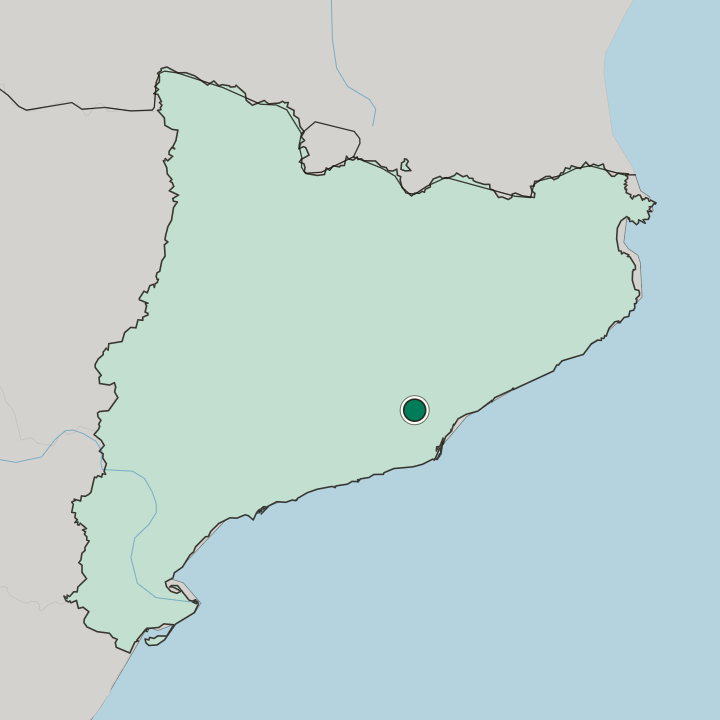
The municipality is mid-sized. Rubí covers roughly 32.3 square kilometres of inland Catalonia, enough ground that Castell de Canals, Sant Feliuet de Vilamilans and Can Fatjó sit well outside the built-up part of it. By contrast the old quarter is small.
Sant Pere's Church, Carrer Balmes and the Rubí Municipal Museum all fall inside a walkable core.
What is the climate of Rubí?
Catalonia's temperate belt takes in Rubí. That puts a moderate year over this part of Catalonia, without the extremes that would keep anyone indoors, so the walk between Sant Pere's Church and the Rubí Municipal Museum works in most months. Winter is the short season.
Castell de Rubí and Sant Feliuet de Vilamilans are outdoor visits, and they repay a dry day far more than a wet one.
How do you get to Rubí?
Little ground separates one site from another. Rubí is a single municipality of some 32.3 square kilometres, so the trip from the centre out to Castell de Canals or Sant Feliuet de Vilamilans is short by any measure, though it is not a walk. The core handles itself on foot.
Sant Pere's Church, Carrer Balmes, Carrer de la Terrassa and the Rubí Municipal Museum lie close enough together that arrivals rarely need transport once they are in town.
Common questions
What is the best area to stay in Rubí?
Around Sant Pere's Church: Walking days between Sant Pere's Church and the Rubí Municipal Museum. Carrer de la Terrassa: Nights among the listed house fronts of Casa Imbert and Casa Palet. Towards Castell de Rubí: Drivers heading out to Castell de Canals and Sant Feliuet de Vilamilans.
Good for
More cities in Catalunya
Updated October 2026