Spain · Catalunya
Where to Stay in Vilanova i la Geltrú, Catalunya
Vilanova i la Geltrú is a Catalan city of two joined names, keeper of the Railway Museum of Catalonia and the Castell de la Geltrú.
Hotel links are affiliate links: booking through them may earn us a commission, at no extra cost to you. It never affects how places are ranked. How this works


Where to stay in Vilanova i la Geltrú
Where the beds are, and what that means for the visit.
The choice runs between the Geltrú side and the streets around the Biblioteca Museu Víctor Balaguer. Rooms near the Castell de la Geltrú put the older half of the double town at the door, with the Església de la Immaculada Concepció and the Col·legi de les Puríssimes a few corners away and the walk home short at the end of an evening. That side stays quieter.
Take it if you want the old streets first and the collections second. Can Font and Can Freixedes are on the same short walk. The castle end of town reads easily after dark, and the distances between one named house and the next stay short enough to cover without a plan.
Around the Biblioteca Museu Víctor Balaguer the day starts on a different footing, with the picture collection, Can Papiol and the Casa del Poeta Cabanyes inside one short circuit of streets and the Railway Museum of Catalonia within reach on foot. Most rooms sit on that side. Casa Maristany, Can Roig and Cal Baró de Canyelles stand along the way between the two sides, so the crossing from one to the other does its own sightseeing.
Choose by the museum you want to reach first.
Find hotels in Vilanova i la Geltrú
Direct booking searches for these neighbourhoods.
Around the Castell de la Geltrú
The older of the two nuclei, with the Església de la Immaculada Concepció a few corners onFind hotels in Around the Castell de la GeltrúMuseum-first stays built around Can Papiol and the Balaguer picture collectionThe Víctor Balaguer museum streets
One short circuit of streets links the Biblioteca Museu Víctor Balaguer to Casa del Poeta CabanyesFind hotels in The Víctor Balaguer museum streetsArrivals by train who want the locomotives before anything elseThe railway end
The Railway Museum of Catalonia and the Monument als Propulsors del Ferrocarril anchor this end of townFind hotels in The railway endHotel links are affiliate links: booking through them may earn us a commission, at no extra cost to you. It never affects how places are ranked. How this works
Things to do in Vilanova i la Geltrú
Ranked by global recognition; descriptions from Wikidata (CC0).
Museums & Galleries
2- Biblioteca Museu Víctor Balaguer Heritage
- Can Papiol Romanticism Museum
Churches & Religious Sites
1- Església de la Immaculada Concepció Heritage
Castles & Historic Sites
2- Castell de la Geltrú Heritage
- Monument als Propulsors del Ferrocarril Heritage
Landmarks & Notable Places
8- Casa de Santa Teresa (Vilanova i la Geltrú) Heritage
- Casa del Poeta Cabanyes Heritage
- Can Sebastià Soler Heritage
- Can Magrinyà Heritage
- Casa Maristany Heritage
Show 3 more →
- Can Castany Heritage
- Can Ramona i Maynés Heritage
- Col·legi de les Puríssimes Heritage
worth knowingacross 4 categories in Vilanova i la Geltrú
About Vilanova i la Geltrú
Three museums carry the visit.
What is Vilanova i la Geltrú known for?
The Biblioteca Museu Víctor Balaguer gathers a library and a picture collection under one roof, the Can Papiol Romanticism Museum keeps a townhouse of the Romantic era, and the Railway Museum of Catalonia holds the rolling stock that once ran the line. Casa Maristany and Ca l'Artigas stand along the same streets. The Monument als Propulsors del Ferrocarril salutes the promoters of the railway.
What are the main landmarks in Vilanova i la Geltrú?
The Castell de la Geltrú carries the older half of the city's name. Around it stand the Església de la Immaculada Concepció and the Col·legi de les Puríssimes, while a long row of family houses, Can Font, Can Roig, Can Gener, Can Freixedes and Cal Baró de Canyelles, carries old surnames through the streets. Casa del Poeta Cabanyes names a poet.
Can Puig de Galup and Can Magrinyà join the list.
What is the history of Vilanova i la Geltrú?
The name is the first document. Two places, Vilanova and la Geltrú, were joined under one municipality, and the Castell de la Geltrú keeps the older of the two names standing in stone rather than only on the signposts. The parish came with the town.
Both the Església de la Immaculada Concepció and the Col·legi de les Puríssimes carry the same devotional naming, which places them in a settlement that ordered its schooling and its worship around the church. Merchant money shows next. A long row of houses, Can Papiol, Can Font, Can Roig, Can Gener, Can Freixedes, Cal Baró de Canyelles, Can Magrinyà, Can Puig de Galup and Can Sales i Vidal, carries family names rather than institutional ones, which is what a town of trading households leaves behind it.
Can Papiol survives as a museum of the Romantic taste its name records. Casa del Poeta Cabanyes marks a poet, Casa Maristany and Casa Mercedes Soler two more households, Ca l'Artigas another. Industry arrived on rails.
The Monument als Propulsors del Ferrocarril honours the people who pushed the line through, and the Railway Museum of Catalonia now gathers the machines that followed them, so the industry that remade the town also keeps its archive in it. Víctor Balaguer left the other archive. The Biblioteca Museu Víctor Balaguer joins a library to a picture collection under one name, and the Casa de Santa Teresa and Can Vidal i Mascaró stand among the streets that grew up around all of it.
Where is Vilanova i la Geltrú?
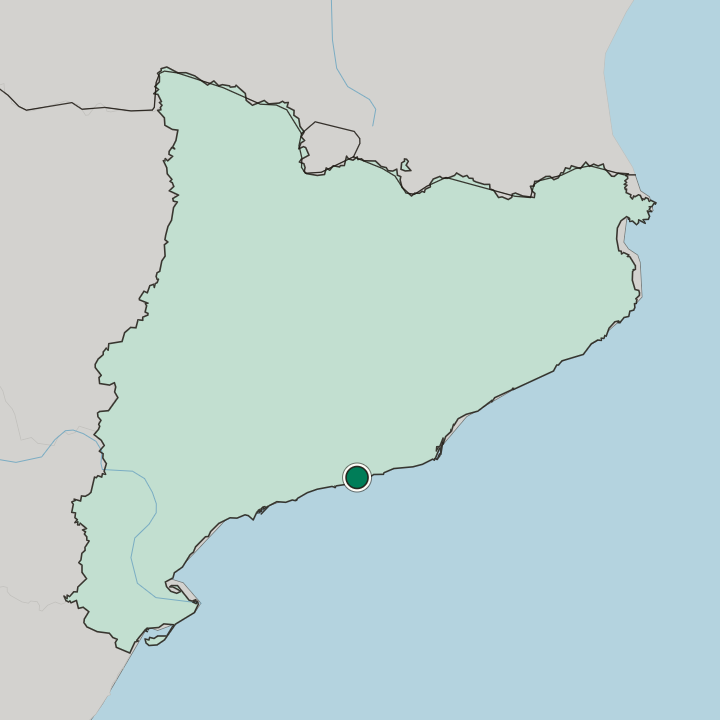
The municipality takes in some thirty-four square kilometres. Its name folds two older settlements into one, and the Castell de la Geltrú still carries the second of them, standing among the streets where the Can houses and the Col·legi de les Puríssimes were built. One short walk links them all.
Casa de Santa Teresa and Can Font belong to the same few streets.
What is the climate of Vilanova i la Geltrú?
Vilanova i la Geltrú sits in the temperate belt of the northern hemisphere, and that placement sets the terms. Summers run warm and long, winters stay mild rather than hard, and the swing between them is small enough that the season rarely decides whether a visit works or not. Snow is not the question.
Shade is.
How do you get to Vilanova i la Geltrú?
The railway is the town's own story, not just its way in. Its promoters are commemorated by the Monument als Propulsors del Ferrocarril, and the Railway Museum of Catalonia keeps the engines, so arriving by train fits the place better than any other approach. Rail handles the bulk of arrivals.
Roads from the rest of Catalunya carry the remainder.
Common questions
What is the best area to stay in Vilanova i la Geltrú?
Around the Castell de la Geltrú: Guests who want the Geltrú castle and the Col·legi de les Puríssimes at the door. The Víctor Balaguer museum streets: Museum-first stays built around Can Papiol and the Balaguer picture collection. The railway end: Arrivals by train who want the locomotives before anything else.
Good for
More cities in Catalunya
Updated October 2026