France · Hauts-de-France
Where to Stay in Saint-Quentin, Hauts-de-France
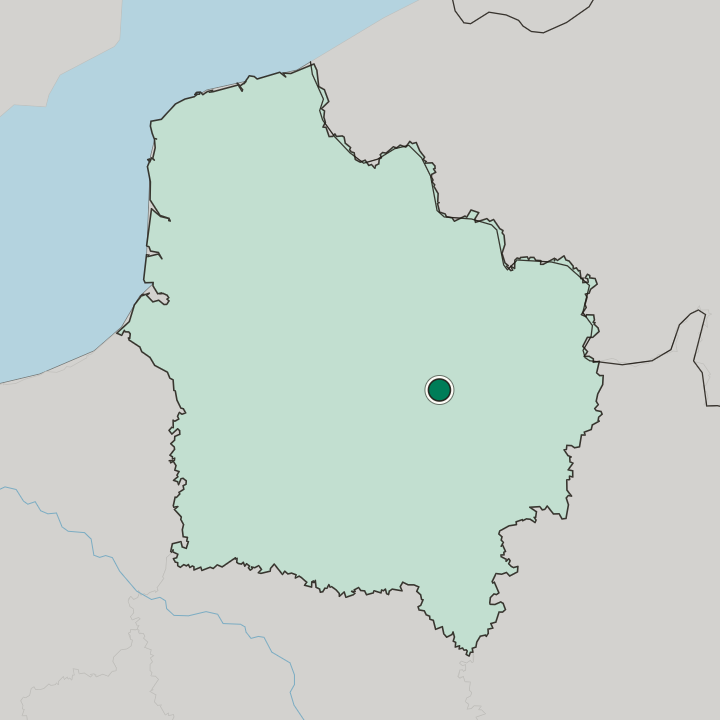
Saint-Quentin is an Aisne city in Hauts-de-France, the Augusta Veromanduorum of antiquity, gathered under its basilica and the Musée Antoine-Lécuyer.
Hotel links are affiliate links: booking through them may earn us a commission, at no extra cost to you. It never affects how places are ranked. How this works


Where to stay in Saint-Quentin
The practical side of choosing where to sleep.
The basilica fixes the centre. Rooms in the streets below the Basilica of Saint-Quentin put the Musée Antoine-Lécuyer and the espace Saint-Jacques à Saint-Quentin within a walk of a few minutes, which is what a short stay wants. Choice there is narrow.
The Musée Motobécane sits on the same side of town and gives a second reason to stay central. Quieter streets run out toward the église Saint-Éloi de Saint-Quentin and the église Saint-Jean de Saint-Quentin, where the buildings are residential and the noise of the centre stops. Beds are plainer here.
The piscine Jean Bouin de Saint-Quentin and the complexe sportif Gilbert Roux are the landmarks on that side. Site la Tombelle and the multi-activités Choquart are the markers further along. Gauchy, Fayet and Rouvroy take the overflow, and a room by the stade de Gauchy, the stade municipal de Fayet or the terrains de sports de Rouvroy comes with parking and an early road out.
Match days change that arithmetic. The stade Philippe-Roth, the stade Gaston-Massot and the complexe Marcel Bienfait draw their own crowds, and the piscine de Gauchy fills whenever the weather turns.
Find hotels in Saint-Quentin
Direct booking searches for these neighbourhoods.
Below the basilica
The centre under the Basilica of Saint-Quentin, with the Musée Antoine-Lécuyer and the espace Saint-Jacques à Saint-Quentin a few minutes off. Rooms are few around here — worth securing early.Find hotels in Below the basilicaa residential street with the piscine Jean Bouin nearbyTowards the église Saint-Éloi
The plainer run around the église Saint-Éloi de Saint-Quentin and the église Saint-Jean de Saint-Quentin, away from the museum circuit.Find hotels in Towards the église Saint-Éloithe piscine de Gauchy and a car outside the doorGauchy and Fayet
The outer communes at the stade de Gauchy and the stade municipal de Fayet, where a room comes with its own parking space.Find hotels in Gauchy and FayetHotel links are affiliate links: booking through them may earn us a commission, at no extra cost to you. It never affects how places are ranked. How this works
Things to do in Saint-Quentin
Ranked by global recognition; descriptions from Wikidata (CC0).
Museums & Galleries
2- Musée Antoine-Lécuyer
- Musée Motobécane
Churches & Religious Sites
3- Basilica of Saint-Quentin Heritage
- espace Saint-Jacques à Saint-Quentin Heritage
- église Saint-Éloi de Saint-Quentin
Stadiums & Sports
3- complexe Marcel Bienfait
- complexe sportif Gilbert Roux
- complexe sportif Robert Barran
worth knowingacross 3 categories in Saint-Quentin
About Saint-Quentin
One building dominates the skyline.
What is Saint-Quentin known for?
The Basilica of Saint-Quentin is the reason most people stop, and the Musée Antoine-Lécuyer, the Musée Motobécane and the espace Saint-Jacques à Saint-Quentin fill the rest of an afternoon. Two smaller churches hold their own quarters: the église Saint-Jean de Saint-Quentin and the église Saint-Éloi de Saint-Quentin. Sport is the everyday side, at the stade Philippe-Roth, the complexe sportif Robert Barran and the piscine Jean Bouin de Saint-Quentin.
What are the main landmarks in Saint-Quentin?
The Basilica of Saint-Quentin carries the town's name. Collections come next: the Musée Antoine-Lécuyer, the Musée Motobécane and the espace Saint-Jacques à Saint-Quentin between them cover what the town puts on show. Parish churches complete it.
The église Saint-Jean de Saint-Quentin and the église Saint-Éloi de Saint-Quentin stand away from the basilica, each anchoring a quarter of its own.
What is the history of Saint-Quentin?
Augusta Veromanduorum is the older name. Saint-Quentin has been identified with that settlement of antiquity, and the city that followed took the name of Saint Quentin of Amiens, said to have been martyred here in the 3rd century. The Basilica of Saint-Quentin grew out of that story.
It remains the building the town is measured by, and the église Saint-Jean de Saint-Quentin and the église Saint-Éloi de Saint-Quentin came later to serve quarters of their own. Industry left its own record. The Musée Motobécane keeps the name of a manufacture that belonged to this part of the Aisne, and the Musée Antoine-Lécuyer holds the collection the town assembled beside it.
Both sit within the same few streets as the espace Saint-Jacques à Saint-Quentin. The twentieth century built outward. Gauchy, Fayet and Rouvroy came into the same orbit, and the stade de Gauchy, the stade municipal de Fayet and the terrains de sports de Rouvroy belong to that expansion rather than to the old city.
The piscine Jean Bouin de Saint-Quentin, the complexe sportif Robert Barran and the stade Philippe-Roth followed on the same ground. The complexe Marcel Bienfait and the multi-activités Choquart are later additions.
Where is Saint-Quentin?
The commune is compact, a little over twenty-two square kilometres carrying the Basilica of Saint-Quentin, two parish churches and the museums within the same few streets. Gauchy, Fayet and Rouvroy sit at the boundary. Each is close enough that the stade de Gauchy, the stade municipal de Fayet and the terrains de sports de Rouvroy read as part of the same town, and the site Vermand appears on the same roll of facilities.
What is the climate of Saint-Quentin?
The temperate band gives Saint-Quentin a year without extremes, cool at one end and warm enough at the other to put tables out below the Basilica of Saint-Quentin. Winter belongs indoors. The Musée Antoine-Lécuyer, the Musée Motobécane and the piscine Jean Bouin de Saint-Quentin absorb it, while the piscine de Gauchy takes the same traffic from the edge of town.
How do you get to Saint-Quentin?
Saint-Quentin is the practical centre of its part of the Aisne, and roads from Gauchy, Fayet and Rouvroy run into the same middle. The rest is walking. From the Basilica of Saint-Quentin, the Musée Antoine-Lécuyer, the espace Saint-Jacques à Saint-Quentin and the église Saint-Jean de Saint-Quentin all sit within a few minutes of one another, which makes a car more nuisance than help in the centre.
Sports grounds are the exception, out at the stade Gaston-Massot and the complexe sportif Gilbert Roux.
Common questions
What is the best area to stay in Saint-Quentin?
Below the basilica: the Basilica of Saint-Quentin at the end of the street. Towards the église Saint-Éloi: a residential street with the piscine Jean Bouin nearby. Gauchy and Fayet: the piscine de Gauchy and a car outside the door.
Good for
More cities in Hauts-de-France
Updated October 2026