France · Île-de-France · Paris
Charonne, Paris — Area Guide & Where to Stay
Charonne was a village annexed by Paris in 1860; its core still gathers at Rue de Bagnolet and Rue Saint-Blaise.
Hotel links are affiliate links: booking through them may earn us a commission, at no extra cost to you. It never affects how places are ranked. How this works


Where to stay in Charonne
The practical side of choosing where to sleep.
Beds cluster either around the junction of Rue de Bagnolet and Rue Saint-Blaise, from which the quarter grew, or out along the streets approaching the centre sportif de la Porte de Bagnolet. Saint-Germain de Charonne marks the first. The Église Saint-Jean-Bosco and the Église Saint-Cyrille-Saint-Méthode give the second its own landmarks.
Land from the old commune also passed to the Père-Lachaise quarter and the Saint-Fargeau quarter, so those names sit immediately alongside.
Find hotels in Charonne
Direct booking searches for these neighbourhoods.
Rue Saint-Blaise
Rue Saint-Blaise meets Rue de Bagnolet at the historic centre of the former commune, and Saint-Germain de Charonne stands beside that junction as the village parish church.Find hotels in Rue Saint-BlaiseArrivals landing at the Porte de Bagnolet edge of the 20th arrondissementPorte de Bagnolet
The centre sportif de la Porte de Bagnolet and the Stade Déjerine mark this end of Charonne, where the quarter runs out to the boundary of Paris.Find hotels in Porte de BagnoletStays planned around the Église Saint-Jean-BoscoSaint-Jean-Bosco side
The Église Saint-Jean-Bosco rises well away from the old village crossing, giving this part of Charonne a landmark of its own rather than a borrowed one.Find hotels in Saint-Jean-Bosco sideRooms on the line where Charonne was divided from the Père-Lachaise quarterPère-Lachaise seam
Napoleon III's annexation split the commune three ways, and rooms along the Père-Lachaise seam keep Richard Wallace's tomb and the Monument du Souvenir within reach.Find hotels in Père-Lachaise seamHotel links are affiliate links: booking through them may earn us a commission, at no extra cost to you. It never affects how places are ranked. How this works
Things to do in and around Paris
Ranked by global recognition; descriptions from Wikidata (CC0).
Churches & Religious Sites
3- Saint-Germain de Charonne Heritage
- Église Saint-Jean-Bosco Heritage
- Église Saint-Cyrille-Saint-Méthode
Castles & Historic Sites
1- Richard Wallace's tomb Heritage
Stadiums & Sports
3- Stade Déjerine
- Centre sportif Maryse-Hilsz
- Amazonia Paris Xx
worth knowingacross 3 categories in and around Paris
About Charonne
What are the main landmarks in Charonne?
Saint-Germain de Charonne is the parish church of the old village, standing near where Rue de Bagnolet meets Rue Saint-Blaise, and Richard Wallace's tomb lies within the quarter. Two later churches follow. The Église Saint-Jean-Bosco and the Église Saint-Cyrille-Saint-Méthode carry the quarter's newer building.
Memorial ground runs through Charonne as well, from the AF 447 memorial and the Monument du Souvenir to the Grave of Ordre de la Libération. Sport fills the remainder, with the Stade Déjerine and the Centre sportif Maryse-Hilsz.
What is the history of Charonne?
Charonne was a commune. Napoleon III merged that municipality into Paris in 1860, and its territory was divided between the Charonne quarter itself, the Père-Lachaise quarter and the Saint-Fargeau quarter. The name stayed with the part of the 20th arrondissement holding the old village core.
Saint-Germain de Charonne had served that village as its parish church.
Where is Charonne?
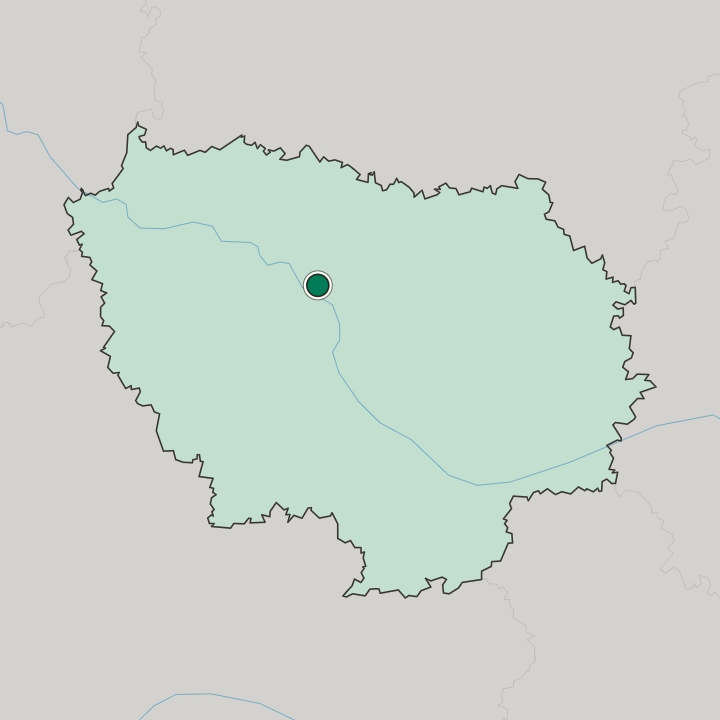
Charonne covers part of the 20th arrondissement of Paris, its historic centre at the junction of Rue de Bagnolet and Rue Saint-Blaise.
Common questions
What is the best area to stay in Charonne?
Rue Saint-Blaise: Walkers who want the old Charonne crossing at Rue de Bagnolet. Porte de Bagnolet: Arrivals landing at the Porte de Bagnolet edge of the 20th arrondissement. Saint-Jean-Bosco side: Stays planned around the Église Saint-Jean-Bosco. Père-Lachaise seam: Rooms on the line where Charonne was divided from the Père-Lachaise quarter.
Good for
More areas in Paris
Updated October 2026