France · Île-de-France
Where to Stay in Paris, Île-de-France
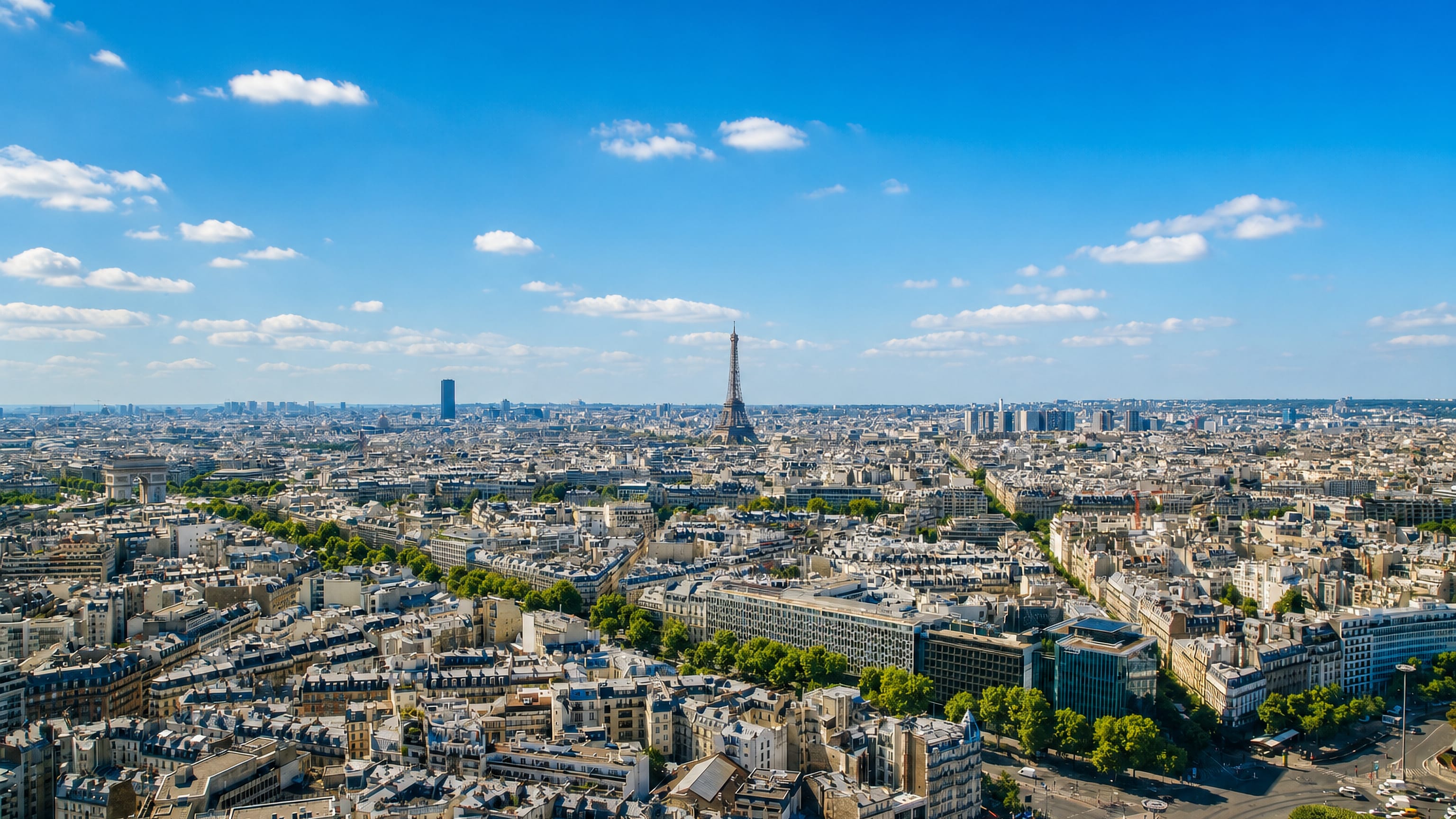
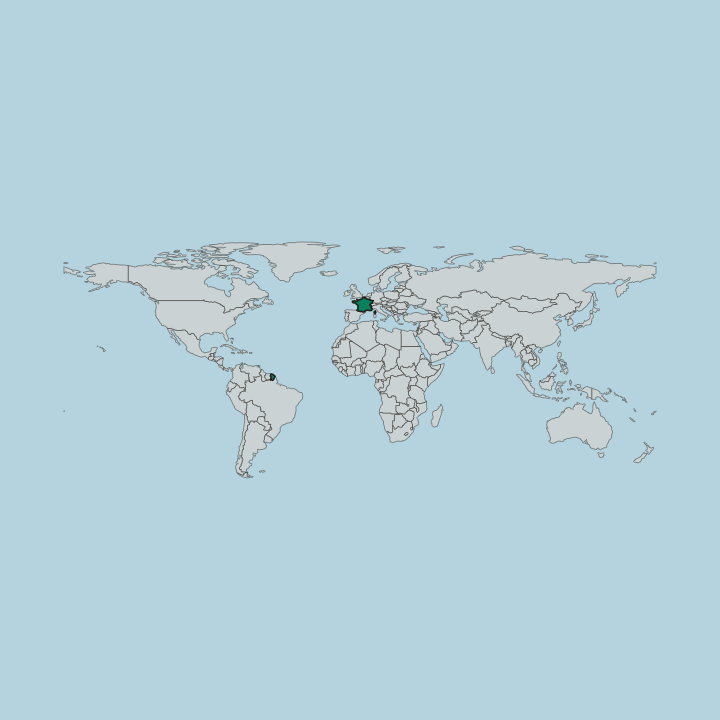
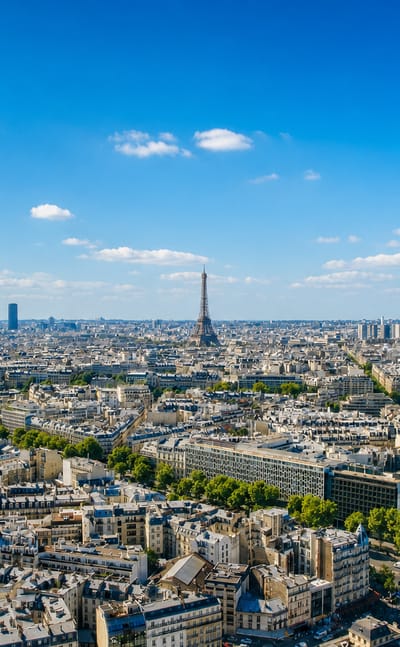
The Seine splits Paris in two, capital of France in the Île-de-France, known for the Louvre Museum, the Panthéon and the Sacré-Cœur above the city.
Hotel links are affiliate links: booking through them may earn us a commission, at no extra cost to you. It never affects how places are ranked. How this works


Where to stay in Paris
Not every neighbourhood fits every trip — here's what each one is good for.
 ParisFranceRiverside stays near the Accor Arena
Bercy
Newer blocks along the Seine put the eastern riverside and arena events close.Bercy →ParisFranceSaint-Merri
Saint-Merri is a Paris quartier whose walking radius holds the Centre Georges Pompidou, the Saint-Jacques Tower and the church that names it.Where to stay → ParisFrance
Le Marais
Le Marais is a historic district of Paris, spread over parts of the 3rd and 4th arrondissements on the Right Bank of the Seine.Where to stay → ParisFrance
Les Halles
Les Halles held Paris's central fresh food market until 1973; the Westfield Forum des Halles stands on the same ground.Where to stay →ParisFranceQuartier Saint-Victor
The Polish Library in Paris, the Pavillon de l'Arsenal and Saint-Louis en l'Île all fall within Quartier Saint-Victor.Where to stay → ParisFrance
Paris 05 Panthéon
Paris 05 Panthéon is the Latin Quarter, the Left Bank arrondissement holding the Panthéon and the Sorbonne, laid out over Gallo-Roman ground.Where to stay →ParisFranceSaint-Germain-des-Prés
Saint-Germain-des-Prés is one of the four administrative quarters of the 6th arrondissement of Paris, gathered around a former abbey church.Where to stay →ParisFrancePalais-Royal
Palais-Royal is the third administrative quartier of Paris, in the 1st arrondissement, a rectangle around the garden of the palace it is named for.Where to stay →ParisFrancePorte Saint-Martin
Porte Saint-Martin centres on a 1674 gateway in Paris, close to the Musée des Arts et Métiers and the House of Nicolas Flamel.Where to stay →ParisFranceFolie Méricourt
Folie Méricourt is an administrative quartier of Paris's 11th arrondissement, reaching from the place de la République to the boulevard de Belleville.Where to stay →ParisFrancePorte Saint-Denis
Porte Saint-Denis is a quartier of Paris named for the arch of 1672 that replaced a gate in the Wall of Charles V.Where to stay →ParisFranceSaint-Ambroise
Café terraces spill onto the pavements of Saint-Ambroise, a quartier in the east of Paris, named for its twin-towered church.Where to stay →All neighbourhoods (46)
ParisFranceParis 11 Popincourt
Paris 11 Popincourt is the arrondissement of Rue Oberkampf and rue de Charonne, with the bar streets running back from Place de la Bastille.Where to stay →ParisFranceRoquette
La Roquette is an administrative quartier of Paris's 11th arrondissement, running from the place de la Bastille out to the boulevard de Ménilmontant.Where to stay → ParisFrance
Paris 10 Entrepôt
Paris 10 Entrepôt is the arrondissement of the Canal Saint Martin, an old faubourg whose industrial era has passed, with the cafés along the water.Where to stay →ParisFranceFaubourg Saint-Marcel
Faubourg Saint-Marcel is a Paris quarter across the 5th and 13th arrondissements, named for Saint Marcel's tomb and long known as the faubourg souffrant.Where to stay →ParisFranceHôpital Saint-Louis
Hôpital Saint-Louis is a quarter of Paris named for the hospital Claude Vellefaux built in 1611 at the request of Henry IV of France.Where to stay → ParisFrance
Ménilmontant
Ménilmontant climbs an 87 m hill in the 20th arrondissement of Paris, between the Père Lachaise Cemetery and the Parc de Belleville.Where to stay →ParisFranceMontparnasse
Montparnasse lies in the south of Paris on the left bank of the Seine, centred where the Boulevard du Montparnasse crosses the Rue de Rennes.Where to stay →ParisFranceSaint-Vincent de Paul
Saint-Vincent de Paul is a quartier of Paris named for its church, with an outline the record dates to 1844.Where to stay →ParisFranceParis 13 Gobelins
Paris 13 Gobelins is a Left Bank district of Paris where looms still run at the Gobelins Manufactory, with the Butte-aux-Cailles rising to the south.Where to stay →ParisFranceInvalides
Invalides is a Paris quartier of museums and monuments, taking in the Musée Rodin, the Musée de l'Armée and the Cathédrale Saint-Louis-des-Invalides.Where to stay →ParisFranceBelleville
Belleville, recorded also as Mont-Chalier, is a Paris neighbourhood strung along the Rue de Belleville across four arrondissements.Where to stay →ParisFranceParis 12 Reuilly
Woodland fills the eastern half of Paris 12 Reuilly, an arrondissement of Paris that runs from the platforms of Gare de Lyon out to the Bois de Vincennes.Where to stay →ParisFranceParis 14 Observatoire
Paris 14 Observatoire is the 14th arrondissement of Paris, a residential district whose best known sight, the Catacombs of Paris, lies underground.Where to stay → ParisFrance
Montmartre
Montmartre is a hill in the 18th arrondissement of Paris, 130 m high, with the white dome of the Sacré-Cœur at its summit.Where to stay →ParisFranceQuartier du Parc de Montsouris
Quartier du Parc de Montsouris is a Paris quartier named for its park, counting the Catacombs of Paris and the Giacometti Institute among its addresses.Where to stay →ParisFranceParis 19 Buttes-Chaumont
Paris 19 Buttes-Chaumont is a district of north-east Paris, a quarried hillside re-cut into the cliffs and lake of the parc des Buttes-Chaumont.Where to stay →ParisFrancePetit-Montrouge
Petit-Montrouge is one of the eighty administrative quartiers of Paris, in the 14th arrondissement, and Parisians know it as Alésia.Where to stay → ParisFrance
Champs-Elysées
La Madeleine, the Petit Palais and the Palais Galliera stand inside the Quartier des Champs-Élysées, a Paris quarter of about 114 hectares.Where to stay →ParisFrancePicpus
Wide avenues run through Picpus, a quartier in the east of Paris, known for the Church of the Holy Spirit and the concerts at Accor Arena.Where to stay →ParisFranceLa Villette
La Villette is a quartier of Paris in the nineteenth arrondissement of Buttes-Chaumont, built around the Cité des Sciences et de l'Industrie.Where to stay →ParisFranceGros-Caillou
The Eiffel Tower rises from Gros-Caillou, a quarter of Paris whose parish church, Saint-Pierre-du-Gros-Caillou, carries the same name.Where to stay →ParisFranceCharonne
Charonne was a village annexed by Paris in 1860; its core still gathers at Rue de Bagnolet and Rue Saint-Blaise.Where to stay → ParisFrance
Paris 18 Buttes-Montmartre
The Sacré-Cœur crowns the hill of Montmartre, the 18th arrondissement on the Right Bank of northern Paris.Where to stay →ParisFrancePlaine-de-Monceaux
Plaine-de-Monceaux is a Paris quarter where the Alexander Nevsky Cathedral and the Église suédoise de Paris stand a short way apart.Where to stay →ParisFranceQuartier Saint-Fargeau
The Georges Vallerey swimming pool and the Église Notre-Dame-des-Otages stand in Quartier Saint-Fargeau, a Paris quartier next to Bagnolet.Where to stay →ParisFranceLa Chapelle
La Chapelle was a commune of the Seine department from 1790 until Paris took it in 1860; Saint-Denys de la Chapelle still holds its core.Where to stay →ParisFranceParis 15 Vaugirard
The Front de Seine towers rise from the Left Bank at Paris 15 Vaugirard, the largest of the twenty arrondissements of Paris.Where to stay →ParisFranceBel-Air
Chestnut-lined streets edge toward the woods at Bel-Air, a quartier in the east of Paris, known for the Paris Zoological Park and the Porte Dorée.Where to stay → ParisFrance
Batignolles
Batignolles is a neighbourhood in the 17th arrondissement of Paris, held between four streets and named twice over by its own two churches.Where to stay →ParisFranceGrenelle
A neighbourhood of southwestern Paris, Grenelle fills part of the 15th arrondissement and holds the Maison de Balzac and the Musée du Vin.Where to stay →ParisFranceChaillot
Chaillot is a Right Bank quarter of Paris in the 16th arrondissement, its landmark list headed by the Eiffel Tower and the palais de Tokyo.Where to stay →ParisFranceTernes
Ternes is a quarter of Paris gathered around the Église Saint-Ferdinand-des-Ternes, with the Gare de la Porte Maillot at its outer edge.Where to stay →ParisFranceParis 16 Passy
The Bois de Boulogne closes the far end of Paris 16 Passy, the 16th arrondissement, a Right Bank district of Paris whose year turns on Stade Roland Garros.Where to stay →ParisFranceAuteuil
Auteuil is the westernmost quarter of Paris, a Right Bank neighbourhood in the 16th arrondissement beside the Bois de Boulogne.Where to stay →Hotel links are affiliate links: booking through them may earn us a commission, at no extra cost to you. It never affects how places are ranked. How this works
Find hotels in Paris
Direct booking searches for these neighbourhoods.
Louvre quarter
The Louvre Museum and the Musée de l'Orangerie sit on the Seine within a short walk.Find hotels in Louvre quarterUniversity streets around the PanthéonLatin Quarter
The Musée de Cluny and the Church of Saint-Sulpice anchor the old Left Bank student district.Find hotels in Latin QuarterHotel links are affiliate links: booking through them may earn us a commission, at no extra cost to you. It never affects how places are ranked. How this works
Things to do in Paris
Ranked by global recognition; descriptions from Wikidata (CC0).
Museums & Galleries
8- Centre Georges Pompidou Heritage
- Petit Palais Heritage
- Musée du quai Branly Heritage
- Arab World Institute Heritage
- palais de Tokyo Heritage
Show 3 more →
- Guimet Museum Heritage
- Galerie nationale du Jeu de Paume Heritage
- Villa La Roche Heritage
Churches & Religious Sites
8- Sacré-Cœur Heritage
- Panthéon Heritage
- La Madeleine Heritage
- Church of Saint-Sulpice Heritage
- Church of Saint Eustache Heritage
Show 3 more →
- Saint-Étienne-du-Mont Heritage
- Alexander Nevsky Cathedral, Paris Heritage
- Saint-Pierre de Montmartre Heritage
Castles & Historic Sites
6- Château de Vincennes Heritage
- equestrian statue of Joan of Arc Heritage
- Monument to the French Declaration of the Rights of Man and of the Citizen Heritage
- Château de Bercy Heritage
- fontaine Molière Heritage
Show 1 more →
- Richard Wallace's tomb Heritage
Stadiums & Sports
5- Piscine Molitor Heritage
- Butte-aux-Cailles swimming pool Heritage
- espace sportif Pailleron Heritage
- Gymnase Jean-Jaurès Heritage
- piscine Oberkampf Heritage
Parks & Gardens
1- Jardin mémorial des enfants du Vél' d'Hiv'
Landmarks & Notable Places
8- Eiffel Tower Heritage
- Saint-Jacques Tower Heritage
- House of Nicolas Flamel Heritage
- Tour Jean-sans-Peur Heritage
- Pavillon Carré de Baudouin Heritage
Show 3 more →
- Hôtel Hérouet Heritage
- Hôtel Mégret de Sérilly Heritage
- Hôtel Mortier de Sandreville Heritage
worth knowingacross 6 categories in Paris
About Paris
What is Paris known for?
Paris is known as the capital of France and the great museum city on the Seine. The Louvre Museum and the Musée d'Orsay hold two of the world's largest art collections, while the Centre Georges Pompidou gathers the modern work. Art defines it.
Above the rooftops the Sacré-Cœur crowns the hill of Montmartre, the Panthéon holds the nation's honoured dead, and the Catacombs of Paris run beneath the streets.
What are the main landmarks in Paris?
Paris carries more landmarks than any single visit can hold. The Louvre Museum and the Musée d'Orsay face each other across the Seine, and the Centre Georges Pompidou stands nearby with the modern collection. Churches mark the skyline.
The Sacré-Cœur crowns Montmartre and the Panthéon rises over the Left Bank, while the Musée Rodin, the Musée Picasso and the Catacombs of Paris draw visitors to quieter corners of the city.
What is the history of Paris?
Paris grew from an island in the Seine into the capital of France and the heart of the Île-de-France. The river gave the early city its defence and its trade, and the medieval town spread from the two banks around the crossing. Kings made it their seat.
Over centuries the monarchy raised the palace that became the Louvre Museum, and the Panthéon rose on the Left Bank as a temple to the nation's great figures. The Church of Saint Eustache and the Musée de Cluny survive from the older medieval and Roman layers beneath the modern streets. Revolution and enlightenment reshaped the city as sharply as any king.
Paris earned its name as the City of Light partly through its role in the Age of Enlightenment, and its museums grew into the greatest in the country. The Musée d'Orsay filled a former railway station with painting, the Centre Georges Pompidou brought modern art to the old market district, and the Catacombs of Paris gathered the bones of centuries beneath the streets. Through each age the Seine remained the axis, and the city on its banks stayed the political and cultural centre of France.
Where is Paris?
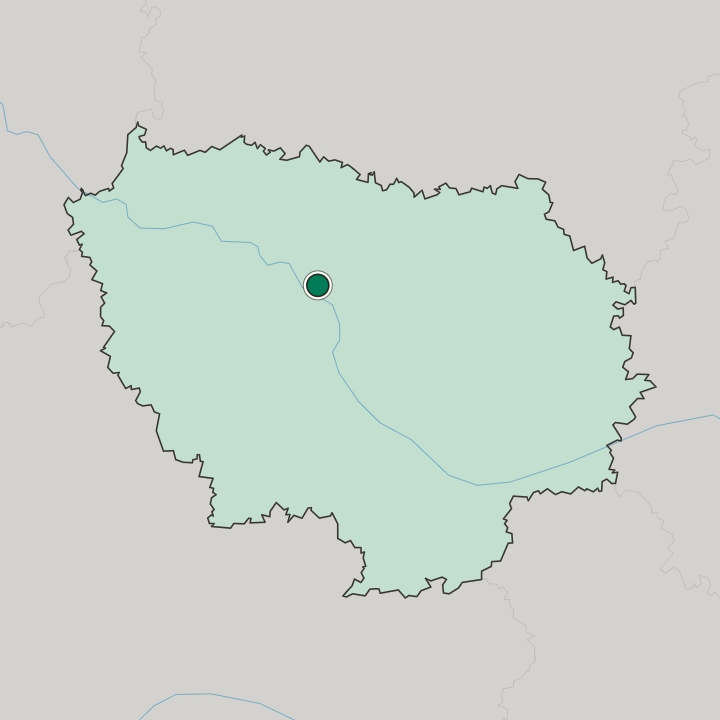
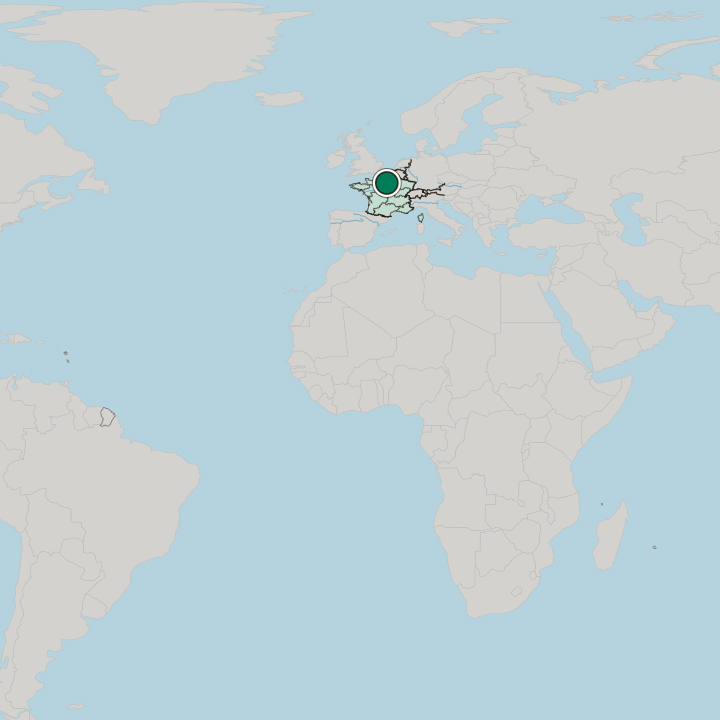
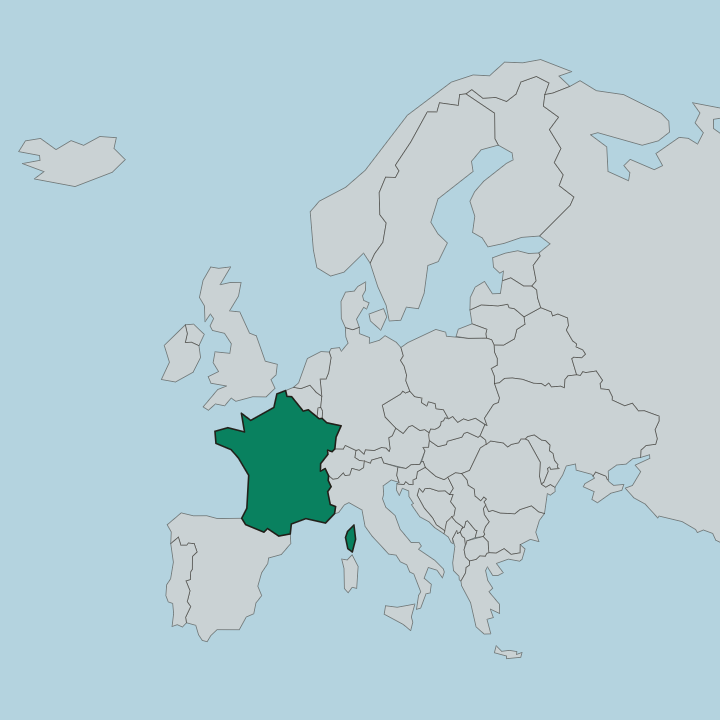
Paris sits on the Seine in the centre of the Île-de-France region of northern France. The river winds through the heart of the city, splitting it into a Right Bank and a Left Bank joined by many bridges. Low hills ring the centre.
The rise of Montmartre carries the Sacré-Cœur above the rooftops, and the flat basin of the Île-de-France spreads around the Seine to hold one of Europe's largest metropolitan areas.
What is the climate of Paris?
Paris has a temperate oceanic climate softened by its inland position on the Seine. Winters stay cool and damp rather than harsh, and summers run warm without long spells of extreme heat. Rain falls evenly across every Paris season.
The mild Atlantic weather that reaches the Île-de-France keeps the parks green across the seasons, and the Seine rarely freezes even in the coldest months.
How do you get to Paris?
Paris is the hub of the French rail and air network. High-speed trains fan out from the city's mainline stations to every corner of France and beyond, and two major airports serve the Île-de-France. Everything meets here.
From the central stations the Louvre Museum and the Seine lie a short ride away, and the dense metro binds the two banks and the outer arrondissements into one network across the region.
Common questions
What is the best area to stay in Paris?
Louvre quarter: First-time visitors near the great galleries. Latin Quarter: University streets around the Panthéon. Bercy: Riverside stays near the Accor Arena.
Good for
More cities in Île-de-France
Updated October 2026