France · Île-de-France · Paris
Paris 16 Passy, Paris — Area Guide & Where to Stay
The Bois de Boulogne closes the far end of Paris 16 Passy, the 16th arrondissement, a Right Bank district of Paris whose year turns on Stade Roland Garros.
Hotel links are affiliate links: booking through them may earn us a commission, at no extra cost to you. It never affects how places are ranked. How this works


Where to stay in Paris 16 Passy
Where visitors usually base themselves, and why.
Paris 16 Passy holds three quite different beds. Trocadéro sells the outlook and charges for it, its gardens facing the Eiffel Tower across the Seine in the 7th arrondissement, so a room turned the right way costs what the window is worth. Step two streets back and the noise drops.
Passy is the quieter answer, uphill blocks around the rue de Passy within a short walk of the Musée Marmottan Monet and the Maison de Balzac. Evenings end early. The western end belongs to the Bois de Boulogne, the greenest sleep on the Right Bank and the base for a fortnight at Stade Roland Garros or a day with children at the Jardin d'Acclimatation, and Boulogne-Billancourt lies over the line in Hauts-de-Seine once the tennis has taken every room in Paris.
Things to do in and around Paris
Ranked by global recognition; descriptions from Wikidata (CC0).
Museums & Galleries
7- Petit Palais Heritage
- Musée du quai Branly Heritage
- palais de Tokyo Heritage
- Guimet Museum Heritage
- Galerie nationale du Jeu de Paume Heritage
Show 2 more →
- Villa La Roche Heritage
- Maison de Balzac Heritage
Churches & Religious Sites
3- La Madeleine Heritage
- Alexander Nevsky Cathedral, Paris Heritage
- Saint-Augustin, Paris Heritage
Stadiums & Sports
1- Stade Roland Garros
Parks & Gardens
1- Jardin d'Acclimatation
Landmarks & Notable Places
1- Eiffel Tower Heritage
worth knowingacross 5 categories in and around Paris
About Paris 16 Passy
What are the main landmarks in Paris 16 Passy?
Paris 16 Passy carries a museum list heavier than its size suggests. The palais de Tokyo and the Musée d'art moderne de Paris share one riverside building, the Guimet Museum keeps Asian collections a few streets north, and the Musée de l'Homme occupies the wing that closes the Trocadéro. Painting and dress follow.
The Musée Marmottan Monet stands west of the rue de Passy, the Palais Galliera keeps costume, the Maison de Balzac preserves the writer's rooms on the hillside, and Villa La Roche is a built argument about how a house should be made. Sport takes the southern edge, where Stade Roland Garros stages the tennis and Parc des Princes is the home ground of the football club Paris Saint-Germain. Across the Seine, in the neighbouring 7th arrondissement, the Eiffel Tower fills the view from the Trocadéro terrace without belonging to this district.
What is the history of Paris 16 Passy?
Passy was a village on the hillside long before it was a number. A spring found on its slope gave the place its early name, the lane that served it is still the rue de Passy, and the commune was taken into Paris in 1860 when the city redrew itself into twenty arrondissements. Wealth arrived and stayed.
The apartment blocks that fill the streets between the Étoile and the river went up for exactly that trade, which is why the quarter has never lost its standing among affluent Parisians. The Bois de Boulogne shaped the other half of the district, an expanse of woodland that gave it a boundary of trees instead of streets and left ground to spare for the Jardin d'Acclimatation, for Stade Roland Garros, and much later for the Louis Vuitton Foundation. Maison de Balzac keeps the rooms where the writer worked.
Where is Paris 16 Passy?
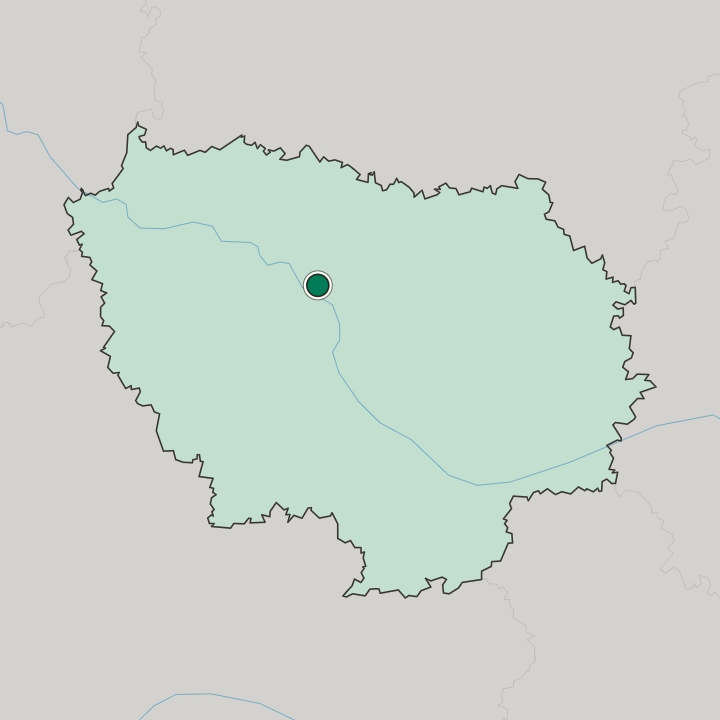
Paris 16 Passy runs west from the Étoile and the Trocadéro to the Bois de Boulogne, bounded by the Seine and, beyond it, by Boulogne-Billancourt in Hauts-de-Seine.
Good for
More areas in Paris
Updated October 2026