France · Île-de-France · Paris
Faubourg Saint-Marcel, Paris — Area Guide & Where to Stay
Faubourg Saint-Marcel is a Paris quarter across the 5th and 13th arrondissements, named for Saint Marcel's tomb and long known as the faubourg souffrant.
Hotel links are affiliate links: booking through them may earn us a commission, at no extra cost to you. It never affects how places are ranked. How this works


Where to stay in Faubourg Saint-Marcel
The practical side of choosing where to sleep.
This was the poor end of Paris for centuries. Local usage called it the faubourg souffrant, the suffering faubourg, and the reputation for being the ugliest, saddest and poorest quarter of the city stuck to it long after the tanneries along the Bièvre had gone. The Gobelins run through the middle.
The avenue des Gobelins follows the line of the old rue Mouffetard, the rue des Gobelins and the rue de la Reine Blanche trace the 13th-century wall, and the rue Broca to the west was the rue de Lourcine before it was renamed. Both arrondissements are central.
Things to do in and around Paris
Ranked by global recognition; descriptions from Wikidata (CC0).
Museums & Galleries
2- Fondation Jérôme Seydoux-Pathé
- musée d'art et d'histoire de l'hôpital Sainte-Anne
Churches & Religious Sites
3- Église Sainte-Anne-de-la-Butte-aux-Cailles Heritage
- Église Saint-Marcel Heritage
- Saint-Louis de la Salpêtrière
Stadiums & Sports
3- Butte-aux-Cailles swimming pool Heritage
- Tep Tolbiac - Baudricourt
- Tep des Cordelieres
Landmarks & Notable Places
1- 3 rue des Gobelins Heritage
worth knowingacross 4 categories in and around Paris
About Faubourg Saint-Marcel
What are the main landmarks in Faubourg Saint-Marcel?
The dead came first. A large necropolis grew here in the early 4th century along the Roman road toward Melun, and a medieval deed calls the ground Terra de lococinerum, the place of ashes, which under Louis VII became the clos de la Cendrée and gave the rue de Lourcine its name. Then came the churches.
The collegiate church of Saint-Marcel went up in the 11th century with the chapel Saint-Martin and the church Saint-Hippolyte, and the parish at the faubourg Saint-Médard is attested before 1163 under the abbey of Sainte-Geneviève. One private house stands out. The banker Scipion built a hôtel in the second half of the 16th century on the rue de la Barre, at the corner of what is now the rue du Fer à Moulin, when the Bièvre still ran with nothing built along it.
What is the history of Faubourg Saint-Marcel?
It was outside Lutetia and outside the walls. The southern part stayed the land of the dead through the Merovingian period, with burials still being found, and the name of the village before the saint is given as Chambois or Chamboy. A tomb made the place.
Saint Denis is said to have dedicated a first chapel to Saint Clement in the 3rd century, and after Marcel died about 435 his tomb drew pilgrims as a place of miracles, so that by the 6th century Gregory of Tours could call the cluster of houses around it a vicus. The relics left in a hurry. They went to Notre-Dame on the Île de la Cité during the Norman siege of 885, behind the walls, and the cult that followed made Marcel one of the patrons of Paris.
Stone and cloth built the rest. Quarries here since antiquity gave the walls of Notre-Dame, Saint-Germain-des-Prés and the Templar enclosure their stone, great lords settled the neighbouring faubourg Saint-Médard from the end of the 13th century, and by the early 16th the fashion had passed and workshops took the estates.
Where is Faubourg Saint-Marcel?
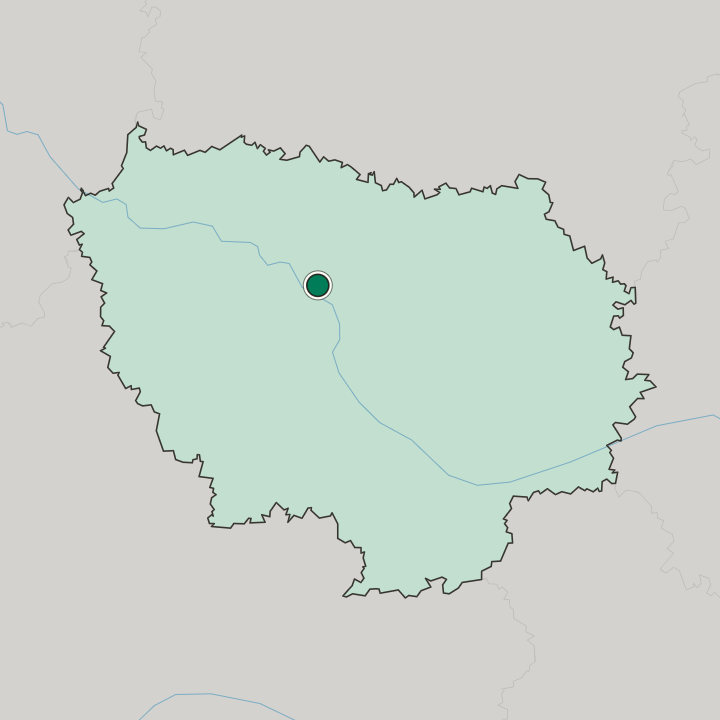
Faubourg Saint-Marcel lies on the left bank of the Seine across the 5th and 13th arrondissements of Paris, along the buried Bièvre, its 13th-century wall traced now by the rue des Gobelins, the rue de la Reine Blanche and the rue des Fossés Saint-Marcel.
Good for
More areas in Paris
Updated October 2026