France · Île-de-France · Paris
Palais-Royal, Paris — Area Guide & Where to Stay
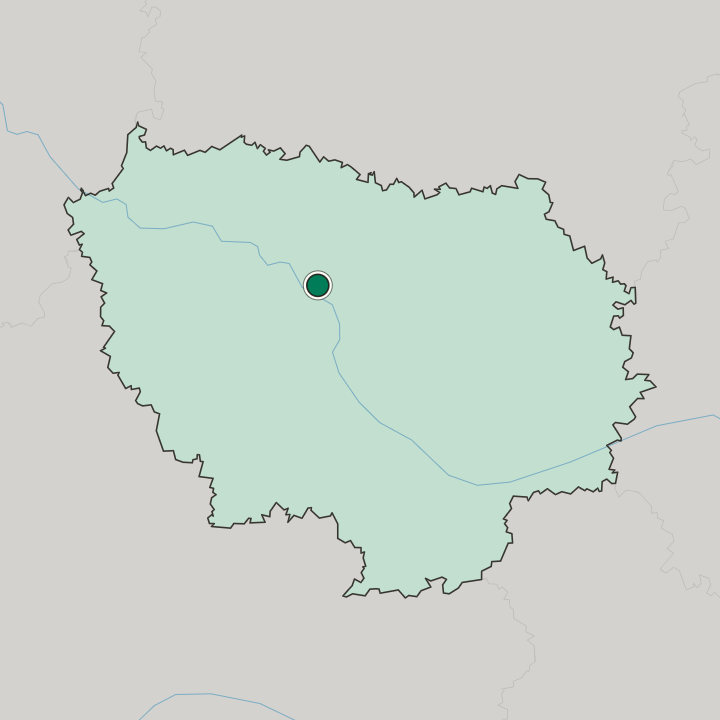
Palais-Royal is the third administrative quartier of Paris, in the 1st arrondissement, a rectangle around the garden of the palace it is named for.
Hotel links are affiliate links: booking through them may earn us a commission, at no extra cost to you. It never affects how places are ranked. How this works


Where to stay in Palais-Royal
Where the beds are, and what that means for the visit.
The garden is the whole logic of the place. No road crosses it, so the quartier reads as a block with a hole in the middle, and only the rue Saint-Honoré runs the full width east to west while the rue de Richelieu and the rue Croix-des-Petits-Champs carry the north to south traffic on either side. The Louvre is one street away.
Place-Vendôme sits to the west, the Halles to the east, Saint-Germain-l'Auxerrois to the south and Vivienne over the arrondissement line to the north, so a room here is a room in the middle of everything. The rue de Rivoli closes the south side.
Things to do in and around Paris
Ranked by global recognition; descriptions from Wikidata (CC0).
Museums & Galleries
3- Galerie nationale du Jeu de Paume Heritage
- Louvre Museum
- Musée de l'Orangerie
Churches & Religious Sites
3- Notre-Dame-de-l'Assomption Heritage
- Lutheran Church of the Redemption Heritage
- Saint-Thomas-du-Louvre
Castles & Historic Sites
3- equestrian statue of Joan of Arc Heritage
- fontaine Molière Heritage
- Monument to Gasprd de Coligny Heritage
Landmarks & Notable Places
1- Hôtel Delpech de Chaunot Heritage
worth knowingacross 4 categories in and around Paris
About Palais-Royal
What are the main landmarks in Palais-Royal?
One street predates everything else here. The rue Coquillière, which links the quartier to the Halles, was cut in the 12th century when the wall of Philippe Auguste went up, and it is the oldest way in the quartier by a wide margin. The rest is a 17th-century grid.
Streets were laid at right angles around the palace and its garden, and the only thing that breaks the pattern is the avenue de l'Opéra, driven through on the diagonal in the Haussmann rebuilding. Four churches once organised it. At the Revolution the quartier ran as the districts of Saint-Honoré, Saint-Roch, the Jacobins on the rue Saint-Honoré and Saint-Philippe-du-Roule, and in 1701 Jean de la Caille counted an abbey here, Notre-Dame de la Paix of the Augustinian canonesses.
What is the history of Palais-Royal?
Paris was divided into twenty quartiers in 1702. A royal declaration of 12 December that year and a Conseil d'État ruling of 14 February set the bounds, and the Palais Royal came out as the fifth of them, running east to the rues Fromenteau and des Bons-Enfants and south to the quays along the Seine. The Revolution renamed it.
In 1790 it became the section de la Montagne, then the section de la Butte-des-Moulins, and a prefectural order of 10 May 1811 gave it back the name quartier du Palais-Royal while it still sat in the old 2nd arrondissement. The present boundaries date from 1859. The law of 16 June that year put the quartier in the 1st arrondissement, where it has stayed, bounded by the rue Saint-Roch, the rues de Marengo and de Croix-des-Petits-Champs, the rue des Petits-Champs and the rue de Rivoli.
Where is Palais-Royal?
Palais-Royal forms a rectangle in the middle of the 1st arrondissement of Paris, bounded west by the rue Saint-Roch, east by the rues de Marengo and de Croix-des-Petits-Champs, north by the rue des Petits-Champs and south by the rue de Rivoli.
Good for
More areas in Paris
Updated October 2026