France · Nouvelle-Aquitaine
Where to Stay in Brive-la-Gaillarde, Nouvelle-Aquitaine
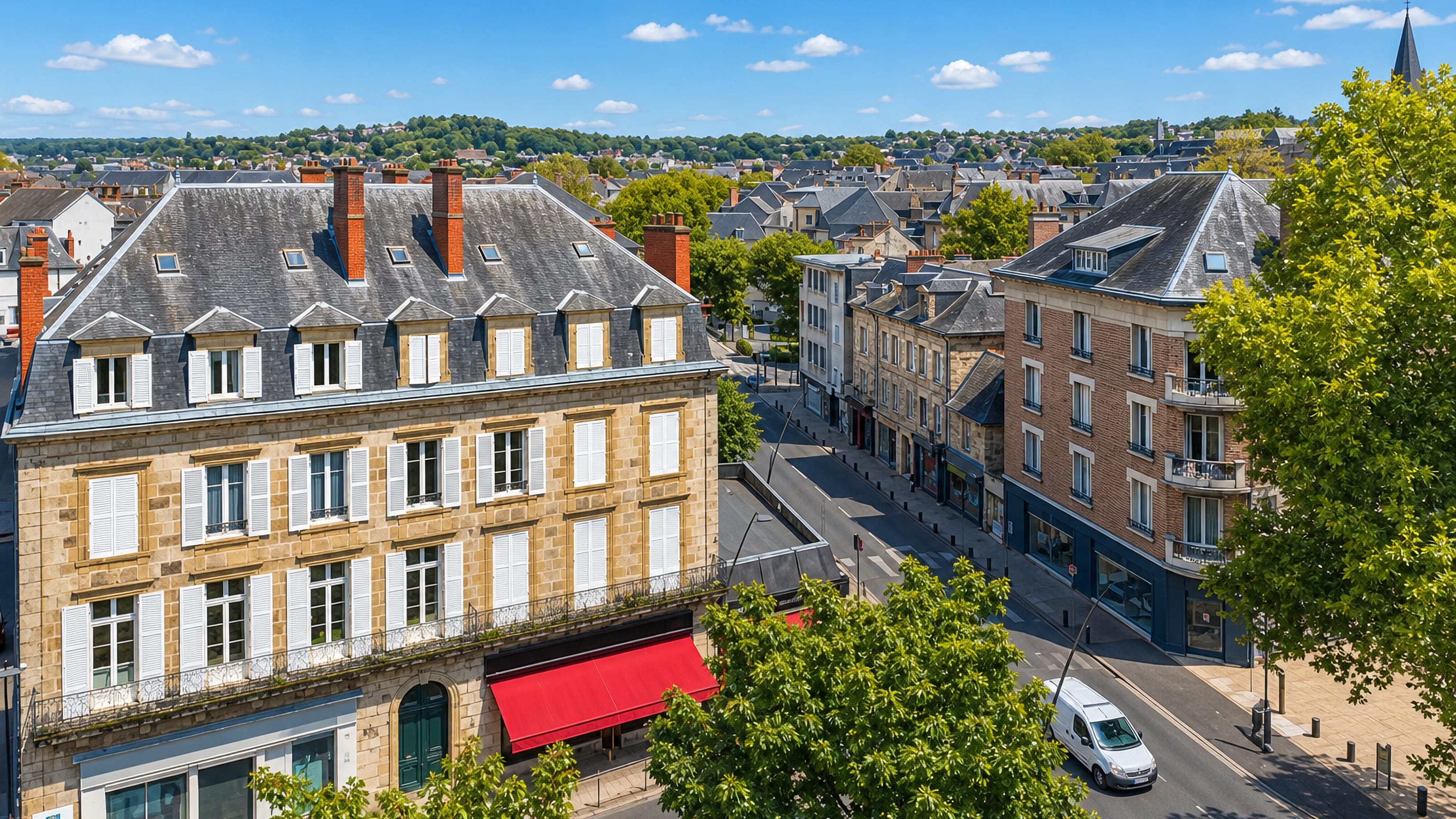
Brive-la-Gaillarde, largest town of the Corrèze, gathers its old centre around the Collégiale Saint-Martin and the Tour des Échevins.
Hotel links are affiliate links: booking through them may earn us a commission, at no extra cost to you. It never affects how places are ranked. How this works


Where to stay in Brive-la-Gaillarde
Where visitors usually base themselves, and why.
Most stays run to a night or two, and the centre answers that best: the Collégiale Saint-Martin, the Musée Labenche and the Tour des Échevins stand within minutes of each other, with the Maison Cavaignac and the Maison Grivel on the way between them. Those minutes are all on foot. Anyone who came for the named houses should book inside that circle and leave the car wherever it can be left for the duration.
Match weekends are the exception. The Stade Raymond-Faucher fills the town on its own account, and rooms towards the stade Nayrac, the stade André Pestourie and the complexe de la Garenne Verte are the ones that go last when something is on. Check what is playing.
Those same streets sit quiet the rest of the time, with the centre aquatique de Brive-la-Gaillarde a few minutes off. Tujac and the edge towards Malemort-sur-Corrèze make a third option. The plaine des jeux Ouest de Tujac and the stade de Tujac mark one side of it and the Église Saint-Sanctin de Malemort-sur-Corrèze the other, and a bed out there puts parking and a fast exit ahead of an evening among the old frontages.
Space out there is the compensation. You give up the walk home from dinner.
Find hotels in Brive-la-Gaillarde
Direct booking searches for these neighbourhoods.
Around the Collégiale Saint-Martin
The old centre of Brive-la-Gaillarde, where the Tour des Échevins, the Maison Cavaignac and the Maison Grivel stand within a few streets of the collegiate church. Beds are limited here, so book early.Find hotels in Around the Collégiale Saint-Martina fixture at the Stade Raymond-Faucher or the stade NayracTowards the Stade Raymond-Faucher
The sporting quarter of the town, where the stade André Pestourie and the complexe de la Garenne Verte set which weekends are busy.Find hotels in Towards the Stade Raymond-Faucherparking, space, and the Église Saint-Sanctin de Malemort-sur-CorrèzeTujac and Malemort
The outer edge by the stade de Tujac and the plaine des jeux Ouest de Tujac, where Brive-la-Gaillarde runs into Malemort-sur-Corrèze.Find hotels in Tujac and MalemortHotel links are affiliate links: booking through them may earn us a commission, at no extra cost to you. It never affects how places are ranked. How this works
Things to do in Brive-la-Gaillarde
Ranked by global recognition; descriptions from Wikidata (CC0).
Museums & Galleries
2- centre d'études et musée Edmond-Michelet Heritage
- Musée Labenche
Churches & Religious Sites
3- Collégiale Saint-Martin de Brive-la-Gaillarde Heritage
- Église Saint-Sanctin de Malemort-sur-Corrèze Heritage
- église Saint-Antoine du monastère des Franciscains de Brive-la-Gaillarde
Castles & Historic Sites
3- Monument au colonel Jean-Baptiste Delmas
- Brive-la-Gaillarde (Samian Ware Discovery Site)
- Monument au lieutenant-colonel Germain de l'artillerie coloniale
Stadiums & Sports
3- Stade Raymond-Faucher
- Moving
- centre aquatique de Brive-la-Gaillarde
Landmarks & Notable Places
8- Tour des Échevins Heritage
- Maison Cavaignac (Brive-la-Gaillarde) Heritage
- Maison Renaudie (Brive-la-Gaillarde) Heritage
- Maison Lalande Heritage
- Maison Leygonie Heritage
Show 3 more →
- Maison Treilhard Heritage
- Maison Maillard Heritage
- Maison 5 rue du Lieutenant-Colonel-Farro Heritage
worth knowingacross 5 categories in Brive-la-Gaillarde
About Brive-la-Gaillarde
Old houses are the reason to walk.
What is Brive-la-Gaillarde known for?
The Musée Labenche holds the town's collections, and the Maison Cavaignac, the Maison Leygonie, the Maison Lalande and the Maison Treilhard put named stone frontages within a couple of streets of the Collégiale Saint-Martin. Sport carries the rest. The Stade Raymond-Faucher, the stade Nayrac and the centre aquatique de Brive-la-Gaillarde belong to a town big enough to keep several grounds busy at once.
What are the main landmarks in Brive-la-Gaillarde?
The Collégiale Saint-Martin is the fixed point. Civic building shows in the Tour des Échevins and the Musée Labenche, while the Maison Renaudie, the Maison Maillard and the Maison 5 rue du Lieutenant-Colonel-Farro carry the domestic side of the same streets. Two memorials honour officers.
The Monument au colonel Jean-Baptiste Delmas and the Monument au lieutenant-colonel Germain de l'artillerie coloniale stand outdoors, and the église Saint-Antoine du monastère des Franciscains de Brive-la-Gaillarde closes the list of churches.
What is the history of Brive-la-Gaillarde?
A pottery find sits at the bottom of it. The Samian Ware Discovery Site is the earliest thing recorded in the commune, and everything a visitor can see above ground belongs to centuries well after whoever left that ware behind. Then the Collégiale Saint-Martin fixed the centre.
Streets arranged themselves around the church and have not much moved since. The houses are the record of the town's better years. The Maison Renaudie, the Maison Cavaignac, the Maison Leygonie, the Maison Lalande, the Maison Grivel, the Maison Maillard, the Maison Treilhard and the Maison 5 rue du Lieutenant-Colonel-Farro each carry a family name, and together they say more about who lived here than any charter would.
Government had its own building. The Tour des Échevins carries the name of the town's magistrates, and the Musée Labenche now holds the collections that came out of all this. Faith and memory take the next layer: the église Saint-Antoine du monastère des Franciscains de Brive-la-Gaillarde for one, and the Monument au colonel Jean-Baptiste Delmas and the Monument au lieutenant-colonel Germain de l'artillerie coloniale for two officers the town chose to remember.
The centre d'études et musée Edmond-Michelet works as study centre and museum together. Later building went to sport. The Stade Raymond-Faucher, the stade Nayrac, the stade André Pestourie, the stade de Tujac, the complexe de la Garenne Verte and the centre aquatique de Brive-la-Gaillarde all belong to the modern commune, which by then had grown out as far as Malemort-sur-Corrèze and its Église Saint-Sanctin de Malemort-sur-Corrèze.
Where is Brive-la-Gaillarde?
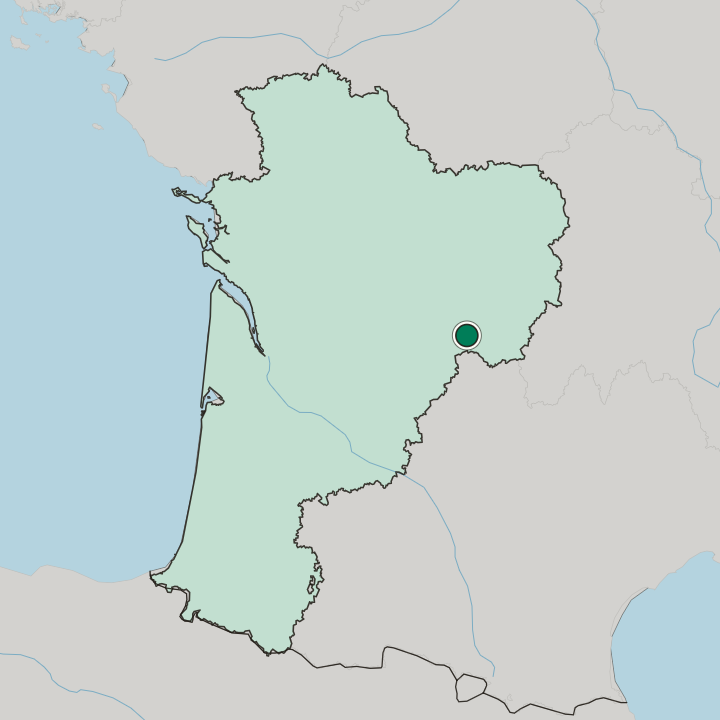
Some forty-nine square kilometres of inland country. Brive-la-Gaillarde is the largest town of the Corrèze, in the old Limousin and now within Nouvelle-Aquitaine, and its commune runs from the streets around the Collégiale Saint-Martin out to Tujac and the boundary with Malemort-sur-Corrèze. Salt water plays no part here.
The complexe de la Garenne Verte and the plaine des jeux Ouest de Tujac take up much of the open ground.
What is the climate of Brive-la-Gaillarde?
The Corrèze country sets the terms: a temperate year, wet enough to keep the fields around the commune green, and summers warm enough to put people outdoors near the Collégiale Saint-Martin well into the evening. Brive sees frost only in passing. Winter here is a grey and mild business rather than a hard one, and snow that settles in the streets counts as an event rather than a season.
Spring arrives early.
How do you get to Brive-la-Gaillarde?
Brive-la-Gaillarde is the sub-prefecture and the largest town of the Corrèze, which is why routes across the department converge here rather than on anywhere smaller. Most people come by road. Once you have stopped, the Collégiale Saint-Martin, the Musée Labenche and the Tour des Échevins are minutes apart on foot, while Tujac, the complexe de la Garenne Verte and Malemort-sur-Corrèze want wheels.
Distances are small either way.
Common questions
What is the best area to stay in Brive-la-Gaillarde?
Around the Collégiale Saint-Martin: the named houses and the Musée Labenche on foot. Towards the Stade Raymond-Faucher: a fixture at the Stade Raymond-Faucher or the stade Nayrac. Tujac and Malemort: parking, space, and the Église Saint-Sanctin de Malemort-sur-Corrèze.
Good for
More cities in Nouvelle-Aquitaine
Updated September 2026