France · Nouvelle-Aquitaine
Where to Stay in Niort, Nouvelle-Aquitaine
Niort is the old capital of the Deux-Sèvres in western France, a river town with a great keep at the edge of the Marais Poitevin.
Hotel links are affiliate links: booking through them may earn us a commission, at no extra cost to you. It never affects how places are ranked. How this works


Where to stay in Niort
How the choice of base plays out on the ground.
Choosing a room in Niort really means deciding how near the keep and the old market you want to sleep. The streets around the keep and the market keep the churches, the shops, and the river within a walk, and staying downtown suits anyone here for the town. The old market fills by day.
Rooms sit near the keep. Out toward the marsh and the west, the town gives way to canals and green water. A room by the marsh trades the old streets for the boats, the willows, and the quiet of the Green Venice.
The green canals open past the edge. If you want the keep and the market, stay downtown; if you want the marsh, take a room to the west. Whichever you pick, the keep and Niort's old lanes stay within easy reach.
Find hotels in Niort
Direct booking searches for these neighbourhoods.
The old town
Around the Donjon within a walk of the covered marketFind hotels in The old townStays wanting the canals and boatsThe marsh side
Toward the Marais Poitevin and the Green VeniceFind hotels in The marsh sideHotel links are affiliate links: booking through them may earn us a commission, at no extra cost to you. It never affects how places are ranked. How this works
Things to do in Niort
Ranked by global recognition; descriptions from Wikidata (CC0).
Museums & Galleries
1- Musée Bernard d'Agesci
Churches & Religious Sites
5- Église Saint-André Heritage
- église Notre-Dame de Niort Heritage
- Église Saint-Hilaire (Niort) Heritage
- Église Saint-Étienne Heritage
- Église Sainte-Pezenne de Niort Heritage
Castles & Historic Sites
2- Donjon de Niort Heritage
- Niort (Samian Ware Discovery Site)
Stadiums & Sports
3- Stade René Gaillard
- complexe de Cholette
- complexe de Pissardant
Landmarks & Notable Places
1- Maison de la Vierge Heritage
worth knowingacross 5 categories in Niort
About Niort
Niort is the river town at the edge of the Green Venice.
What is Niort known for?
On the Sèvre Niortaise in the west of France, it grew under a mighty twin-towered keep raised by the Plantagenet kings, and it is known for its old covered market, its many churches, and its place at the door of the Marais Poitevin, the green marsh of quiet canals. The green marsh spreads to the west. Keep and marsh mark the town.
What are the main landmarks in Niort?
The Donjon is the emblem of Niort. The great twin-towered keep, raised by the Plantagenet kings over the Sèvre, stands square and grey above the river, the mark of the town, by the old market. A green marsh lies to the west.
The Marais Poitevin, its canals shaded by trees, spreads out as the Green Venice, while the old covered market, the churches, and the river quays mark the streets of Niort.
What is the history of Niort?
Niort rose around a great keep of the Plantagenets. In the twelfth century Henry the Second and Richard the Lionheart, kings of England and lords of these lands, raised a mighty twin-towered keep over the Sèvre to guard the river crossing. The town grew rich on wool and skins.
In the middle ages Niort prospered on its cloth, its chamois leather, and the trade of the river down to the sea. The marsh shaped the country around. West of the town the monks and lords drained the great marsh over centuries into a maze of green canals, the Marais Poitevin that people call the Green Venice, worked by flat-bottomed boats.
Later the town found a modern trade. In the last century Niort became the seat of France's great mutual insurers, and grew as a quiet city of offices and gardens by the river. The old keep still guards the Sèvre.
Niort keeps its keep and its marsh in the Poitou.
Where is Niort?
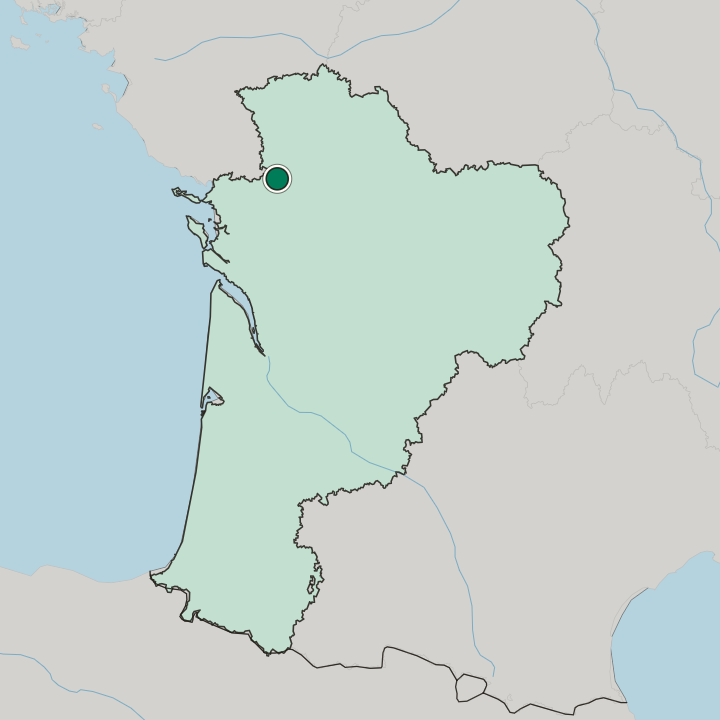
Niort lies on the Sèvre Niortaise in the west of France, at the head of the Marais Poitevin. The city sits on low hills above the river, where the dry plain gives way to the great marsh that runs west to the sea, in the country of the Poitou. Low hills roll around.
The river winds down to the marsh.
What is the climate of Niort?
Niort has a mild oceanic climate. Warm summers and soft winters cross the marsh country, and rain blows in off the Atlantic through the year, keeping the fields and canals green and full. Mist rises off the marsh at dawn.
The green country stays soft through the year.
How do you get to Niort?
Niort lies in western France, between Poitiers and La Rochelle. Trains and the motorway run to it from Poitiers and La Rochelle across the plain, and roads reach into the marsh and down to the coast. Buses reach the marsh towns around.
Most arrive by train from Poitiers.
Common questions
What is the best area to stay in Niort?
The old town: Visitors here for the keep, market, and churches. The marsh side: Stays wanting the canals and boats.
Good for
More cities in Nouvelle-Aquitaine
Updated September 2026