France · Nouvelle-Aquitaine
Where to Stay in Poitiers, Nouvelle-Aquitaine
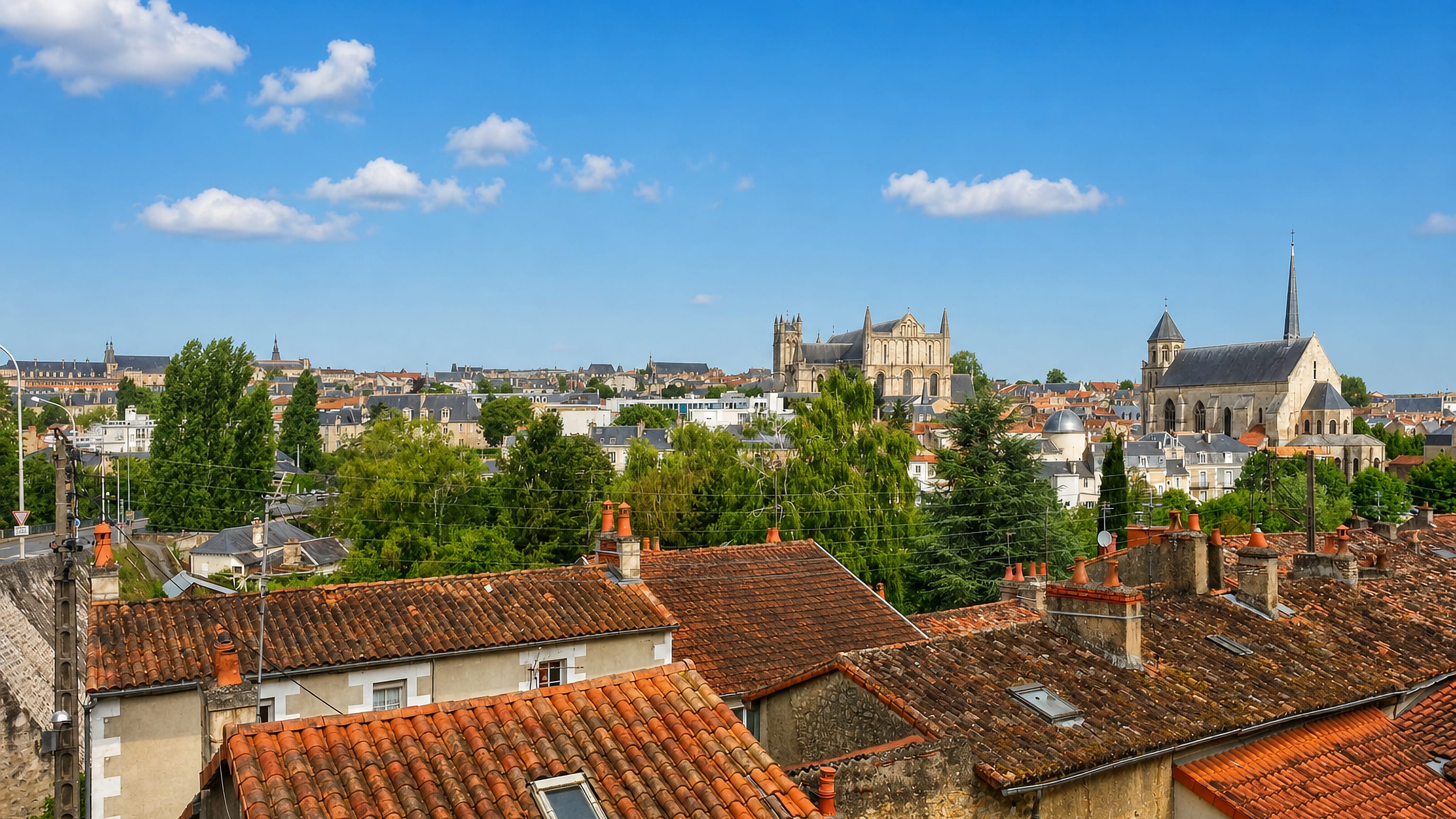
Poitiers is a university city on the river Clain in Nouvelle-Aquitaine, the old Poitou capital of a hundred bell-towers.
Hotel links are affiliate links: booking through them may earn us a commission, at no extra cost to you. It never affects how places are ranked. How this works


Where to stay in Poitiers
Where visitors usually base themselves, and why.
The old town of Poitiers sits high on a spur inside a loop of the Clain, and that upper town is where most visitors stay. The central quarter around the Église Notre-Dame la Grande and the Musée Sainte-Croix keeps the great churches, the shops, and the market squares within one walkable stretch, and it suits travellers who want the historic core on the doorstep. It is the best first base.
West, the streets that run down toward the Church Saint-Hilaire le Grand and the Église Saint-Porchaire de Poitiers trade the busiest lanes for a quieter, older grain. Down by the water, the lower town near the église Sainte-Radegonde de Poitiers and the Clain is calmer still, a short climb below the centre. Each pocket lies within an easy walk of the others, so the choice is one of mood over distance.
Find hotels in Poitiers
Direct booking searches for these neighbourhoods.
Upper old town
Around the Église Notre-Dame la Grande and the Musée Sainte-Croix, the walkable historic heart of Poitiers.Find hotels in Upper old towna quieter, older grain of streetsSaint-Hilaire quarter
West toward the Church Saint-Hilaire le Grand and the Église Saint-Porchaire de Poitiers, off the busiest lanes.Find hotels in Saint-Hilaire quartera calm riverside baseLower town by the Clain
Down near the église Sainte-Radegonde de Poitiers and the Clain, a short climb below the upper town.Find hotels in Lower town by the ClainHotel links are affiliate links: booking through them may earn us a commission, at no extra cost to you. It never affects how places are ranked. How this works
Things to do in Poitiers
Ranked by global recognition; descriptions from Wikidata (CC0).
Museums & Galleries
2- Musée Sainte-Croix Heritage
- musée Rupert-de-Chièvres Heritage
Churches & Religious Sites
8- Église Notre-Dame la Grande, Poitiers Heritage
- église Sainte-Radegonde de Poitiers Heritage
- Church of Saint-Jean de Montierneuf Heritage
- Church Saint-Hilaire le Grand Heritage
- Église Saint-Porchaire de Poitiers Heritage
Show 3 more →
- Chapelle Saint-Louis de Poitiers Heritage
- Monastère Saint-Hilaire de la Celle Heritage
- Église Saint-Paul de Poitiers Heritage
Castles & Historic Sites
1- Poitiers (Samian Ware Discovery Site)
Stadiums & Sports
3- Stade Michel-Amand
- stade Paul-Rébeilleau
- centre aquatique de la Pépinière
Landmarks & Notable Places
2- Maison des Trois Clous Heritage
- Maison, 54 rue Arsène-Orillard Heritage
worth knowingacross 5 categories in Poitiers
About Poitiers
What is Poitiers known for?
Poitiers is known for its churches, the city of a hundred bell-towers. The Église Notre-Dame la Grande and its carved Romanesque front lead a long roll of them across the old town. A great university gives the streets their crowds.
Add the Musée Sainte-Croix, the Church Saint-Hilaire le Grand, and the église Sainte-Radegonde de Poitiers, and the historic city stands clear.
What are the main landmarks in Poitiers?
Poitiers wears its landmarks as churches. The Église Notre-Dame la Grande shows the finest carved Romanesque front, while the Church Saint-Hilaire le Grand and the église Sainte-Radegonde de Poitiers keep two more of the oldest sanctuaries. Museums hold the rest of the story.
The Musée Sainte-Croix and the musée Rupert-de-Chièvres gather the art and the city's deep past, and the Église Saint-Porchaire de Poitiers and the Church of Saint-Jean de Montierneuf add to the roll of towers.
What is the history of Poitiers?
Poitiers holds one of the deepest church histories in Nouvelle-Aquitaine, the old capital of Poitou. Faith built the city. High on a spur inside a bend of the Clain, it grew as a stronghold of early Christianity, and the Church Saint-Hilaire le Grand carries the name of the bishop-scholar who made it a centre of the western church, while the église Sainte-Radegonde de Poitiers keeps the memory of the queen who founded a great convent here.
The Romanesque age crowned it. The carved west front of the Église Notre-Dame la Grande is among the masterworks of that art, one of scores of towers that earned the city its name of a hundred bell-towers. A university took root in the later Middle Ages and has shaped the town ever since.
Older houses like the Maison des Trois Clous still stand in the lanes, and the Musée Sainte-Croix now holds the layered past dug from beneath the streets. The city is that long weave of church, scholarship, and stone.
Where is Poitiers?
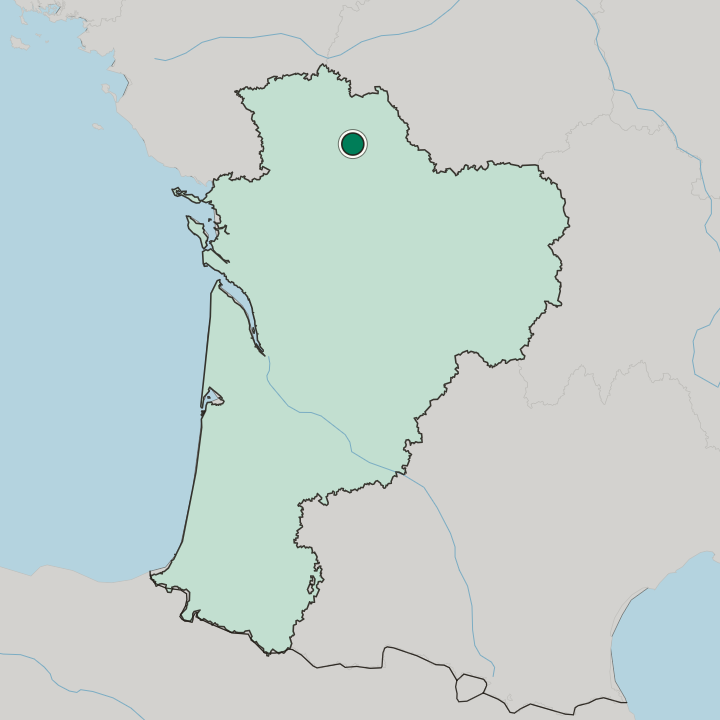
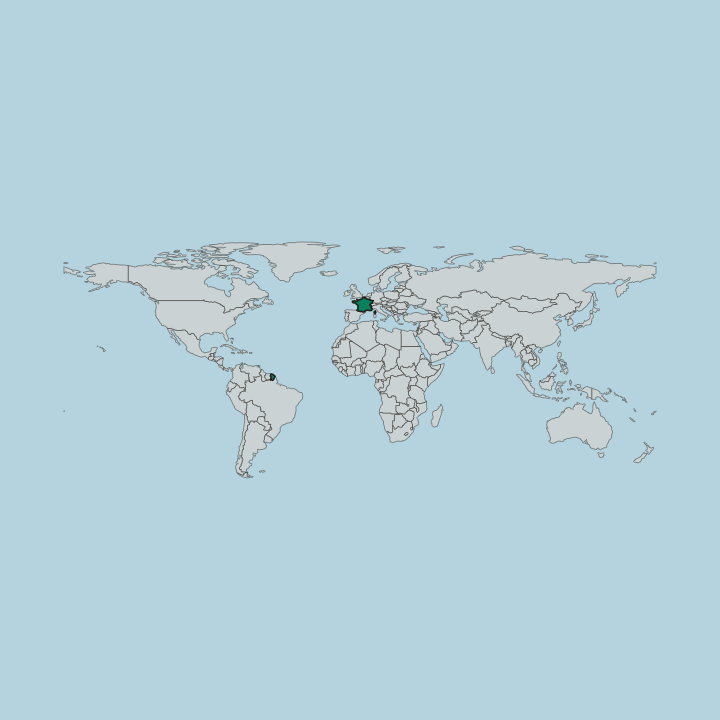
Poitiers stands in the north of Nouvelle-Aquitaine, the historic capital of Poitou. A river loop shapes the site. The old town rises on a high spur nearly ringed by a bend of the Clain, with the Église Notre-Dame la Grande near its crown.
The lower streets and the église Sainte-Radegonde de Poitiers drop toward the water below.
What is the climate of Poitiers?
Poitiers has a mild, moist climate on the threshold between coast and inland, in the north of Nouvelle-Aquitaine. Winters stay cool and grey. Frost and damp come and go rather than deep cold, and snow is uncommon on the spur above the Clain.
Summers are warm and long, the kind that fills the terraces below the Église Notre-Dame la Grande. Rain falls in every season on the spur above the Clain.
How do you get to Poitiers?
Poitiers sits on the main rail spine crossing Nouvelle-Aquitaine, so most visitors arrive by train. The station lies in the valley below the old town, a climb up to the spur where the Église Notre-Dame la Grande stands. Roads reach the city across the plateaus of Poitou.
Once in the upper town the churches, the Musée Sainte-Croix, and the market squares all sit close enough to cross on foot. It is a walking city.
Common questions
What is the best area to stay in Poitiers?
Upper old town: the great churches and market squares. Saint-Hilaire quarter: a quieter, older grain of streets. Lower town by the Clain: a calm riverside base.
Good for
More cities in Nouvelle-Aquitaine
Updated September 2026