France · Nouvelle-Aquitaine
Where to Stay in Pau, Nouvelle-Aquitaine
Pau is a city in Nouvelle-Aquitaine, the old capital of Béarn, gathered below the Musée national du château de Pau facing the Pyrénées.
Hotel links are affiliate links: booking through them may earn us a commission, at no extra cost to you. It never affects how places are ranked. How this works


Where to stay in Pau
Where the beds are, and what that means for the visit.
Pau is easy to base yourself in, because the old town and the resort quarter sit side by side. The castle end around the Musée national du château de Pau and the Église Saint-Martin de Pau keeps the oldest streets and the small hotels within a short walk, and it suits travellers who want the château and the terrace view on the doorstep. It is the most atmospheric base.
East along the ridge, the belle-époque quarter of grand villas like the Villa Lawrance and the Villa du Pont d'Oly runs to the Musée des Beaux-Arts de Pau and the leafier avenues built for winter visitors. Down by the river the sportier ground gathers around the Stade d'eaux vives Pau Béarn Pyrénées, a base for anyone drawn to the water and the Pyrénées beyond. Each pocket sits within an easy stroll of the others, so the choice is one of character rather than distance.
Find hotels in Pau
Direct booking searches for these neighbourhoods.
Castle quarter
Around the Musée national du château de Pau and the Église Saint-Martin de Pau, with the old streets and the Pyrénées panorama close.Find hotels in Castle quartergrand avenues and the fine-arts museumBelle-époque villa quarter
The winter-resort streets of villas like the Villa Lawrance and the Villa du Pont d'Oly, near the Musée des Beaux-Arts de Pau.Find hotels in Belle-époque villa quarterwater sports and an active baseRiverside sports ground
Down by the water around the Stade d'eaux vives Pau Béarn Pyrénées, under the peaks.Find hotels in Riverside sports groundHotel links are affiliate links: booking through them may earn us a commission, at no extra cost to you. It never affects how places are ranked. How this works
Things to do in Pau
Ranked by global recognition; descriptions from Wikidata (CC0).
Museums & Galleries
3- pavillon des Arts de Pau Heritage
- Musée des Beaux-Arts de Pau
- Musée Bernadotte
Churches & Religious Sites
7- Église Saint-Martin de Pau Heritage
- Église Saint-Jacques de Pau Heritage
- Église Saint-Joseph de Pau Heritage
- Église Notre-Dame-du-Bout-du-Pont de Pau Heritage
- église Saint-André de Pau Heritage
Show 2 more →
- Église Notre-Dame-de-l'Assomption de Jurançon Heritage
- église Saint-Barthélemy-et-Saint-Pierre de Mazères-Lezons Heritage
Castles & Historic Sites
2- Villa du Pont d'Oly
- Villa Lawrance
Stadiums & Sports
3- Palais des Sports de Pau
- Stade de la Croix du Prince
- Stade d’eaux vives Pau Béarn Pyrénées
Landmarks & Notable Places
1- Bernadotte Museum Heritage
worth knowingacross 5 categories in Pau
About Pau
Pau is known for its château and its view.
What is Pau known for?
The Musée national du château de Pau crowns the old town, once the seat of the kings of Béarn. A grand terrace opens on the Pyrénées beyond. Add the Musée Bernadotte, the Musée des Beaux-Arts de Pau, and the Église Saint-Martin de Pau, and the shape of the resort city is set.
What are the main landmarks in Pau?
Pau centres on its castle. The Musée national du château de Pau holds the old royal seat of Béarn, and the terrace beside it opens the long view to the Pyrénées. The Musée Bernadotte and the Musée des Beaux-Arts de Pau gather the city's history and art.
Churches mark the quarters, the Église Saint-Martin de Pau and the Église Saint-Jacques de Pau among them, while the Jaï-alaï de Pau keeps the local pelota tradition.
What is the history of Pau?
Pau rose as the capital of Béarn, the small mountain state that long kept its own laws below the Pyrénées. A castle made the city. The Musée national du château de Pau stands on the old fortress that became the seat of the viscounts and later the kings of Navarre, the birthplace of Henri IV, and for centuries the château fixed the town around it as the political heart of Béarn.
A soldier born here later became a king of Sweden, remembered in the Musée Bernadotte. Later the city took on a second life. English and other northern visitors came for the mild winters and the mountain air, and the belle-époque villas that line the eastern quarter, the Villa Lawrance and the Villa du Pont d'Oly among them, went up for that season of grand resort.
Churches from the older town still stand, the Église Saint-Martin de Pau and the Église Saint-Jacques de Pau among them. The city braids the mountain capital and the winter resort into one.
Where is Pau?
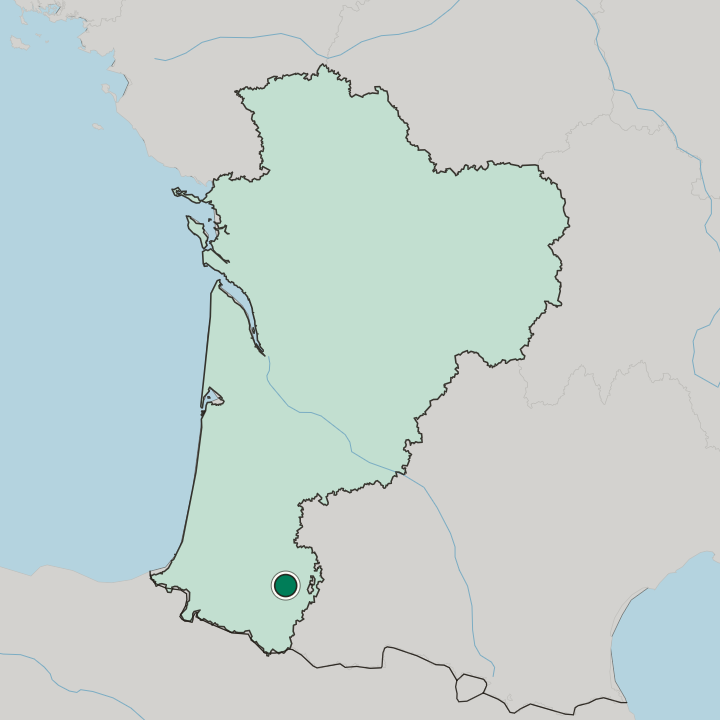
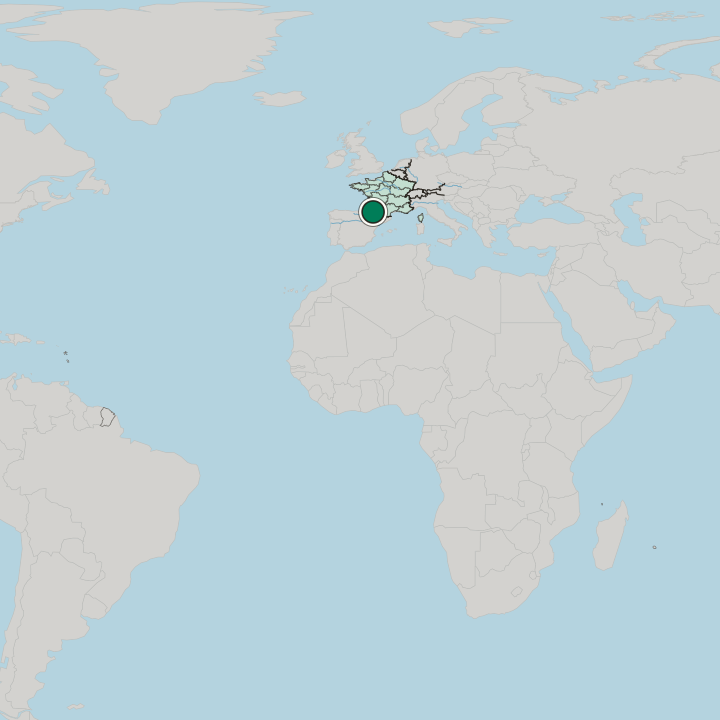
Pau lies in the south of Nouvelle-Aquitaine, the old capital of Béarn under the Pyrénées. Mountains fill the southern skyline. The old town runs along a ridge above the river, the Musée national du château de Pau at its western end, and the long terrace beside the castle opens the famous view across to the peaks.
The belle-époque quarter spreads east along the same high ground.
What is the climate of Pau?
Pau has the mild, moist climate that first made it a winter resort, sheltered under the Pyrénées in southern Nouvelle-Aquitaine. Winters are gentle. Frost is light and snow rare on the town's ridge, even as the peaks beyond the terrace stay white, which is why northern visitors once wintered here.
Summers are warm and green, with the mountains drawing frequent afternoon rain. The air stays soft.
How do you get to Pau?
Pau sits on the rail line running along the northern edge of the Pyrénées, so many visitors arrive by train. An airport north of the city adds longer links. Roads climb up from the plains of Nouvelle-Aquitaine and down from the mountain valleys of Béarn.
Once in the city, the old town around the Musée national du château de Pau and the villa quarter to the east are close enough to cross on foot.
Common questions
What is the best area to stay in Pau?
Castle quarter: the old town and the terrace view. Belle-époque villa quarter: grand avenues and the fine-arts museum. Riverside sports ground: water sports and an active base.
Good for
More cities in Nouvelle-Aquitaine
Updated October 2026