France
Nouvelle-Aquitaine, France — Towns & Travel Guide
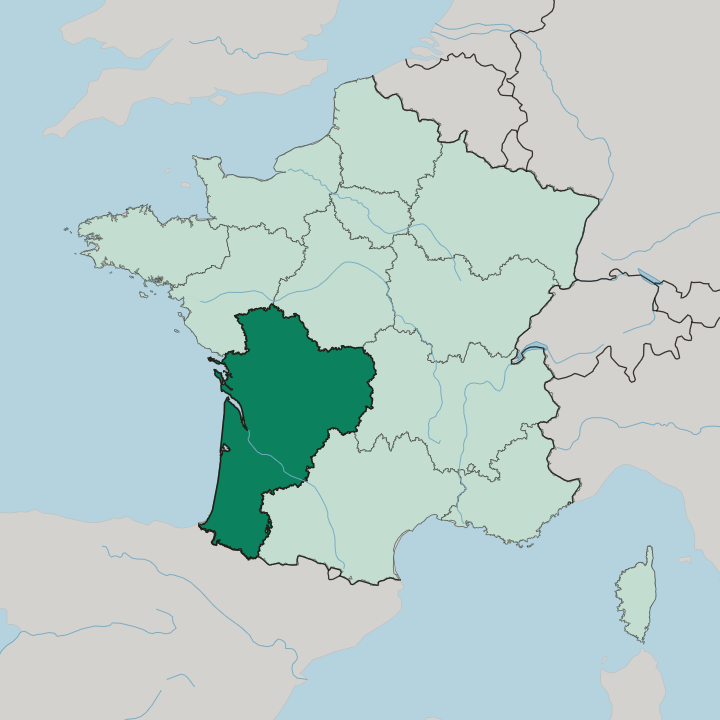
Nouvelle-Aquitaine is France's largest region, spread across the south-west from the Pyrenees to the Atlantic and centred on Bordeaux.
Hotel links are affiliate links: booking through them may earn us a commission, at no extra cost to you. It never affects how places are ranked. How this works


Towns & cities in Nouvelle-Aquitaine
Pick a town or city — each links to where to stay.
 France
Bordeaux
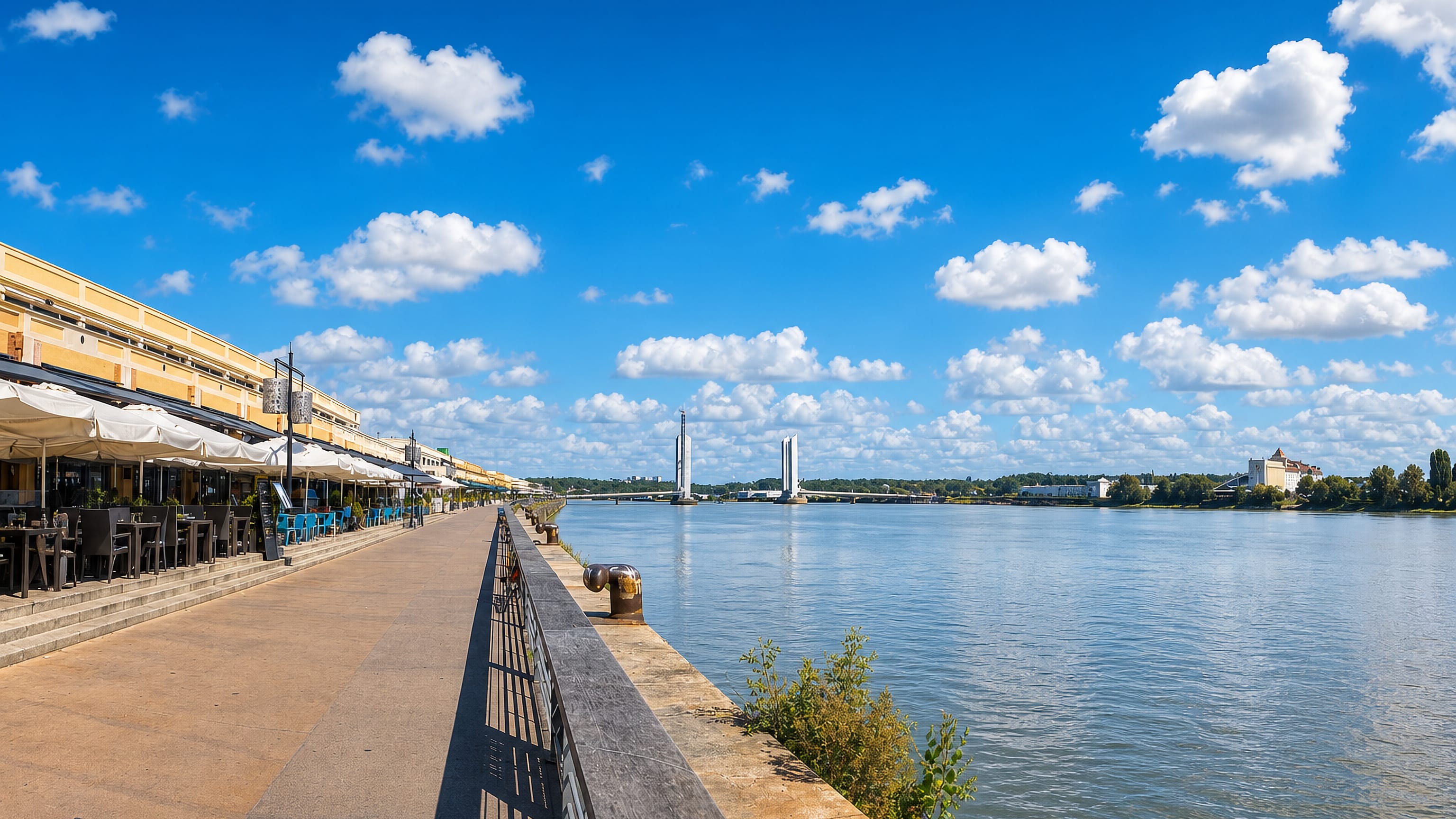
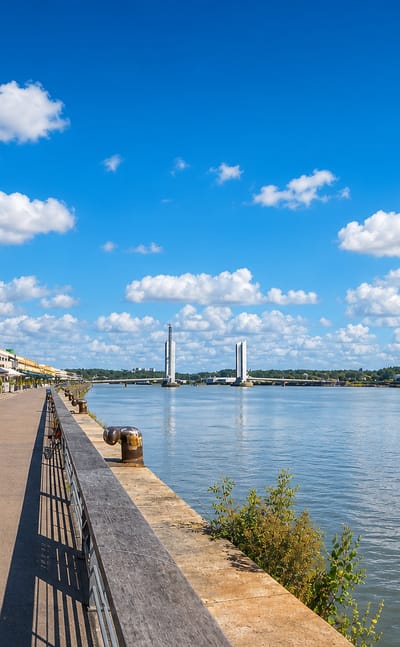
Pale limestone quays curve along the Garonne at Bordeaux, a port city in southwestern France, capital of Nouvelle-Aquitaine and known for the Cité du Vin.Where to stay →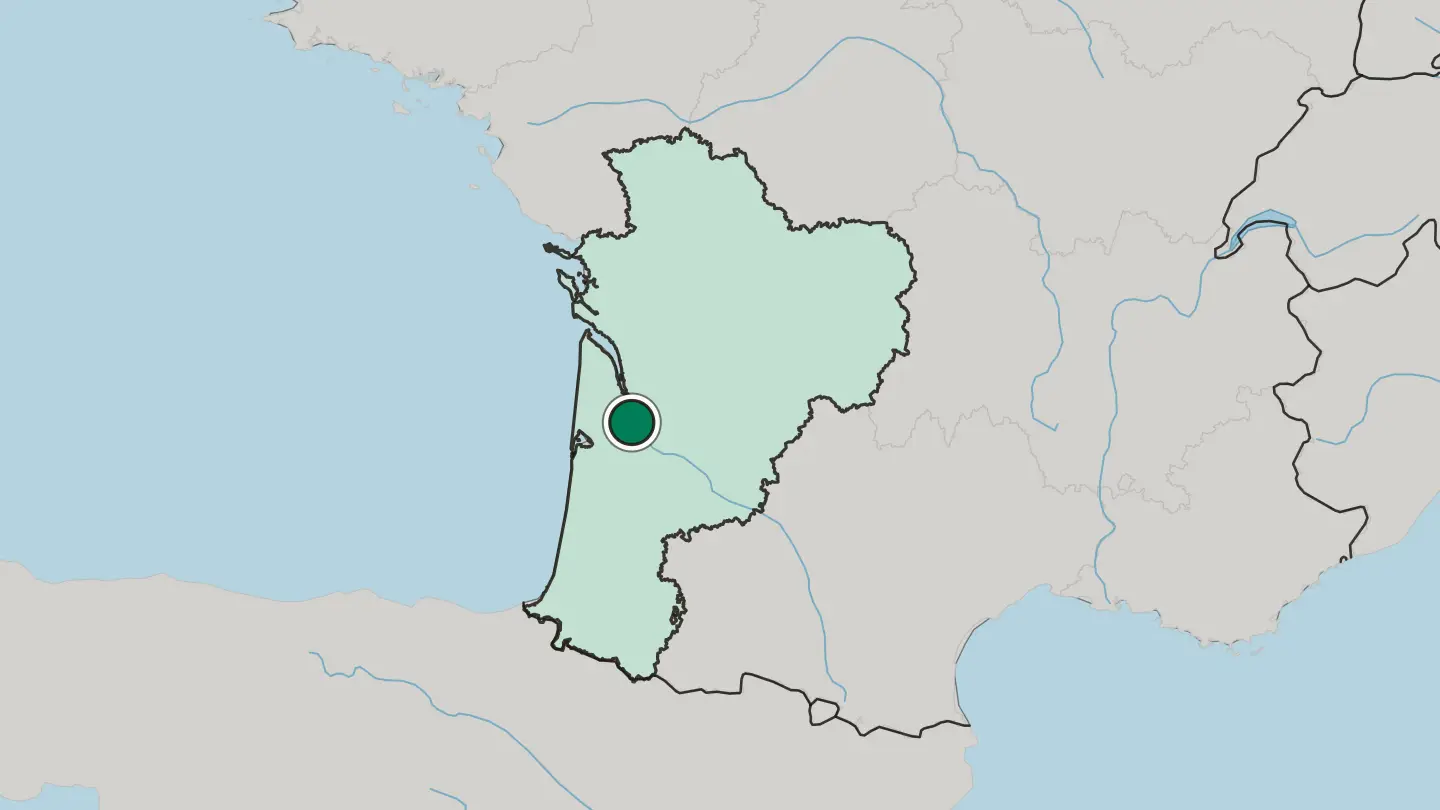
 France
Limoges
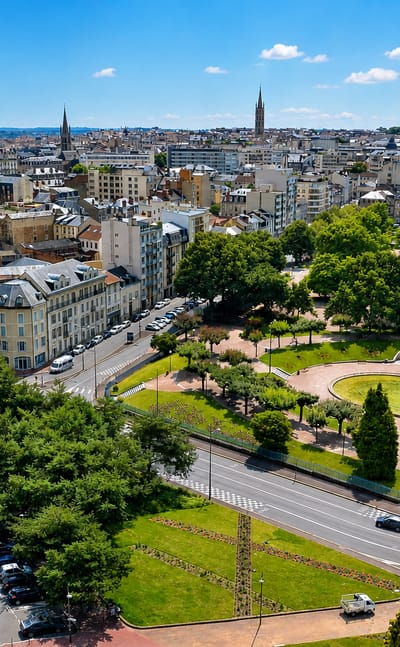
Limoges is a porcelain city in Nouvelle-Aquitaine, its trade told in the Adrien Dubouché National Museum on the site of Roman Augustoritum.Where to stay →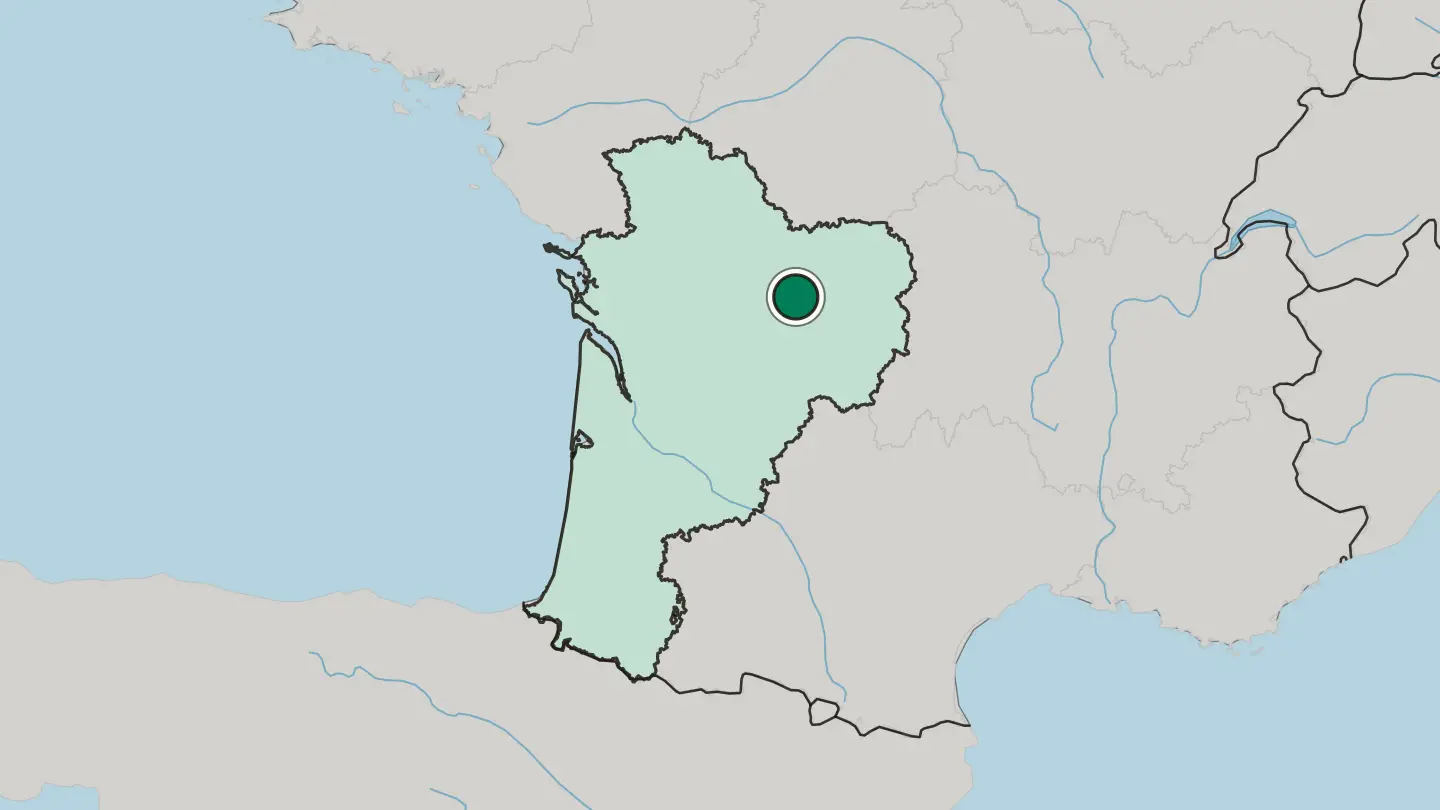
 France
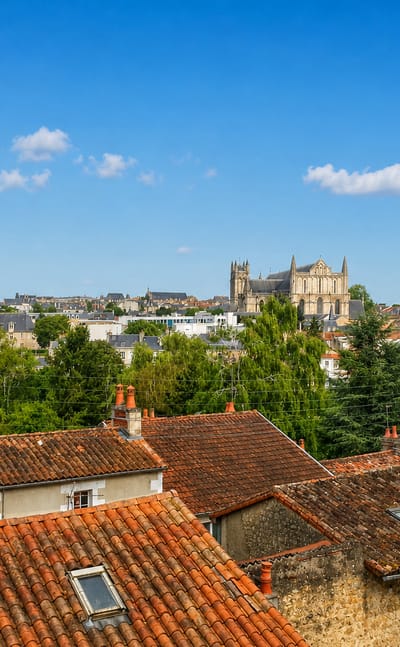
Poitiers
Poitiers is a university city on the river Clain in Nouvelle-Aquitaine, the old Poitou capital of a hundred bell-towers.Where to stay →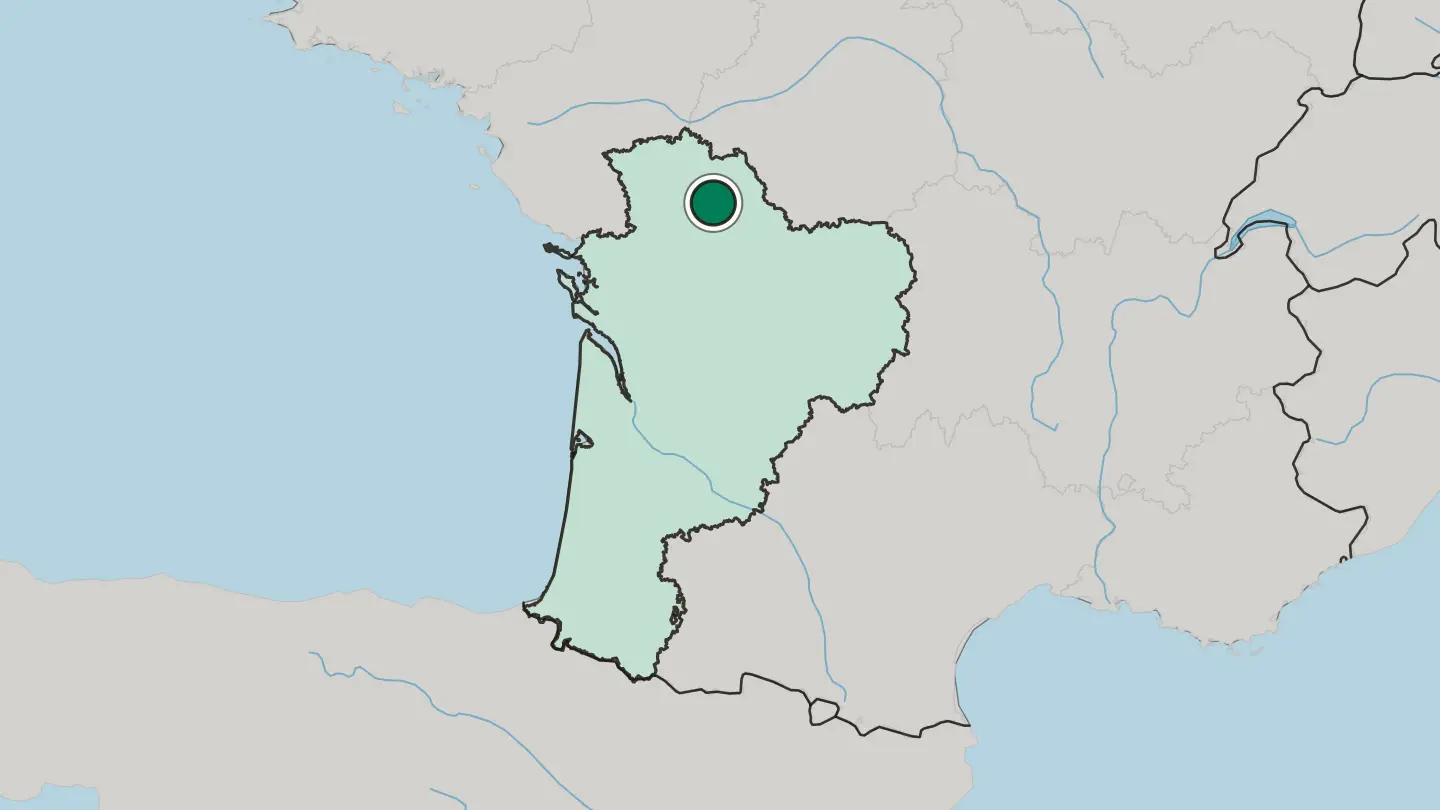 France
Pau
Pau is a city in Nouvelle-Aquitaine, the old capital of Béarn, gathered below the Musée national du château de Pau facing the Pyrénées.Where to stay →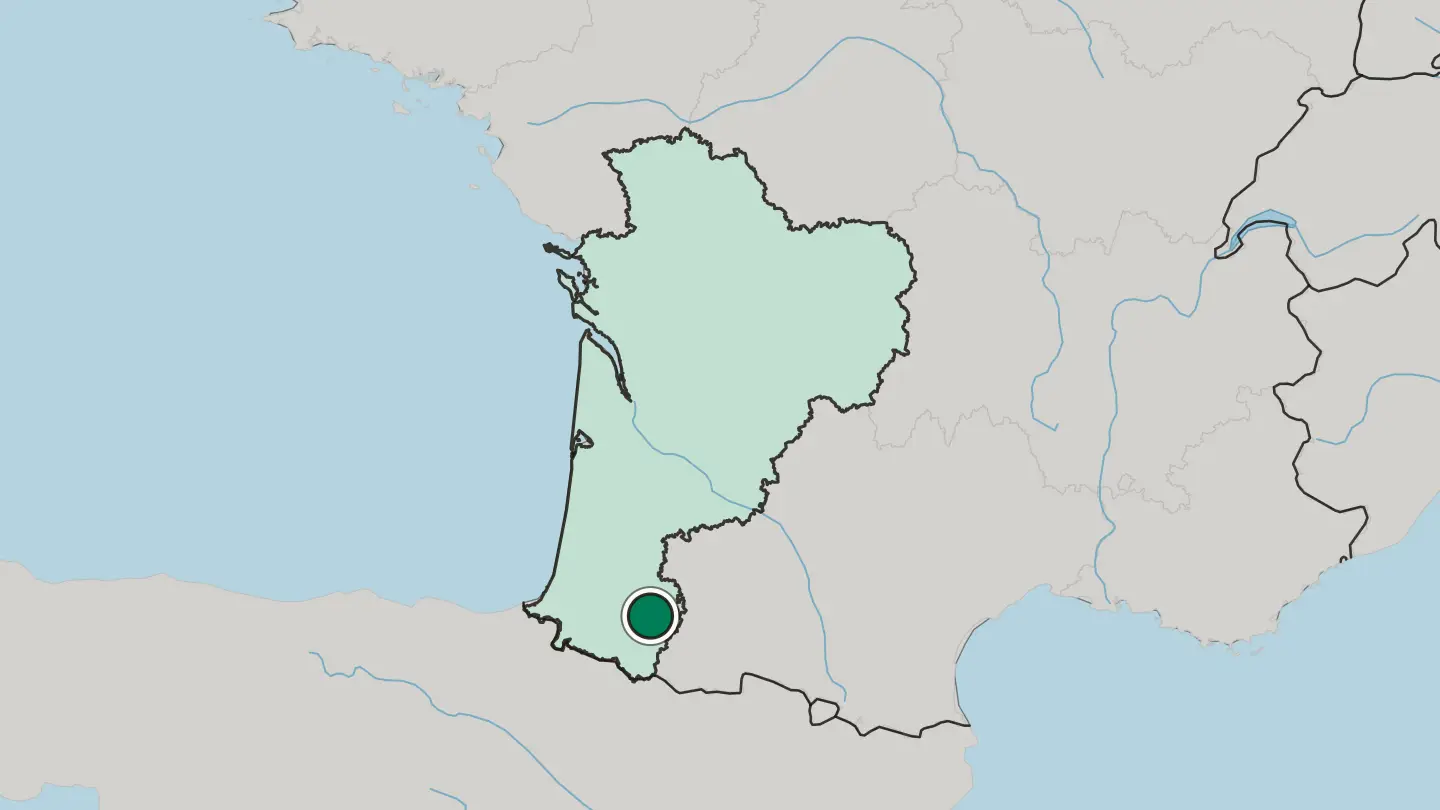
 France
La Rochelle
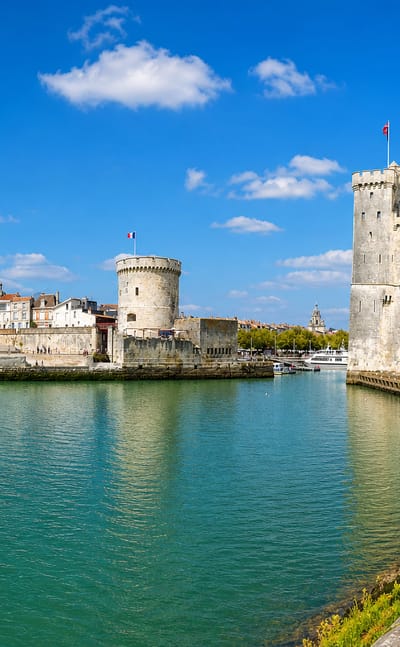
Two stone towers guard the old harbour at La Rochelle, a seaport on the Bay of Biscay in Nouvelle-Aquitaine, capital of Charente-Maritime.Where to stay →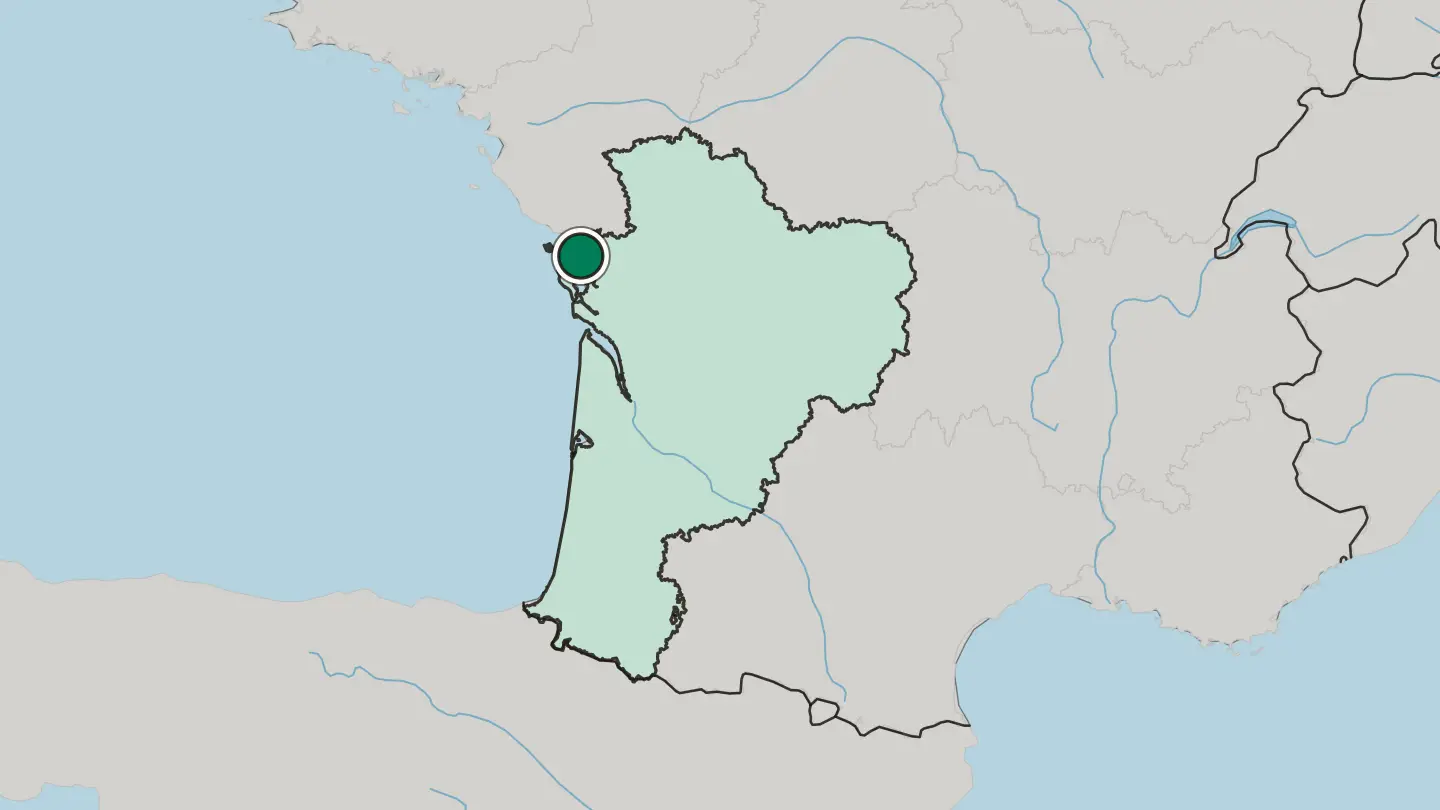
 France
Pessac
Pessac is a commune in the Gironde, the second-largest suburb of Bordeaux, holding the catalogued houses of rue Le Corbusier and rue Henry-Frugès.Where to stay →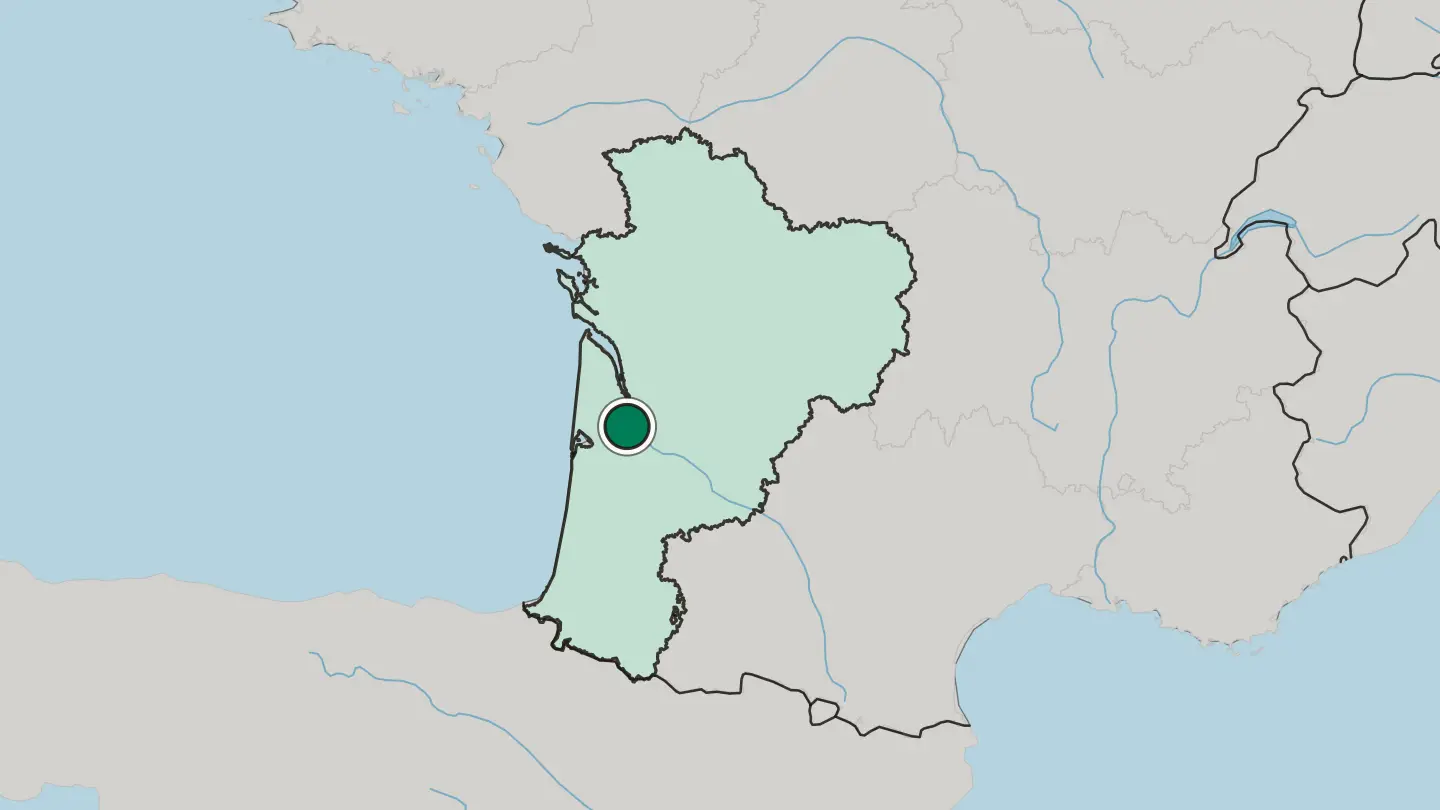 France
Niort
Niort is the old capital of the Deux-Sèvres in western France, a river town with a great keep at the edge of the Marais Poitevin.Where to stay →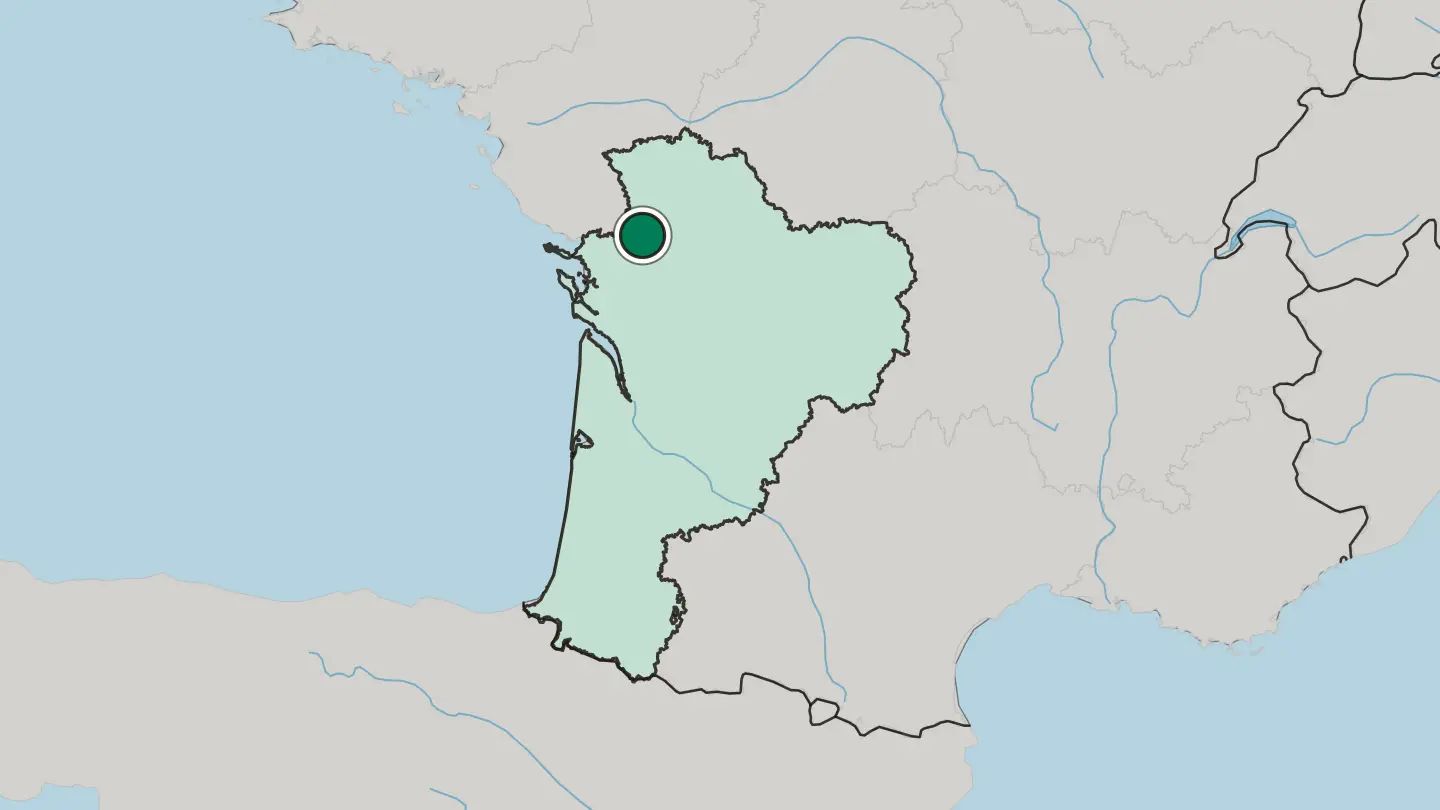
 France
Brive-la-Gaillarde
Brive-la-Gaillarde, largest town of the Corrèze, gathers its old centre around the Collégiale Saint-Martin and the Tour des Échevins.Where to stay →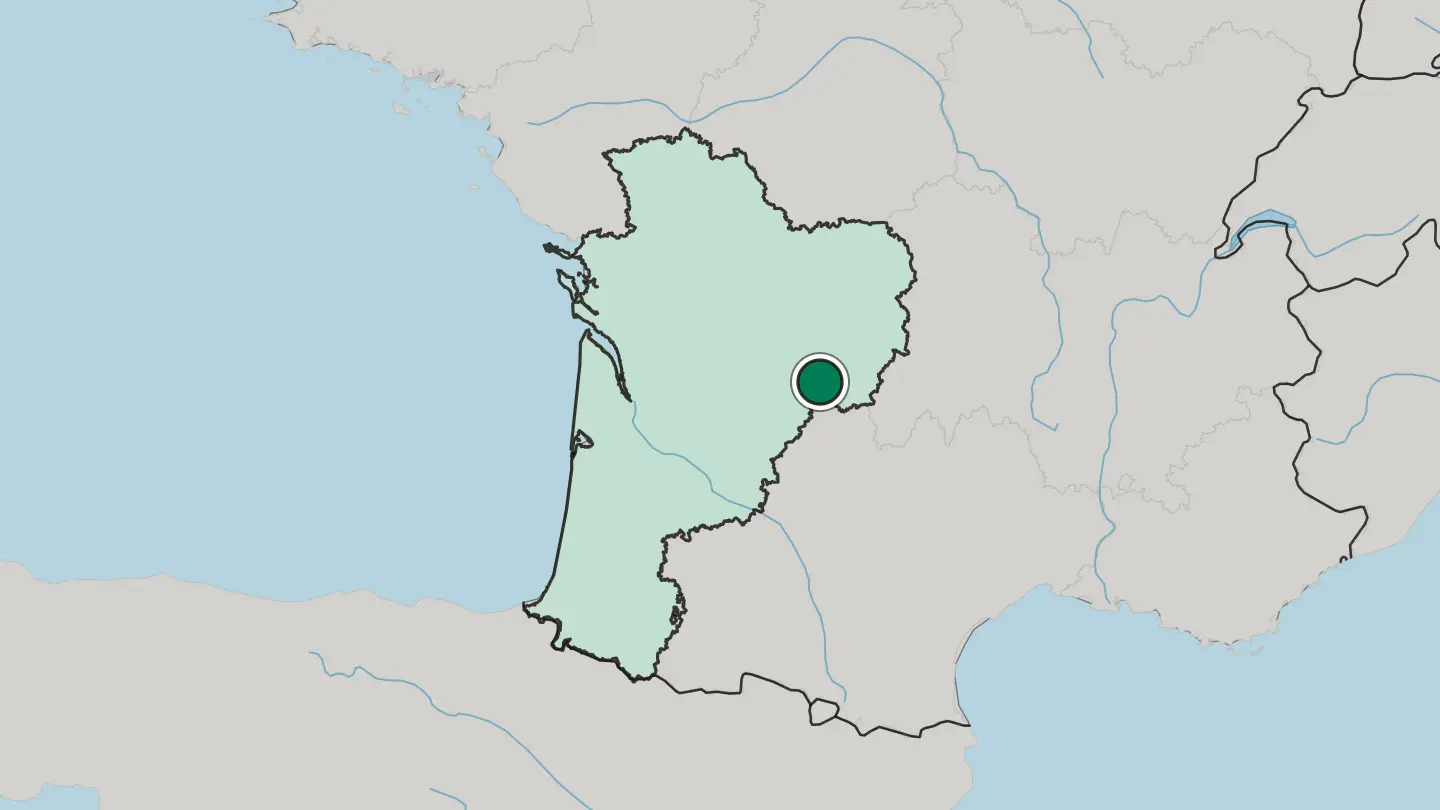
Hotel links are affiliate links: booking through them may earn us a commission, at no extra cost to you. It never affects how places are ranked. How this works
About Nouvelle-Aquitaine
Wine, first of all.
What is Nouvelle-Aquitaine known for?
The vineyards around Bordeaux and Saint-Émilion and the brandy stills of Cognac have carried the region's name far beyond France, and the Garonne that runs past Bordeaux to the Atlantic has moved that trade for centuries. Inland lies the Dordogne, home to the painted caves at Lascaux. The Atlantic edge draws surfers to Biarritz and the Basque coast, walkers to the pine forests of the Landes, and climbers up the high Dune du Pilat.
It is a large and varied stretch of country, part vineyard, part mountain, part shore.
Where is Nouvelle-Aquitaine?
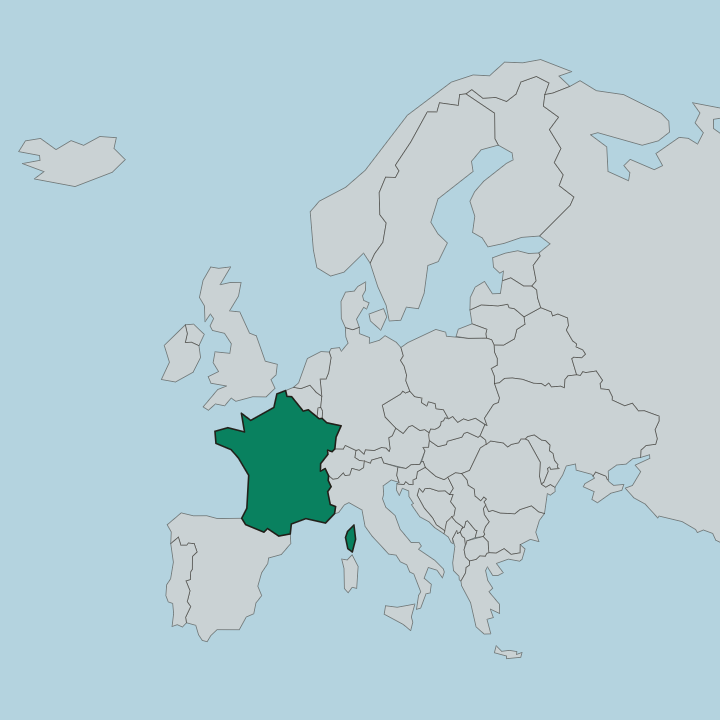
Nouvelle-Aquitaine fills the south-west corner of France, the largest of the country's regions by area. Its western edge is all Atlantic. Some 720 kilometres of shoreline face the Bay of Biscay, from the marshes and oyster bays of the Charente coast down to the Basque beaches on the border with Spain.
Behind that shore runs the Landes forest, close to a million hectares of planted maritime pine, the largest such forest in western Europe. The land is not flat everywhere. In the south the Pyrenees rise along the Spanish frontier, and in the east the Limousin plateau climbs toward the granite highlands of the Massif Central.
Between the two lies the broad Aquitaine Basin, drained by two great rivers. The Garonne comes down out of the Pyrenees and the Dordogne out of the Massif Central, and the pair meet just below Bordeaux to form the Gironde estuary. Along the straight Atlantic shore rise high dunes, the Dune du Pilat among them.
To the north the region reaches almost to the Loire valley, some 500 kilometres from the Pyrenees. Four French regions border it inland, and Spain closes it off in the south. Water and mountain frame nearly every edge.
What is Nouvelle-Aquitaine like?
Wine sits at the centre of how the region lives and eats. Bordeaux gave its name to a wine district of international renown, and the vineyards of the Médoc, Saint-Émilion and Pomerol spread out along the Garonne and the Dordogne. Cognac, on the Charente to the north, distils its brandy from the same Atlantic vineyards.
The table follows the vine. This is foie gras and duck country, oysters from the Arcachon and Marennes-Oléron beds, lamb from the Pyrenean slopes and salt-cured ham from the Basque south. The south keeps its own language and games.
In the Basque country near the Spanish border, Basque is still spoken, pelota is played against the fronton wall, and the surf towns around Biarritz have grown into a distinct Atlantic culture of their own. Inland the mood is older and quieter. The Dordogne valley holds the painted caves of Lascaux, and stone villages perch above the river between walnut groves and vineyards.
The Limousin plateau in the east runs to oak and chestnut woods, cattle pasture and the porcelain workshops of Limoges. French is the common tongue across all of it. But the accents, the food and the festivals shift as you cross the region, coast to mountain and vineyard to plateau.
What is the history of Nouvelle-Aquitaine?
The name Aquitaine is Roman. Bordeaux, then Burdigala, was capital of the province of Aquitania that Augustus laid out from the Pyrenees to the Loire. In the Middle Ages the land became the powerful Duchy of Aquitaine, and when Eleanor of Aquitaine married Henry II in 1152 the duchy passed to the English crown and stayed contested for three centuries.
The modern region is new. It took its present shape in 2016, when Aquitaine, Limousin and Poitou-Charentes were merged into a single administrative region, the largest in France.
What is the climate of Nouvelle-Aquitaine?
The Atlantic sets the weather here. Along the coast from the Charente to the Landes the climate is mild and sunny, with warm summers, soft winters and rain spread through the year off the Bay of Biscay. Push south toward the Basque country and the Pyrenean foothills catch the rolling Atlantic fronts, so that corner runs greener and much wetter than the rest.
Inland the Limousin plateau, higher and away from the sea, turns colder in winter and cooler in summer. Sunshine is the region's long suit.
How do you get to Nouvelle-Aquitaine?
Bordeaux, the region's only metropolis, is the gateway. Its airport and rail hub on the Garonne carry the traffic, and from there fast trains run north to Paris and out across the region to Limoges, Poitiers and the Atlantic coast. Coming from the south means crossing the Pyrenees or following the shore up from Spain, which meets the region at the Basque border.
Ferries and coastal road link the seaside towns. Inland the going is slower toward the Massif Central.
Common questions
What is the best area to stay in Nouvelle-Aquitaine?
Bordeaux: wine and the city on the Garonne. The Basque coast: surfing and the Pyrenean south. The Dordogne valley: cave country and river villages. The Landes and Gironde coast: pine forest and open Atlantic beaches.
Good for
More regions in France
Updated October 2026