France · Provence-Alpes-Côte d'Azur
Where to Stay in Arles, Provence-Alpes-Côte d'Azur
Arles is a city in Provence, in the Bouches-du-Rhône department, known for its Roman monuments and the Church of St. Trophime, together listed by UNESCO.
Hotel links are affiliate links: booking through them may earn us a commission, at no extra cost to you. It never affects how places are ranked. How this works





Where to stay in Arles
Where visitors usually base themselves, and why.
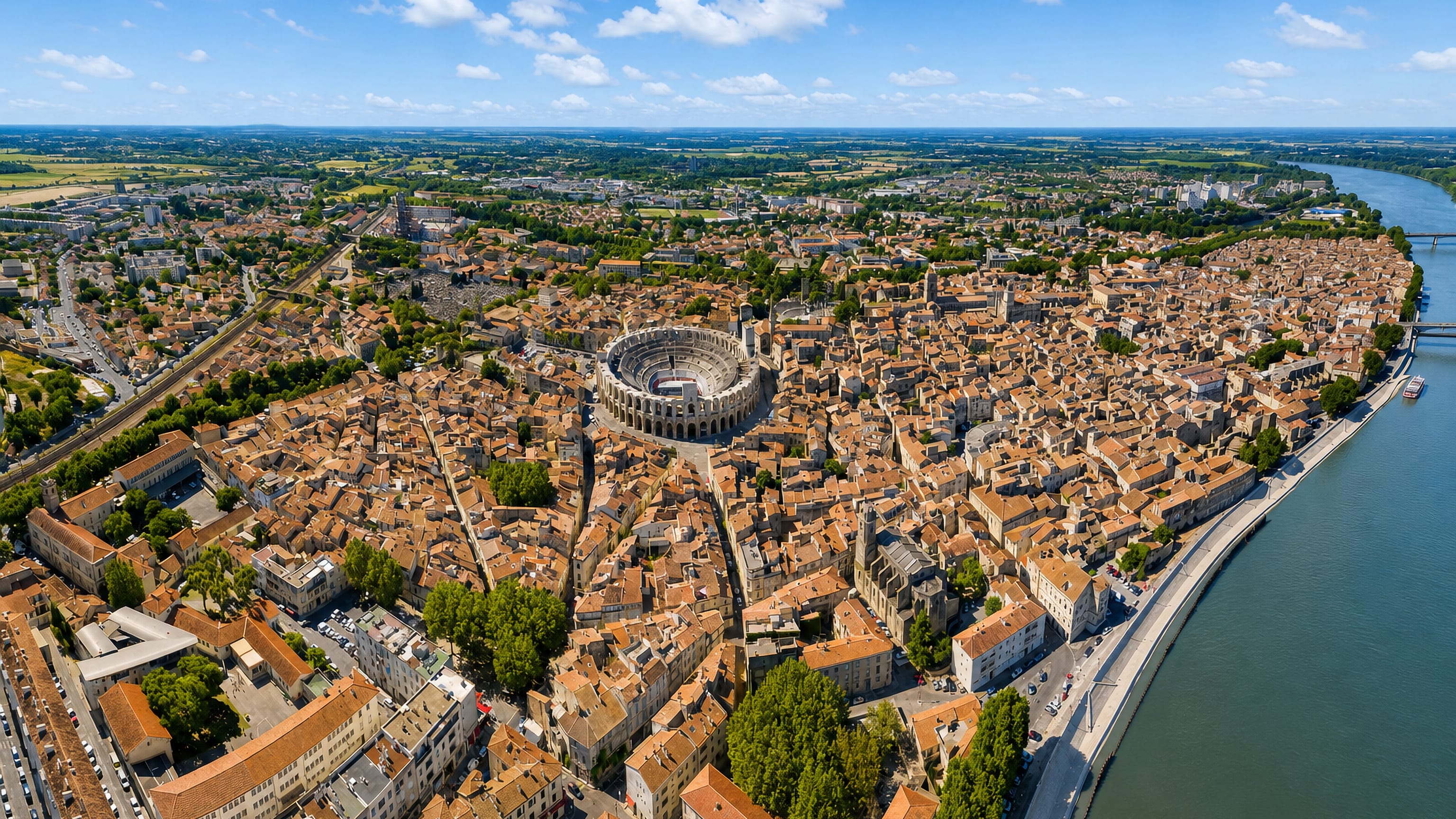
Arles keeps its lodging close to the Roman core, so where you stay is mostly a question of how near the monuments you want to be. The old town wraps the Arles Amphitheatre and the Gallo-Roman theatre in a knot of narrow Provençal streets, with the Church of St. Trophime and its cloister a short walk on. Base yourself here to reach everything on foot.
Rooms fill the lanes between the amphitheatre and the central squares, and the museums of the old quarter sit within easy reach. The quieter southern edge runs down toward the Alyscamps, the tree-lined Roman burial road lined with old sarcophagi, a calmer base still inside the town. Alyscamps lines the southern edge.
West of the historic centre, the ground opens toward the flat country that Arles governs across the Bouches-du-Rhône, where hotels give more space and parking away from the crowded core. Stay near the amphitheatre if you want the ruins and the evening life around them at your door, or out toward the Museon Arlaten for the Provençal quarter. Little in the old town lies more than a few minutes' walk apart.
The whole Roman circuit closes into a single day on foot.
Find hotels in Arles
Direct booking searches for these neighbourhoods.
Old town around the Amphitheatre
The Roman core knots its narrow Provençal lanes around the arena, with the cloister of the Church of St. Trophime minutes awayFind hotels in Old town around the AmphitheatreA calmer base beside the sarcophagi of the Roman burial roadSouthern edge by the Alyscamps
The tree-lined Alyscamps burial road runs down from the town, quieter than the arena yet still inside historic ArlesFind hotels in Southern edge by the AlyscampsStaying in the Provençal-collections district with more room than the arena lanesMuseon Arlaten quarter
The streets around the Museon Arlaten give the culture of Provence with easier space and parking off the crowded coreFind hotels in Museon Arlaten quarterHotel links are affiliate links: booking through them may earn us a commission, at no extra cost to you. It never affects how places are ranked. How this works
Things to do in Arles
Ranked by global recognition; descriptions from Wikidata (CC0).
Museums & Galleries
2- Musée départemental de l'Arles antique
- Musée Réattu
Churches & Religious Sites
8- Church of St. Trophime, Arles Heritage
- Église Notre-Dame-de-la-Major d'Arles Heritage
- église Sainte-Anne d'Arles Heritage
- Église des Dominicains d'Arles Heritage
- Église Saint-Césaire d'Arles Heritage
Show 3 more →
- Église Saint-Julien d'Arles Heritage
- Temple protestant d'Arles Heritage
- prieuré Saint-Pierre-et-Saint-Paul des Mouleyrès (Arles) Heritage
Castles & Historic Sites
6- Arles, Roman and Romanesque Monuments UNESCO
- Arles Amphitheatre Heritage
- The Alyscamps Heritage
- Gallo-Roman theatre at Arles Heritage
- Ancient Roman circus of Arles Heritage
Show 1 more →
- Archaeological site of the Verrerie Heritage
Landmarks & Notable Places
2- Hôtel de Lalauzière Heritage
- Tower of Roland
worth knowingacross 4 categories in Arles
About Arles
What is Arles known for?
Arles is known for its Roman remains, gathered under the UNESCO listing of the Arles, Roman and Romanesque Monuments. The Arles Amphitheatre still stands. Around it sit the Gallo-Roman theatre and the Alyscamps, the old Roman burial road lined with sarcophagi, while the Romanesque portal of the Church of St. Trophime marks the medieval town.
The Museon Arlaten holds the Provençal collections that fix the city in the culture of Provence.
What are the main landmarks in Arles?
Arles centres on its Roman and Romanesque monuments. The Arles Amphitheatre, a two-tier arena, dominates the old town. The Gallo-Roman theatre and the Ancient Roman circus survive nearby, and the Alyscamps carries its sarcophagi along a Roman road, while the Romanesque Church of St. Trophime keeps its carved west portal and cloister.
Inside the town, the Museon Arlaten, the Musée Réattu and the Musée départemental de l'Arles antique hold the Provençal and Roman collections.
What is the history of Arles?
Arles began as the Roman town of Arelate, and that origin still shapes the city. The stone proves it. The Arles Amphitheatre, the Gallo-Roman theatre and the Ancient Roman circus were raised when Arelate was a working Roman city on the trade routes of Provence, and their walls have stood through every age since.
Around them the Alyscamps grew as a Christian burial road, its sarcophagi lining the way out of town. In the Romanesque centuries Arles built the Church of St. Trophime, whose carved portal and cloister set it among the great works of southern French building. These Roman and Romanesque monuments were later listed together by UNESCO as a single World Heritage ensemble.
The old province of Provence left its Provençal culture on the town, gathered generations later into the collections of the Museon Arlaten. That heritage endures. A subprefecture of the Bouches-du-Rhône, Arles governs a wide territory of flat country beyond its walls, but its core remains the compact Roman grid where Arelate first stood.
Where is Arles?
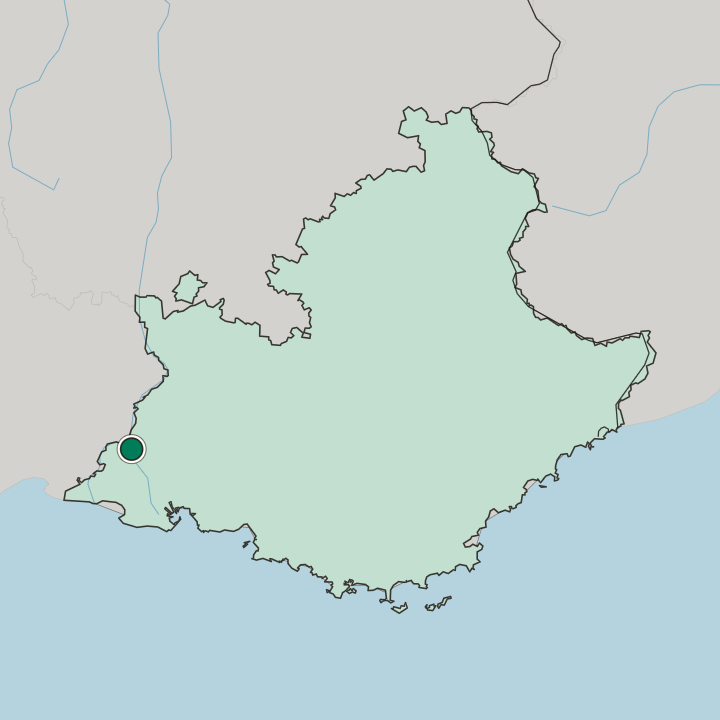
Arles lies in the Bouches-du-Rhône department of the Provence-Alpes-Côte d'Azur region, in the old province of Provence. Its reach is vast. The commune spreads across an unusually wide expanse of flat, low-lying country running south of the historic centre toward the coast, making it one of the largest communes in France by area.
The compact old town holds the Roman monuments on slightly higher ground. Beyond the walls, the open plain takes over.
What is the climate of Arles?
Arles has a Mediterranean climate, shaped by the flat country of Provence around it. Its summers bake dry. Winters stay mild, and the dry northerly wind that funnels down the Bouches-du-Rhône plain blows hardest in the colder months, clearing the sky and pressing across the open ground toward the coast.
Rain comes mainly in autumn and spring, leaving long bright spells over the Roman town.
How do you get to Arles?
Arles sits on the rail network of southern France, its station a short walk from the old town and the Arles Amphitheatre. Trains link it across the Bouches-du-Rhône and the wider Provence-Alpes-Côte d'Azur region toward the larger cities of the coast, while roads cross the surrounding plain to the neighbouring towns of Provence. Walking does the rest.
From the station, the Roman monuments all lie within an easy stroll of one another.
Common questions
What is the best area to stay in Arles?
Old town around the Amphitheatre: Reaching the Arles Amphitheatre, the Gallo-Roman theatre and St. Trophime on foot. Southern edge by the Alyscamps: A calmer base beside the sarcophagi of the Roman burial road. Museon Arlaten quarter: Staying in the Provençal-collections district with more room than the arena lanes.
Good for
More cities in Provence-Alpes-Côte d'Azur
Updated September 2026