France · Provence-Alpes-Côte d'Azur
Where to Stay in Toulon, Provence-Alpes-Côte d'Azur
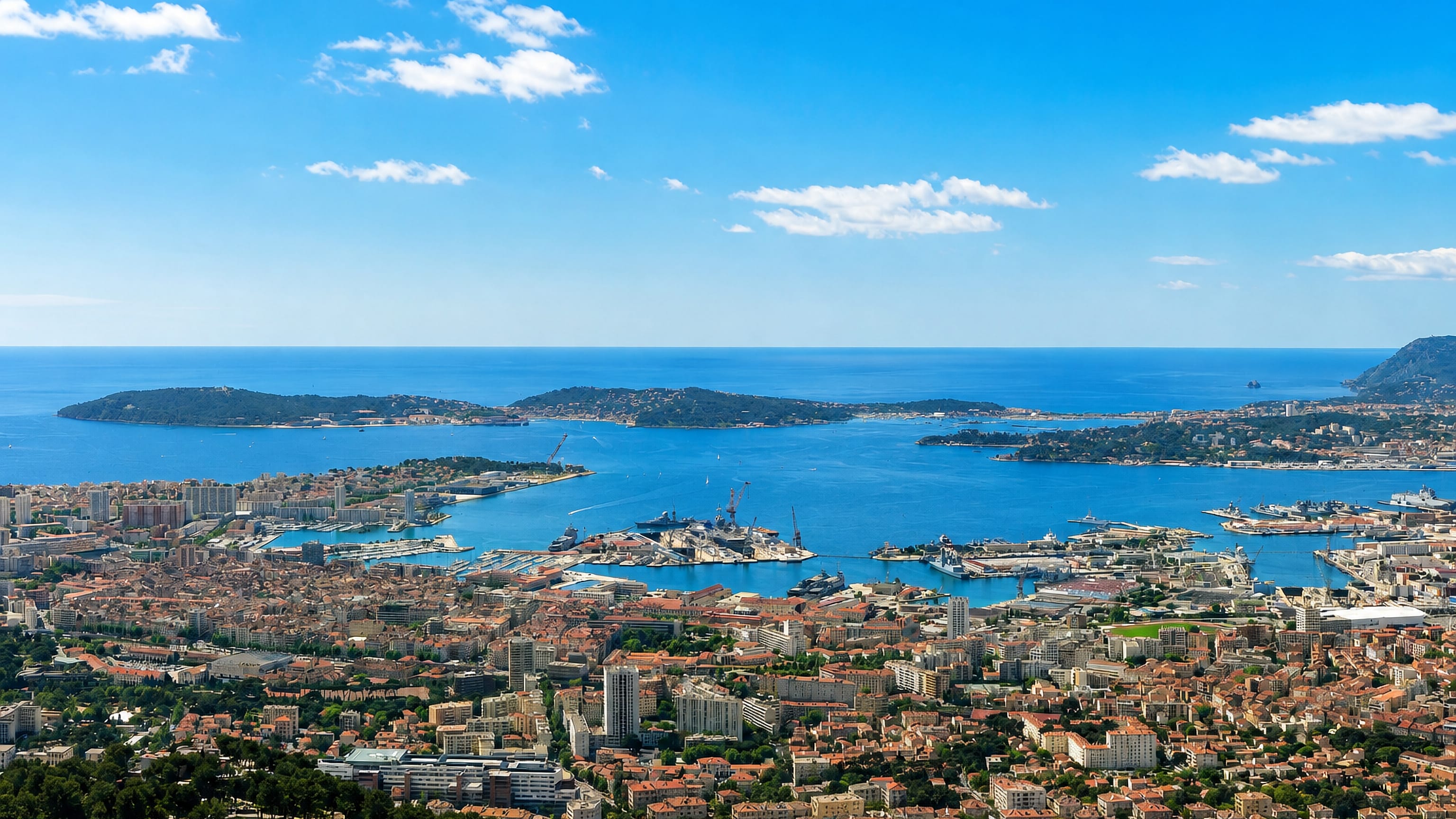
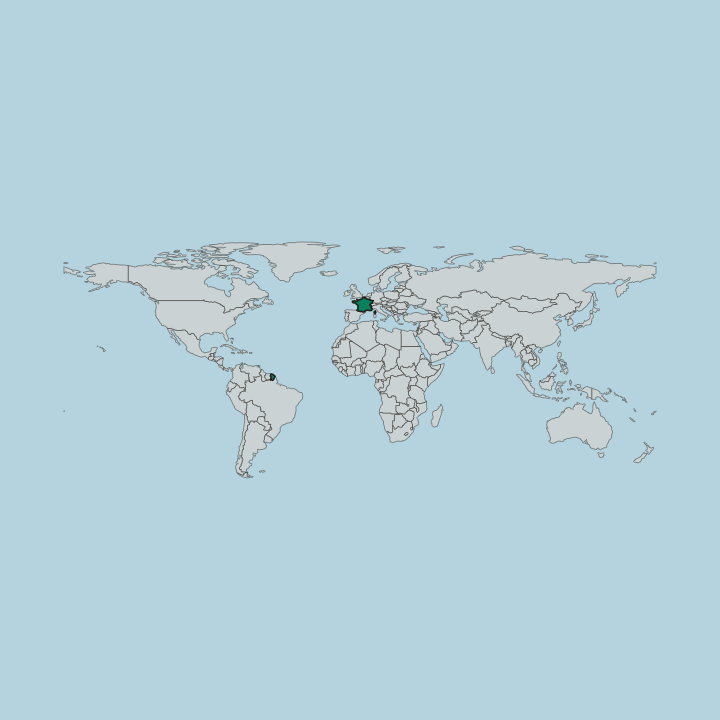
Toulon is a naval port on the French Riviera in the Var, on the Gulf of Lion between Marseille and Nice, known for its harbour and Mont Faron above it.
Hotel links are affiliate links: booking through them may earn us a commission, at no extra cost to you. It never affects how places are ranked. How this works


Where to stay in Toulon
One neighbourhood here has its own guide — here's what it is best for.

 ToulonFrance
Le Mourillon
Le Mourillon is a former fishing village east of Toulon, holding Fort Saint Louis, the Plages du Mourillon and a small port on the Rade.Where to stay →Hotel links are affiliate links: booking through them may earn us a commission, at no extra cost to you. It never affects how places are ranked. How this works
Find hotels in Toulon
Direct booking searches for these neighbourhoods.
Old port and harbour front
The old port forms the heart of Toulon, with ferries, cafes and the maritime museum a few steps from the doorFind hotels in Old port and harbour frontThe covered market and the Musée d'Art de Toulon on footOld town lanes below the market
The lanes climb inland from the harbour toward the town market and the art museum, central yet a step back from the quaysFind hotels in Old town lanes below the marketA greener, calmer base near the cable car and the war memorialSlopes below Mont Faron
The upper districts run to the foot of Mont Faron, where the cable car reaches the zoo and the Memorial of the landing in Provence above the bayFind hotels in Slopes below Mont FaronHotel links are affiliate links: booking through them may earn us a commission, at no extra cost to you. It never affects how places are ranked. How this works
Things to do in Toulon
Ranked by global recognition; descriptions from Wikidata (CC0).
Museums & Galleries
3- Memorial of the landing in Provence Heritage
- Musée d'Art de Toulon
- Musée des arts asiatiques de Toulon
Churches & Religious Sites
3- Église Saint-François-de-Paule de Toulon Heritage
- Église Saint-Louis de Toulon Heritage
- église Saint-Pie-X de Toulon
Castles & Historic Sites
1- Toulon (Samian Ware Discovery Site)
Stadiums & Sports
3- Stade Mayol
- Bon Rencontre Stadium
- Zénith de Toulon
worth knowingacross 4 categories in Toulon
About Toulon
What is Toulon known for?
Toulon is known for its harbour, a deep natural bay that holds one of the great naval ports of the Mediterranean and a busy marina for cruise ships. The National Maritime Museum tells that story. Above the town rises Mont Faron, the wooded height reached by cable car and home to the Zoo du Mont Faron, while the Memorial of the landing in Provence marks the wartime past on its slopes.
Rugby at Stade Mayol gives the city its other loyalty.
What are the main landmarks in Toulon?
Toulon sets its landmarks between the harbour and the mountain. The National Maritime Museum stands on the old port, telling the naval story of the bay. Mont Faron rises behind the town, reached by cable car to the Zoo du Mont Faron and the Memorial of the landing in Provence.
In the streets below sit the Musée d'Art de Toulon, the Muséum départemental du Var and the Musée des arts asiatiques, while the church of Saint-Louis marks the old centre.
What is the history of Toulon?
Toulon grew around its harbour, and the sea made the city. The bay decided everything. A deep, sheltered natural anchorage on the Gulf of Lion, it became one of the principal naval ports of the Mediterranean, and the arsenals and quays around the old port shaped the town that spread inland from the water.
Mont Faron, rising sharply behind, gave the harbour its natural shield and its lookout over the approaches. Provence held Toulon within its old province, and the city later became the prefecture of the Var department that surrounds it. Its wartime history is written into the ground on Mont Faron, where the Memorial of the landing in Provence records the campaign along this coast.
The naval port has always set the rhythm of the place, from the arsenal streets to the fleet in the bay. Around that working harbour the museums grew, the National Maritime Museum on the water and the art and natural-history collections in the old centre, so the city reads as a port first and a Riviera town second.
Where is Toulon?
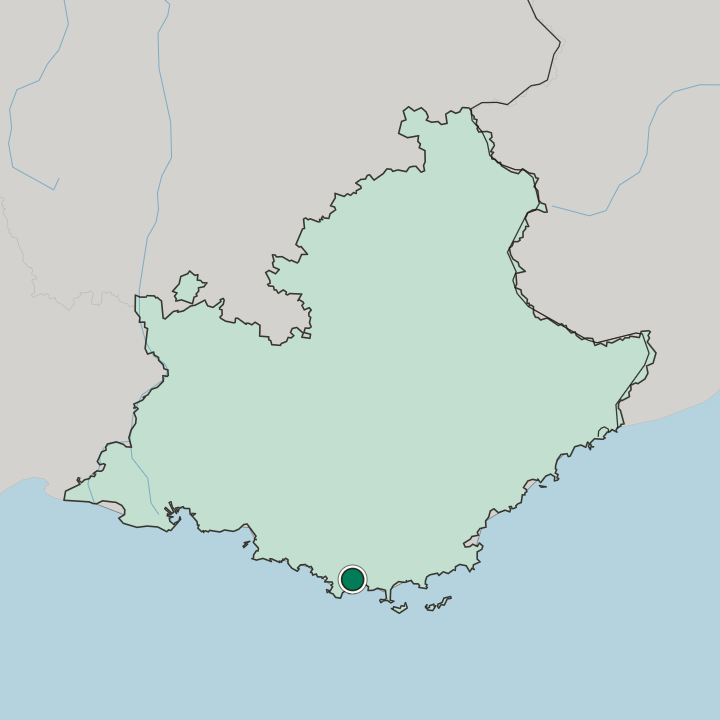
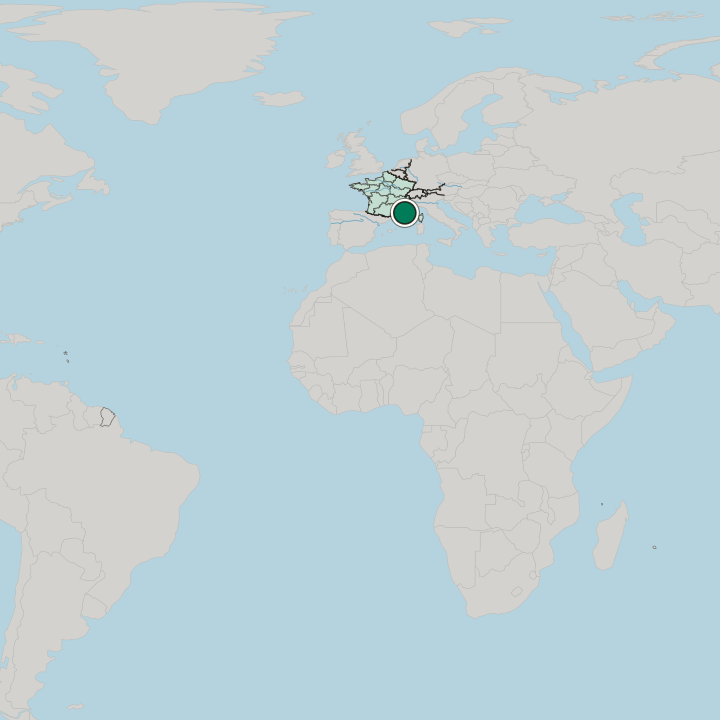
Toulon sits on the French Riviera at the eastern end of the Gulf of Lion, between Marseille to the west and Nice to the east. A deep natural bay opens the city to the Mediterranean, sheltered by headlands and by the steep bulk of Mont Faron rising directly behind the town. The old port fills the inner harbour.
Beyond the ridges the Var department spreads inland from the coast.
What is the climate of Toulon?
Toulon has a Mediterranean climate, among the sunniest on the French Riviera. Its summers run hot and parched. Winters stay mild along the sheltered bay, warmed by the sea and shielded from the north by the wall of Mont Faron, though the wind can funnel hard down the coast in the cooler months.
Rain falls mainly in autumn and spring, leaving long clear spells over the harbour.
How do you get to Toulon?
Toulon lies on the coastal rail line of the French Riviera, its station a short walk from the old port. Trains link it west to Marseille and east through the Var toward Nice, while the motorway shadowing the same coast carries road traffic between the larger cities of the region. Ferries and cruise ships put in at the harbour itself.
A cable car climbs from the town to the top of Mont Faron. The port district stays walkable.
Common questions
What is the best area to stay in Toulon?
Old port and harbour front: Waking beside the marina, the cruise quays and the National Maritime Museum. Old town lanes below the market: The covered market and the Musée d'Art de Toulon on foot. Slopes below Mont Faron: A greener, calmer base near the cable car and the war memorial.
Good for
More cities in Provence-Alpes-Côte d'Azur
Updated October 2026