Indonesia
East Nusa Tenggara, Indonesia — Towns & Travel Guide
East Nusa Tenggara is Indonesia's southernmost province, a dry arc of islands running from Flores and Sumba to the western half of Timor.
Hotel links are affiliate links: booking through them may earn us a commission, at no extra cost to you. It never affects how places are ranked. How this works


Towns & cities in East Nusa Tenggara
One town here has its own guide — it links to where to stay.

 Indonesia
Kupang
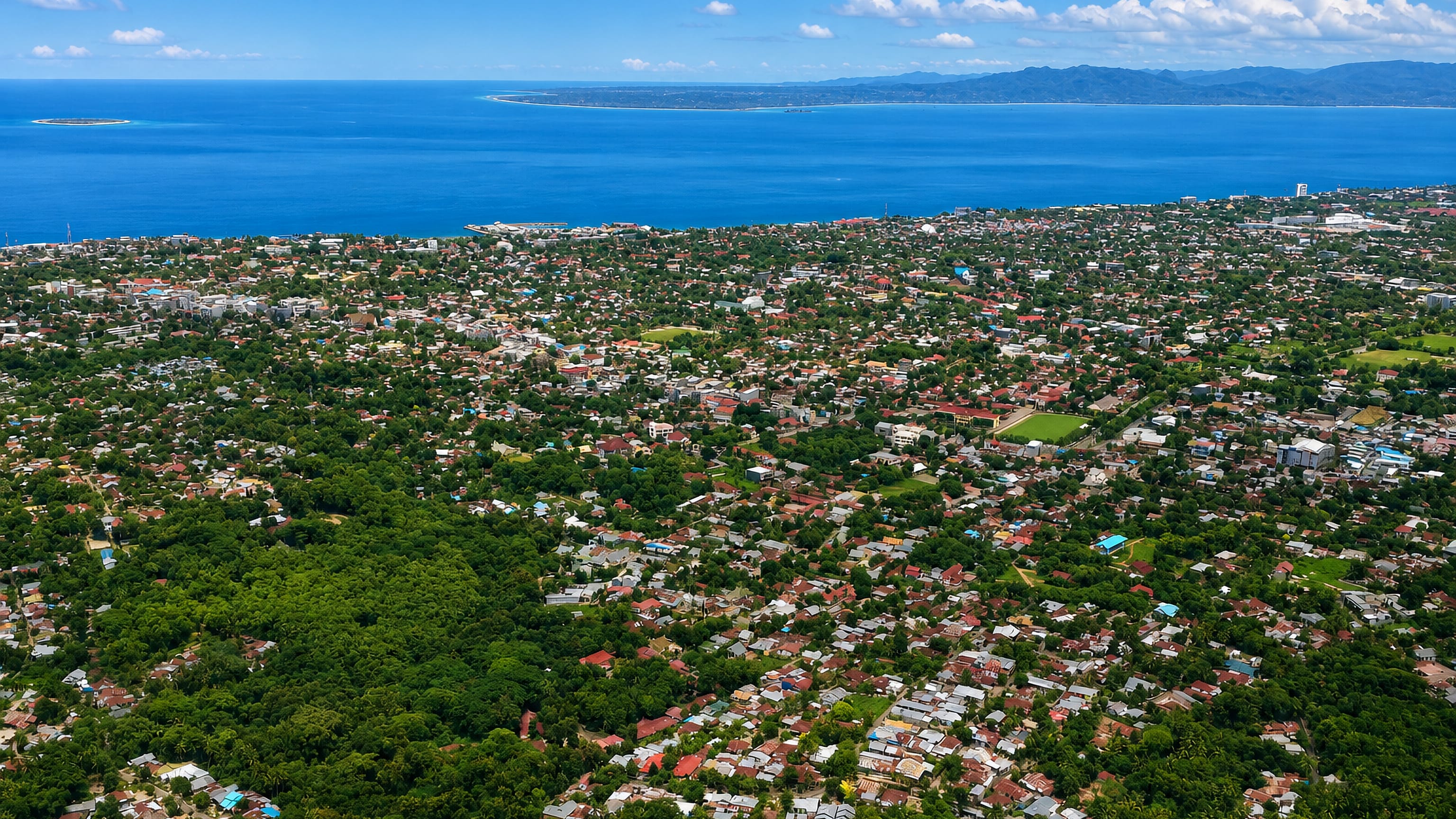
Kupang is the capital of East Nusa Tenggara, the largest city and port on Timor, with a white-sand beach along its own coast.Where to stay →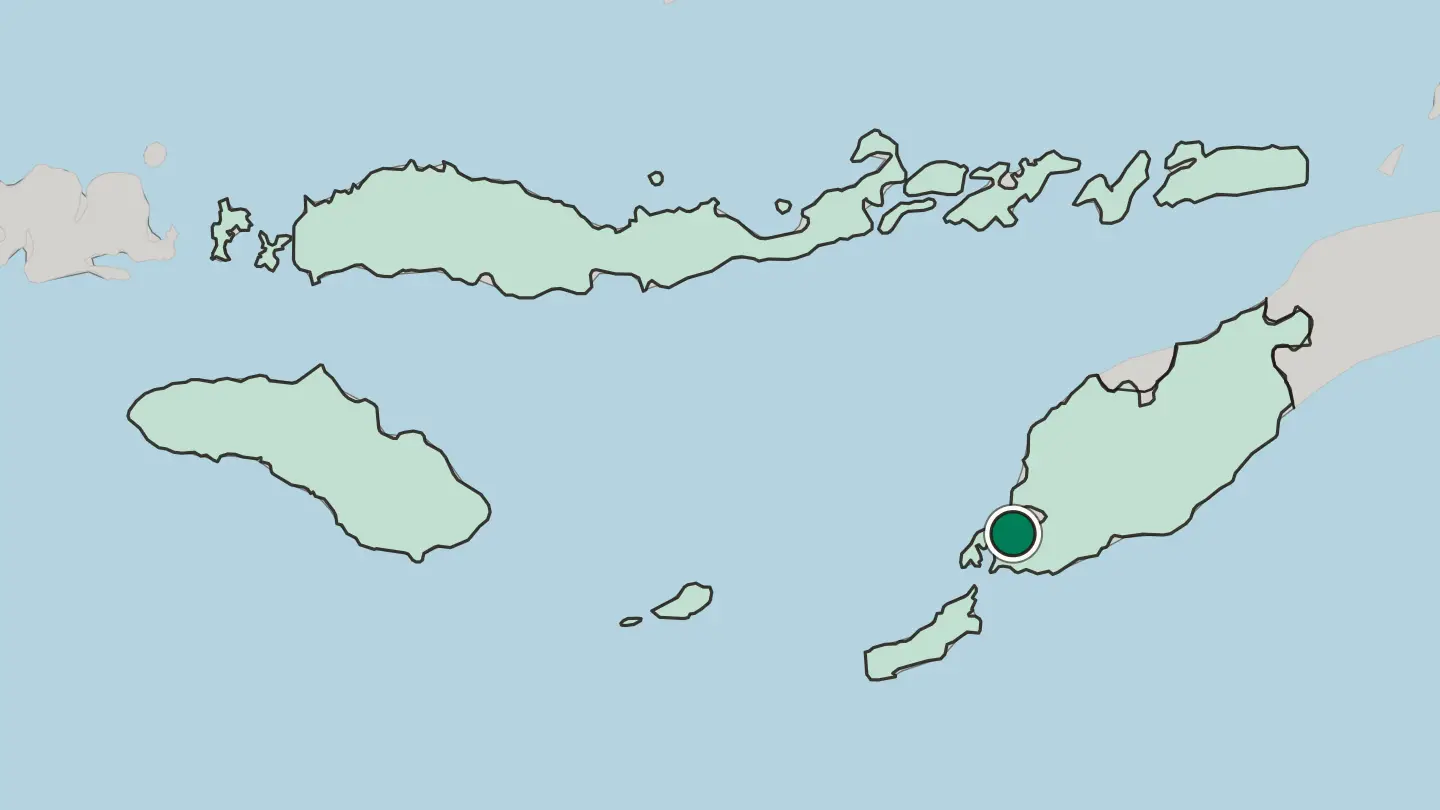
Hotel links are affiliate links: booking through them may earn us a commission, at no extra cost to you. It never affects how places are ranked. How this works
About East Nusa Tenggara
Dragons made the name.
What is East Nusa Tenggara known for?
Komodo National Park, off the western tip of Flores, shelters the Komodo dragon, the largest living lizard on Earth, and draws divers to its reefs. Boats leave from Labuan Bajo. Inland on Flores the volcano Kelimutu holds three crater lakes that shift between turquoise, green and black, while Sumba is known for its ikat weaving and the Pasola, a mounted spear festival.
Kupang anchors the province on Timor.
Where is East Nusa Tenggara?
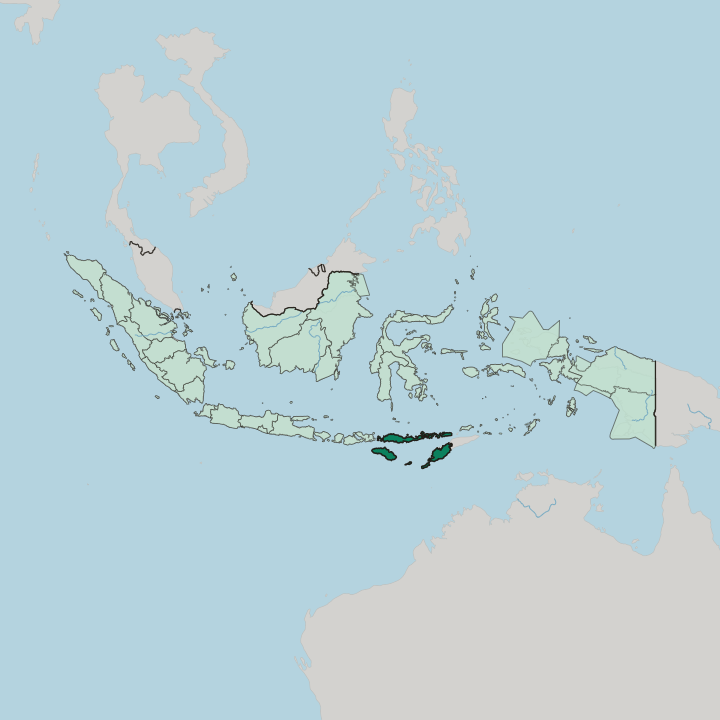
East Nusa Tenggara fills the eastern end of the Lesser Sunda Islands, the chain that trails away from Bali toward the Timor Sea. Its territory is water as much as land. Some six hundred islands make up the province, but three carry most of it: Flores in the north, Sumba to the south-west, and the western half of Timor in the south-east.
Alor, Lembata and Rote round out the larger ones, and Rote is the southernmost inhabited island of the whole country. Komodo and Rinca sit off the western end of Flores. The Flores Sea washes the northern coasts, while the Savu Sea and the open Indian Ocean lie to the south.
Kupang, the capital, stands on the south-western tip of Timor. The one land border in the province runs across Timor, where the western regencies meet the separate country of Timor-Leste. Terrain is rugged and volcanic on Flores, where Kelimutu and a line of cones rise along the spine of the island.
Timor climbs inland to Mount Mutis, the high ground of the province. Sumba is different again, lower and drier, ridged with grassland and limestone. Nothing here sits far from the sea.
Ferries and short flights stitch the islands together, because the water between them is wide and the province spreads across a long reach of the Lesser Sunda arc.
What is East Nusa Tenggara like?
Faith sets this province apart. Across most of Indonesia the majority is Muslim, but here it is Christian: Catholic missions took root on Flores and the surrounding islands, and East Nusa Tenggara is one of the country's few Catholic-majority provinces. At Larantuka, on eastern Flores, a Portuguese-rooted Holy Week procession still fills the streets each year before Easter.
Older beliefs hold too. On Sumba the ancestral Marapu religion survives, tied to clan villages, tall thatched houses, and the great stone tombs raised for the dead. Weaving carries the culture.
Ikat cloth, dyed and bound thread by thread, marks status and ritual across Sumba, Flores and Timor, and the Pasola sends spear-throwing horsemen against each other before the planting season. Language splinters by valley. Dozens of tongues are spoken, from Uab Meto on Timor to Manggarai on western Flores, and people cross between them in Kupang Malay and Indonesian.
What is the history of East Nusa Tenggara?
Sandalwood drew the first outsiders. Portuguese traders reached Timor and the Solor islands in the sixteenth century for its scented sandalwood, planted the Catholic mission at Larantuka, and were later pushed back by the Dutch, who folded the islands into the East Indies. The province itself is modern.
It was carved out of the Lesser Sunda Islands in 1958, alongside Bali and West Nusa Tenggara, with Kupang as its seat. The eastern half of Timor took a different path, staying under Portugal and later becoming the independent country of Timor-Leste.
What is the climate of East Nusa Tenggara?
This is dry Indonesia. While much of the country is soaked rainforest, the savanna islands of East Nusa Tenggara sit in a rain shadow and turn brown for months, among the driest ground in the archipelago. Two seasons rule the year.
The wet months arrive with the north-west monsoon between roughly November and March, and the long dry stretch runs from about May into October. Heat sits heavy in the lowlands, easing only in the hills toward Mount Mutis and the Flores volcanoes.
How do you get to East Nusa Tenggara?
For East Nusa Tenggara, arrival comes by air for nearly all. The two main arrival airports are El Tari at Kupang on Timor and the busier Komodo International Airport at Labuan Bajo, which handles most of the traffic bound for Flores and the Komodo boats. Both link to Bali.
Direct flights run from Denpasar and Jakarta, with smaller strips at Ende, Maumere and Waingapu feeding the outer islands. On the ground it is ferries and short hops, since roads stop at the water between one island and the next.
Common questions
What is the best area to stay in East Nusa Tenggara?
Labuan Bajo: reaching Komodo National Park by boat. Kupang: El Tari flight links and the Timor coast. Moni: the dawn climb to the Kelimutu lakes. Waingapu: Sumba's ikat villages and stone tombs.
Good for
More regions in Indonesia
Updated September 2026