India · State of Gujarāt
Where to Stay in Pālanpur, State of Gujarāt
Pālanpur heads Banaskantha district in Gujarāt, and is the ancestral home of an industry of Indian diamond merchants.
Hotel links are affiliate links: booking through them may earn us a commission, at no extra cost to you. It never affects how places are ranked. How this works


Where to stay in Pālanpur
The practical side of choosing where to sleep.
Pālanpur keeps its rooms in a small compass, and the choice comes down to whether the Kirti Stambha and the district offices of Banaskantha need to be within walking distance. Its centre covers little ground. In a district headquarters of this size, most beds sit close to the administrative streets rather than scattered across the outskirts.
That arrangement suits anyone with business in Banaskantha. It suits you equally well if the Kirti Stambha, the lanes immediately around it, and an early start toward the rest of Gujarāt are the whole of the plan. Rooms further out along the approaches trade that walk for quieter nights and a simpler exit onto the roads that cross Banaskantha.
Both sides of that trade-off are ordinary rather than dramatic. Neither choice is far from the other. Pālanpur is small enough that the difference between the two is counted in minutes, not in the logistics a larger Gujarāt city would demand of a visitor.
There is no resort quarter here, and no hotel district built for leisure, since the town accommodates travellers mainly because it administers Banaskantha. Let the errand decide.
Find hotels in Pālanpur
Direct booking searches for these neighbourhoods.
The Kirti Stambha core
The monument and the administration of Banaskantha sit in the same short walk, so one bed covers both errands in Pālanpur.Find hotels in The Kirti Stambha coreOvernight halts by travellers crossing Banaskantha on the way through GujarātThe Pālanpur approaches
Beds on the approach roads give up the walk to the Kirti Stambha in exchange for a quieter night and a quick start out of Pālanpur.Find hotels in The Pālanpur approachesHotel links are affiliate links: booking through them may earn us a commission, at no extra cost to you. It never affects how places are ranked. How this works
About Pālanpur
What is Pālanpur known for?
Pālanpur is known first for the merchant families who carried its name into the diamond trade of India, and second for its working role as the headquarters of Banaskantha district. The Kirti Stambha stands here. Administration and trade give the town its everyday character in Gujarāt.
Travellers mostly meet Pālanpur as a stop between larger Gujarāt cities rather than a destination in itself.
What are the main landmarks in Pālanpur?
Pālanpur keeps one monument on the lists. The Kirti Stambha is the landmark recorded for the town, and it stands as the reference point visitors use when they ask what there is to see. Beyond it, Pālanpur offers the working fabric of a Banaskantha district seat.
Offices, shops, and through traffic do the ordinary work here, while the diamond trade that carried the name of Pālanpur abroad left its mark in people rather than architecture.
What is the history of Pālanpur?
Pālanpur enters the modern record as the seat of Banaskantha, the district it still administers from within Gujarāt. No founding year is attached to it. Records of the deeper past are sparse.
What the record does carry is a lineage: the town is named as the ancestral home of an industry of Indian diamond merchants, families whose trade moved outward from Banaskantha into the wider country. That is an unusual thing for a town of this size to be known for, and it explains why the name of Pālanpur travels further than the town itself. The diamond connection is the thread that runs through most accounts of the place.
The Kirti Stambha survives as the named monument of the town. Stone outlasts commerce. Around it, the ordinary business of a district headquarters has continued, which is administration, trade, and the movement of people between Pālanpur and the villages of Banaskantha.
Gujarāt has many such towns. Few of them are named as the ancestral home of an industry, and that claim is what keeps Pālanpur in the record beyond Banaskantha. History here is a matter of people more than of buildings.
Where is Pālanpur?
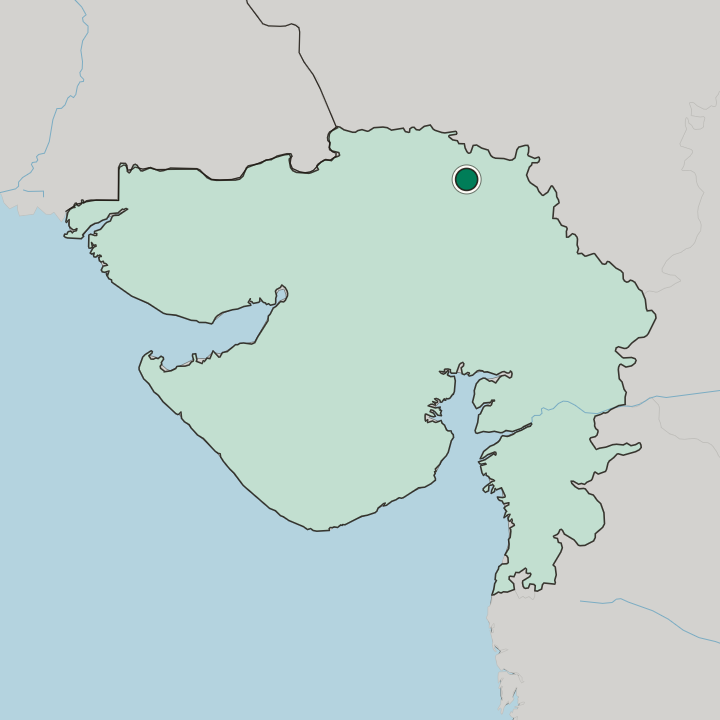
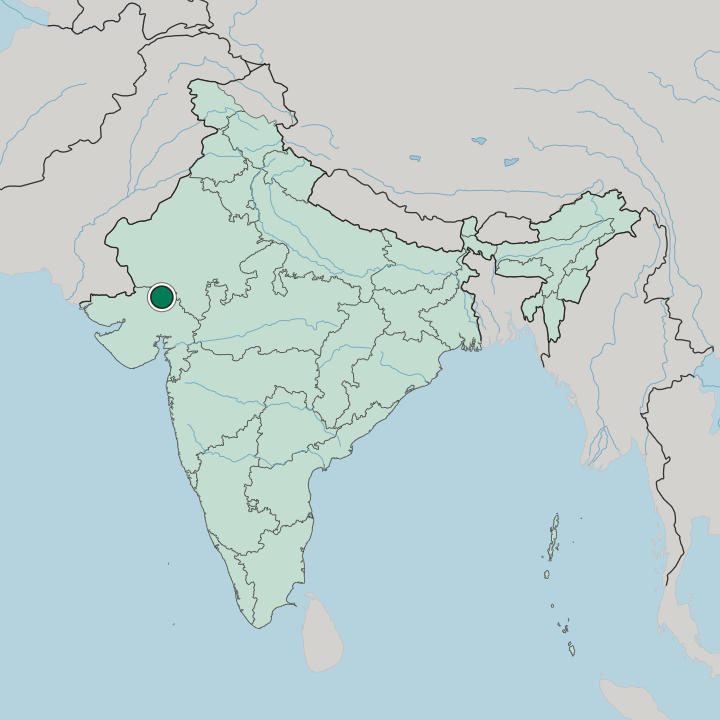
Pālanpur sits inland, away from the Gujarāt coast. The district around it, Banaskantha, is largely rural, and Pālanpur functions as the point where its villages, its roads, and its administration converge. Subtropical weather rules the calendar here.
Nothing about the position is dramatic, and the interest of Pālanpur lies in what passes through it rather than in the ground it occupies within Banaskantha.
What is the climate of Pālanpur?
Distance from the coast sets the pattern. Pālanpur lies in the subtropical band, and without the moderating effect of the Gujarāt shoreline its warm season runs hotter and drier than it does in the towns nearer the water. The monsoon breaks that.
Rain arrives in a concentrated season across Banaskantha rather than spreading through the year, which divides the calendar into one wet stretch and a long dry remainder. Winters are the comfortable months.
How do you get to Pālanpur?
Approaches to Pālanpur are overland. The town is the node that the roads of Banaskantha converge on, which is what being a district headquarters means in practical terms for anyone arriving from elsewhere in Gujarāt. Nothing arrives by sea.
Travellers generally reach Pālanpur along a longer route across Gujarāt, and the town works best as a scheduled break in a journey rather than an endpoint chosen for itself.
Common questions
What is the best area to stay in Pālanpur?
The Kirti Stambha core: Stays anchored on the Kirti Stambha and the Banaskantha district offices. The Pālanpur approaches: Overnight halts by travellers crossing Banaskantha on the way through Gujarāt.
More cities in State of Gujarāt
Updated September 2026