India · State of Gujarāt
Where to Stay in Pālitāna, State of Gujarāt
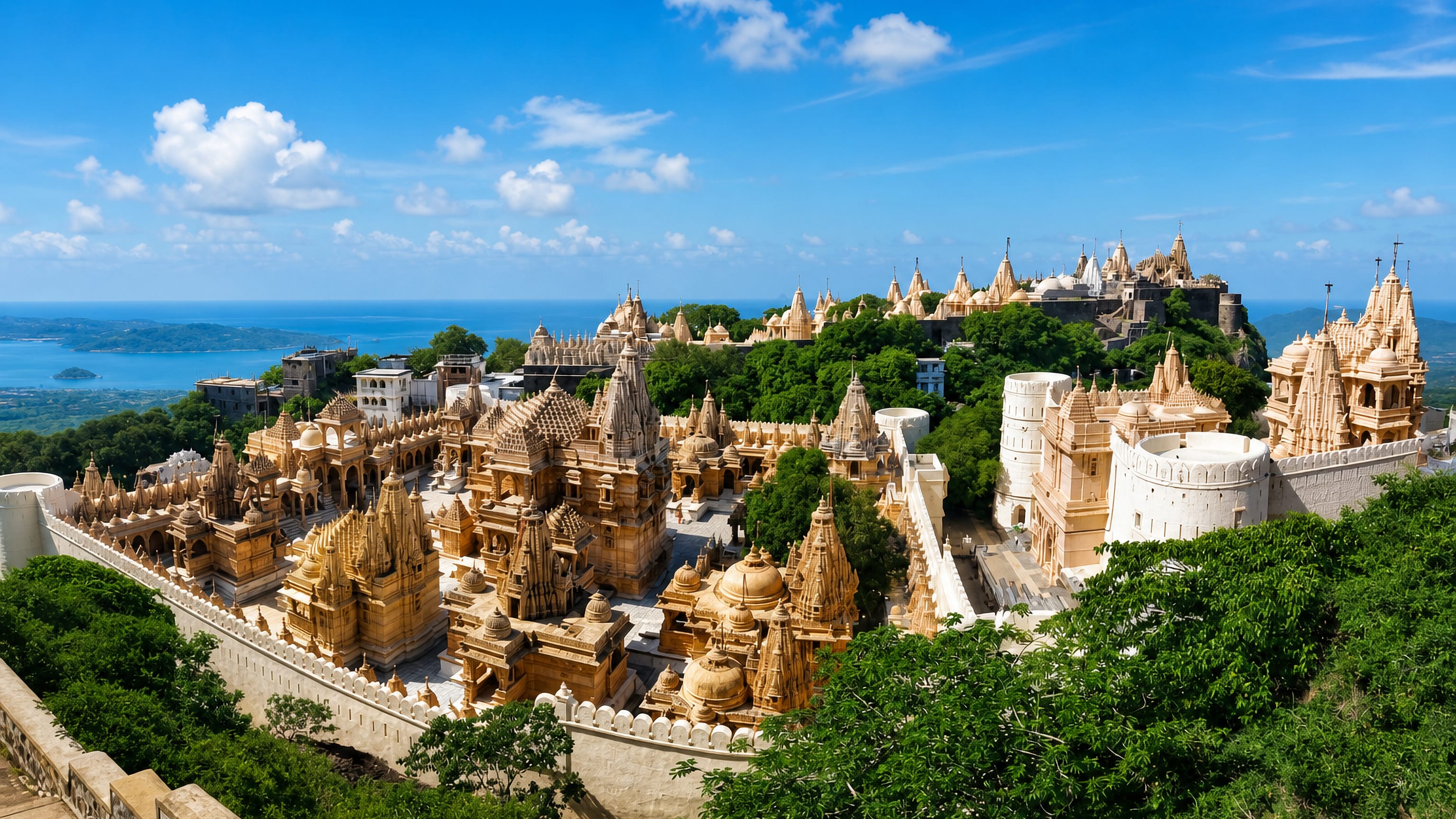
Pālitāna, in the Saurashtra region of Gujarāt, is a Jain pilgrimage town beneath Shatrunjaya, whose hill carries more than 900 marble temples.
Hotel links are affiliate links: booking through them may earn us a commission, at no extra cost to you. It never affects how places are ranked. How this works


Where to stay in Pālitāna
How the choice of base plays out on the ground.
Pālitāna divides into two kinds of stay, and the line between them is the foot of Shatrunjaya, where the stairs to the temple complex begin their long climb. Pilgrim lodging clusters there. It exists for one purpose, which is to put you at the base of the hill early enough to reach the summit temples before the heat.
The stairs are the itinerary. Ordinary hotels sit further into Pālitāna. Those rooms trade the head start for the shops of the town and the Babra Mound, and they suit anyone treating Jain heritage as one stop on a wider Saurashtra route. Bhavnagar is the other option, since Pālitāna lies 50 km south-west of that city and a day trip from there is entirely workable.
The trade-off is an early start on the road. Staying in Pālitāna itself means walking out at dawn rather than driving in, and for a hill of more than 900 temples that difference decides how much of Shatrunjaya you actually see. Jain visitors dominate.
Rooms in Pālitāna are geared to pilgrimage rather than leisure, which shapes the hours the town keeps. Both bases reach the same stairs.
Find hotels in Pālitāna
Direct booking searches for these neighbourhoods.
The Shatrunjaya foot
Beds at the foot of Shatrunjaya put the temple stairs a few minutes from the door, which matters when the ascent begins in the dark.Find hotels in The Shatrunjaya footTravellers pairing the Babra Mound with a wider Saurashtra routePālitāna town
The town below Shatrunjaya holds the everyday services, and the Babra Mound sits inside the same short radius as the shops.Find hotels in Pālitāna townHotel links are affiliate links: booking through them may earn us a commission, at no extra cost to you. It never affects how places are ranked. How this works
About Pālitāna
Pilgrims set the rhythm here.
What is Pālitāna known for?
Shatrunjaya rises above Pālitāna with a temple complex of more than 900 marble structures, counted among the holiest sites in Jainism, and the climb up the hill is the reason most people come. The town below supplies what the ascent requires. Bhavnagar district administers it, and the wider Saurashtra region places Pālitāna among the towns whose importance is religious rather than commercial.
What are the main landmarks in Pālitāna?
Shatrunjaya carries the whole reputation. More than 900 marble temples stand on the hill above Pālitāna, a complex counted among the holiest in Jainism and built up over centuries of pilgrimage. The Babra Mound is the other named site recorded for the town.
Everything else in Pālitāna reads as support for the climb, which is an unusual balance even among the pilgrimage towns of Saurashtra.
What is the history of Pālitāna?
The history of Pālitāna is the history of a hill. Shatrunjaya became a centre of Jain pilgrimage, and the marble temples on its ridge accumulated past 900 as successive generations added to what earlier ones had built. The town followed the temples.
Pālitāna exists at the foot of the climb because pilgrims needed somewhere to arrive, rest, and set out from before dawn. That sequence explains the shape of the place better than any charter would. Pilgrimage came first, and everything the town does still answers to it.
Bhavnagar district took Pālitāna into its administration, and the town became a municipality within the Saurashtra region of Gujarāt rather than a settlement defined only by its temples. The Babra Mound is recorded here too. Local sites beyond the hill are few.
Jainism holds Shatrunjaya among its most significant destinations, which has kept the flow of visitors to Pālitāna steady across long stretches of history rather than tied to any single era. Few towns have so single a story. What Pālitāna records is not conquest or trade but continuity: a hill, a stair, and a complex of marble that kept growing.
Where is Pālitāna?
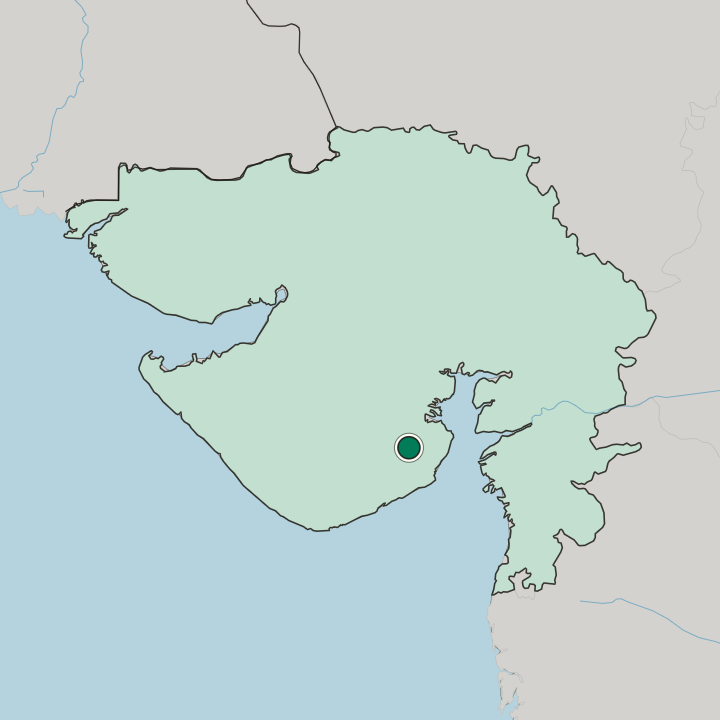
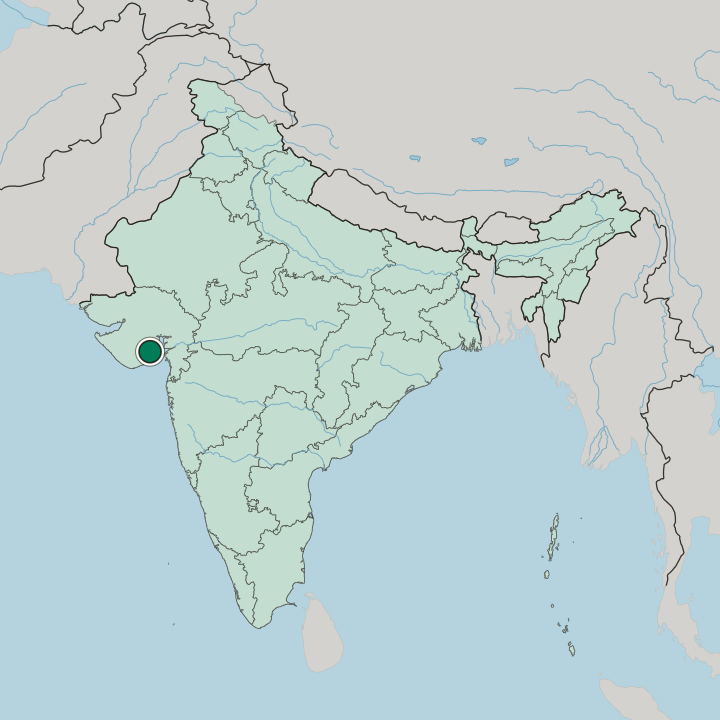
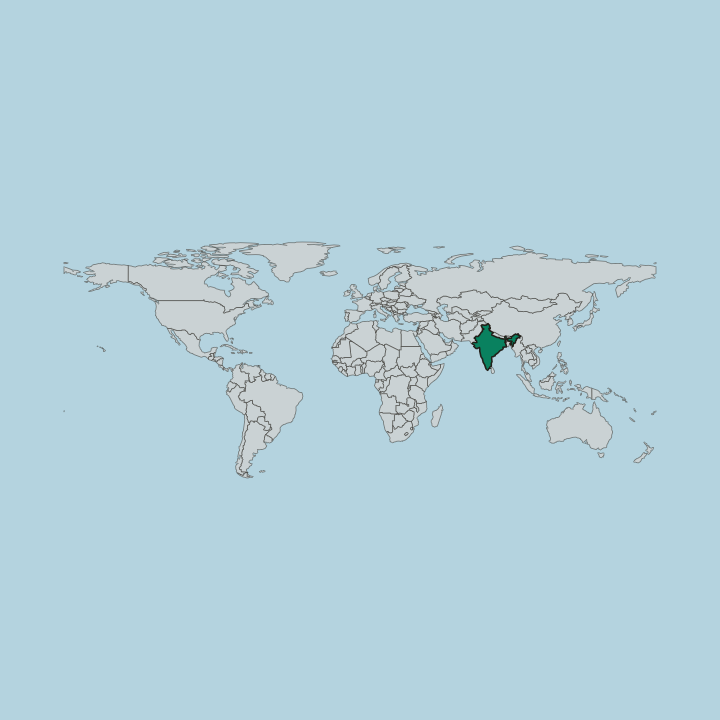
Pālitāna sits in the Saurashtra region of Gujarāt. The town stands 50 km south-west of Bhavnagar city, and the ground it occupies is otherwise unremarkable until Shatrunjaya lifts out of it. Saurashtra is tropical country.
Shatrunjaya gives Pālitāna its skyline, its orientation, and the single feature by which the surrounding district recognises the town.
What is the climate of Pālitāna?
The monsoon governs the calendar. Saurashtra takes its rain in a short season, and outside it the country around Pālitāna dries out under a tropical sun that makes the Shatrunjaya climb an early-morning undertaking. Pilgrims start before first light for that reason.
Winter is the settled stretch, and the months either side of the rains are when the stairs are busiest.
How do you get to Pālitāna?
Most approaches run through Bhavnagar. Pālitāna lies 50 km south-west of that city, which puts the last stretch of any journey on the roads of Bhavnagar district rather than on a route of its own. Saurashtra roads carry the rest.
Arriving travellers reach Pālitāna to climb Shatrunjaya, so the town is rarely a waypoint and almost always the destination itself.
Common questions
What is the best area to stay in Pālitāna?
The Shatrunjaya foot: Pilgrims starting the Shatrunjaya climb before first light. Pālitāna town: Travellers pairing the Babra Mound with a wider Saurashtra route.
Good for
More cities in State of Gujarāt
Updated October 2026