India · State of Gujarāt
Where to Stay in Verāval, State of Gujarāt
Verāval, also called Somnath, is a coastal fishing port in Gujarāt whose Somnath Temple is one of the twelve Jyotirlinga shrines of Shiva.
Hotel links are affiliate links: booking through them may earn us a commission, at no extra cost to you. It never affects how places are ranked. How this works


Where to stay in Verāval
The practical side of choosing where to sleep.
Verāval and Somnath function as two halves of one stay, and the halves pull in different directions: one toward the temple, the other toward the fishing harbour. Most pilgrims choose the temple side. Rooms in the Prabhas Kshetra sit close to the Somnath Temple, which matters when the plan involves being there for the first hours of the day.
Bhalka Tirtha is part of that circuit. Staying on the Somnath side puts both it and the temple within an easy loop, and it suits you if the point of the journey is the pilgrimage rather than the coast. The harbour end of Verāval is a different proposition.
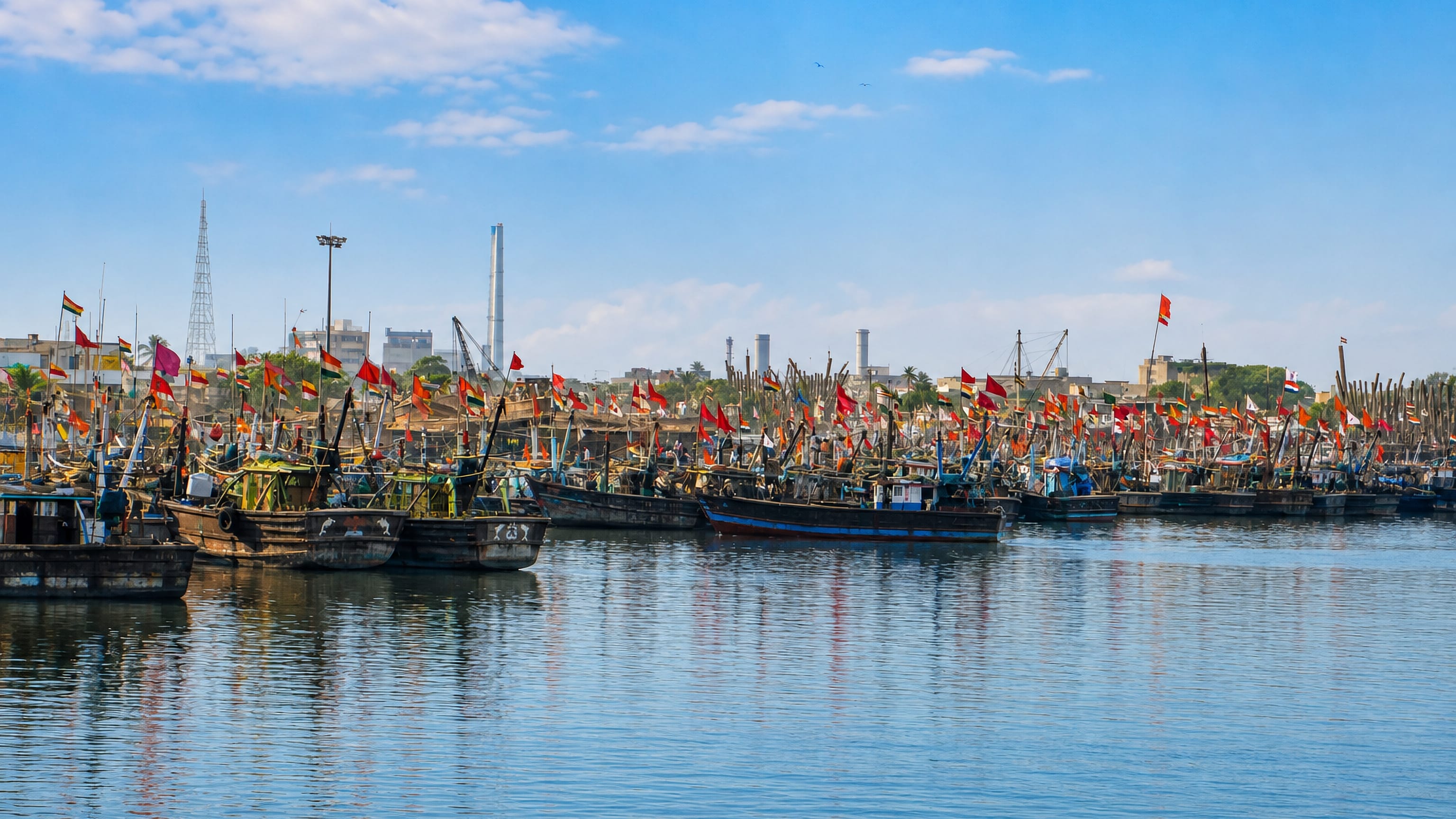
Verāval works as one of the major fishing ports of India, and rooms near the water put the boats, the seafood trade, and the Ancient Jain Temple within reach of a short walk. That side is louder and starts earlier. Trawlers set the hour.
Gir Somnath district has little else in the way of lodging, so the practical question is which of the two ends of the town you want to wake up in.
Find hotels in Verāval
Direct booking searches for these neighbourhoods.
Around the Somnath Temple
Beds inside the Prabhas Kshetra keep the temple and the sea a few minutes apart, which suits early and late visits alike.Find hotels in Around the Somnath TempleTravellers wanting the Verāval fishing harbour and the Ancient Jain TempleThe Verāval harbour side
The port end of Verāval holds the fishing fleet, the seafood trade, and the Ancient Jain Temple in one working quarter.Find hotels in The Verāval harbour sideVisitors adding Bhalka Tirtha to a Somnath circuitTowards Bhalka Tirtha
Rooms on the Bhalka Tirtha side shorten the loop between the two sacred sites, at the cost of the walk to the Verāval harbour. Rooms are few around here — worth securing early.Find hotels in Towards Bhalka TirthaHotel links are affiliate links: booking through them may earn us a commission, at no extra cost to you. It never affects how places are ranked. How this works
About Verāval
Pilgrims and trawlers share the town.
What is Verāval known for?
The Somnath Temple, counted among the twelve Jyotirlinga sites dedicated to Shiva, is the reason most visitors come to Verāval, and it stands in the Prabhas Kshetra close to the shore. Fishing does the other half of the work here. Verāval is one of the major fishing ports of India and a centre for seafood processing and export, which gives the harbour a rhythm entirely separate from the temple.
What are the main landmarks in Verāval?
One temple outweighs everything else. The Somnath Temple, in the Prabhas Kshetra, is among the twelve Jyotirlinga sites of Shiva and draws pilgrims to Verāval from across India. Bhalka Tirtha stands nearby, traditionally held to be the place where Krishna was struck by the arrow of the hunter Jara, and it completes the pair that most visitors come to see.
The Ancient Jain Temple, now a museum building, is the third.
What is the history of Verāval?
Verāval is old in the way coastal ports are old, which is to say it has always faced the water and taken its living from it. The sacred ground sits beside it. Prabhas Kshetra carries the Somnath Temple, counted among the twelve Jyotirlinga sites dedicated to Shiva, and that status has drawn pilgrimage to this stretch of coast for a very long time.
Tradition places another episode here. Bhalka Tirtha is held to mark the final earthly moments of Krishna, struck by an arrow loosed by the hunter Jara, and the association ties Verāval to one of the oldest narratives in the country. Administration came much later.
Gir Somnath district took Verāval as its headquarters, which put the modern working town in charge of a coastline that had been defined for centuries by what stands on it. Fishing built the other Verāval. The port grew into one of the major fishing harbours of India and a centre of seafood processing and export, an economy that has nothing to do with pilgrimage and runs alongside it.
The Ancient Jain Temple, kept as a museum building, is a reminder that other traditions left marks here too.
Where is Verāval?
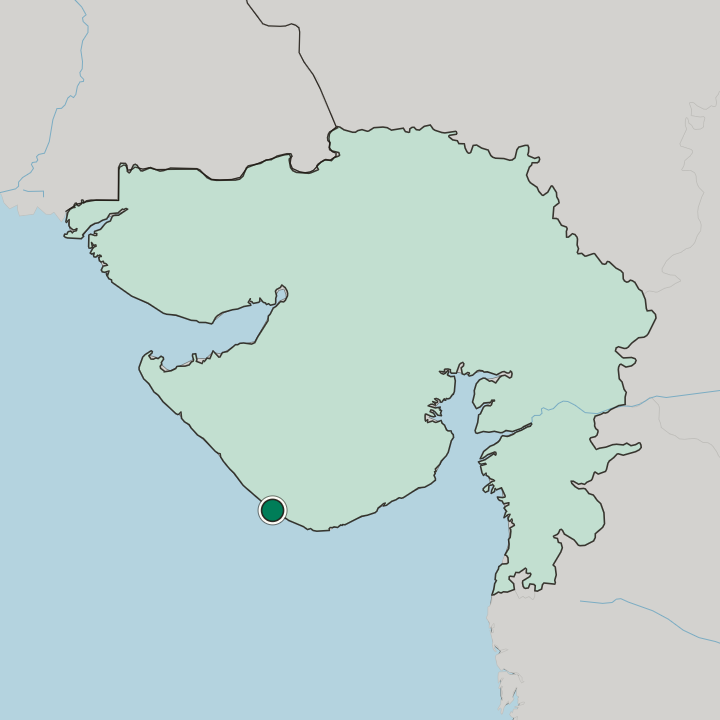
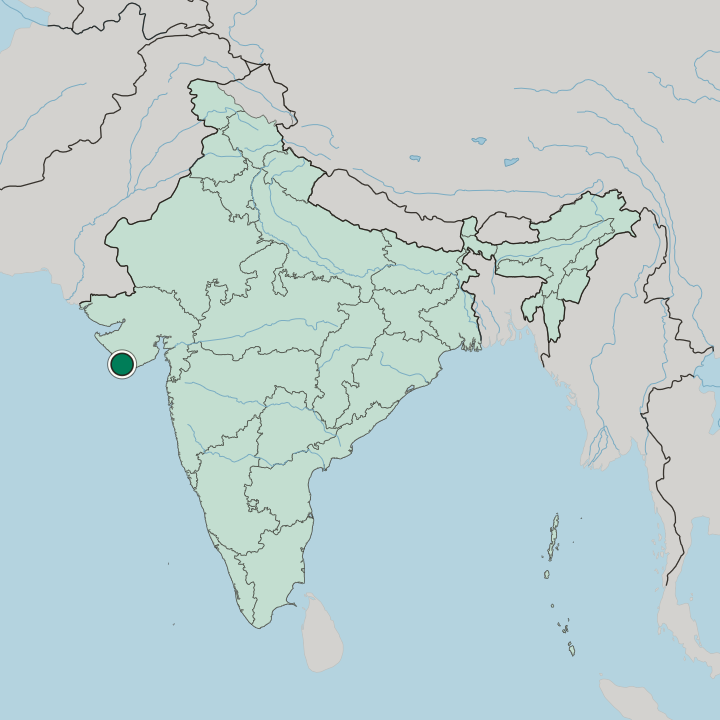
Nothing shelters Verāval from the sea. The city sits on an exposed stretch of coast in Gir Somnath district, with the Prabhas Kshetra and the Somnath Temple standing close to the shoreline rather than set back from it. Tropical conditions apply throughout.
Inland from the harbour the district spreads away from the water, and the interest of Verāval stays concentrated on the narrow strip that holds the town, the temple, and the fishing fleet.
What is the climate of Verāval?
Ocean exposure keeps Verāval from the extremes that inland Gujarāt reaches, so the hot months are humid rather than scorching and the nights stay heavy. The monsoon arrives from the sea. Rain concentrates into those weeks, and the fishing calendar bends around them because an exposed coast is no place for small boats in heavy weather.
Winter suits the walk to the temple.
How do you get to Verāval?
Pilgrimage traffic sets the pattern. Most arrivals come overland from elsewhere in Gujarāt, and the volume rises around the Somnath Temple rather than around anything the town itself offers. Gir Somnath district is administered from here, which brings its own steady traffic.
The fishing fleet comes and goes on a working schedule that has nothing to do with visitors, and the two flows of people barely overlap in Verāval.
Common questions
What is the best area to stay in Verāval?
Around the Somnath Temple: Pilgrims timing the day around the Somnath Temple. The Verāval harbour side: Travellers wanting the Verāval fishing harbour and the Ancient Jain Temple. Towards Bhalka Tirtha: Visitors adding Bhalka Tirtha to a Somnath circuit.
Good for
More cities in State of Gujarāt
Updated September 2026