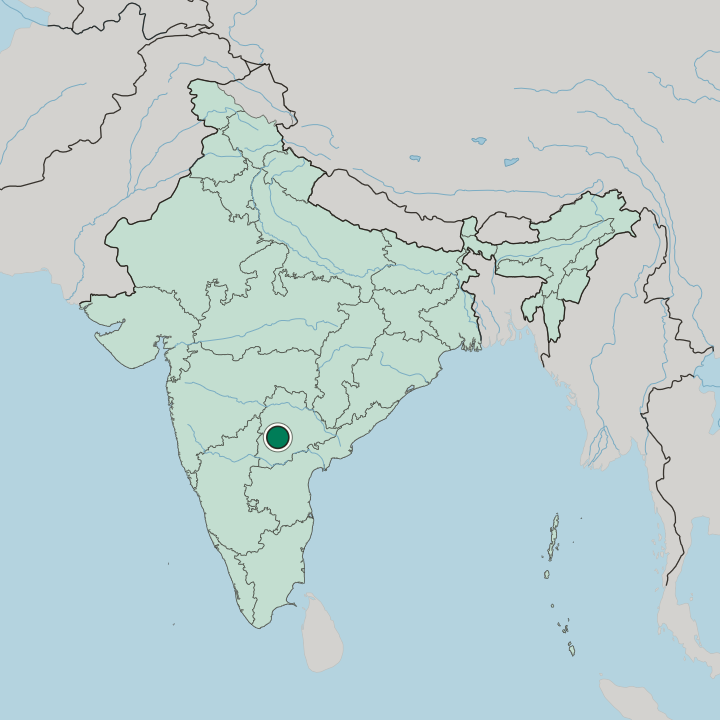
India · State of Telangāna
Where to Stay in Hyderabad, State of Telangāna
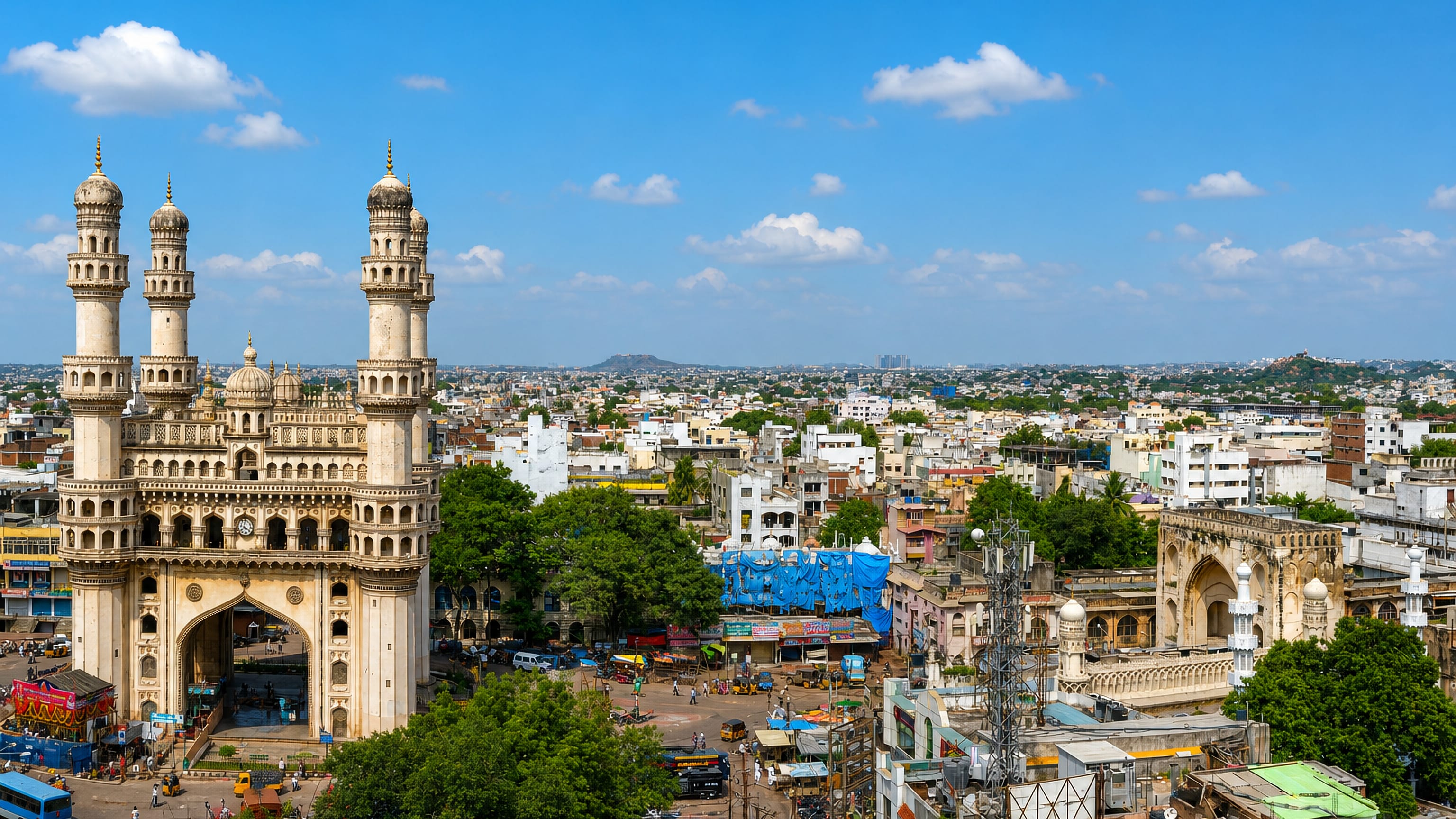
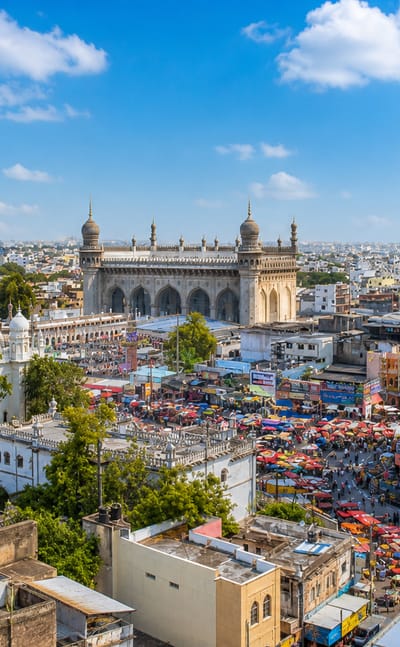
Charminar's minarets rise over Hyderabad, capital of Telangana on the Musi River, known for the Salar Jung Museum and Falaknuma Palace.
Hotel links are affiliate links: booking through them may earn us a commission, at no extra cost to you. It never affects how places are ranked. How this works


Where to stay in Hyderabad
Each area has its own feel; here's who each one suits.
 HyderabadIndia
Hyderabad Old City
Hyderabad Old City is Hyderabad's walled historic quarter, the district around the Charminar and its lanes of markets, palaces and museums.Where to stay →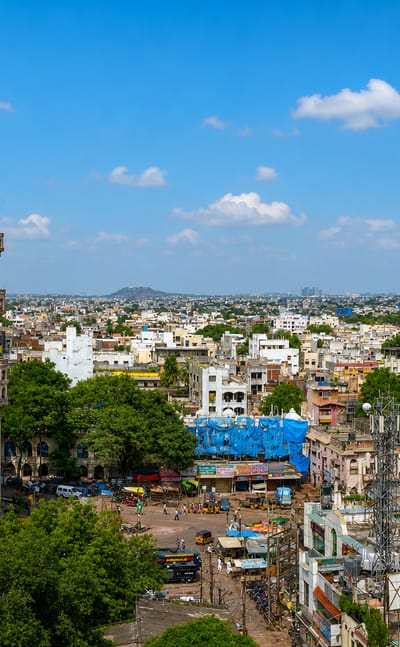 HyderabadIndia
Begum Bazaar
Begum Bazaar is one of Hyderabad's oldest wholesale markets, a merchant quarter of brassware and spice trade near the Musi River.Where to stay → HyderabadIndia
Tolichowki
Tolichowki is a residential district of western Hyderabad, near Banjara Hills and the Nehru Zoological Park.Where to stay →HyderabadIndiaLakdi ka pul
Lakdi ka pul is a central neighbourhood of Hyderabad, ranged near the Telangana State Archaeology Museum and Irrum Manzil.Where to stay →HyderabadIndiaDilsukhnagar
Dilsukhnagar is a busy commercial neighbourhood of eastern Hyderabad, built around one of the city's largest bus and metro hubs.Where to stay →HyderabadIndiaBanjara Hills
Banjara Hills is Hyderabad's upmarket commercial neighbourhood, a grid of numbered roads beside Jubilee Hills.Where to stay →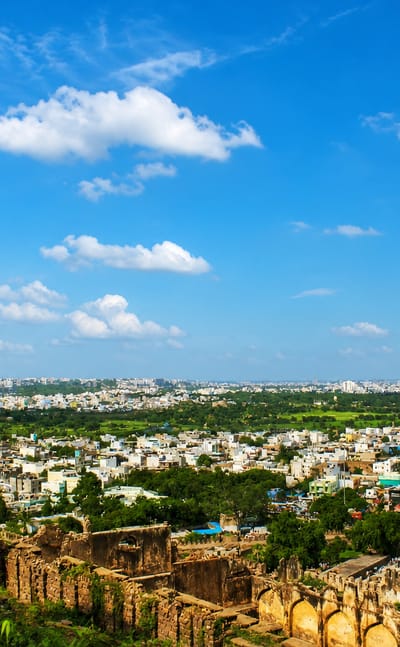 HyderabadIndia
Golconda
Golconda is a fortified citadel of Hyderabad, a ruined city above the Musi River whose diamond trade once meant vast wealth.Where to stay →HyderabadIndiaKhairtabad
Khairtabad is a central district of Hyderabad, marked by Irrum Manzil and the Nizamia observatory.Where to stay →HyderabadIndiaSanjeeva Reddy Nagar
Sanjeeva Reddy Nagar is a residential neighbourhood of Hyderabad, set beside the commercial belt of Ameerpet.Where to stay → HyderabadIndia
Begumpet
Begumpet is a district of Hyderabad, where the Nizamia observatory and the Nizam's court palaces stand among its streets.Where to stay → HyderabadIndia
Jubilee Hills
Jubilee Hills is an upmarket residential district of Hyderabad, in Telangāna, near Banjara Hills.Where to stay →Hotel links are affiliate links: booking through them may earn us a commission, at no extra cost to you. It never affects how places are ranked. How this works
Find hotels in Hyderabad
Direct booking searches for these neighbourhoods.
Old city around Charminar
The historic core packs the four-arched Charminar, Moazzam Jahi Market, and the palace lanes into a few walkable blocks.Find hotels in Old city around CharminarTravellers wanting lakeside calm and quick road links north of the centreBy Hussain Sagar
The greener districts by the Hussain Sagar lake sit near the Salar Jung Museum and the State Central Library.Find hotels in By Hussain SagarHotel links are affiliate links: booking through them may earn us a commission, at no extra cost to you. It never affects how places are ranked. How this works
Things to do in Hyderabad
Ranked by global recognition; descriptions from Wikidata (CC0).
Museums & Galleries
3- Salar Jung Museum
- Birla Science Museum
- Nizam Museum
Churches & Religious Sites
3- Charminar Heritage
- St Joseph's Cathedral
- St. George's Church, Hyderabad
Castles & Historic Sites
3- Raymond's Tomb Heritage
- Golconda
- Falaknuma Palace
Stadiums & Sports
1- Kotla Vijay Bhaskar Reddy Indoor Stadium
Parks & Gardens
1- Jalavihar
Landmarks & Notable Places
3- State Central Library
- Golden Threshold
- Vikhar Manzil
worth knowingacross 6 categories in Hyderabad
About Hyderabad
What is Hyderabad known for?
Hyderabad is known for the Charminar, the four-arched monument at the heart of its old city. The Salar Jung Museum holds one of the country's great art collections, and the Falaknuma Palace crowns a rise above the streets. Water shapes it too.
The Hussain Sagar lake, older than the city itself, spreads to the north of the centre and gives the modern districts their green, open frame. Markets like Moazzam Jahi Market keep the old trades alive.
What are the main landmarks in Hyderabad?
Hyderabad centres its landmarks on the Charminar, with palaces and museums spread across the old city. The Charminar, a four-arched monument, marks the heart of the bazaar quarter. The Salar Jung Museum and the Nizam Museum hold vast collections of art and relics, while the Falaknuma Palace stands over the city from its ridge.
Older markets survive. Moazzam Jahi Market and the Mahboob Chowk Clock Tower still order the streets of the old town.
What is the history of Hyderabad?
Hyderabad was founded in 1592 on the Deccan Plateau, along the banks of the Musi River. The Charminar rose at its centre, and the grid of the old city grew outward from that four-arched monument. The Hussain Sagar lake, dug before the city itself, already stood to the north.
Water shaped it. For centuries the city was the seat of a wealthy court, whose palaces and collections survive in the Falaknuma Palace and the Salar Jung Museum. Trade, craft, and learning gathered here over the long span that followed.
Markets such as Moazzam Jahi Market and civic landmarks like the State Central Library and the Mahboob Chowk Clock Tower mark the layers the city added to itself through one era after another. The old order left its mark everywhere. The Nizam Museum and the Goshamahal Baradari keep the memory of the ruling houses that governed from here.
Hyderabad now serves as the capital of Telangana, the largest city of the state and the anchor of the wider Deccan region. Beyond the old core, the newer districts ring the Hussain Sagar and the lakes to the north.
Where is Hyderabad?
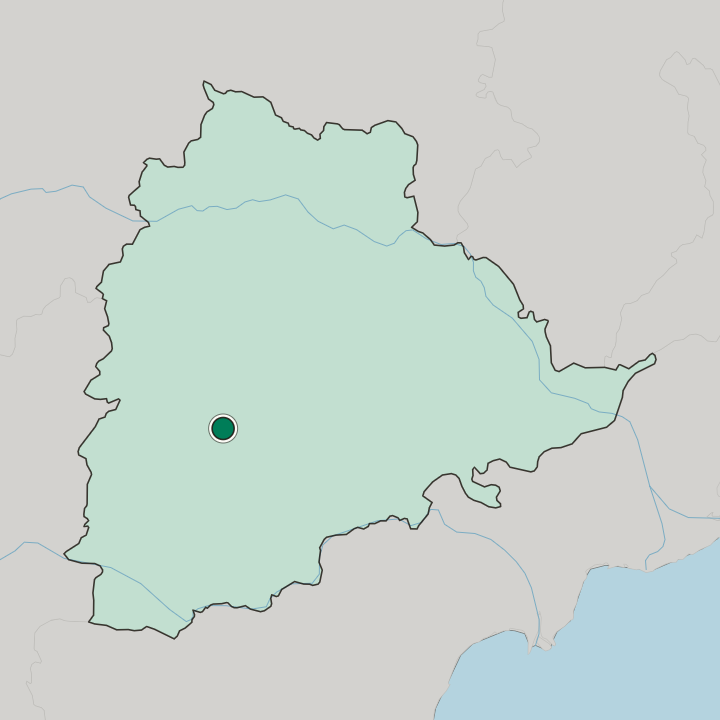
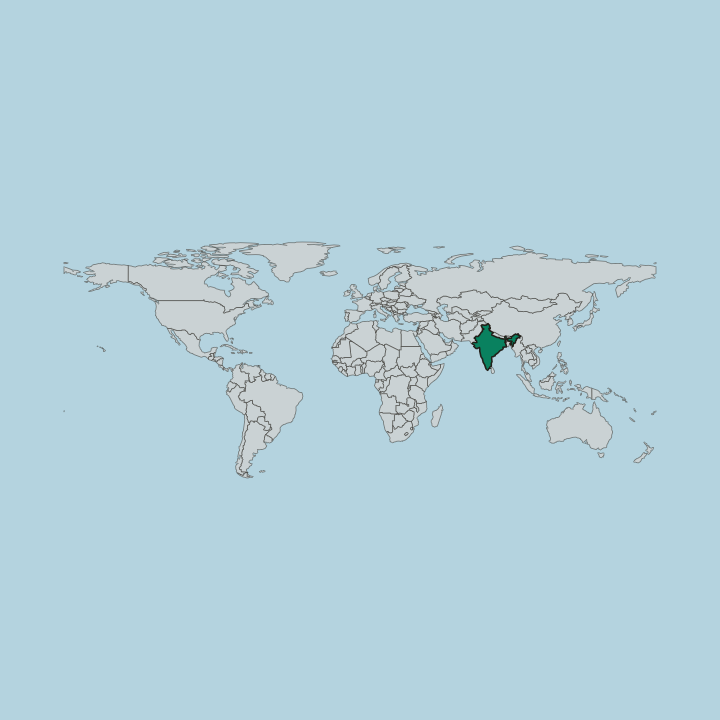
Hyderabad lies on the Deccan Plateau, along the banks of the Musi River, in the state of Telangana. The Musi divides the old city from the newer quarters that spread across the surrounding hills. Artificial lakes stud the ground.
The Hussain Sagar lake, older than the city, sits to the north of the centre, and the terrain rolls in low rises around the water. The wider Deccan spreads out beyond the built-up districts.
What is the climate of Hyderabad?
Hyderabad has a tropical climate, tempered a little by its height on the Deccan Plateau. Summers run long and hot before the rains. The monsoon then sweeps the plateau, filling the Hussain Sagar and the other lakes and washing the heat from the air.
Winters stay dry and mild. That cooler, drier stretch is when the streets around the Charminar are at their most comfortable.
How do you get to Hyderabad?
Hyderabad is a major hub of Telangana, reached by air, rail, and road. Long-distance trains and highways climb onto the Deccan Plateau from every direction. Roads bridge the Musi River between the two halves of the city, and traffic feeds steadily toward the old core around the Charminar.
Air links reach it widely. Once in the centre, the bazaars and the lake road connect the main sights on foot or by short ride.
Common questions
What is the best area to stay in Hyderabad?
Old city around Charminar: First-time visitors who want the monuments and bazaars on their doorstep. By Hussain Sagar: Travellers wanting lakeside calm and quick road links north of the centre.
Good for
More cities in State of Telangāna
Updated October 2026