Italy · Piemonte · Turin
Borgo San Paolo, Turin — Area Guide & Where to Stay
Borgo San Paolo is a quarter in the west of Turin, born outside the walls early in the 17th century, named for the Compagnia delle opere pie di San Paolo.
Hotel links are affiliate links: booking through them may earn us a commission, at no extra cost to you. It never affects how places are ranked. How this works


Where to stay in Borgo San Paolo
Where visitors usually base themselves, and why.
The street plan is a spider's web. Giolitti's influence carried a scheme decided in 1899 that ran the roads out in a web rather than the chequerboard the rest of Turin uses, and the centre of that web sits behind the church of San Bernardino, in what became the round piazza named for Carlo and Mario Nicolis di Robilant. Piazza Sabotino is the other focus.
The trades and shops of the borgo turned on it and on the church, and the quarter belongs to Circoscrizione 3 along with Lesna, Cenisia, Pozzo Strada and Cit Turin. The Rione Lancia is the small piece named for the car firm.
About Borgo San Paolo
What are the main landmarks in Borgo San Paolo?
The church came before the plan. San Bernardino was raised in 1893 by the architect Giuseppe Gallo in neo-Gothic for the late medieval preaching saint, and it stands on what was then via Villafranca and is now via Dante Di Nanni. The house of prayer is gone.
Count Silvestro Olivero gave the Jesuits land to the northeast in 1699 for a large house of prayer, backed financially by the Compagnia delle opere pie di San Paolo, which is where the borgo took its name. It served other purposes instead. Through the 19th century the building was used far more as a powder store and a military hospital than for prayer, passed to the Racca family when the Jesuits were suppressed between 1773 and 1814, returned to the Compagnia di San Paolo in 1910 and was pulled down in 1941 for the Lancia works.
What is the history of Borgo San Paolo?
The land belonged to Ligurian counts. The borgo began in the southwestern countryside outside the Turin walls early in the 17th century on ground held by the wealthy Olivero family, by the older cascina Pareto, which was rebuilt as the villa-cascina Olivero. One farmstead survives from it.
The cascina known as Torassa stands at via Arbe 19, over the boundary in Mirafiori Nord toward Santa Rita, and it is what is left of that estate. The shape of the borgo is late. Its topography was only decided at the end of the 19th century, when a mostly rural area turned industrial, and the road plan of 1899 gave it the web of streets radiating from behind San Bernardino.
Building rules followed in 1901. The first building plan came that year, the population climbed steeply from the end of the previous century through the early 1920s, and the borgo still stayed a peripheral and fairly isolated place until the First World War drew it fully into the city. Lancia held the middle for seventy years.
The works built on the demolished Jesuit ground in 1941 stood from 1945 until 2011, when part of it came down for housing on the via Monginevro side.
Where is Borgo San Paolo?
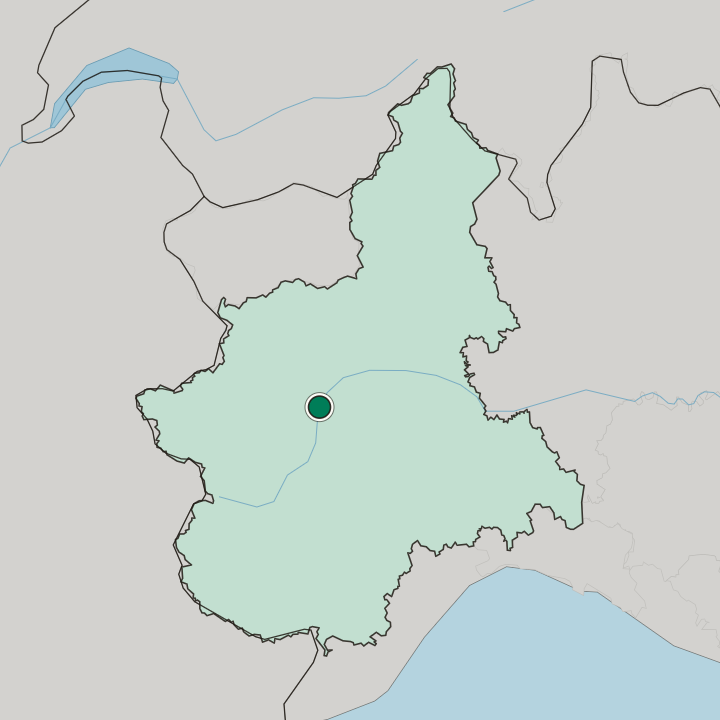
Borgo San Paolo lies in western Turin bounded by corso Peschiera on the north toward Cenisia, corso Trapani on the west toward Pozzo Strada, corso Mediterraneo and the Turin to Fossano and Savona railway on the east toward Crocetta, and via Tirreno on the south toward Santa Rita.
More areas in Turin
Updated September 2026