Italy · Veneto
Where to Stay in Treviso, Veneto
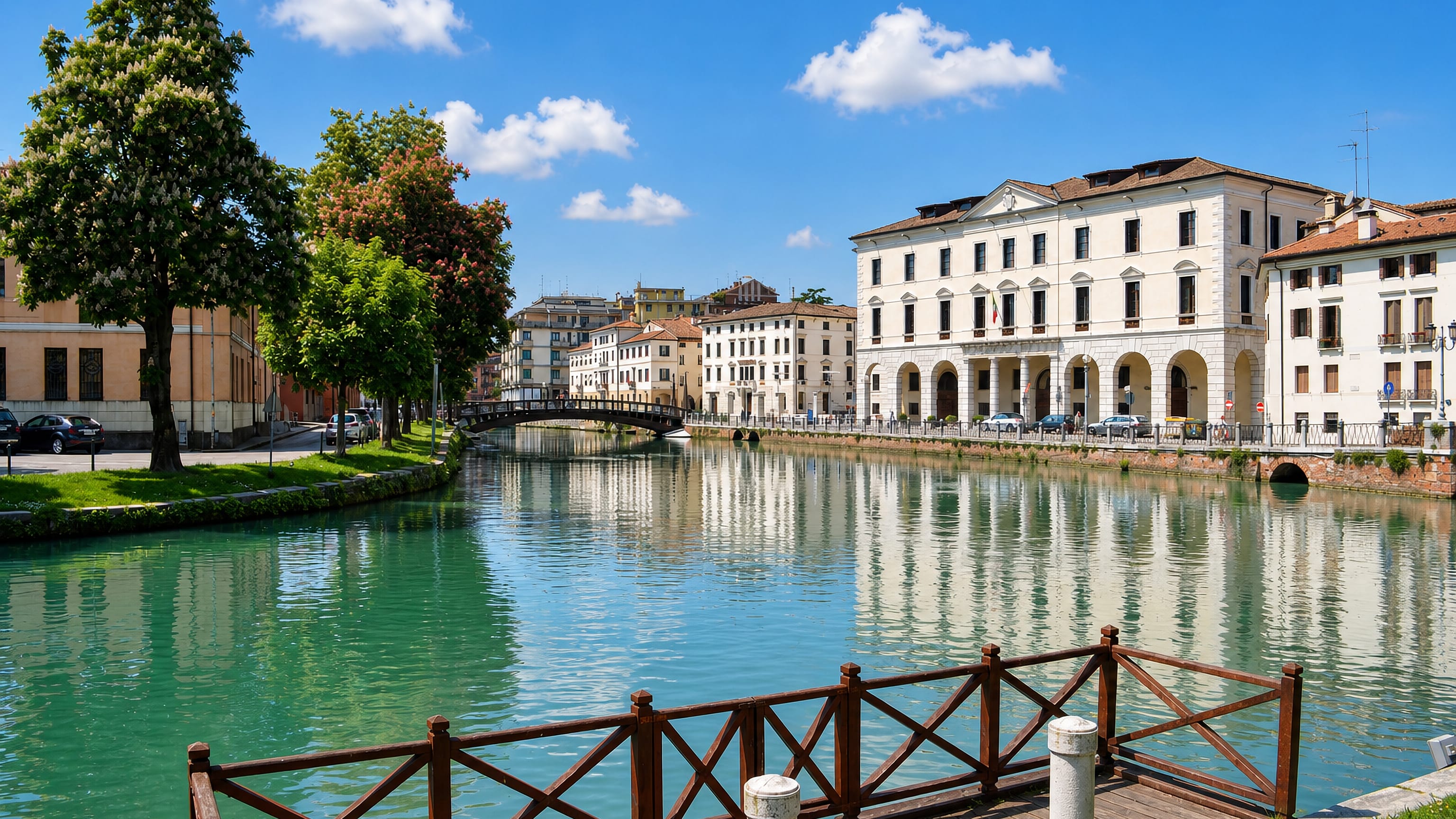
Treviso is a walled provincial capital in Veneto, cut through by canals, standing north of Venezia and south of Belluno.
Hotel links are affiliate links: booking through them may earn us a commission, at no extra cost to you. It never affects how places are ranked. How this works


Where to stay in Treviso
The practical side of choosing where to sleep.
The walls draw the line. Everything a short visit wants sits inside them: the Canale dei Buranelli, the Isola della Pescheria, the Torre Civica, and the churches, all within a few minutes of one another on foot. Rooms inside the Venetian walls are the obvious first choice, though the number of them is limited by how little of the city that boundary actually contains.
San Francesco marks a second option. Beds around it, and around the Church of Santa Margherita and the Chiesa di San Leonardo, keep the walk short while stepping back from the canals. Collections argue for a third.
The Luigi Bailo Museum, the Musei civici di Treviso, the Museo nazionale Collezione Salce, and the Diocesan Museum of Treviso can absorb a full day between them, and a base near that group saves repeating the same streets. Villa Manfrin called Margherita lies outside the walls. Anyone with a car might take that side, along with the Museo etnografico provinciale, and treat the walled centre as a place to walk into rather than sleep in.
Venezia pulls hard on the beds. Staying in Treviso instead is the quieter arrangement.
Find hotels in Treviso
Direct booking searches for these neighbourhoods.
Inside the Venetian walls
The Canale dei Buranelli, the Isola della Pescheria, and the Torre Civica are all within the walled centre, minutes apart on foot. Few places to stay nearby — book ahead.Find hotels in Inside the Venetian wallsa quieter base a step back from the canalsAround San Francesco
San Francesco, the Church of Santa Margherita, and the Chiesa di San Leonardo set the tone here, with the water a short walk away.Find hotels in Around San Francescoa full day across Treviso's collectionsBy the Luigi Bailo Museum
The Luigi Bailo Museum, the Museo nazionale Collezione Salce, and the Diocesan Museum of Treviso are close enough to cover without crossing the city twice.Find hotels in By the Luigi Bailo MuseumHotel links are affiliate links: booking through them may earn us a commission, at no extra cost to you. It never affects how places are ranked. How this works
Things to do in Treviso
Ranked by global recognition; descriptions from Wikidata (CC0).
Museums & Galleries
3- Complesso di santa Caterina Heritage
- Musei civici di Treviso
- Diocesan Museum of Treviso
Churches & Religious Sites
3- San Francesco
- Chiesa di San Leonardo
- Church of Santa Margherita
Castles & Historic Sites
5- Canale dei Buranelli Heritage
- Isola della Pescheria Heritage
- Villa Manfrin called Margherita Heritage
- war memorial Heritage
- Corte San Parisio Heritage
worth knowingacross 3 categories in Treviso
About Treviso
Water runs through the centre.
What is Treviso known for?
The Canale dei Buranelli and the Isola della Pescheria carry water right through the walled centre, and the old town is built around those channels. Museums are the other specialty. The Musei civici di Treviso, the Luigi Bailo Museum, the Museo nazionale Collezione Salce, and the Gallerie delle Prigioni give a city of this size an unusual spread of collections.
San Francesco and the Torre Civica hold the rest.
What are the main landmarks in Treviso?
The Torre Civica rises over the centre, and the Canale dei Buranelli and the Isola della Pescheria carry the water through it. Churches follow. San Francesco, the Church of Santa Margherita, the Chiesa di San Leonardo, and the Complesso di santa Caterina hold the religious side, with the Mosaico Paleocristiano and Corte San Parisio among the older survivals.
The museums run long: the Musei civici di Treviso, the Luigi Bailo Museum, the Museo nazionale Collezione Salce, the Diocesan Museum of Treviso, the Musei del Seminario vescovile di Treviso, and the Gallerie delle Prigioni.
What is the history of Treviso?
The Mosaico Paleocristiano reaches furthest back. An early Christian mosaic puts the city's record well before the walls that now define its centre, and before the churches that fill the streets inside them. Water came with the site.
The Canale dei Buranelli and the Isola della Pescheria are not decoration but the working arrangement the old town grew around, a market island and a channel through the middle of it. Defence arrived later, and the Venetian walls still mark the boundary of the historic centre, holding only a small part of what the city has since become. The churches filled the space inside.
San Francesco, the Church of Santa Margherita, the Chiesa di San Leonardo, and the Complesso di santa Caterina belong to that long period of building, and Corte San Parisio and the complesso di Ca' da Noal, Casa Robegan e Casa Karwath carry the domestic side of it. The Torre Civica watched over both. Collecting is the modern chapter.
The Luigi Bailo Museum, the Musei civici di Treviso, the Collezione Giuseppe Scarpa, and the Musei del Seminario vescovile di Treviso gathered the city's art, while the Museo nazionale Collezione Salce and the Gallerie delle Prigioni brought in material of a different order altogether. Treviso runs its province from the same walls.
Where is Treviso?
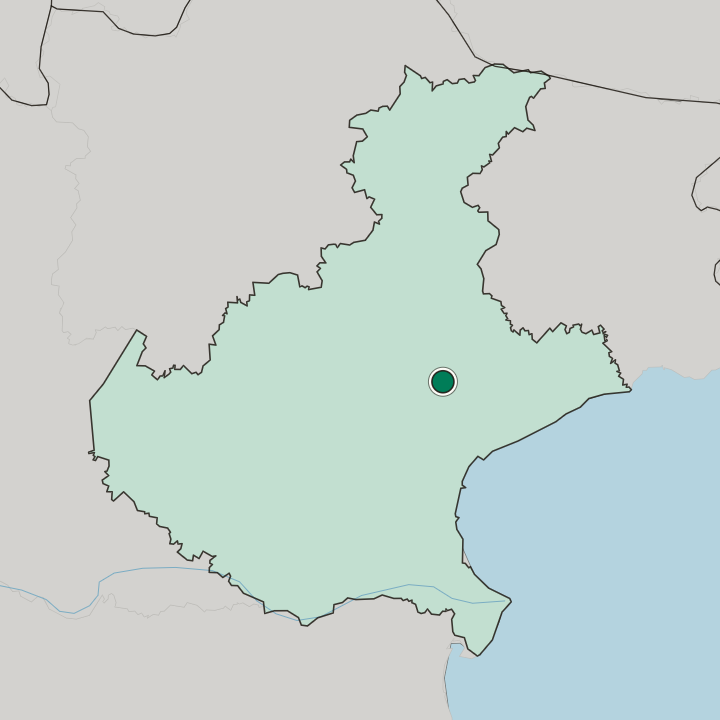
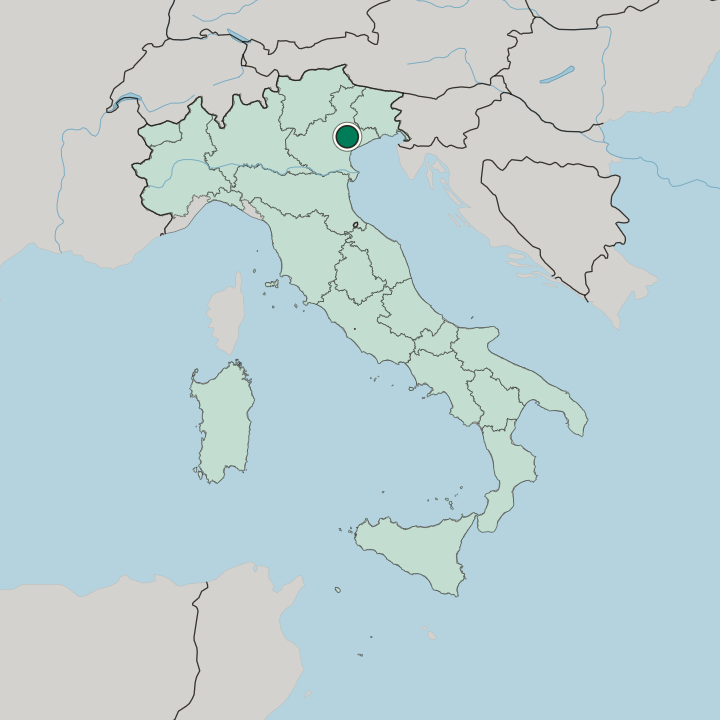
Treviso stands north of Venezia and south of Belluno, inside Veneto, on ground the canals cross rather than skirt. The comune is compact. Its area is small for a provincial capital, and the Venetian walls enclose a smaller part again, which is why the built-up city runs well past both boundaries.
Water is the constant, with the Canale dei Buranelli and the Isola della Pescheria inside the walls and the province of Treviso spreading around them.
What is the climate of Treviso?
Position between Venezia and Belluno gives Treviso a year with two clear halves, warm through the middle months and cold at either end of the calendar. The temperate band explains most of it. Treviso sits in the northern hemisphere, so the warm stretch falls mid-year, and the walled centre traps whatever heat the streets collect while the canals stay cooler.
Shoulder months suit walking.
How do you get to Treviso?
Venezia is the usual approach, since Treviso stands north of it and south of Belluno, which puts the city on the route between them. The province supplies the rest. Treviso is its capital, so roads from across the province of Treviso end here, and once inside the Venetian walls almost everything is close enough to reach on foot.
The Torre Civica is the easiest thing to steer by. Villa Manfrin called Margherita sits apart from that core.
Common questions
What is the best area to stay in Treviso?
Inside the Venetian walls: canal mornings and a walk to the Torre Civica. Around San Francesco: a quieter base a step back from the canals. By the Luigi Bailo Museum: a full day across Treviso's collections.
Good for
More cities in Veneto
Updated October 2026