Japan · Niigata-ken
Where to Stay in Tsubame, Niigata-ken
Tsubame is a compact city of Niigata Prefecture, Japan, holding the Tsubame Industrial Materials Museum and the Teradomari Aquarium.
Hotel links are affiliate links: booking through them may earn us a commission, at no extra cost to you. It never affects how places are ranked. How this works


Where to stay in Tsubame
Where visitors usually base themselves, and why.
The Tsubame Industrial Materials Museum is the anchor for a short stay. Rooms near it keep the city's own subject within reach and leave Minami-Akasaka Site as an easy addition, which is as much as a visitor needs from a municipality of barely a hundred square kilometres. Small ground helps.
One base does the work of three. Teradomari Aquarium pulls the other way. A night at that end suits travellers who would rather open with the tanks than with a materials collection, and the Yahiko Shrine Hōmotsuden fits the same slower half of a visit.
Rooms are scarcer there. Tsubame is small enough that choosing between the two ends costs far less of a day than it would in a wider municipality. Sanjo is the third option and the one that changes the arithmetic.
Its museum already appears on Tsubame's landmark list, so a bed on that side of the boundary loses a traveller nothing except the Tsubame name over the door.
Find hotels in Tsubame
Direct booking searches for these neighbourhoods.
Beside the Tsubame Industrial Materials Museum
The city's own trade collection within reach, with Minami-Akasaka Site an easy additionFind hotels in Beside the Tsubame Industrial Materials MuseumFamilies leading with the Teradomari Aquarium tanksThe Teradomari Aquarium end
The half of the list owing nothing to industry, with the Yahiko Shrine Hōmotsuden alongside. Rooms are few around here — worth securing early.Find hotels in The Teradomari Aquarium endNights taken next door when Tsubame has no roomSanjo across the boundary
The Sanjo City Museum already appears on Tsubame's own landmark listFind hotels in Sanjo across the boundaryHotel links are affiliate links: booking through them may earn us a commission, at no extra cost to you. It never affects how places are ranked. How this works
About Tsubame
Two industrial museums, one small city.
What is Tsubame known for?
The Tsubame Industrial Materials Museum names the trade outright, and the Sanjo City Museum of Historical, Folkloric and Industrial Materials sits on the same list because the district's working history refuses to stop at a boundary. Water and worship follow. Teradomari Aquarium and the Yahiko Shrine Hōmotsuden give the list its two entries that owe nothing to industry at all.
What are the main landmarks in Tsubame?
Five entries, and no two alike. The Tsubame Industrial Materials Museum and the Sanjo City Museum of Historical, Folkloric and Industrial Materials cover the trade between them, one under this city's name and one under a neighbour's. Minami-Akasaka Site keeps its Japanese name alone.
Teradomari Aquarium and the Yahiko Shrine Hōmotsuden finish a list on which Teradomari and Sanjo lend names that are not the city's own.
What is the history of Tsubame?
Minami-Akasaka Site comes first in any local sequence. Whatever the modern city has built, that name marks ground older than anything else on the list and older by far than the municipality that now contains it. Then the shrine.
Yahiko Shrine Hōmotsuden belongs to the religious layer, a holding attached to Yahiko Shrine rather than a building put up for visitors. Industry made the modern town. The Tsubame Industrial Materials Museum exists because the trade it records was substantial enough to warrant a collection of its own, and the Sanjo City Museum of Historical, Folkloric and Industrial Materials is filed here because that trade never respected the municipal line.
Two towns, one trade. Sanjo and Tsubame appear on each other's lists for that reason and no other. The municipality is the youngest thing here.
Tsubame became a city in 1954, which makes the municipality younger than most of what it contains and far younger than the ground Minami-Akasaka Site records. Teradomari Aquarium sits at the modern end. Barely a hundred square kilometres of Niigata Prefecture hold that whole sequence, and the compression of it is the most useful thing to know about Tsubame.
Where is Tsubame?
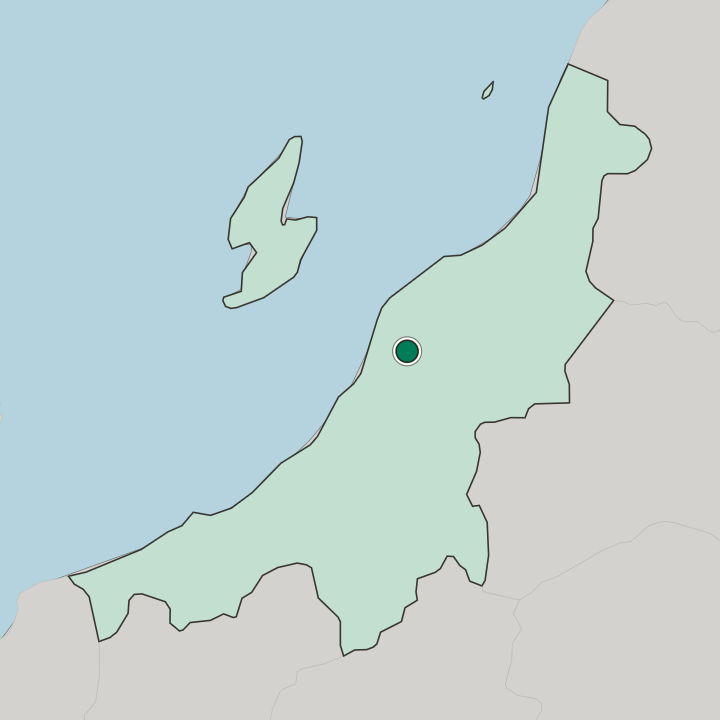
Barely a hundred square kilometres make up Tsubame. That is a tight footprint for a city, and it means the five named sites fall within a range most visitors can manage in one day. Travel between the five costs little time.
Sanjo's collection appears on this list as though the boundary between the two towns did not exist, and the Teradomari Aquarium is the other entry whose name is not the city's own.
What is the climate of Tsubame?
A hundred square kilometres take the same weather all at once. Nothing in Tsubame is far enough from anything else for the temperate year to treat one end differently from the other, which reduces planning to a single question about rain. Indoors covers most of it.
The Tsubame Industrial Materials Museum and Teradomari Aquarium both work in bad weather, while Minami-Akasaka Site asks for a dry hour outdoors.
How do you get to Tsubame?
Distance is not the obstacle here. Five named sites inside barely a hundred square kilometres mean a single day covers the Tsubame Industrial Materials Museum, Minami-Akasaka Site and the Yahiko Shrine Hōmotsuden without strain. Sanjo is the one crossing.
Its museum sits on Tsubame's list, so the only real decision is whether the day includes that crossing or stays inside the city with Teradomari Aquarium instead.
Common questions
What is the best area to stay in Tsubame?
Beside the Tsubame Industrial Materials Museum: Short stays opening with the Tsubame Industrial Materials Museum. The Teradomari Aquarium end: Families leading with the Teradomari Aquarium tanks. Sanjo across the boundary: Nights taken next door when Tsubame has no room.
More cities in Niigata-ken
Updated October 2026