Philippines · Calabarzon
Where to Stay in San Pablo, Calabarzon
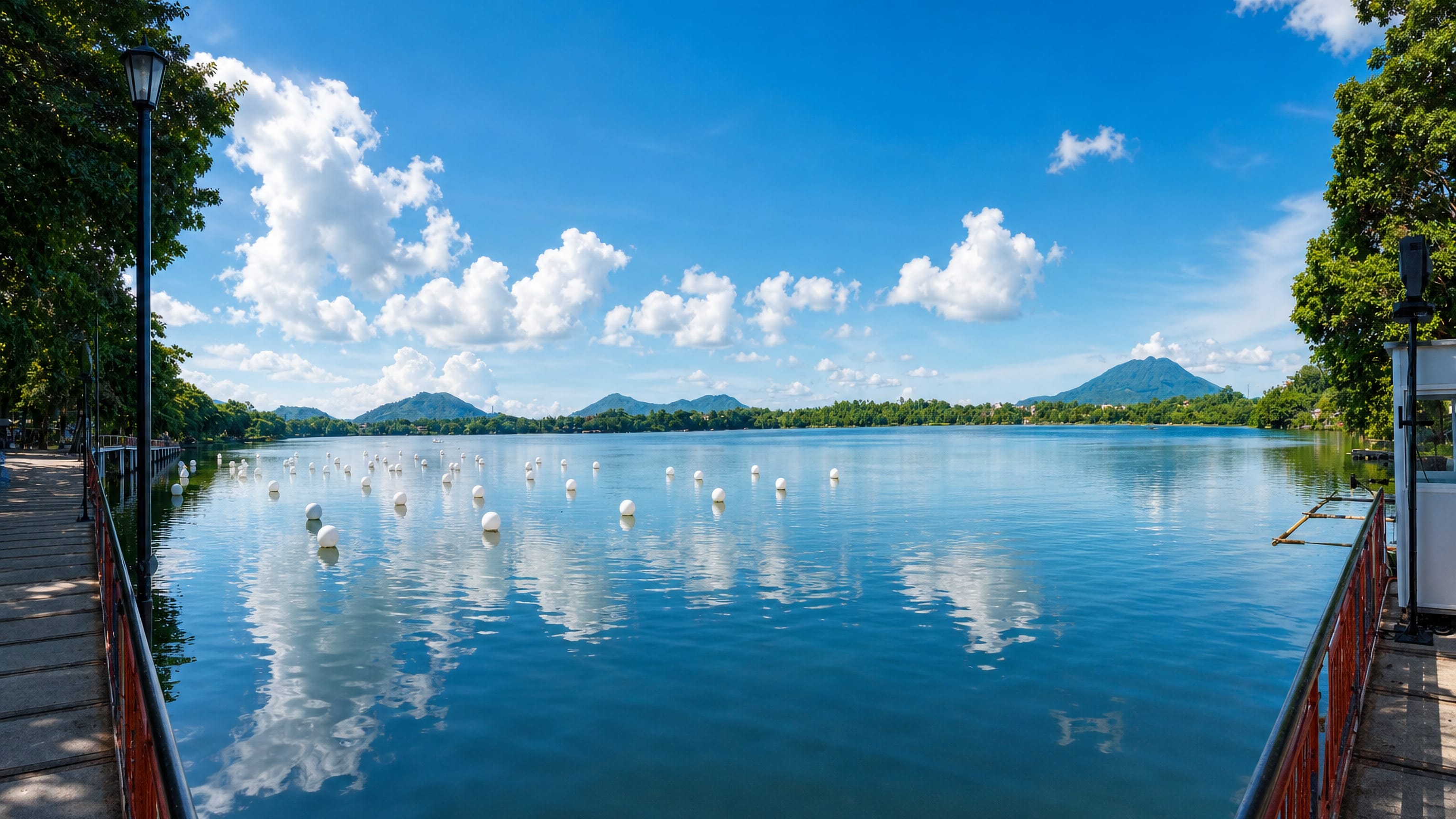
San Pablo holds seven crater lakes in Laguna, with Lake Sampaloc behind the city hall and Mount Banahaw on the skyline east.
Hotel links are affiliate links: booking through them may earn us a commission, at no extra cost to you. It never affects how places are ranked. How this works


Where to stay in San Pablo
How the choice of base plays out on the ground.
Downtown San Pablo is compact enough to make the choice simple. Jose Rizal Avenue carries the four lanes, the jeepney terminals, and most of the heritage stock, running west from Plaza Rizal and San Pablo Cathedral until it becomes Colago Avenue on the way out to Calauan. A room anywhere along that axis puts the San Pablo City Public Market, the shops on A. Flores Street, and the cathedral within walking distance, and it puts every jeepney route to the outlying barangays at the same door.
Jeepney horns are the cost. Downtown and the Maharlika Highway both clog badly at rush hour, and the streets around the plaza stay busy long after the offices shut. Dagatan Boulevard offers the other kind of night.
It runs along the southern shore of Lake Sampaloc beneath Doña Leonila Park and the Old San Pablo City Hall, close enough that the floating cottages and the giant tilapia monument are a walk rather than a ride, and far enough from the highway that the traffic stops mattering. Rooms thin out along Dagatan Boulevard. Travellers arriving late or leaving early do better out at San Rafael, where SM City San Pablo sits on Maharlika Highway beside the stops used by the Manila and Lucena buses, and where the San Pablo City Central Terminal handles the provincial services.
That address trades the lake for the road.
Find hotels in San Pablo
Direct booking searches for these neighbourhoods.
Plaza Rizal and the cathedral end of Jose Rizal Avenue
Jose Rizal Avenue runs west from Plaza Rizal past the colonnaded footbridge, the jeepney terminals, and the San Pablo City Public Market, so the cathedral and the day's errands sit on the same walk.Find hotels in Plaza Rizal and the cathedral end of Jose Rizal AvenueMornings on the Lake Sampaloc lakefront below Doña Leonila ParkDagatan Boulevard, on the Lake Sampaloc shore
Dagatan Boulevard follows the Lake Sampaloc waterfront under the promontory that carries Doña Leonila Park and the Old San Pablo City Hall, which puts the floating cottages and the tilapia monument at the foot of the street.Find hotels in Dagatan Boulevard, on the Lake Sampaloc shoreLate arrivals at SM City San Pablo or the San Pablo City Central TerminalSan Rafael, out on Maharlika Highway
SM City San Pablo stands at the Riverina estates on Maharlika Highway in San Rafael, beside the Manila and Lucena bus stops and within reach of the San Pablo City Central Terminal, which suits an arrival after dark or a dawn exit by road.Find hotels in San Rafael, out on Maharlika HighwayHotel links are affiliate links: booking through them may earn us a commission, at no extra cost to you. It never affects how places are ranked. How this works
About San Pablo
What is San Pablo known for?
The Seven Lakes of San Pablo give the city its other name, Lungsod ng Pitong Lawa. Lake Sampaloc lies behind the city hall, youngest and largest of the seven crater lakes, while Lake Pandin and Lake Yambo sit side by side, split only by a narrow isthmus. Coconut groves fill the gaps.
That harvest drew the Franklin Baker Company plant and built the buko pie trade the city claims, and the Coco Festival honours Saint Paul the First Hermit, the patron whose name the place carries.
What are the main landmarks in San Pablo?
Saint Paul the First Hermit Cathedral was built in adobe in 1714, lost part of itself to World War II, and still carries the dome that marks the skyline from Plaza Rizal. Its diocese covers all of Laguna. The Fule-Malvar Mansion went up in 1915 for the first city mayor, Potenciano Malvar, in the beaux-arts manner of the American period, and the Komikero Komiks Museum on Marasigan Street holds original art by Alfredo Alcala and Gerry Alanguilan.
Museo San Pablo fills the Old San Pablo City Hall on Trece Martires Street.
What is the history of San Pablo?
Four barrios ringed by Mount Makiling make up the earliest record of the place, and the largest of them was called Sampalok. Juan de Salcedo's troops reached that upland village in 1571. Joaquin Martinez de Zuñiga later wrote that Aetas held the ground under four chieftains.
The Augustinian friar Hernando Cabrera raised the first church in wood, and its sacristy carried enough silver to rival what Spain kept. A parish followed in 1586. Sampaloc became a municipality in 1647 under Bartolome Maghayon, its first governadorcillo, and took the name San Pablo de los Montes for Saint Paul the First Hermit, with the Franciscans holding the parish from 1734. Batangas took jurisdiction in 1756, and Laguna got it back in 1883.
A municipal government was set up in 1899 under Innocente Martinez, and Marcos Paulino won the office in 1902 once civil government arrived. From 1926 the town pressed to be cut loose from the province, and the Charter Bill that Assemblyman Tomas D. Dizon carried was approved by President Manuel L. Quezon in 1940 as Commonwealth Act 520. The city was inaugurated in 1941.
Potenciano Malvar, a former governor of Laguna, took the mayor's chair by appointment, Manuel Quisumbing followed him, and Cipriano B. Colago became the first mayor San Pableños actually elected. San Pablo left the Roman Catholic Archdiocese of Lipa in 1967 to become the seat of the Roman Catholic Diocese of San Pablo.
Where is San Pablo?
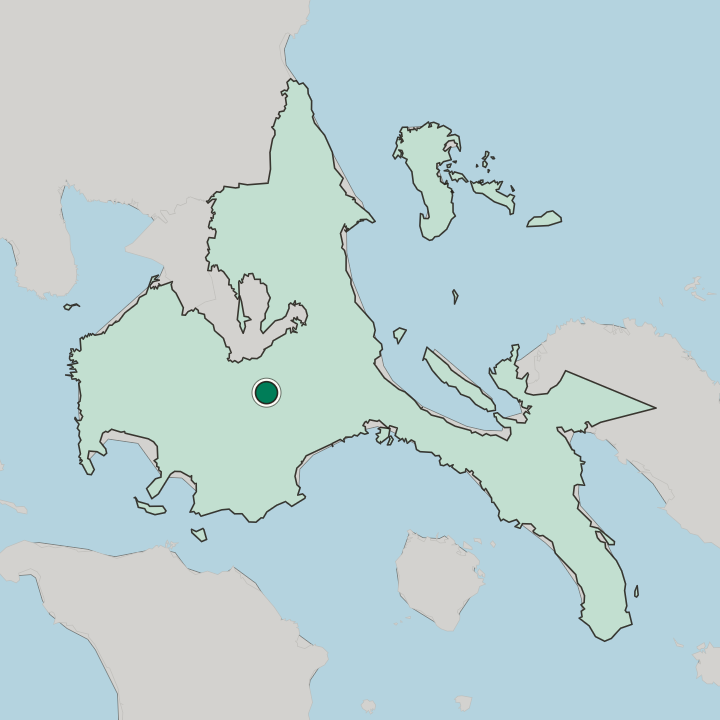
By land area San Pablo is the largest in Laguna province, and its 80 barangays climb the foothills of Mount Banahaw, Mount Makiling, and the Sierra Madre Mountains. Seven crater lakes pit the ground between them, all of them part of the Laguna Volcanic Field. Mount San Cristobal stands east.
It is an inactive volcano on the Quezon boundary, called the evil twin of Mount Banahaw next door. Coconut, lanzones, and rambutan grow on the volcanic soil, and Manila lies 82 kilometres northwest by road through Alaminos.
What is the climate of San Pablo?
Height is what cools San Pablo. The city sits above the flatlands that the rest of Laguna occupies along Laguna de Bay, and the forested slopes of Mount Banahaw and Mount Makiling keep its air cooler than Calamba's or Santa Rosa's. The year splits into wet and dry rather than warm and cold.
Rain refills the seven crater lakes through the wet months, and the drier stretch is the one that makes a circuit of Lake Pandin and Lake Yambo comfortable on foot.
How do you get to San Pablo?
Maharlika Highway does the heavy work, running through the city on its way from Batangas to Quezon. Buses between Manila and Lucena stop at the San Pablo City Central Terminal, at SM City San Pablo, and at San Rafael by the Cipriano Colago Avenue junction. Drivers from Manila usually take the STAR Tollway and turn off at Santo Tomas.
Philippine National Railways keeps San Pablo station on its southern main line. Jeepneys leave for Alaminos, Calauan, and Tiaong, and Werner Schetelig Avenue carries the ones bound for Nagcarlan and Liliw. Tricycles cover the barangays.
Common questions
What is the best area to stay in San Pablo?
Plaza Rizal and the cathedral end of Jose Rizal Avenue: Walking to San Pablo Cathedral, Plaza Rizal, and the public market. Dagatan Boulevard, on the Lake Sampaloc shore: Mornings on the Lake Sampaloc lakefront below Doña Leonila Park. San Rafael, out on Maharlika Highway: Late arrivals at SM City San Pablo or the San Pablo City Central Terminal.
Good for
More cities in Calabarzon
Updated September 2026