Philippines · Calabarzon
Where to Stay in Santa Cruz, Calabarzon
Santa Cruz, founded in 1602, is the capital of Laguna province and the junction town through which the routes of eastern Laguna run.
Hotel links are affiliate links: booking through them may earn us a commission, at no extra cost to you. It never affects how places are ranked. How this works


Where to stay in Santa Cruz
Where the beds are, and what that means for the visit.
Santa Cruz puts a traveller in the middle of Laguna's administrative and transport life, not at the edge of a view. Rooms here are practical. The town's beds cluster near the terminal traffic and the provincial offices, which is exactly where anyone using Santa Cruz as a junction wants to be, and equally the reason nobody chooses it for atmosphere.
Being the capital of Laguna alone determines who is sleeping in the town. Position beats atmosphere, every time. Two practical zones exist.
Around the transport hub, stays are built for early departures into eastern Laguna, with noise the cost of that convenience and a wide choice of onward routes the payoff. Nearer Dambanang Kawayan the streets quieten, and a stay on that side works better for anyone treating Santa Cruz as a place to look at rather than a place to leave from. Neither side offers many rooms.
The Municipality of Santa Cruz is not large, and travellers moving through Calabarzon on a schedule usually book what is available rather than what they would choose, then find that a capital town of this size puts everything within a walk anyway.
Find hotels in Santa Cruz
Direct booking searches for these neighbourhoods.
Around the transport hub
Rooms beside the Santa Cruz terminals trade quiet for the widest choice of onward routes into the towns of eastern Laguna.Find hotels in Around the transport hubThe quieter Santa Cruz streets within sight of Dambanang KawayanNear Dambanang Kawayan
The streets around Dambanang Kawayan are the calmest in Santa Cruz, and the only part of the capital worth walking for its own sake. Rooms are few around here — worth securing early.Find hotels in Near Dambanang KawayanBusiness in the Laguna provincial capital rather than sightseeingThe provincial offices quarter
Stays beside the provincial offices of Santa Cruz suit anyone whose reason for being in Laguna is paperwork rather than the road onward.Find hotels in The provincial offices quarterHotel links are affiliate links: booking through them may earn us a commission, at no extra cost to you. It never affects how places are ranked. How this works
About Santa Cruz
What is Santa Cruz known for?
Santa Cruz is where Laguna's business gets done. As provincial capital it holds the provincial offices, and as the transport hub for eastern Laguna it collects the routes that fan out to the towns beyond, which gives the streets a working rhythm rather than a touristic one. Dambanang Kawayan is the exception.
It is the one name here that brings visitors who would otherwise pass straight through on their way somewhere else in the province.
What are the main landmarks in Santa Cruz?
Dambanang Kawayan is the landmark Santa Cruz is listed for, and for most visitors it is the whole list. No rival stands beside it. What the town has instead is the working fabric of a provincial capital, the offices and terminals and market streets that a transport hub for eastern Laguna produces rather than a set of monuments.
Founded in 1602, Santa Cruz has had time to accumulate more, and the absence of it is part of what the place is.
What is the history of Santa Cruz?
Santa Cruz carries a founding date of 1602, older than most of the towns it now serves. The name is Spanish. A settlement of that age sits well back in the province's record, and the role Santa Cruz plays across Laguna, capital, junction and market, is the accumulated result of having been in the right place on the road for a very long time.
That position has never moved. Being the transport hub for eastern Laguna is not a role Santa Cruz chose so much as one the geography of the province handed it, and every function the town holds since has followed from the routes converging here. The provincial capital followed.
Provincial administration needs a place everyone can already reach, and Santa Cruz was that place. Dambanang Kawayan belongs to a different strand of the same past, a structure that has become the one thing outsiders can name about the Municipality of Santa Cruz. Everything else stayed practical.
Four centuries after 1602 the town still works as a place things pass through, which is a modest kind of continuity and the most accurate description of Santa Cruz within Calabarzon and the wider Philippines.
Where is Santa Cruz?
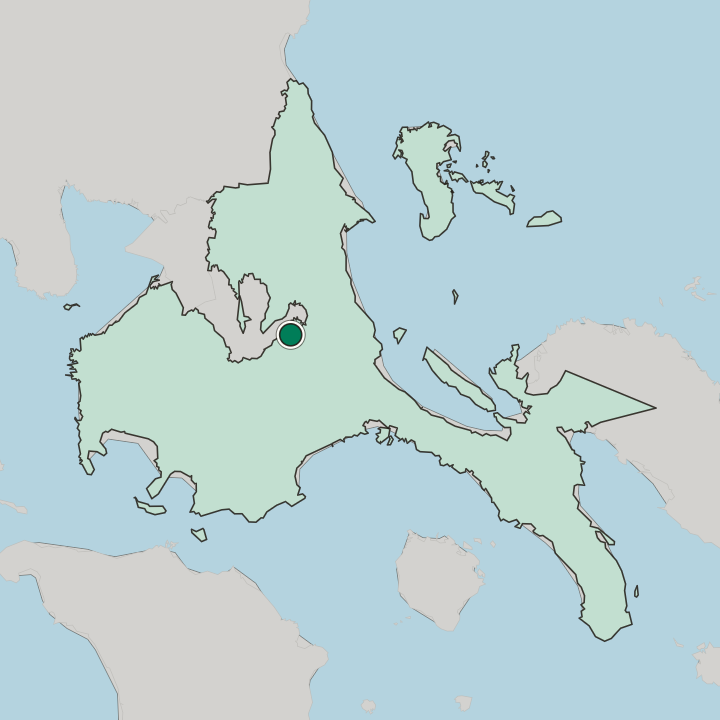
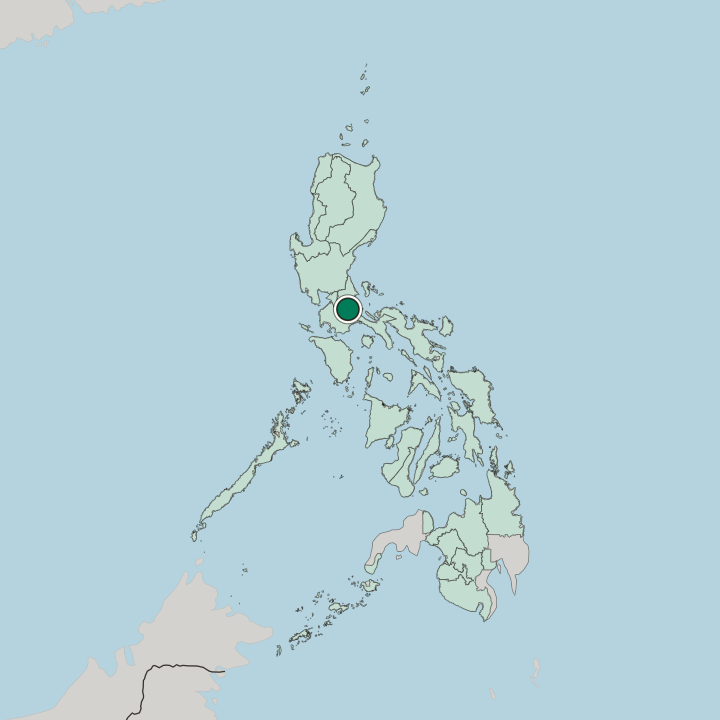
Santa Cruz occupies a modest area for a provincial capital, compact enough to cross without transport. The province opens out around it. Routes leave the town toward the rest of eastern Laguna, and it is that fan of connections, rather than any feature of the ground itself, that fixes Santa Cruz where it is on the map of Calabarzon.
About 38 square kilometres make up the municipality, one corner of a Luzon region that stretches southeast of Metro Manila and gathers Laguna with Cavite, Batangas, Rizal and Quezon.
What is the climate of Santa Cruz?
Wet and dry is the only division that matters in Santa Cruz, and the roads register it before anyone else does. Heat holds all year. The monsoon months put the heaviest rain on the routes out to eastern Laguna, which is what a transport town notices first, and the drier half of the year is when the province is straightforward to cross.
How do you get to Santa Cruz?
Getting to Santa Cruz is the easy part, since the town exists as a junction. Laguna's provincial roads meet at the town. Services running between the province's towns pass through on their way across eastern Laguna, which makes Santa Cruz reachable from most of Calabarzon without planning, and makes it the place other journeys are assembled from.
Common questions
What is the best area to stay in Santa Cruz?
Around the transport hub: Early departures into eastern Laguna from the Santa Cruz terminals. Near Dambanang Kawayan: The quieter Santa Cruz streets within sight of Dambanang Kawayan. The provincial offices quarter: Business in the Laguna provincial capital rather than sightseeing.
More cities in Calabarzon
Updated September 2026