Sweden · Västerbotten County
Where to Stay in Skellefteå, Västerbotten County
Skellefteå is a city on the Baltic coast of north-eastern Västerbotten County, an industrial centre of northern Sweden.
Hotel links are affiliate links: booking through them may earn us a commission, at no extra cost to you. It never affects how places are ranked. How this works


Where to stay in Skellefteå
The practical side of choosing where to sleep.
Most visitors stay in the city centre, where hotels, the timber cultural centre, and guesthouses sit within an easy walk of the shops, the museums, and the bridges over the Skellefteälven. The centre suits business travellers and city visitors who want services, dining, and the riverside sights close at hand. Rooms fill on weekdays.
The industrial boom of recent years has pressed hard on beds, so the centre and the districts around it book up early when the works and the city draw their crowds. Out toward the Baltic coast east of the city, cabins, cottages, and campsites open through the warm months for bathers and families who come for the beaches and the long northern light, while inland toward Boliden the small towns and lakes hold cottages for fishers and hikers. Winter brings aurora-watchers.
Reserve well ahead in every season, because demand here runs strong across the year and the stock of beds is stretched thin.
Find hotels in Skellefteå
Direct booking searches for these neighbourhoods.
City centre
hotels and dining near the river, museums, and the timber centre. Rooms are few around here — worth securing early.Find hotels in City centresummer bathers and familiesBaltic coast
cabins and campsites by the beaches and sea. Lodging is scarce in this area; reserve in advance.Find hotels in Baltic coastfishers and hikersInland toward Boliden
cottages by the lakes and forests of the mining districtFind hotels in Inland toward BolidenHotel links are affiliate links: booking through them may earn us a commission, at no extra cost to you. It never affects how places are ranked. How this works
Things to do in Skellefteå
Ranked by global recognition; descriptions from Wikidata (CC0).
Museums & Galleries
3- Skellefteå museum
- Museum Anna Nordlander Skellefteå
- Skellefteå Konsthall
Churches & Religious Sites
3- Sankt Olovs kyrka Heritage
- Morö Backe Church Heritage
- Skellefteå landsförsamlings kyrka
Stadiums & Sports
1- Norrvalla IP sports ground
worth knowingacross 3 categories in Skellefteå
About Skellefteå
Skellefteå is a city built on industry.
What is Skellefteå known for?
Long a centre for gold and ore from the rich mining belt inland at Boliden, it has drawn fresh attention as the home of a vast battery works, and it carries one of the tallest timber buildings in the world in its riverside cultural centre. Wood is a theme here. The city also keeps Skellefteå museum, the art hall Skellefteå Konsthall, and a cluster of churches across its districts, while the Skellefteälven river and the Baltic shore shape the country around it.
What are the main landmarks in Skellefteå?
The riverside cultural centre is the city's signature, a soaring tower of cross-laminated timber that ranks among the tallest wooden buildings anywhere. Skellefteå museum keeps the story of the district. The art hall Skellefteå Konsthall, the Museum Anna Nordlander, and a wide spread of churches fill out the city, from Sankt Olovs kyrka and the old Skellefteå landsförsamlings kyrka to the parish churches of Anderstorp, Morö Backe, Sörböle, and Sunnanå.
Through the centre runs the Skellefteälven. The mining country inland and the Baltic coast close the wider picture.
What is the history of Skellefteå?
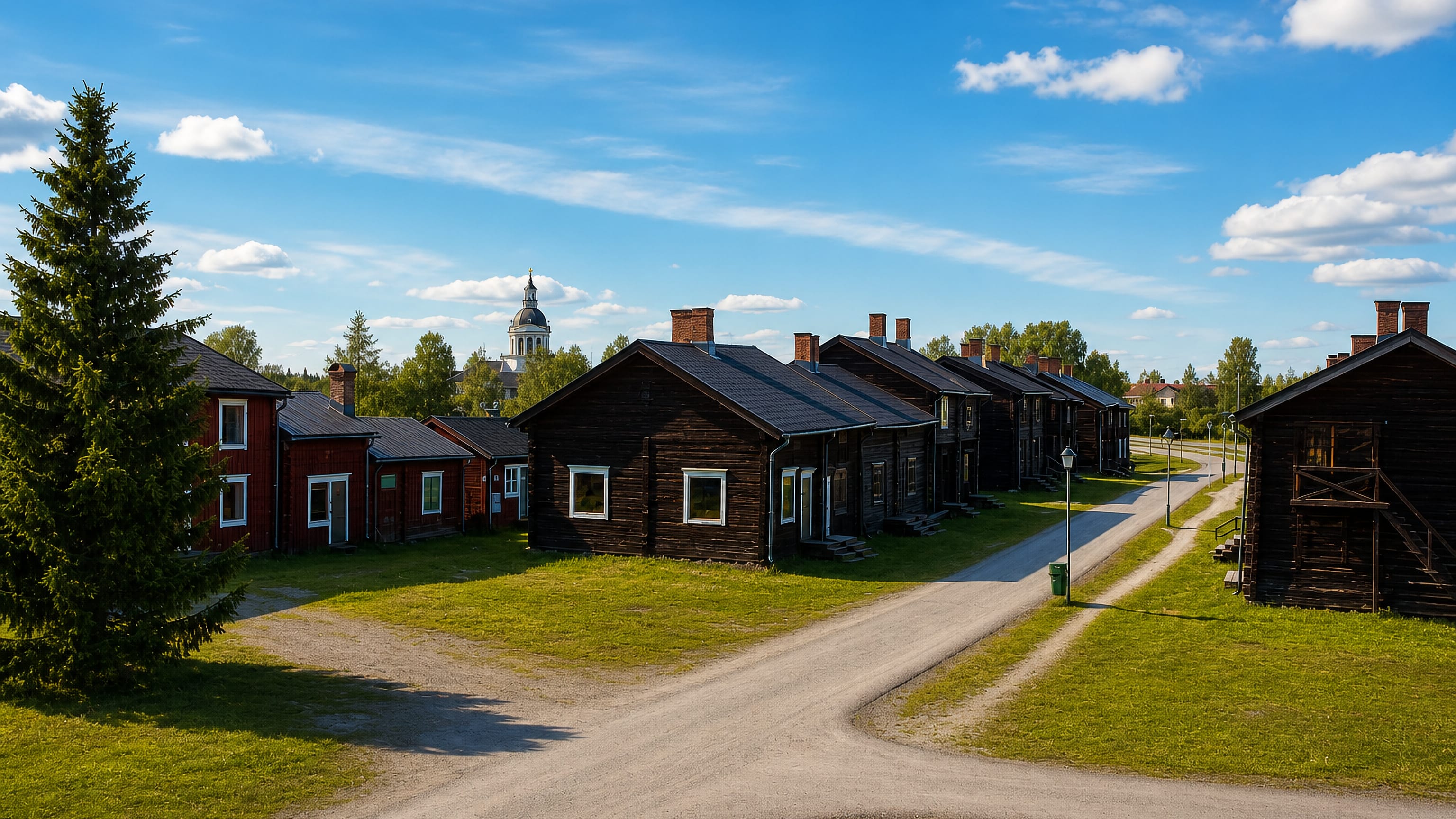
The district was settled along the river. For long ages farmers and fishers worked the land where the Skellefteälven reaches the Baltic, gathering around an old church village whose parish church and rows of small wooden cottages drew the scattered people of the country to market, worship, and trade through the seasons. The town itself was chartered in the nineteenth century.
Gold and ore made the modern city. When rich deposits were found in the forests inland at Boliden, mining and smelting transformed the district, drawing workers, capital, and railways, and the town on the river grew into a busy centre for the wealth pulled from the ground. Industry kept on reshaping the place.
In recent times a vast battery works rose on the edge of the city and a tower of timber went up by the river as a cultural centre, and Skellefteå, long a quiet northern seat, found itself among the fastest-changing cities of Sweden, still bound to the river, the coast, and the ore-rich country behind it.
Where is Skellefteå?
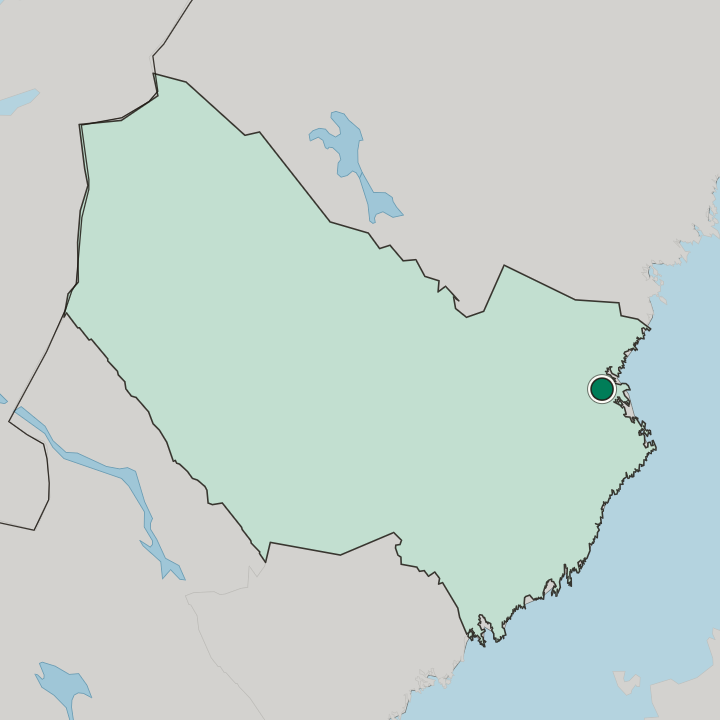
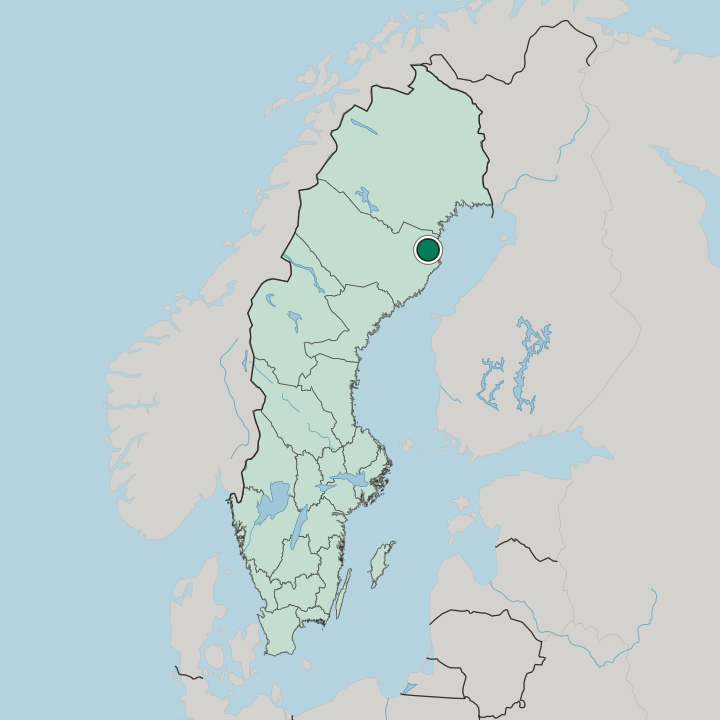
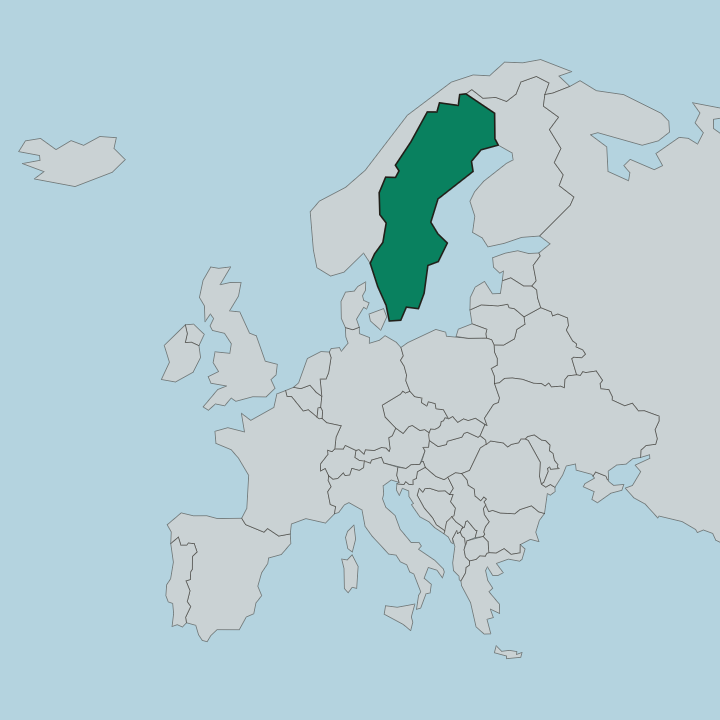
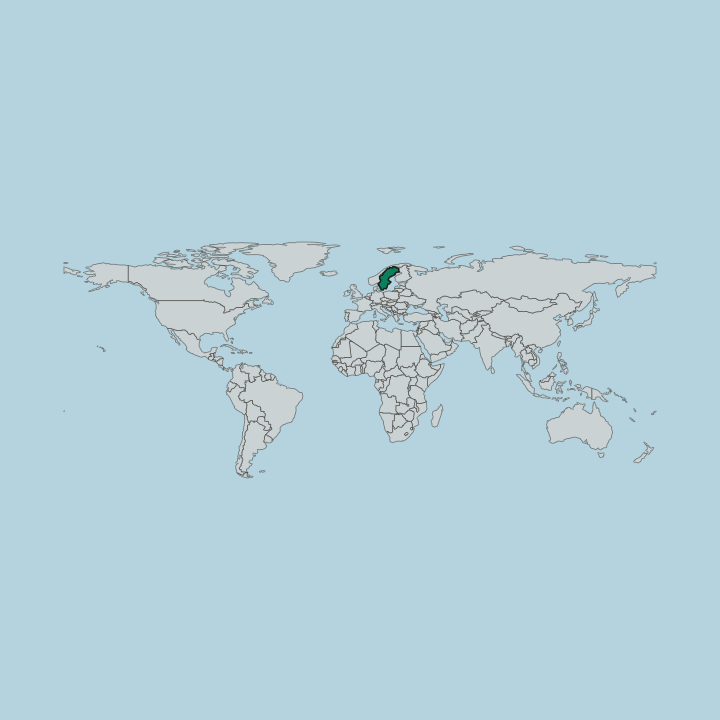
Skellefteå lies in the north-eastern part of Västerbotten County, on the Baltic coast where the Skellefteälven river reaches the sea in northern Sweden. The city sits along the lower river, with the open coast and its islands to the east and the forests, lakes, and mining country rising inland to the west toward Boliden and the interior. The setting is river and coast.
Roads and rail tie the city north toward Piteå and Luleå and south toward Umeå along the Baltic plain.
What is the climate of Skellefteå?
The climate by the coast here runs cold. Winters are long, dark, and snowy, with hard frost and deep snow lying over the city and the country around it for months while the sun stays low and the days run short through the darkest part of the year. The warm season runs brief but luminous.
The long days bring mild warmth, green forest, and open water, drawing people to the coast and the river before the cold returns. Snow cover here is reliable and lasting each winter.
How do you get to Skellefteå?
Skellefteå has its own airport. It lies a short way out of the city and links the coast to Stockholm and other centres, serving as the main gateway for visitors from the south. Trains and buses reach the city along the Baltic route.
Drivers come on the main coastal road from Umeå in the south and from Piteå and Luleå in the north, while local roads run inland to Boliden and the forest country and east to the coast and its beaches.
Common questions
What is the best area to stay in Skellefteå?
City centre: business and city visitors by the Konsthall. Baltic coast: summer bathers and families. Inland toward Boliden: fishers and hikers.
Good for
More cities in Västerbotten County
Updated October 2026