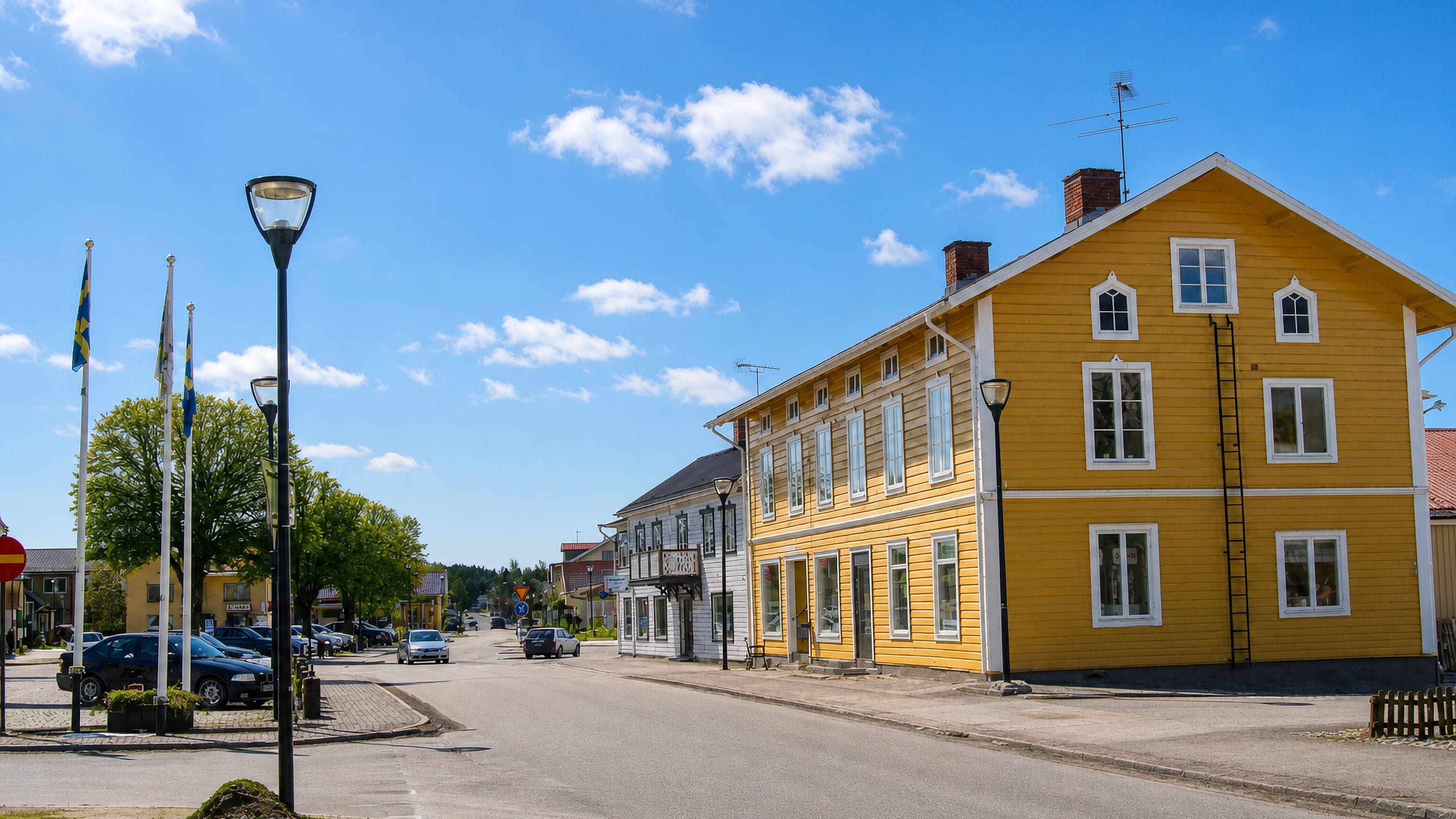
Sweden · Västra Götaland County
Where to Stay in Hova, Västra Götaland County
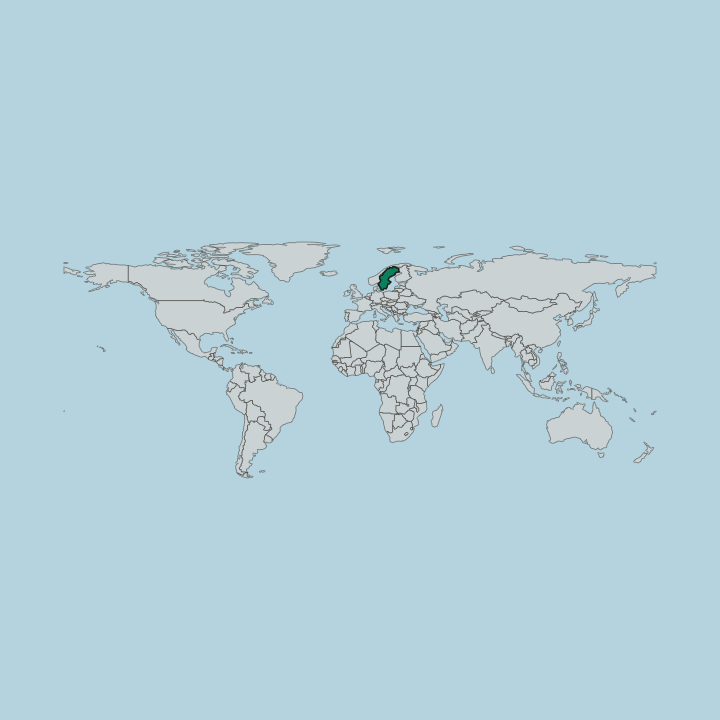
Hova is one of two seats of Gullspång Municipality in central Sweden, a small Västra Götaland County locality set around Hova kyrka.
Hotel links are affiliate links: booking through them may earn us a commission, at no extra cost to you. It never affects how places are ranked. How this works


Where to stay in Hova
The practical side of choosing where to sleep.
Two centres, not one. Gullspång Municipality is unusual in running its affairs from Hova and from Gullspång at the same time, and that split matters to a visitor because a bed unavailable in one of them may well be free in the other, a short drive away. Hova itself is tiny.
What rooms exist here sit close to Hova kyrka, which puts the church, the shops and Hova hembygdsmuseum inside a few minutes on foot. Water pulls the rest of the demand. Lakes lie through Gullspång Municipality, and the cottages and cabins along them take the visitors who come for swimming, fishing and a week outdoors rather than for anything the two seats can offer.
Those stays assume a car. Nothing on the water is walkable from Hova, and the pattern is to book a house for the week, shop once, and treat the locality as the place to drive to for the church, the museum and whatever else is needed. High summer is the pinch.
Beds across a municipality this small run out quickly when the warm weeks arrive, and a late booking may leave nothing between Hova and Gullspång at all.
Find hotels in Hova
Direct booking searches for these neighbourhoods.
Hova
the locality's handful of rooms within sight of Hova kyrka, with Hova hembygdsmuseum a few minutes on. Rooms are few around here — worth securing early.Find hotels in HovaFalling back on the municipality's other seatGullspång
the second seat of Gullspång Municipality, a short drive off when Hova has nothing free. Lodging is scarce in this area; reserve in advance.Find hotels in GullspångSwimming and fishing weeks taken by carLakeside cottages
self-catering houses along the lakes of Gullspång Municipality, well out from either seat. Lodging is scarce in this area; reserve in advance.Find hotels in Lakeside cottagesHotel links are affiliate links: booking through them may earn us a commission, at no extra cost to you. It never affects how places are ranked. How this works
About Hova
Hova shares its administrative role.
What is Hova known for?
Gullspång Municipality keeps two seats rather than one, Hova and Gullspång, an arrangement that leaves this locality holding part of the municipal function without ever becoming the single centre of the district it sits in. Its own draws are modest and local. Hova kyrka carries heritage protection, and Hova hembygdsmuseum keeps the local-history collection that a place of this size assembles about itself, its farms and its parish.
What are the main landmarks in Hova?
Hova kyrka is the anchor. The church holds heritage protection, which sets it apart from an ordinary parish building and means its fabric is kept as evidence of the past rather than merely maintained for weekly use. Hova hembygdsmuseum handles the rest.
A local-heritage museum of the kind found across Sweden, it gathers the objects, photographs and household things that record how the parish lived before the district around it changed. There is nothing else on the list.
What is the history of Hova?
The parish is the older unit. Hova kyrka stands at the centre of a parish that organised this stretch of the north-eastern part of Västra Götaland County long before the modern municipal map was drawn, and the church's heritage listing recognises exactly that depth. Parishes were the working geography.
Before county and municipality took over, a church defined who belonged where, where records were kept and how far a person's ordinary world extended, and Hova was the point that answered those questions for the farms around it. Little of it survives above ground beyond the church. Amalgamation changed the picture.
Hova was drawn into Gullspång Municipality, and unusually the new unit did not resolve into a single capital: Hova and Gullspång were both kept as seats, so neither locality absorbed the other and both retained a share of the administrative work. That balance still holds. Memory of the older order is kept deliberately.
Hova hembygdsmuseum keeps the record of the parish itself, the buildings, tools and household objects that no county archive would have collected, and it survives as the local answer to a memory that administration does not hold.
Where is Hova?
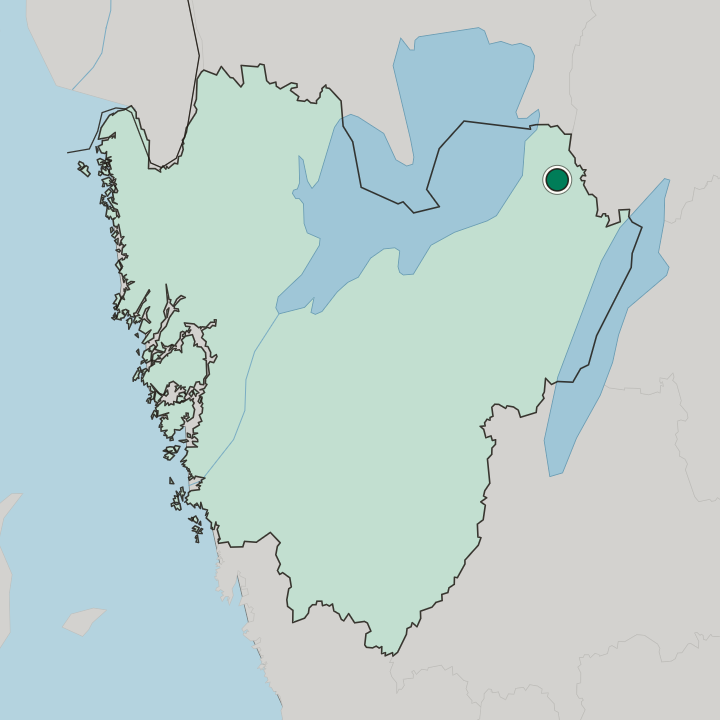
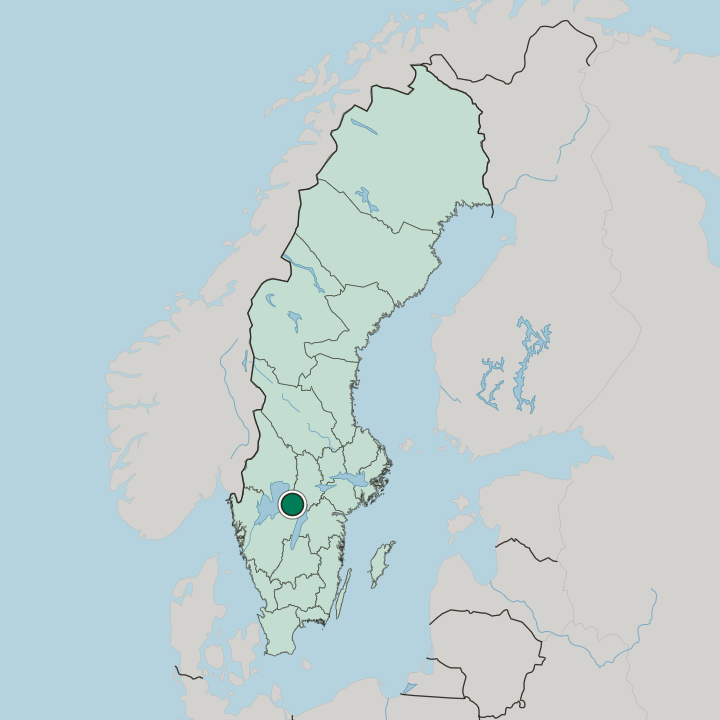
Lakes shape the ground here. Hova lies in the north-eastern part of Västra Götaland County, in central Sweden, on a stretch of country where water, farmland and woodland alternate across the territory that Gullspång Municipality covers. The locality is compact.
Hova kyrka and the streets beside it make up most of the built ground, and beyond them the municipality opens out towards the lakes that carry the district's outdoor season. Gullspång sits within the same municipality.
What is the climate of Hova?
The lakes freeze and thaw here. Water bodies across Gullspång Municipality take the edge off the sharpest cold and the sharpest heat alike, so Hova gets a temperate year with a real winter rather than the severe cold of the north or the mild damp of the coast. Summer is the short season.
Warm weeks run through July and into August, and they are when the lakes and the outdoor life around them are worth the trip, while the rest of the year belongs to grey light and long evenings indoors.
How do you get to Hova?
Everything here runs on the road. Hova sits in the north-eastern part of Västra Götaland County with no terminal of its own, so arrival means driving in through central Sweden, and the same drive continues to Gullspång if the second seat of the municipality is the actual destination. Distances between the two are short.
Once in Hova, Hova kyrka and Hova hembygdsmuseum are close enough together to see on foot, but the lakes and the wider spread of Gullspång Municipality need a car for any practical use.
Common questions
What is the best area to stay in Hova?
Hova: Nights beside Hova kyrka and the hembygdsmuseum. Gullspång: Falling back on the municipality's other seat. Lakeside cottages: Swimming and fishing weeks taken by car.
Good for
More cities in Västra Götaland County
Updated September 2026