
Turkey
Elâzığ, Turkey — Towns & Travel Guide
Elâzığ is a high-plateau province of eastern Turkey, ringed by Lake Hazar and the Euphrates, below the ancient citadel town of Harput.
Hotel links are affiliate links: booking through them may earn us a commission, at no extra cost to you. It never affects how places are ranked. How this works


Towns & cities in Elâzığ
One town here has its own guide — it links to where to stay.

 Turkey
Elazığ
Elazığ is the city of the upper Euphrates valley, built out from old Harput and ringed by Lake Hazar and the reservoirs of the Keban Dam.Where to stay →
Hotel links are affiliate links: booking through them may earn us a commission, at no extra cost to you. It never affects how places are ranked. How this works
About Elâzığ
Harput sets the tone.
What is Elâzığ known for?
The old citadel town on the hill above the modern city keeps a stone castle first raised in the Iron Age, along with mosques, churches, and the mansions of a settlement that outranked the plain below for centuries. Its kitchen made the region's name: Harput köftesi in an oregano-scented sauce, and the walnut sweet orcik dipped in grape molasses. South-east of the city, Lake Hazar draws summer swimmers to a turquoise rift lake, and the Keban Dam holds back the Euphrates.
Vineyards ripen the Öküzgözü grape across the plateau.
Where is Elâzığ?
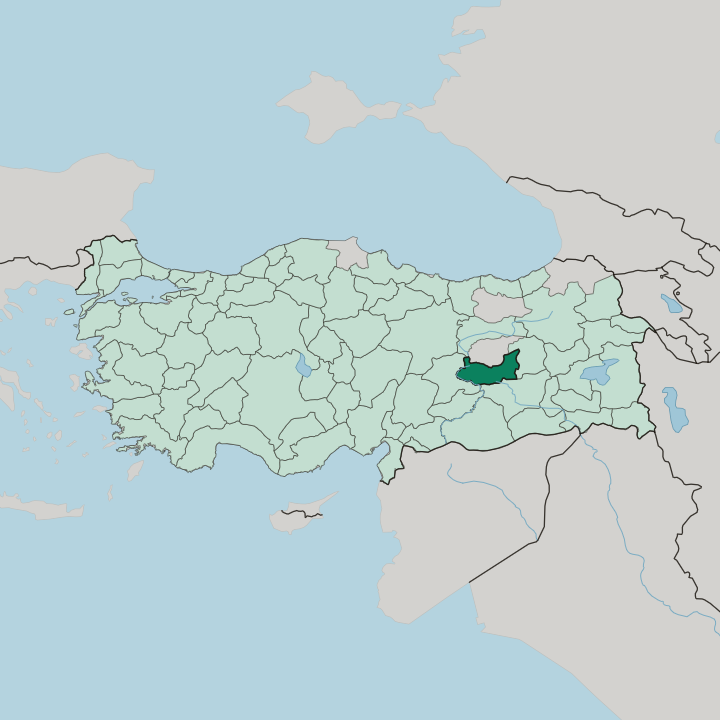
Elâzığ sits on a high plateau in the Upper Euphrates basin, in the southern reaches of Eastern Anatolia. Water rings it on almost every side. The Keban Dam floods the western and northern edge, where its reservoir drowns the old gorge of the Euphrates and backs up the Murat, the eastern of the two rivers that meet to form it.
To the south-east the ground drops to Lake Hazar, a long rift lake cradled in the Taurus foothills. The Karakaya reservoir laps the far south. Between these waters the province is steppe and stony plateau, cut by ridges and opening into fertile plains around the capital.
Two of the Middle East's great rivers begin here. The Euphrates gathers at Keban, where the Karasu and the Murat join a short way above the dam, while the Tigris rises from the outflow of Lake Hazar to the south-east. That lake is no ordinary basin.
It fills a pull-apart trough on the East Anatolian Fault, the strike-slip boundary that grinds along the whole southern flank of the region and shakes it hard from time to time. Above the plain the old citadel of Harput keeps to its hill, and the modern city of Elâzığ spreads on the flat ground below it. Malatya lies west across the Euphrates, Tunceli to the north, Diyarbakır over the Taurus to the south.
What is Elâzığ like?
The province wears the mixed character of Eastern Anatolia. Turks, Kurds, and Zazas share its towns, and Turkish carries the daily talk while Kurdish and Zazaki are heard across the countryside. Harput once held a large Armenian community too, whose churches and schools stood on the hill before the killings of the First World War emptied them.
Locals call one another gakkoş, a worn-down word for brother, and hospitality is a point of pride. The old town gave its name to a whole school of folk music, the plaintive Harput songs sung at winter kürsübaşı gatherings around the stove. Food carries the same weight.
Harput köftesi, small bulgur-and-meat balls simmered with dried oregano, is the dish outsiders learn first, and the sweet orcik, walnuts strung and dipped in grape molasses, is pure Elâzığ. Vines have grown on the plateau for a very long time. The Öküzgözü grape, the ox-eye of Eastern Anatolia, ripens into the deep reds the region is known for.
In the city itself, Fırat University, named for the Euphrates that rises nearby, has made Elâzığ a centre of learning for the whole east.
What is the history of Elâzığ?
Harput carries the deep past here. A fortress of Iron Age Urartu crowned the hill first, and Romans, Byzantines, Artukid Turks, and Ottomans each held the citadel above the plain in their turn. The modern city is far younger.
It grew on the flat ground below in the nineteenth century, as the crowded hilltop town spilled downhill, and took the name Mamuretülaziz for the Ottoman sultan Abdülaziz. That mouthful was later pared back to Elâzığ.
What is the climate of Elâzığ?
Elâzığ has the hard continental weather of the Eastern Anatolian plateau. Winters bite. Snow settles for months and the plateau can drop far below freezing, while the mountain shell around Lake Hazar traps the cold in the basin.
Summers swing dry and hot on the steppe, though the broad sheets of the Keban reservoir soften the air near their shores. The shoulder seasons pass quickly on the Elâzığ plateau. Rain and snowmelt feed the Murat and the plains through the colder half of the year.
How do you get to Elâzığ?
For most travellers, the flight into Elâzığ is the easiest way in. Elâzığ Airport lies a short way outside the city and takes domestic flights from the big western hubs. Trains reach it too.
A through train still grinds the long, slow route west across the Anatolian plateau all the way to Ankara. By road the main approach climbs from Malatya in the west, crossing the Euphrates where the Keban Dam pens the river. From the city, buses fan out to Harput on its hill and down to the Lake Hazar shore.
Common questions
What is the best area to stay in Elâzığ?
Elâzığ: a first base below the Harput hill. Harput: the citadel town of old Harput. Lake Hazar shore: swimming and boats off the Sivrice shore.
Good for
More regions in Turkey
Updated October 2026