
Turkey
Konya, Turkey — Towns & Travel Guide
Konya is Turkey's largest province, the Seljuk-era capital of the whirling dervishes, spread across the Central Anatolian plateau.
Hotel links are affiliate links: booking through them may earn us a commission, at no extra cost to you. It never affects how places are ranked. How this works


Towns & cities in Konya
Pick a town or city — each links to where to stay.

 Turkey
Konya
The whirling dervishes turn in Konya, a city on the Central Anatolian Plateau in central Turkey, once Iconium and capital of the Seljuk Sultanate of Rum.Where to stay → Turkey
Ereğli
Ereğli is a large district of Konya Province in Turkey, standing well above sea level on the ground of ancient Cybistra.Where to stay →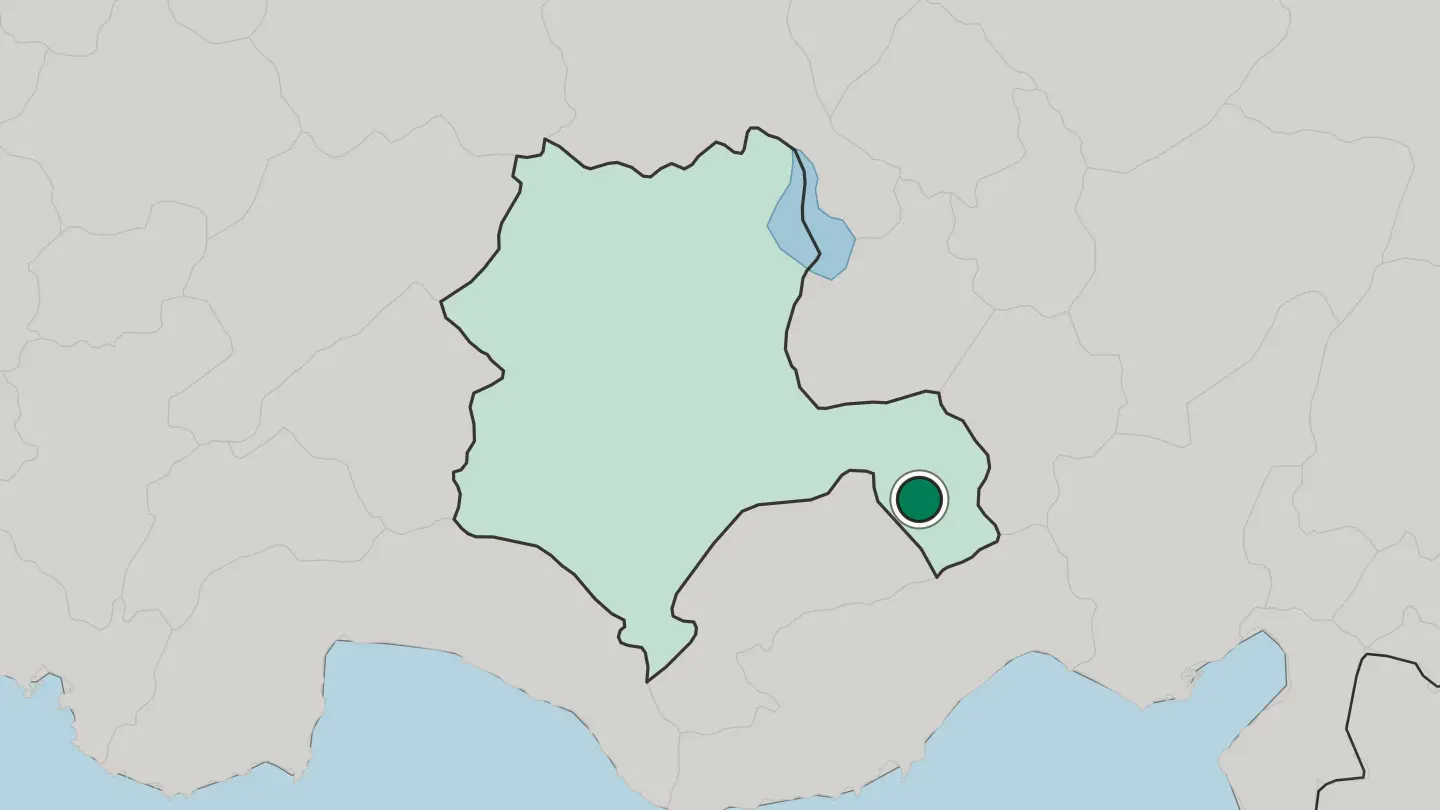 Turkey
Akşehir
Akşehir is a Lakes District town of Konya Province in Turkey, known for Nasreddin Hoca and recorded under the older name Philomelium.Where to stay →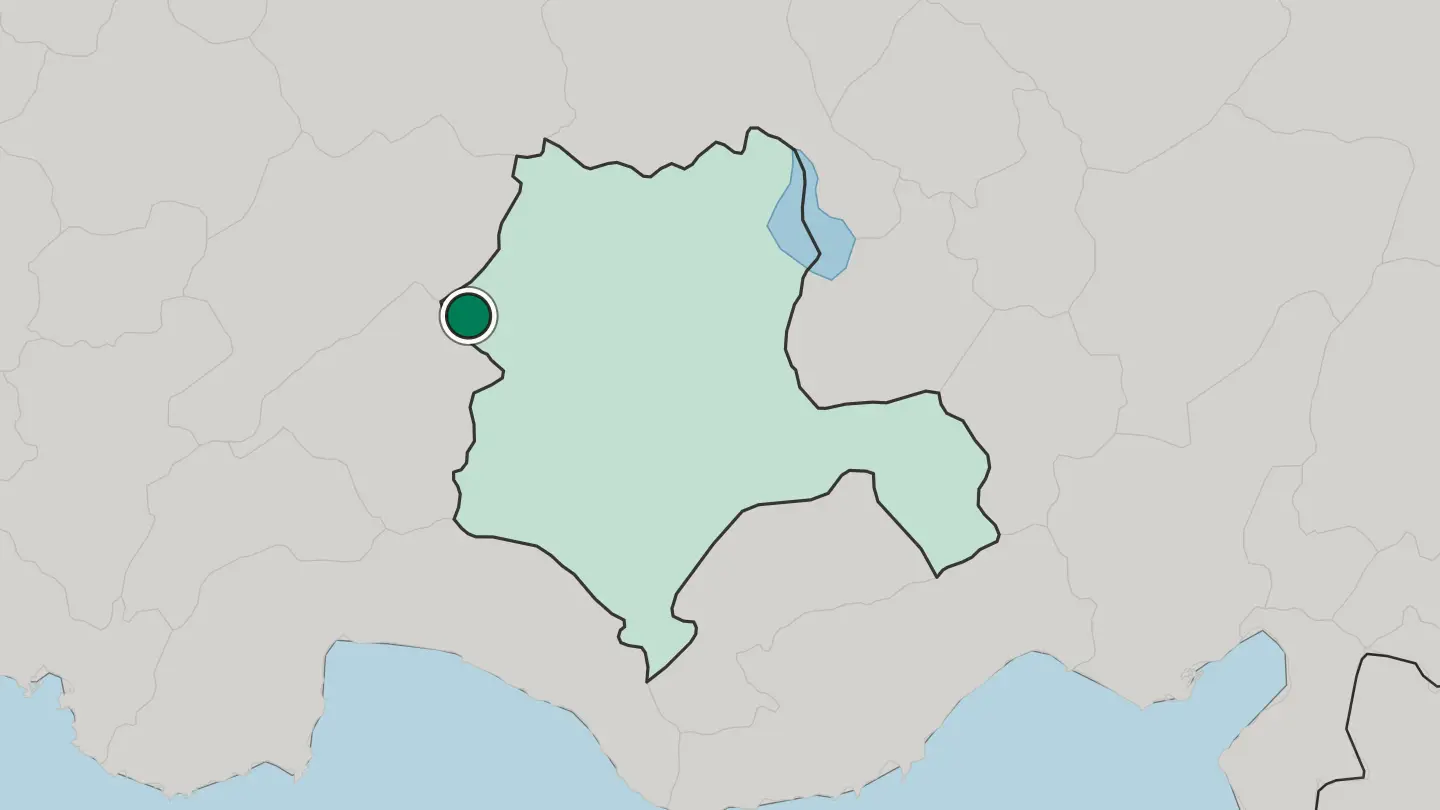
Hotel links are affiliate links: booking through them may earn us a commission, at no extra cost to you. It never affects how places are ranked. How this works
About Konya
Konya answers to one name above all: Rumi.
What is Konya known for?
The 13th-century Persian poet and mystic settled in the city, died there, and lies beneath the green-tiled dome of the Mevlâna Museum, the shrine that draws pilgrims from across the Muslim world. His followers founded the Mevlevi order, whose dervishes turn in the slow, trance-like Sema. Seljuk stone runs through the centre.
The Alâeddin Mosque crowns its hilltop, and carved gateways survive at the İnce Minare and Karatay medrese, both now museums of the Seljuk age.
Where is Konya?
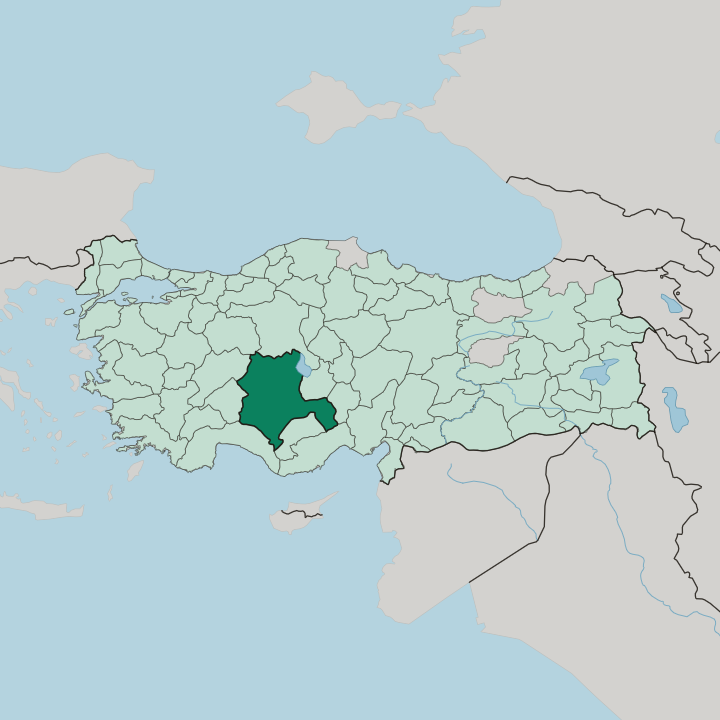
Konya spreads across the southern reach of the Central Anatolian plateau, the dry tableland at the heart of Anatolia. It is the largest province of Turkey by area. Most of that land is the Konya Plain, a vast, almost treeless steppe that runs flat to the horizon.
The plain sits high and open. Along the south it breaks against the Taurus Mountains, the long wall that divides the interior from the Mediterranean coast beyond. Ankara's plateau country reaches down from the north, while the province's corners run toward Cappadocia in the east and the lake district in the west. Water gathers at the plain's edges.
In the southwest lies Lake Beyşehir, the largest freshwater lake in Turkey, held in a national park below the mountains. Toward the north the ground turns white where the salt pan of Lake Tuz spreads over the steppe. Snowmelt off the Taurus feeds the Çarşamba stream, which once emptied into marshes and now waters the irrigated fields around Çumra.
This is grain country. Wheat and barley cover the flats that feed much of the nation, which is why the province is often called the granary of Turkey.
What is Konya like?
Konya wears its faith openly. This is one of Turkey's most devout cities, and the rhythm of the province still turns on Rumi and the order his followers built. Each December the Mevlevi dervishes perform the Sema, spinning with one palm turned to the sky and one to the earth, to mark the night Rumi called his wedding with the divine.
Pilgrims fill the city for it. The mood is quieter and more conservative than Istanbul or the coast, with mosques and tea houses at the centre of daily life. Selçuk University has drawn a younger crowd into that pious frame, so students and pilgrims share the same avenues.
The table is Anatolian and plain in the best sense. Konya's signature dish is etli ekmek, a long, thin flatbread baked with minced lamb and pulled apart by hand. Oven-slow fırın kebabı and sweet, syrupy pastries round out the local table.
Turkish is the language everywhere. West of the centre, the old stone houses and rock-cut churches of Sille recall the Greek Christians who lived on the plateau for centuries before the modern republic.
What is the history of Konya?
Konya's story runs back to the dawn of settled life. At Çatalhöyük, south-east of the city, a Neolithic town of mud-brick houses stood some nine thousand years ago, one of the oldest known anywhere, and it joined the UNESCO World Heritage list in 2012. The Romans knew the city as Iconium.
Its golden age came under the Seljuks, who made Konya the capital of their Sultanate of Rum and raised the mosques and medreses that still define the old town, before Rumi settled here and died in 1273. Mongol pressure ended that era.
What is the climate of Konya?
Konya lies open to a dry, continental climate. The Taurus Mountains wall off the Mediterranean's rain, so the plain stays parched, and most of the little moisture it gets falls as winter snow. Snow covers the plain for months.
Summers are hot and bone-dry by day, yet the nights turn cool once the Anatolian plateau loses its heat. Spring and autumn are the gentler seasons, when meltwater greens the steppe before the summer sun burns it back to straw.
How do you get to Konya?
Konya is easy to reach for an inland city. Fast YHT trains climb up from Ankara in about an hour and a half and run through from Istanbul, gliding across the plateau to a modern station on the city's edge. The airport handles domestic flights and a handful of routes abroad.
Drivers come too. Roads climb south over the Taurus passes to the Mediterranean at Antalya, and run north across the open plain toward Ankara and the rest of Anatolia.
Common questions
What is the best area to stay in Konya?
Konya: Rumi's shrine and the Seljuk core. Beyşehir: lakeside nights below the Taurus. Ereğli: the southern grain plains and Ivriz. Akşehir: cherry orchards and Nasreddin's town.
Good for
More regions in Turkey
Updated October 2026