Turkey
Diyarbakır, Turkey — Towns & Travel Guide
Diyarbakır is a province of south-eastern Turkey, wrapped around a black-basalt walled city on the upper Tigris.
Hotel links are affiliate links: booking through them may earn us a commission, at no extra cost to you. It never affects how places are ranked. How this works


Towns & cities in Diyarbakır
Pick a town or city — each links to where to stay.
 Turkey
Diyarbakır
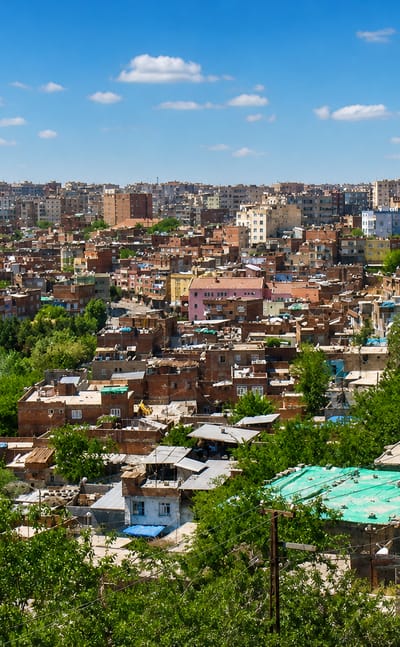
Dark basalt walls ring old Diyarbakır, a historic city of Turkey and the capital of Diyarbakır Province, known for its ramparts and old churches.Where to stay →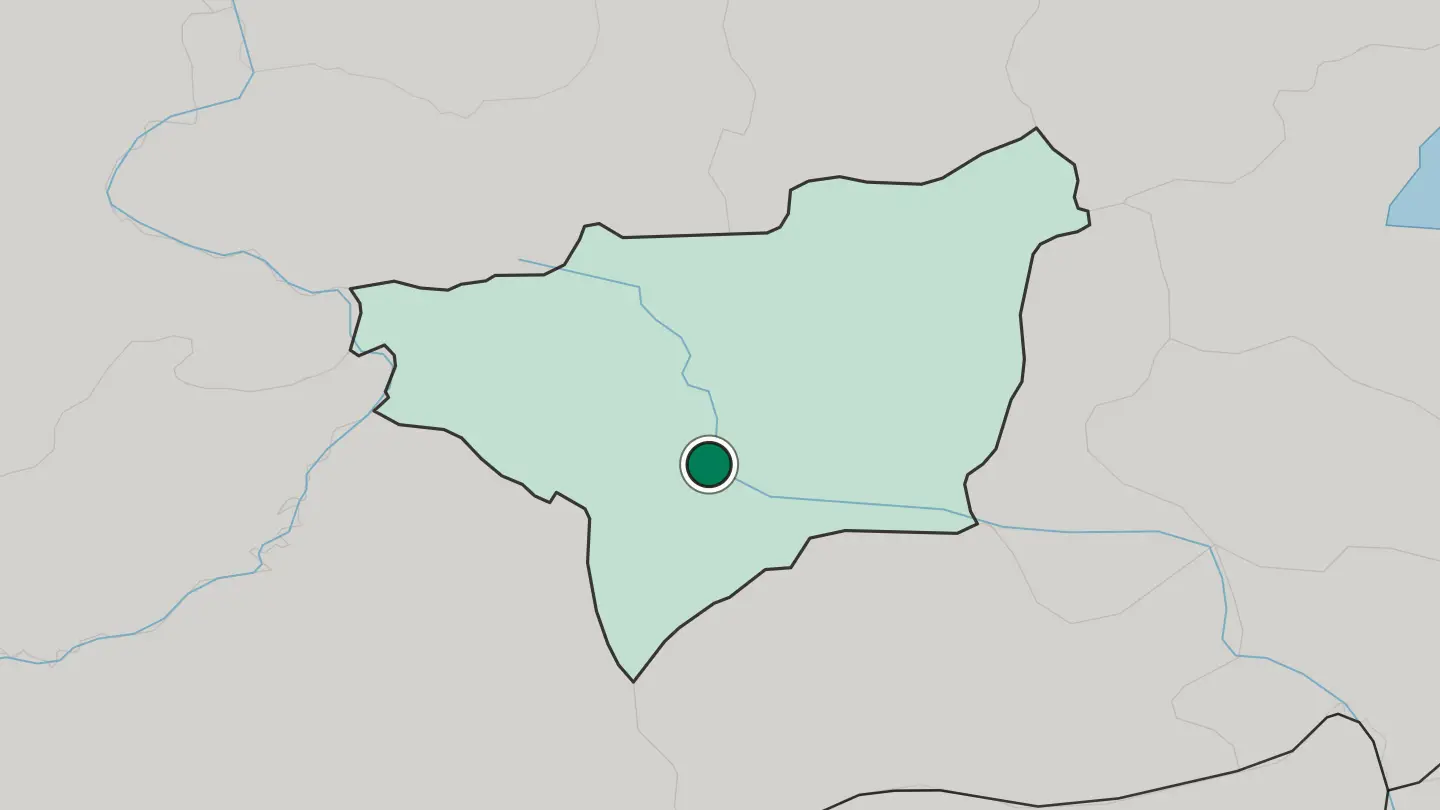
 Turkey
Silvan
Silvan is a district town of Diyarbakır Province, identified with ancient Tigranocerta and known for the Malabadi Bridge.Where to stay →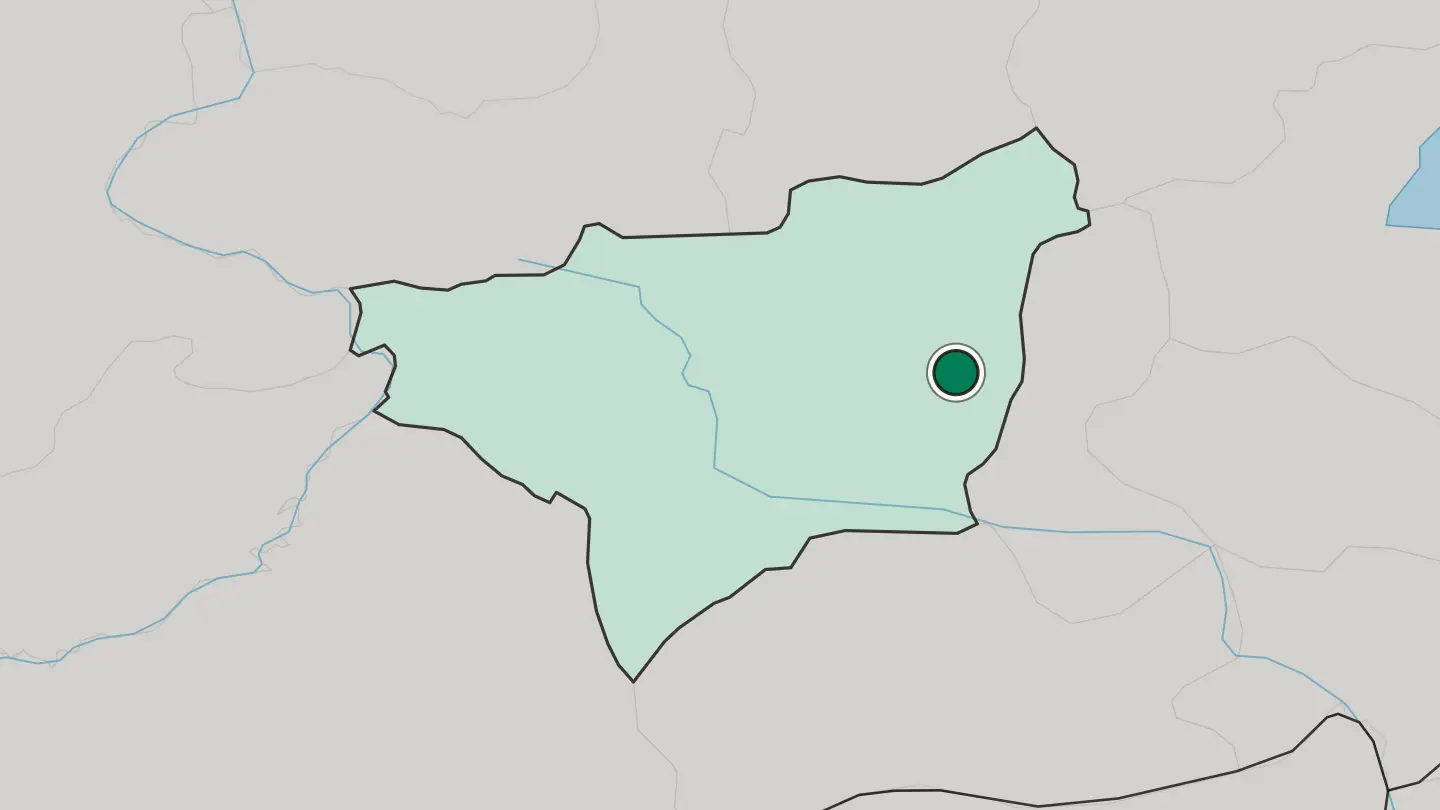 Turkey
Ergani
Çayönü is the reason to come. Ergani is a district town of Diyarbakır Province where exhausted copper and iron workings sit near that prehistoric mound.Where to stay →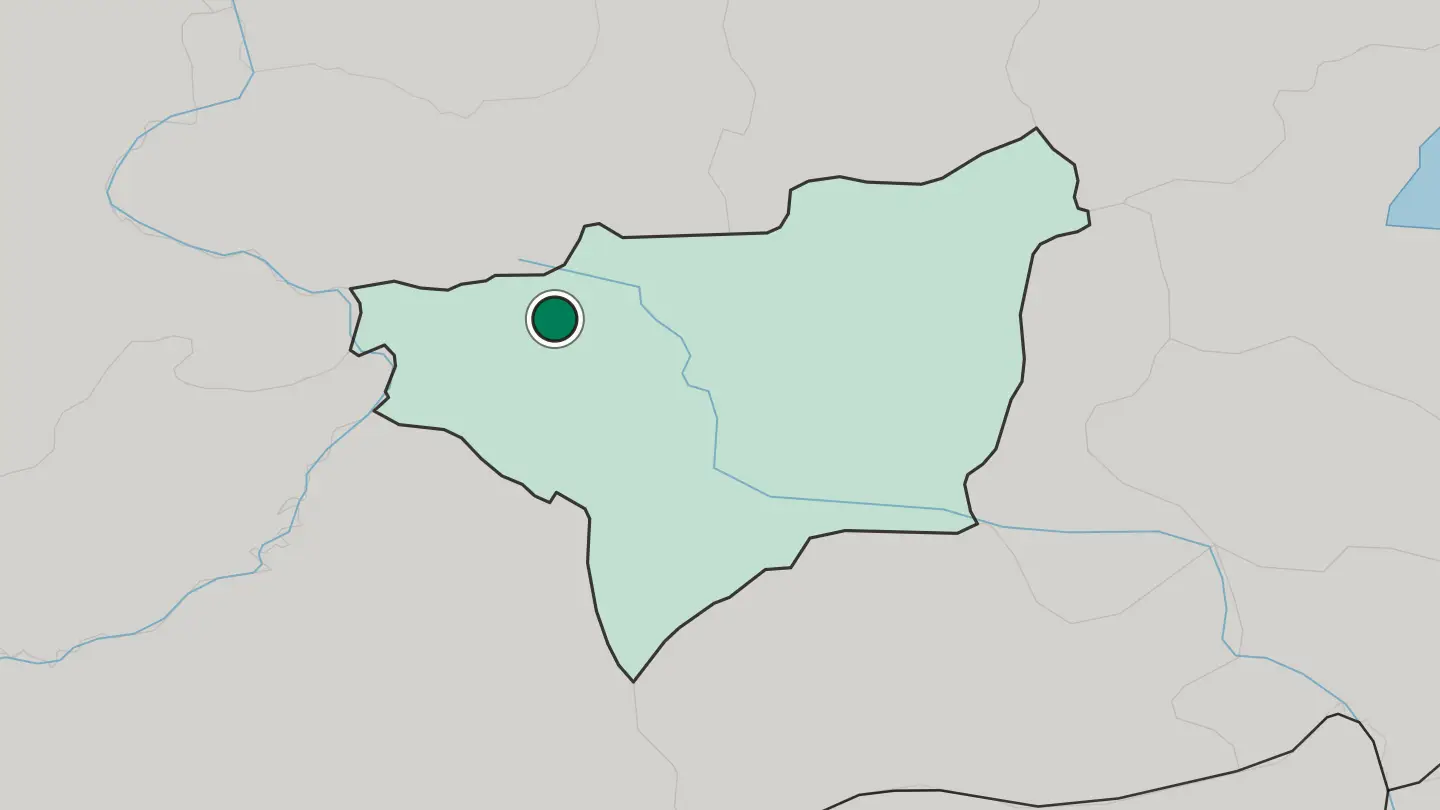
Hotel links are affiliate links: booking through them may earn us a commission, at no extra cost to you. It never affects how places are ranked. How this works
About Diyarbakır
The walls come first.
What is Diyarbakır known for?
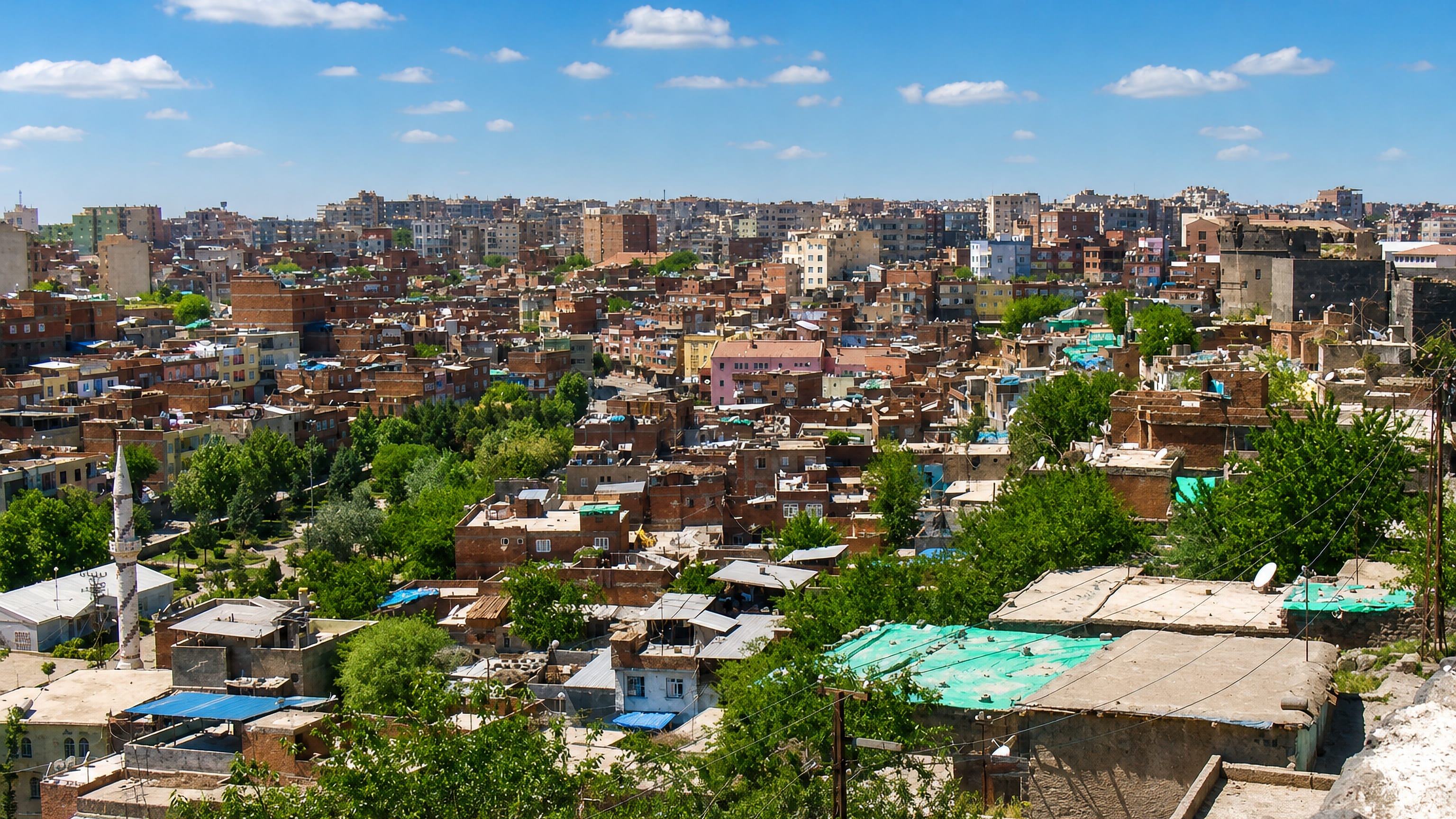
A near-unbroken ring of black basalt encircles Sur, the old walled core of Diyarbakır, standing above the right bank of the Tigris where the river bends below the ramparts. Inside stand the Great Mosque of Diyarbakır, laid in bands of dark basalt and pale limestone, and a warren of courtyards, old churches, and covered markets. The Hevsel Gardens drop toward the water between wall and river.
That fortress-and-gardens landscape holds UNESCO World Heritage status, and out on the basalt plateau the province grows the watermelons it is famous for.
Where is Diyarbakır?
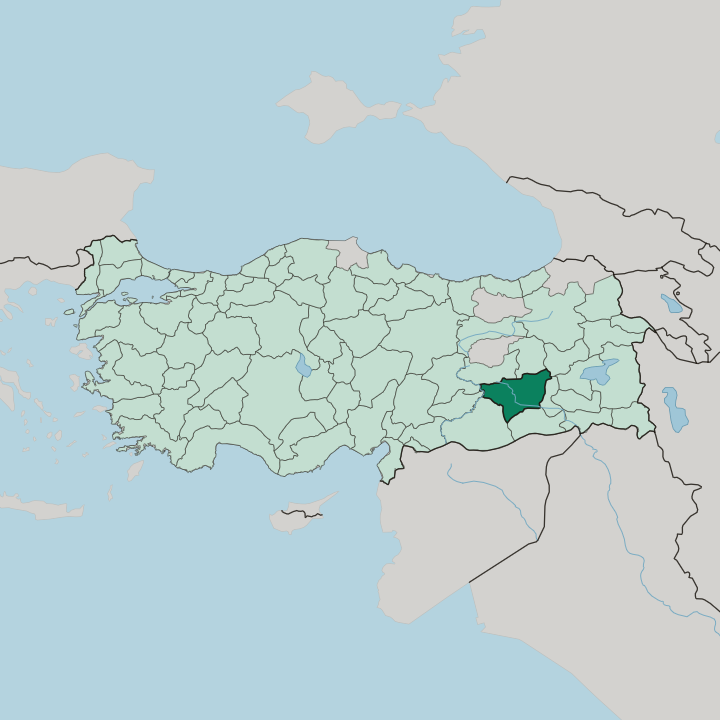
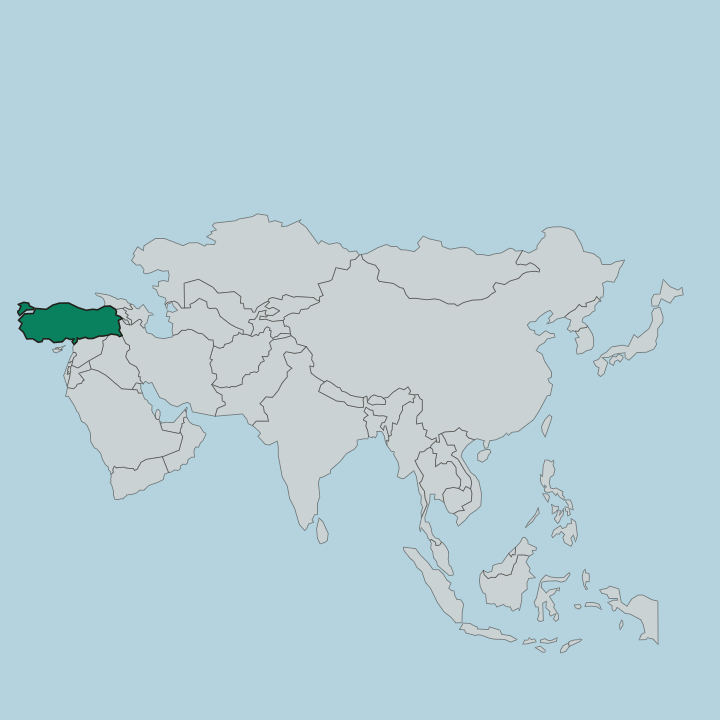
Diyarbakır lies in the south-east of Turkey, in the region of Southeastern Anatolia. Its land belongs to Upper Mesopotamia, the northern reach of the great river plain of the Tigris. The Tigris crosses the province and runs past the provincial capital, which stands on the river's right bank on a shelf of dark volcanic rock.
That rock is basalt, poured out long ago by Karaca Dağ, a low shield volcano on the western rim of the province. The stone is black. It built the ramparts of the old city and gave the whole town its dark colour.
To the north the ground climbs into the Taurus Mountains, the wall that shuts the province off from eastern Anatolia. Southward the plateau falls away toward the open Mesopotamian plain and the hills around Mardin. The province spreads over a broad basalt tableland cut by the Tigris and its tributaries. Şanlıurfa lies to the west, Mardin to the south, Batman to the east, and Malatya off to the north-west across the Taurus.
Seventeen districts fill the province, among them Bismil and Çınar out on the plateau, Ergani and Silvan up toward the northern hills, and Sur at the old walled heart of the capital. Between the ramparts and the river the Hevsel Gardens have been worked for generations, watered off the Tigris. Beyond them the fields carry melons and wheat.
The land is old, and so is the working of it.
What is Diyarbakır like?
Diyarbakır wears its history in black stone. The old city inside the walls is built largely of basalt, from the banded Great Mosque of Diyarbakır down to plain courtyard houses and covered lanes. It is one of the oldest mosques in Anatolia, raised on the plan of an early congregational mosque, its façades striped in dark basalt and pale limestone.
Behind the ramparts the lanes open into basalt courtyards cooled against the summer sun. Armenian and Syriac churches stand among the mosques, a reminder that many peoples have shared the walled town. Two languages are heard here.
Turkish is the official tongue, and Kurdish is spoken widely across the province and the wider south-east. Music leans on the drum and the zurna, the reedy pipe that carries over a crowd at weddings and festivals. The table is generous and meat-heavy.
Kaburga dolması, a stuffed rib roast, and meftune, a garlic-and-sumac stew, sit beside spiced lamb and the sweet flesh of the Diyarbakır watermelon. Life still turns on the old rhythms of the plateau, on the harvest and the river and the long summer heat.
What is the history of Diyarbakır?
The walled city began as Amida. Rome held it as a Tigris frontier fortress, and the emperor Constantius II rebuilt its basalt walls in the year 349. Wave after wave followed: Byzantines, then the Arab rulers whose Bakr tribe gave the region the name Diyar Bakr, then Seljuks and the Artuqid emirs who raised much of the old town.
The Ottomans took the city under Selim I in 1515, making it their administrative seat across the upper Tigris. Through it all the black ramparts held.
What is the climate of Diyarbakır?
Diyarbakır has a hot-summer Mediterranean climate, shaped by its inland seat on the upper Tigris basin. Summers are long, dry, and fierce. From high spring into autumn the basalt plateau bakes under a near-cloudless sky, and the shade of the walls and the river gardens is a real relief.
Winters turn cold and wet, with rain and sometimes snow settling over the old city. Most of the year's rain falls between late autumn and early spring, while the deep-summer months pass almost without a drop. The Taurus to the north keeps the milder sea air well away.
How do you get to Diyarbakır?
Air travel is how most visitors get to Diyarbakır. The city's airport sits just outside the walls and links the province to Istanbul and Ankara in a few hours. Diyarbakır is the road hub of the whole south-east, with highways fanning out to Şanlıurfa, Mardin, and Batman, and a rail line running down through the Tigris country.
It anchors the south-east. Within the province, roads follow the river and the old bridges across it, including the ten-arched Dicle Bridge below Sur. From the capital it is a short hop on to the neighbouring cities of the plateau.
Common questions
What is the best area to stay in Diyarbakır?
Sur: sleeping inside the basalt ramparts. Yenişehir and Kayapınar: modern hotels and onward transport. The Tigris riverside: the Hevsel Gardens and river frontage. Bismil and Ergani: ranging across the plateau.
Good for
More regions in Turkey
Updated October 2026