Turkey
Kocaeli, Turkey — Towns & Travel Guide
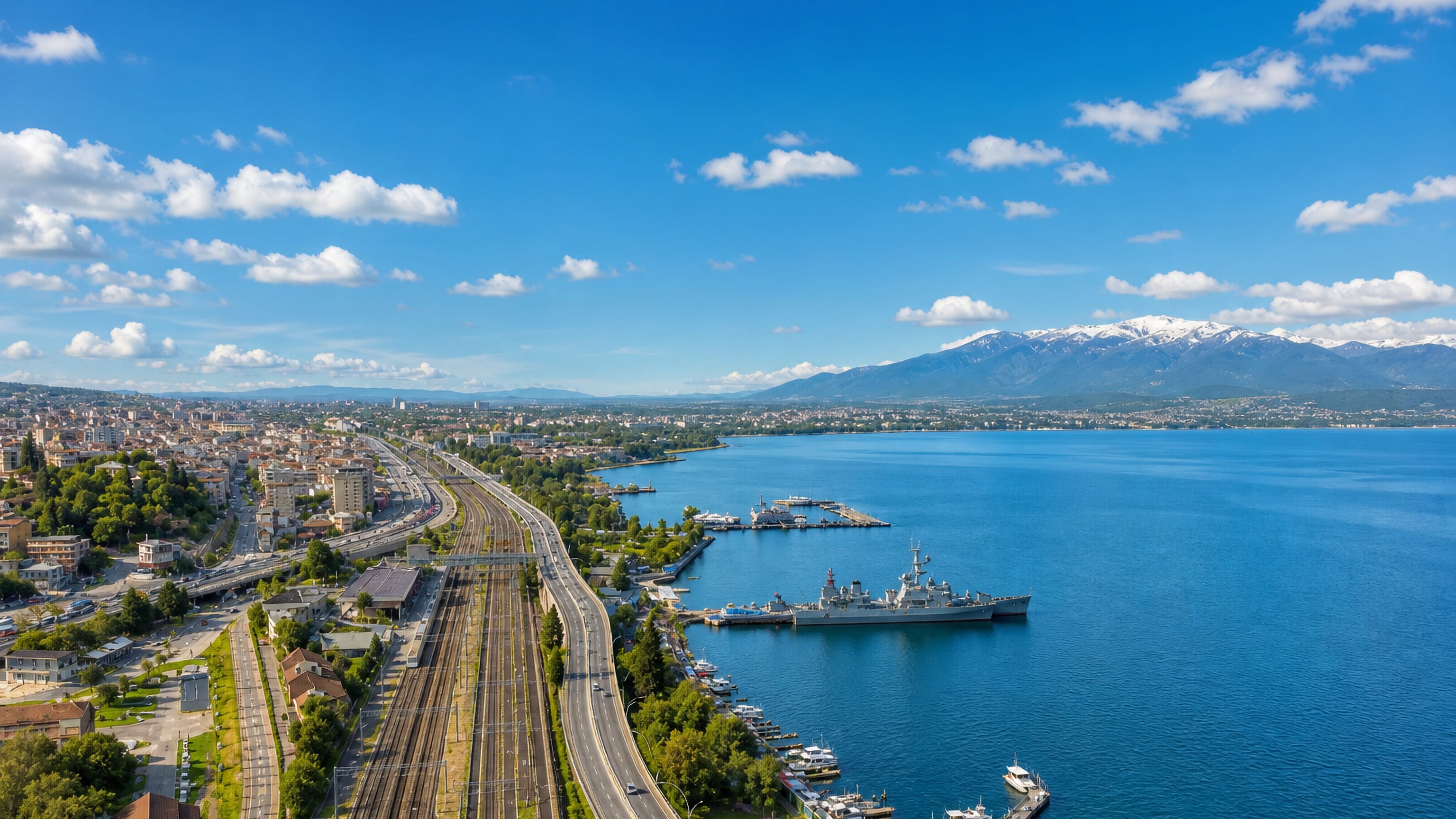
Kocaeli is Turkey's industrial heartland, wrapped around the Gulf of İzmit at the eastern end of the Sea of Marmara.
Hotel links are affiliate links: booking through them may earn us a commission, at no extra cost to you. It never affects how places are ranked. How this works


Towns & cities in Kocaeli
Pick a town or city — each links to where to stay.
 Turkey
Gebze
Gebze, once Libyssa, is a working-class industrial district of Kocaeli Province on the Gulf of İzmit, marked by the Hannibal Memorial.Where to stay →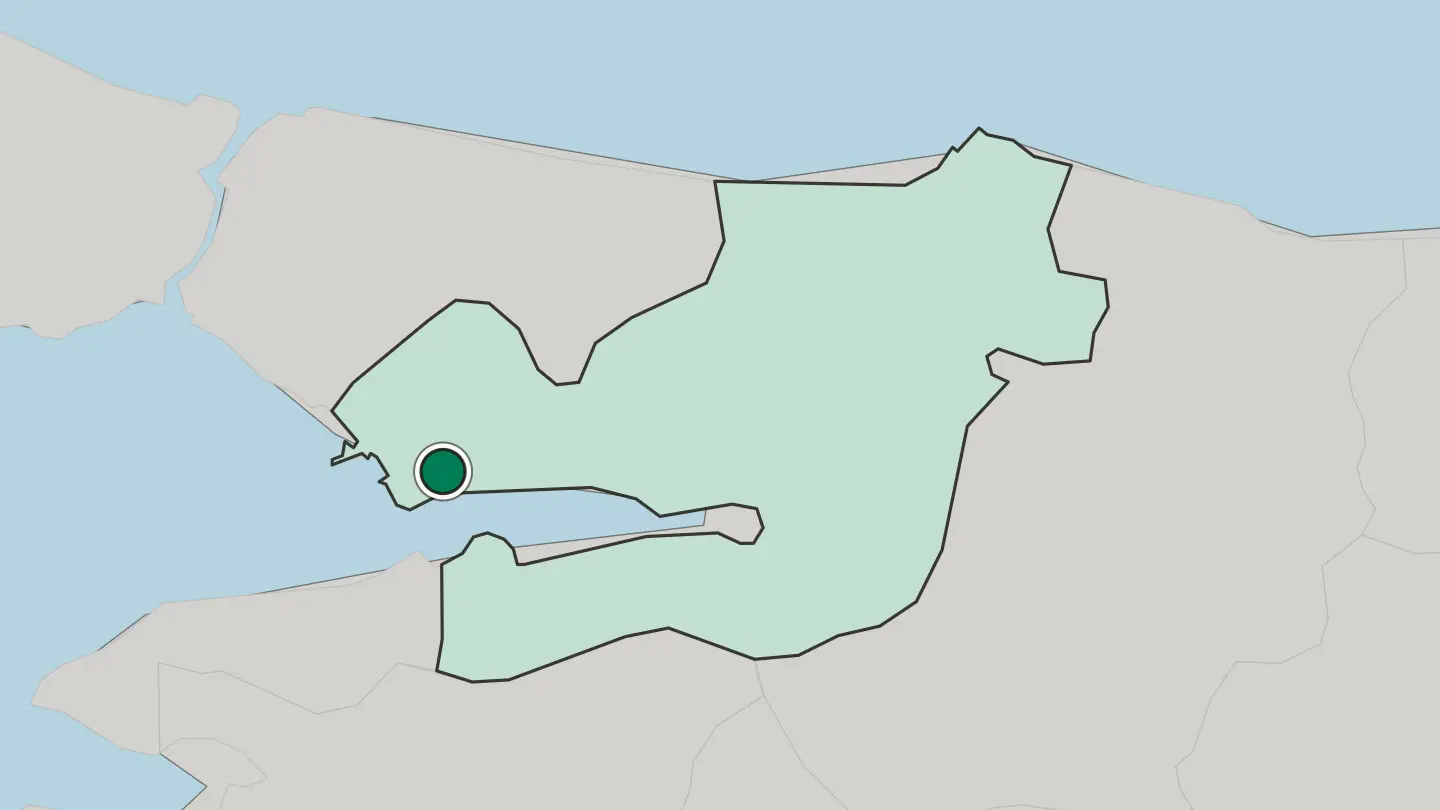
 Turkey
İzmit
İzmit, capital of Kocaeli, stands at the head of the Gulf of İzmit on the Sea of Marmara, over the buried ground of ancient Nicomedia.Where to stay →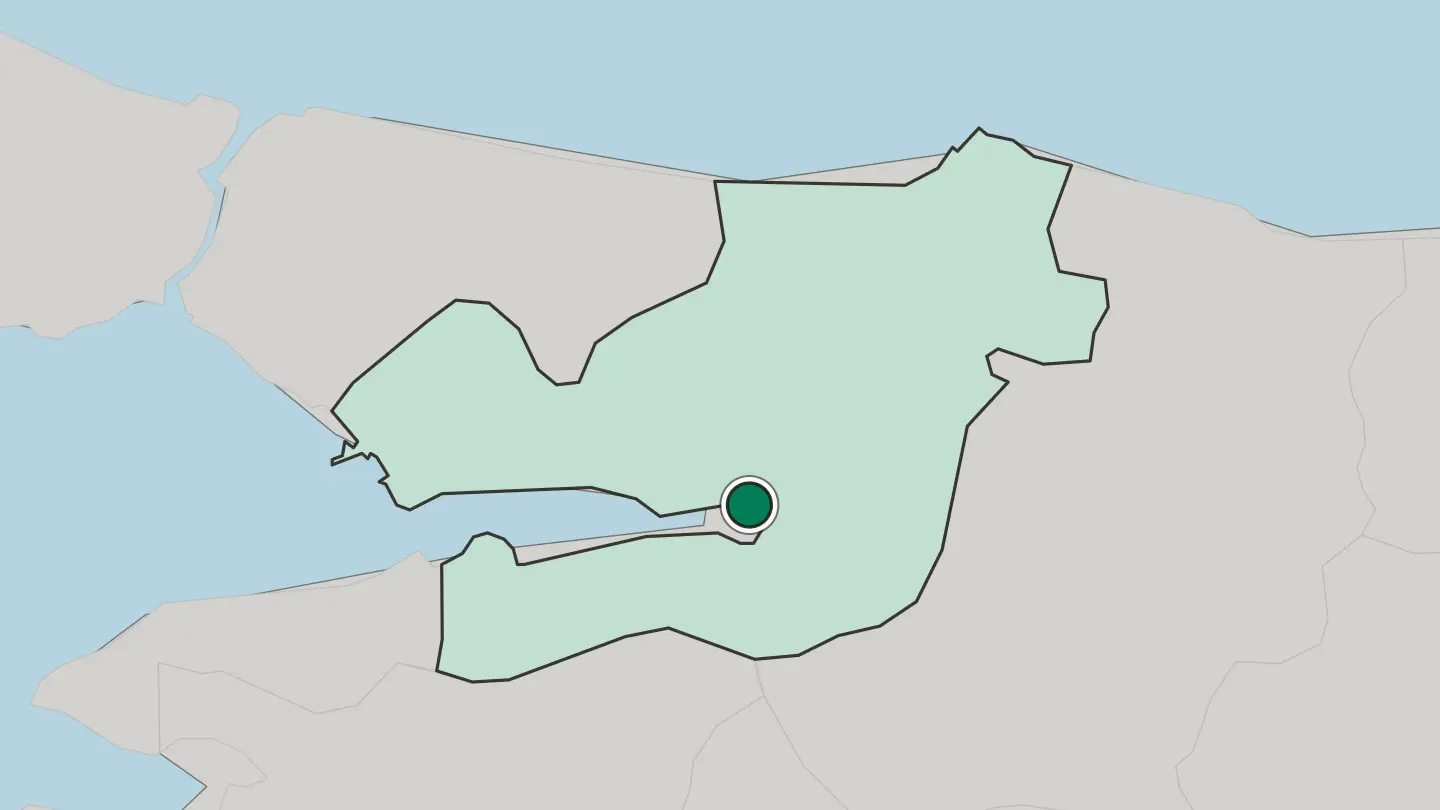
 Turkey
Gölcük
Gölcük lines the southern shore of the Gulf of İzmit, the easternmost inlet of the Sea of Marmara, in Kocaeli Province.Where to stay →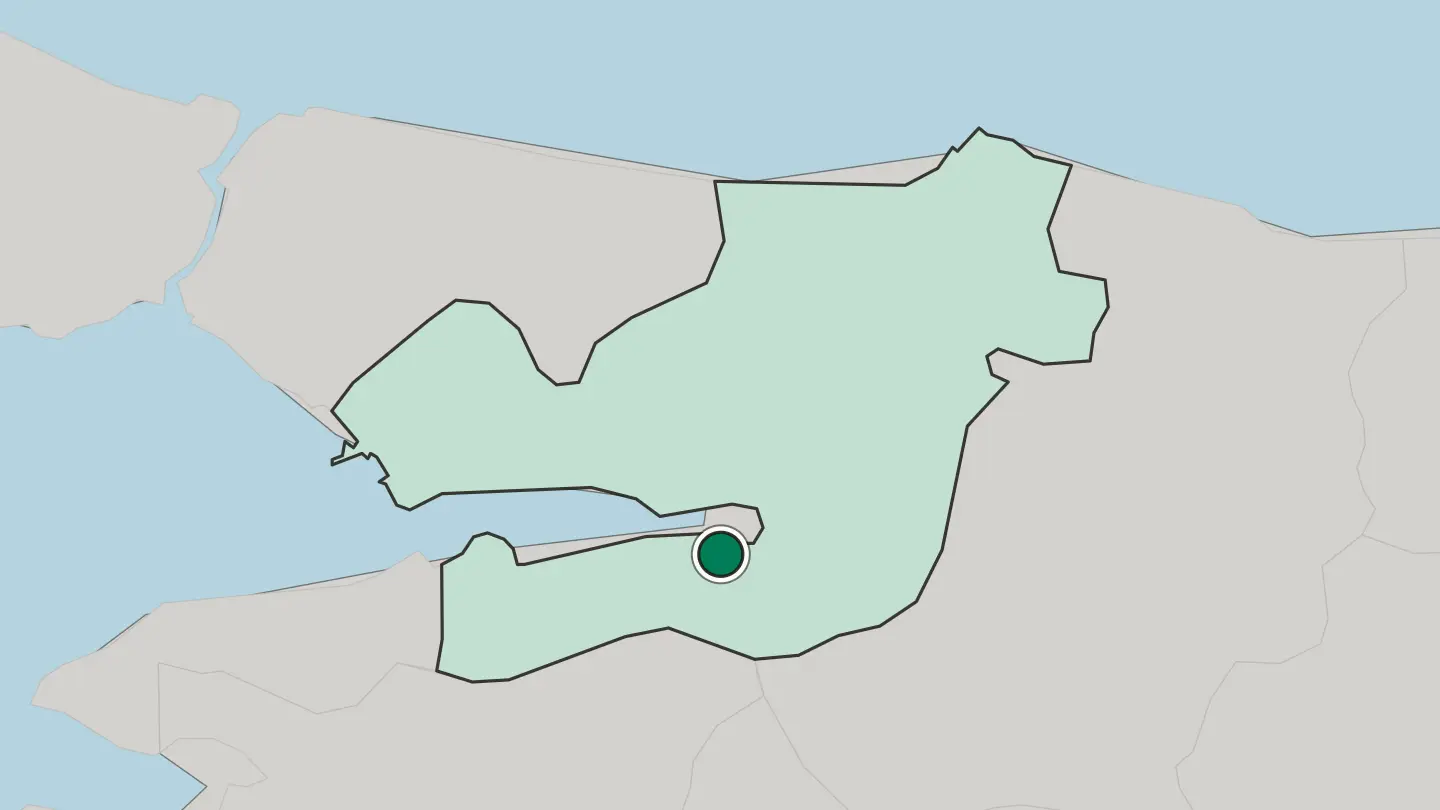
Hotel links are affiliate links: booking through them may earn us a commission, at no extra cost to you. It never affects how places are ranked. How this works
About Kocaeli
What is Kocaeli known for?
Kocaeli is Turkey's factory floor. Refineries, car plants and chemical works crowd the shores of the Gulf of İzmit, and the province turns out a large share of the country's vehicles from plants like Ford Otosan at Gölcük. İzmit anchors it as the provincial hub, with Gebze's industrial estates spreading west toward İstanbul. Yet the same province climbs to snow: Kartepe rises behind the coast into ski runs and forest.
Heavy industry and highland resorts share one map.
Where is Kocaeli?
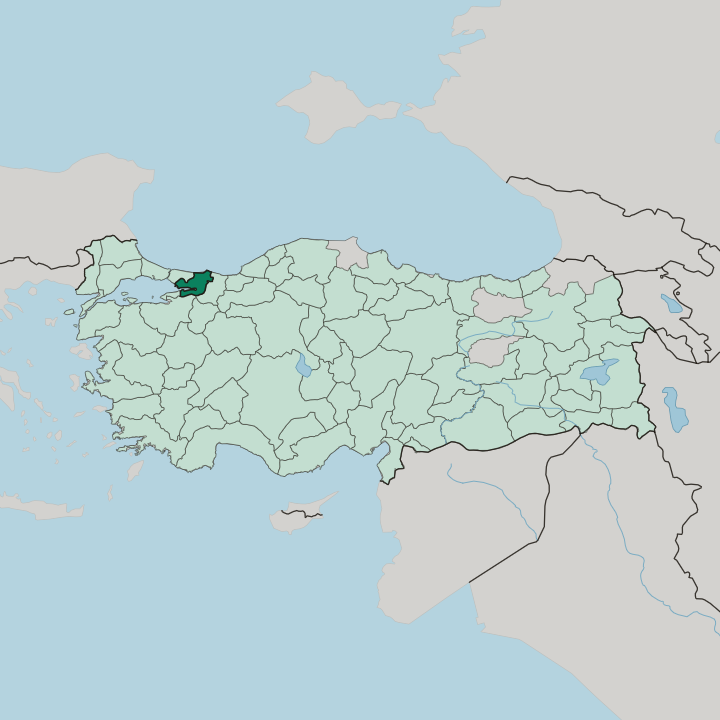
Kocaeli occupies the neck of land where Anatolia narrows toward the Sea of Marmara, immediately east of İstanbul. Two seas hem it in. The Gulf of İzmit reaches deep inland from the west, an inlet of the Sea of Marmara nearly fifty kilometres long, while the open Black Sea forms the whole northern shore.
Between them the land lifts from sea-level quays to wooded ridges. That long bay gives the province a sheltered deep-water harbour, worked since ancient Nicomedia stood at its head. Sakarya lies along the eastern border, and across the gulf to the south sit Yalova and Bursa. Inland the ground climbs to the Samanlı Mountains, and the ridge at Kartepe crowns the province high above the water.
Forests of beech and oak cloak these slopes. Lake Sapanca pools against the eastern edge, a freshwater basin shared with neighbouring Sakarya and fed by the same rainy hills. The northern coast runs wilder, its Black Sea beaches broken by low cliffs and river mouths.
One fault shadows all of it. The North Anatolian Fault runs straight beneath the Gulf of İzmit, and its rupture in 1999 shattered İzmit and Gölcük in one of Turkey's deadliest modern earthquakes. That seam explains the abrupt relief, folding sea, plain and mountain into a single narrow band.
What is Kocaeli like?
Kocaeli wears two faces: a working province of refineries and car plants, and a landscape stacked with antiquity. İzmit stands on Roman Nicomedia. Diocletian ruled the eastern empire from that city, and its emperors left an imprint that İzmit's Ottoman clock tower and the seaside İzmit Palace later built upon. The pavilion once housed sultans on the İstanbul road.
Everyday life runs on Turkish, the shared language of the province and the country around it. That road still shapes the province; the 1999 earthquake tested it hard and much of İzmit was rebuilt in the years after. Gebze carries the older stories west.
At Eskihisar, the painter Osman Hamdi Bey kept a summer house that is now a museum, below a Byzantine castle guarding the gulf. Nearby a monument marks where Hannibal is said to have died in exile at ancient Libyssa. Food pins the province to place too.
Pişmaniye, a threaded halva spun from flour and sugar, comes from İzmit's kitchens, while the dairy farms around Kandıra are known across the region for their thick yoghurt. Weekend crowds trade the coast for Maşukiye's waterfalls and Kartepe's pistes, an easy break from İstanbul.
What is the history of Kocaeli?
İzmit began as Nicomedia, founded by a Bithynian king and raised by Diocletian into an eastern capital of the Roman Empire before Constantine turned instead to nearby Byzantium. Waves of rulers followed. Ottoman forces under the commander Akçakoca took the region in 1327, and his name, softened to Koca Eli, became Kocaeli.
Later centuries turned the sheltered gulf into an industrial base. The past is layered here.
What is the climate of Kocaeli?
Kocaeli sits in a transitional belt between Mediterranean warmth and the damp Black Sea north. Summers turn hot and humid along the Gulf of İzmit, winters stay mild and wet, and rain falls in every season rather than one. The sea keeps the coast from freezing.
Up in the Samanlı Mountains it is a different story: Kartepe holds enough snow for a ski season while the shore below rarely whitens. Grey, rainy spells are part of the deal.
How do you get to Kocaeli?
Most visitors reach Kocaeli from İstanbul, an hour or so east by road. Motorways and the İstanbul-Ankara railway both thread through İzmit, so trains and buses stop here on the way across Anatolia. The Osman Gazi Bridge leaps the Gulf of İzmit at its mouth, cutting the drive south toward Yalova and İzmir. İstanbul's airports handle the flights.
Ferries still cross the gulf between its shores.
Common questions
What is the best area to stay in Kocaeli?
İzmit: a base at the head of the İzmit gulf. Kartepe and Maşukiye: Lake Sapanca and the ski runs. Gebze: the İstanbul-facing industrial west. Kandıra and the Black Sea coast: the Kerpe and Kefken coves.
Good for
More regions in Turkey
Updated October 2026