United States · Florida
Where to Stay in Fort Lauderdale, Florida
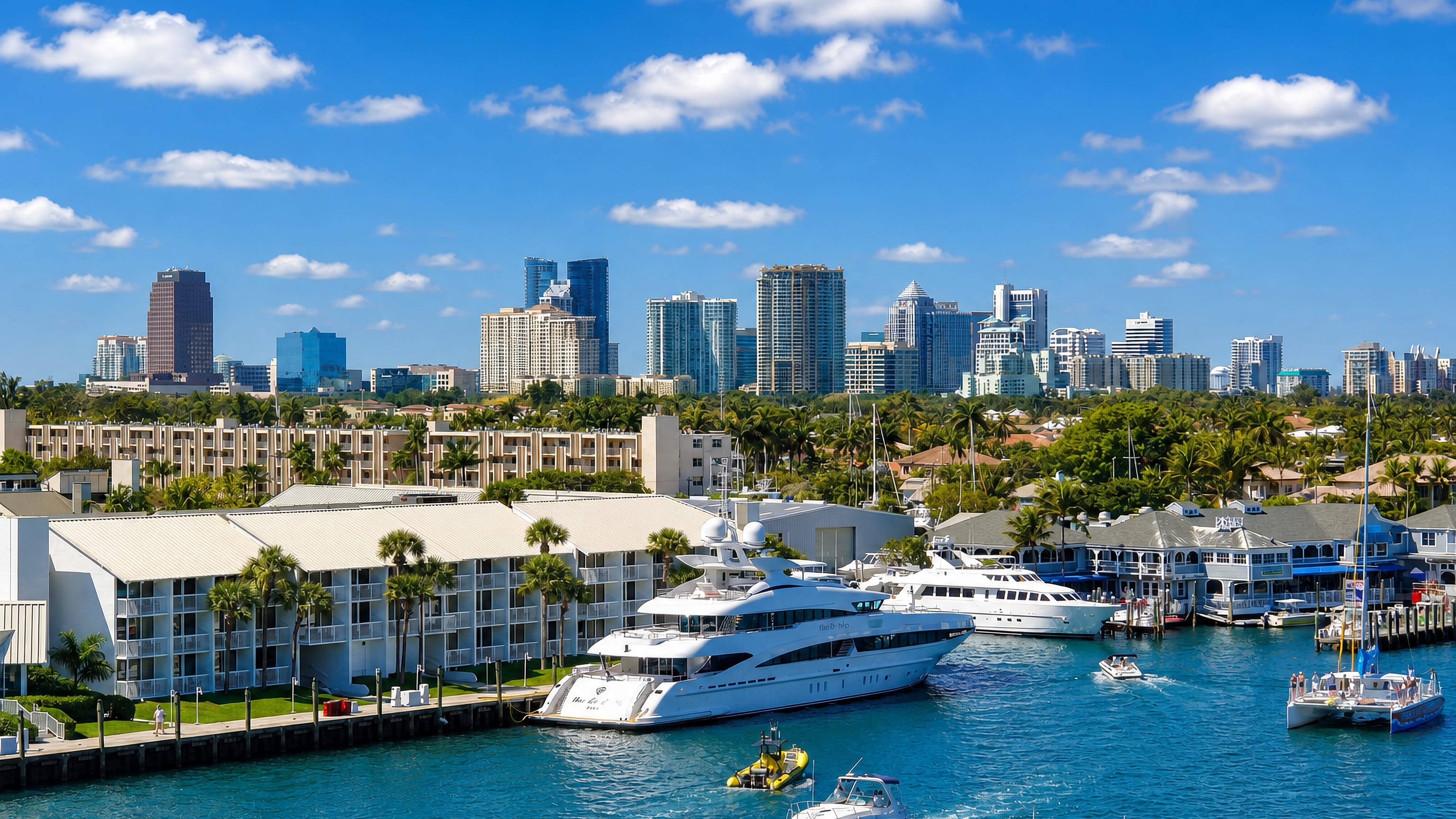
Canals thread the streets of Fort Lauderdale, a coastal city on the Atlantic Ocean in Florida and the seat of Broward County.
Hotel links are affiliate links: booking through them may earn us a commission, at no extra cost to you. It never affects how places are ranked. How this works


Where to stay in Fort Lauderdale
Where the beds are, and what that means for the visit.
Fort Lauderdale spreads between the Atlantic Ocean and its inland canals, and where you stay shapes the trip. The downtown core gathers the city's museums, with the Museum of Art Fort Lauderdale and the Museum of Discovery and Science set a short walk apart. Staying here puts the Stranahan House and the galleries within reach on foot.
It suits first-time visitors who want the sights close at hand. The centre stays flat and walkable. Along the shore, the beachfront runs beside the Atlantic Ocean, where the Bonnet House keeps its gardens and grounds between the sand and the waterway, a quieter base for travellers who come for the water rather than the museums.
Between the two, the canals cut the residential quarters into islands and fingers, the network that earned the city its Venice of America name and drew the boats that fill its docks. Cultural halls stand among the streets, including the Stonewall National Museum Archives & Library and the War Memorial Auditorium. Choose your base in Fort Lauderdale by what you came for, from the downtown museums to the Atlantic shore of Broward County beyond.
Find hotels in Fort Lauderdale
Direct booking searches for these neighbourhoods.
Downtown
The Museum of Art Fort Lauderdale and the Museum of Discovery and Science stand a short walk apart beside the Stranahan House.Find hotels in DowntownA base on the Atlantic shoreThe beachfront
The Bonnet House keeps its gardens between the sand and the canals where the Atlantic Ocean meets the streets of Fort Lauderdale.Find hotels in The beachfrontHotel links are affiliate links: booking through them may earn us a commission, at no extra cost to you. It never affects how places are ranked. How this works
Things to do in Fort Lauderdale
Ranked by global recognition; descriptions from Wikidata (CC0).
Museums & Galleries
3- Museum of Discovery and Science
- Museum of Art Fort Lauderdale
- Bienes Museum of the Modern Book
Churches & Religious Sites
2- All Saints Episcopal Church
- First Baptist Church
Stadiums & Sports
1- War Memorial Auditorium
Landmarks & Notable Places
4- Bonnet House Heritage
- Stranahan House Heritage
- Sam Gilliam House Heritage
- Williams House Heritage
worth knowingacross 4 categories in Fort Lauderdale
About Fort Lauderdale
What is Fort Lauderdale known for?
Fort Lauderdale is known as a coastal city of Florida on the Atlantic Ocean, laced with an expansive canal system that earned it the name Venice of America. Water runs everywhere here. The Museum of Art Fort Lauderdale and the Museum of Discovery and Science anchor its downtown, while the Bonnet House and Stranahan House keep its older story.
As the seat of Broward County, the city sits within the wider Miami metro area along the shore. The waterways define it.
What are the main landmarks in Fort Lauderdale?
Fort Lauderdale's landmarks range from museums to old waterfront houses. The Museum of Art Fort Lauderdale and the Museum of Discovery and Science anchor the downtown. Older homes survive along the water, among them the Stranahan House and the Bonnet House with its gardens near the shore.
The Stonewall National Museum Archives & Library and the War Memorial Auditorium hold the city's civic memory, and the Old Dillard High School keeps a chapter of its history near the centre. Water frames them all.
What is the history of Fort Lauderdale?
Fort Lauderdale took shape in 1911 on the Atlantic coast of Florida, a young city grown from a riverside trading post between the sea and the inland waterways. Water shaped it before anything else. Early settlers built along the tidal river, where the Stranahan House still stands as the oldest surviving building, raised as a trading post and home when the town was barely more than a landing on the bank.
The city grew outward from the water. Dredging cut the canals that would define it, threading the low ground into islands and fingers until the network earned the name Venice of America. The Old Dillard High School served the growing community through the early decades.
Later years brought the culture. The Museum of Art Fort Lauderdale and the Museum of Discovery and Science rose downtown, and the Bonnet House kept its gardens between the shore and the canals as the city built up around it. The Stonewall National Museum Archives & Library and the War Memorial Auditorium record its civic life.
As the seat of Broward County, the city spread along the shore into the wider Miami metro area over the decades that followed. From a river landing to a canal city on the Atlantic, Fort Lauderdale has grown across the coast of Florida.
Where is Fort Lauderdale?
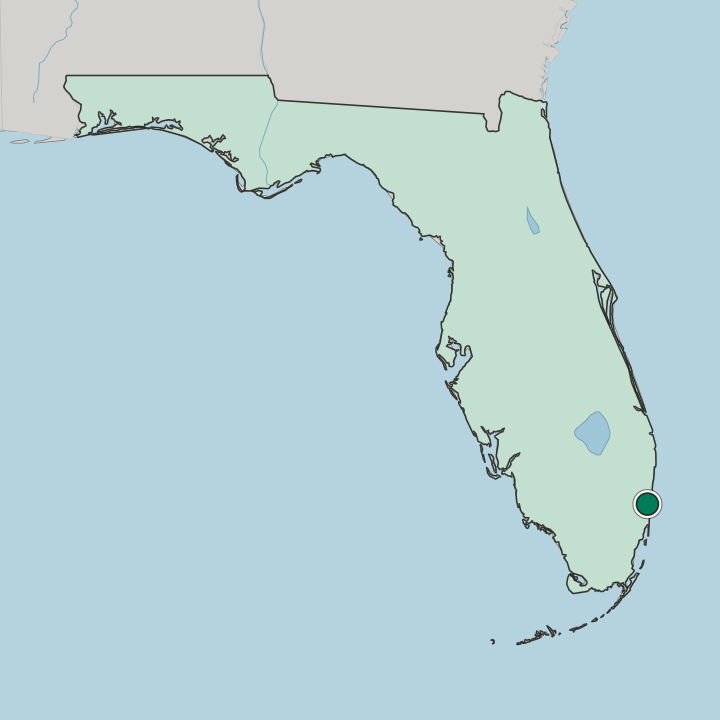
Fort Lauderdale lies low and flat along the Atlantic Ocean in Florida, cut through by its canal system. The land barely rises above the sea. Dredged waterways thread the whole city into islands and fingers, running inland from the shore to the residential quarters and back to the beach.
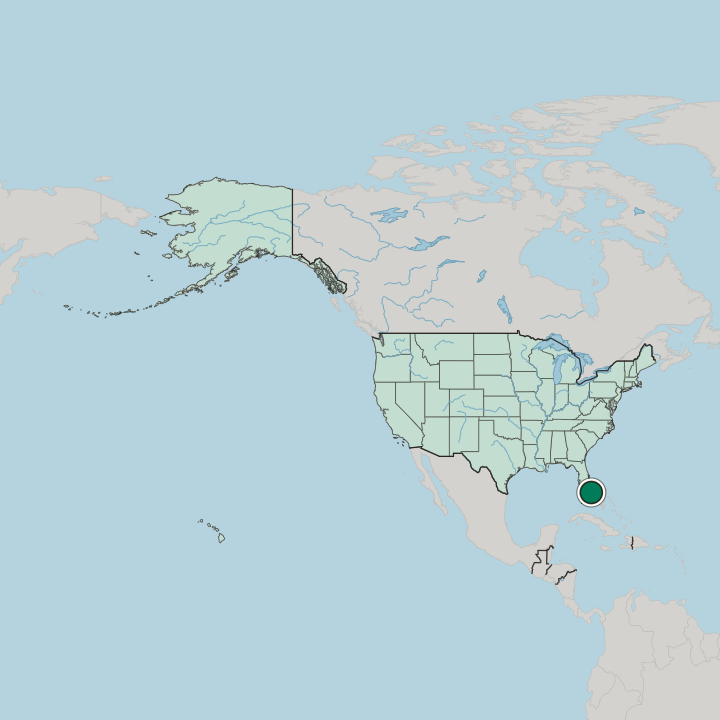
North of Miami along the coast, the city forms the heart of Broward County on the ocean edge. Water and low sand shape the whole of Fort Lauderdale.
What is the climate of Fort Lauderdale?
Fort Lauderdale has a warm tropical climate on the Atlantic coast of Florida. Heat holds through the year. Long humid summers bring heavy afternoon rain off the ocean, and storms roll in over the canals during the wet season before the sky clears again.
Through the winter the rain eases off and the warmth holds. Frost is unknown along this stretch of the Florida shore, where the sea keeps the air mild even at the turn of the year.
How do you get to Fort Lauderdale?
Most travellers reach Fort Lauderdale by air or road. An airport serves the city near the coast, and a deep seaport receives cruise ships on the Atlantic Ocean. Interstate highways and railways run down the shore, tying the city to Miami and the rest of Florida along the coast, while the canals carry boats through the heart of Broward County.
The waterways run everywhere. Sea, road, and canal all lead into Fort Lauderdale.
Common questions
What is the best area to stay in Fort Lauderdale?
Downtown: Waterfront museums on foot. The beachfront: A base on the Atlantic shore.
Good for
More cities in Florida
Updated September 2026