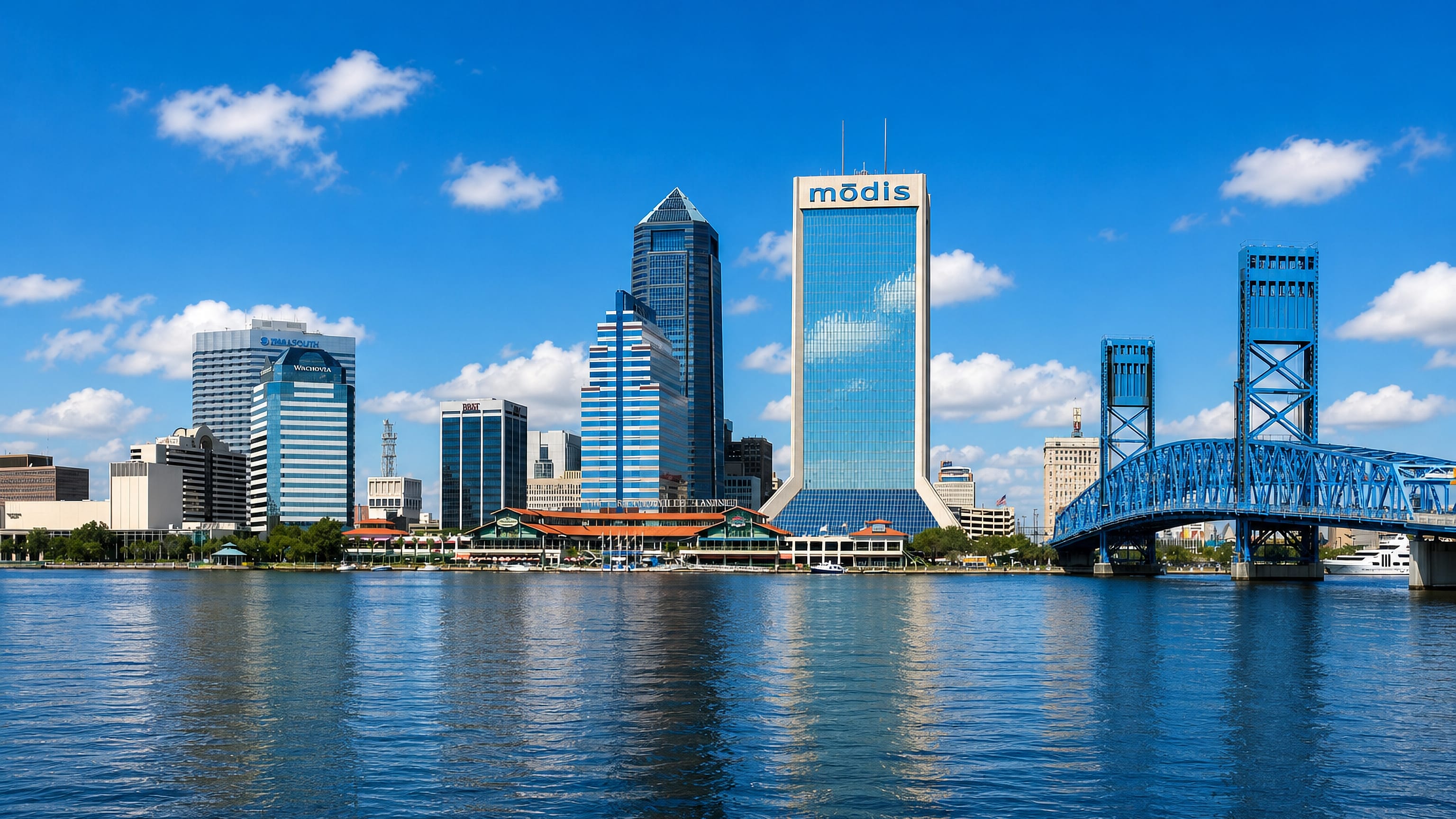
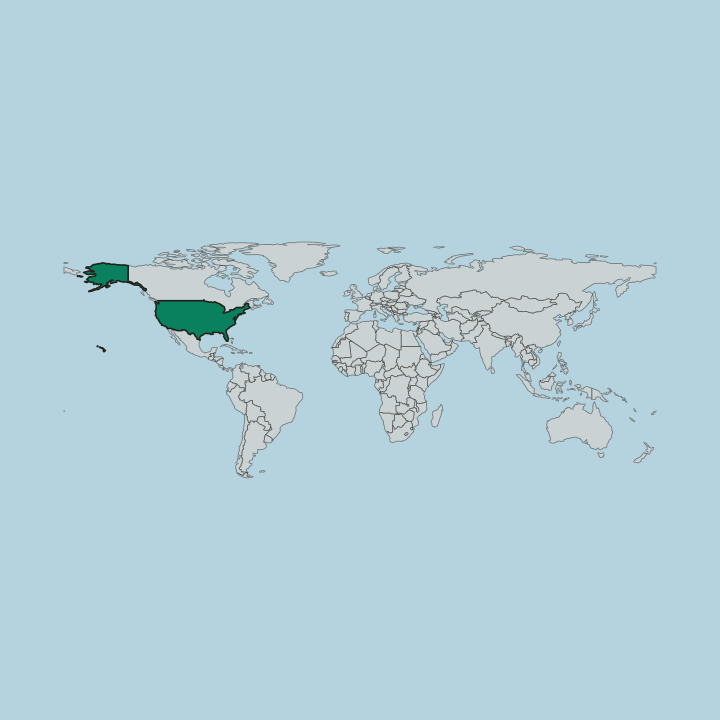
United States · Florida
Where to Stay in Jacksonville, Florida
Old churches and river-side galleries mark Jacksonville, a city in Florida known for the Cummer Museum of Art and Gardens.
Hotel links are affiliate links: booking through them may earn us a commission, at no extra cost to you. It never affects how places are ranked. How this works


Where to stay in Jacksonville
Where you base yourself shapes the visit — here's the character of each area.
 JacksonvilleUnited States
Southbank
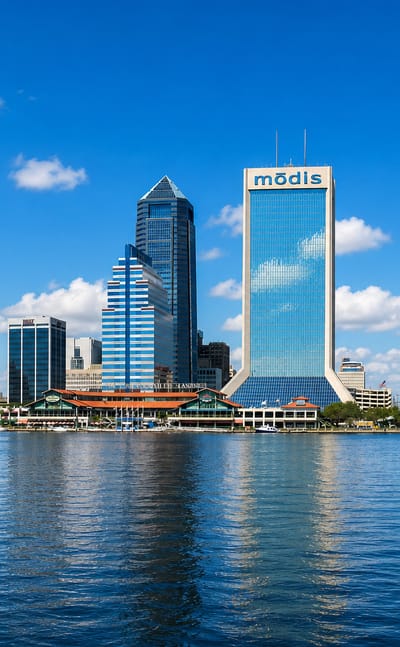
The Southbank faces downtown Jacksonville across the St. Johns, a mixed district of towers, museums and a riverwalk.Where to stay →JacksonvilleUnited StatesDowntown Jacksonville
Downtown Jacksonville is the historic core and central business district of Jacksonville, standing where the St. Johns River narrows.Where to stay →JacksonvilleUnited StatesSan Marco
Three lions guard the fountain in San Marco Square, the commercial heart of San Marco, a Jacksonville district on the south bank of the St. Johns River.Where to stay →JacksonvilleUnited StatesLaVilla
LaVilla was a town of its own until 1887 and became the centre of Black Jacksonville, on the western edge of downtown.Where to stay →JacksonvilleUnited StatesBrooklyn
Office towers line Riverside Avenue in Brooklyn, a St. Johns River neighborhood of Jacksonville platted for freed people after the Civil War.Where to stay →JacksonvilleUnited StatesSpringfield
Oaks shade narrow lots above Hogans Creek in Springfield, a historic district of Jacksonville lined with wood-frame houses of the 1880s to 1920s.Where to stay →JacksonvilleUnited StatesRiverside and Avondale
Riverside and Avondale is Jacksonville's bungalow quarter on the St. Johns River, where Five Points and the Shoppes of Avondale hold the shopfronts.Where to stay →JacksonvilleUnited StatesNew Town
New Town is a residential neighborhood northwest of downtown Jacksonville, built around the Kings Road campus of Edward Waters University.Where to stay →JacksonvilleUnited StatesOrtega
Oak canopy covers four circular parks in Ortega, a Jacksonville district on a peninsula between the Ortega River and the St. Johns River.Where to stay →JacksonvilleUnited StatesTallulah-North Shore
A short row of shopfronts marks the Pearl Street corner in Tallulah-North Shore, a Jacksonville neighborhood platted in 1879 by the Trout River.Where to stay →JacksonvilleUnited StatesArlington
Arlington is one of the large regions of Jacksonville, taken into the city by the consolidation of 1968.Where to stay →JacksonvilleUnited StatesDeerwood
Deerwood was Florida's first gated community, a Southside district of Jacksonville laid out from 1962 around a George Cobb golf course.Where to stay →All neighbourhoods (18)
JacksonvilleUnited StatesMandarin
Live oaks shade Mandarin Road above the St. Johns River in Mandarin, a Jacksonville district named in 1830 for the mandarin orange.Where to stay →JacksonvilleUnited StatesMayport
Mayport is a fishing village at the mouth of the St. Johns River, on the seaward edge of Jacksonville, boxed in by a naval station and the water.Where to stay →JacksonvilleUnited StatesBayard
Freight on the Florida East Coast Railway still passes Bayard, a Jacksonville district platted in 1884 midway on the road to St. Augustine.Where to stay →JacksonvilleUnited StatesJacksonville Beaches
The Jacksonville Beaches are towns and communities on the north half of San Pablo Island, cut off from Jacksonville by the Intracoastal Waterway.Where to stay →JacksonvilleUnited StatesOakleaf Plantation
Oakleaf Plantation covers 6,400 acres of Clay County and Jacksonville's Westside, a planned community of 2002 that the First Coast Expressway cuts in two.Where to stay →JacksonvilleUnited StatesBlack Hammock Island
Tidal salt marsh surrounds Black Hammock Island on every side, an island in the Northside of Jacksonville, with Cedar Point at its south end.Where to stay →Hotel links are affiliate links: booking through them may earn us a commission, at no extra cost to you. It never affects how places are ranked. How this works
Find hotels in Jacksonville
Direct booking searches for these neighbourhoods.
Downtown riverfront
The Museum of Science and History and the Museum of Contemporary Art Jacksonville stand near the downtown riverfront of Jacksonville.Find hotels in Downtown riverfrontA quieter riverside baseThe garden bank
The Cummer Museum of Art and Gardens keeps its terraced grounds along the far bank away from the downtown blocks.Find hotels in The garden bankHotel links are affiliate links: booking through them may earn us a commission, at no extra cost to you. It never affects how places are ranked. How this works
Things to do in Jacksonville
Ranked by global recognition; descriptions from Wikidata (CC0).
Museums & Galleries
3- Cummer Museum of Art and Gardens Heritage
- Museum of Science and History
- Museum of Contemporary Art Jacksonville
Churches & Religious Sites
5- Bethel Baptist Institutional Church Heritage
- St. Andrew's Episcopal Church Heritage
- Snyder Memorial Methodist Episcopal Church Heritage
- Mount Zion AME Church Heritage
- St. George Episcopal Church Heritage
Castles & Historic Sites
2- Maple Leaf Heritage
- Grand Site Heritage
Stadiums & Sports
3- J. P. Small Memorial Stadium Heritage
- VyStar Ballpark
- Deerwood Country Club
Parks & Gardens
1- Adventure Landing
Landmarks & Notable Places
3- Marabanong Heritage
- Napoleon Bonaparte Broward House Heritage
- John S. Sammis House Heritage
worth knowingacross 6 categories in Jacksonville
About Jacksonville
What is Jacksonville known for?
Jacksonville is known as a large city of Florida spread across a wide bend of its waterway. Its museums draw the crowds. The Cummer Museum of Art and Gardens and the Museum of Contemporary Art Jacksonville anchor its arts scene, while the Museum of Science and History fills its halls for families.
Old churches stand through the older quarters, among them the Mount Zion AME Church and the Bethel Baptist Institutional Church. The LaVilla Museum keeps the story of one historic neighbourhood. A broad river threads the middle.
What are the main landmarks in Jacksonville?
Jacksonville's landmarks range from art museums to old churches. The Cummer Museum of Art and Gardens and the Museum of Contemporary Art Jacksonville anchor its galleries, while the Museum of Science and History gathers families near the water. Old churches stand through the historic quarters, among them the Mount Zion AME Church, the Bethel Baptist Institutional Church, and the Snyder Memorial Methodist Episcopal Church.
The Karpeles Manuscript Library Museum holds rare documents, and the LaVilla Museum keeps the memory of one neighbourhood. History gathers here.
What is the history of Jacksonville?
Jacksonville was founded in 1791 on a bend of the waterway in Florida, at a crossing where the river narrowed enough to ford. The ford made the town. A settlement grew at that shallow reach, taking hold on the bank where boats and roads met and spreading outward as trade came upriver.
Churches went up early in the young town. The Mount Zion AME Church, the Bethel Baptist Institutional Church, and the Snyder Memorial Methodist Episcopal Church served its congregations as the community grew, and older homes like the Merrill House Museum and the John S. Sammis House survive from those decades. The nineteenth century remade the city.
Fire and rebuilding reshaped whole quarters, and neighbourhoods like the one kept by the LaVilla Museum grew into centres of their own along the water. Cultural halls came later. The Cummer Museum of Art and Gardens laid out its terraced grounds along the bank, and the Museum of Science and History and the Museum of Contemporary Art Jacksonville rose downtown as the arts scene took shape.
The Karpeles Manuscript Library Museum gathered its documents among them. From a river ford to a wide city on the water, Jacksonville has grown across the northern reach of Florida.
Where is Jacksonville?
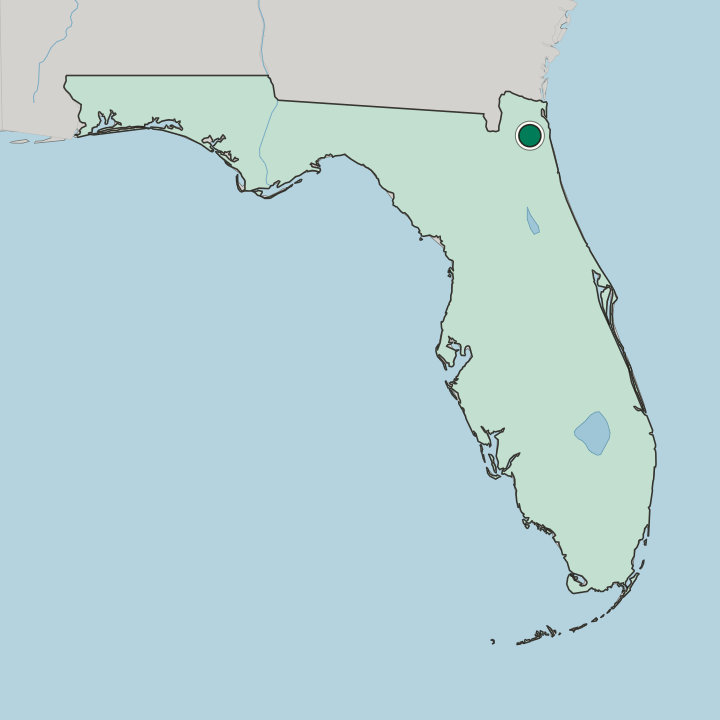
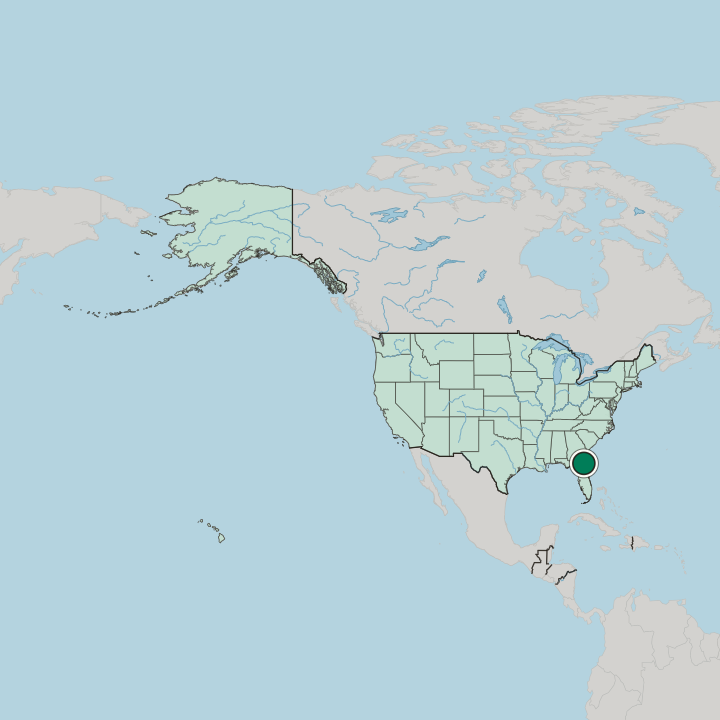
Jacksonville lies low and flat along a wide bend of its waterway in Florida. The city stands divided by one river. It curves broad and slow through the centre before turning toward the coast, and bridges carry the streets from bank to bank across the water.
The land stays near sea level, its low ground reaching out across the northern corner of Florida toward the ocean. Water and flat plain shape the whole of Jacksonville.
What is the climate of Jacksonville?
Jacksonville has a warm humid climate over the low ground of Florida. Summers turn hot and wet. Long humid days bring heavy afternoon thunderstorms through the summer months, breaking over the river before the sky clears again toward evening.
Jacksonville's winters keep gentle in this warm corner of Florida. Frost comes only rarely to this northern corner of Florida, where the sea keeps the air gentle through the cooler months around Jacksonville.
How do you get to Jacksonville?
Most travellers reach Jacksonville by road or air. An airport serves the city, and a seaport receives ships where the river meets the coast. Interstate highways cross at Jacksonville, tying the city to the rest of Florida and the wider South, while bridges and rail lines carry the routes over the water through the centre.
The river shaped every crossing. Road, rail, and water all lead into the heart of the city.
Common questions
What is the best area to stay in Jacksonville?
Downtown riverfront: Civic museums by the water. The garden bank: A quieter riverside base.
Good for
More cities in Florida
Updated October 2026