United States · Florida
Where to Stay in Tallahassee, Florida
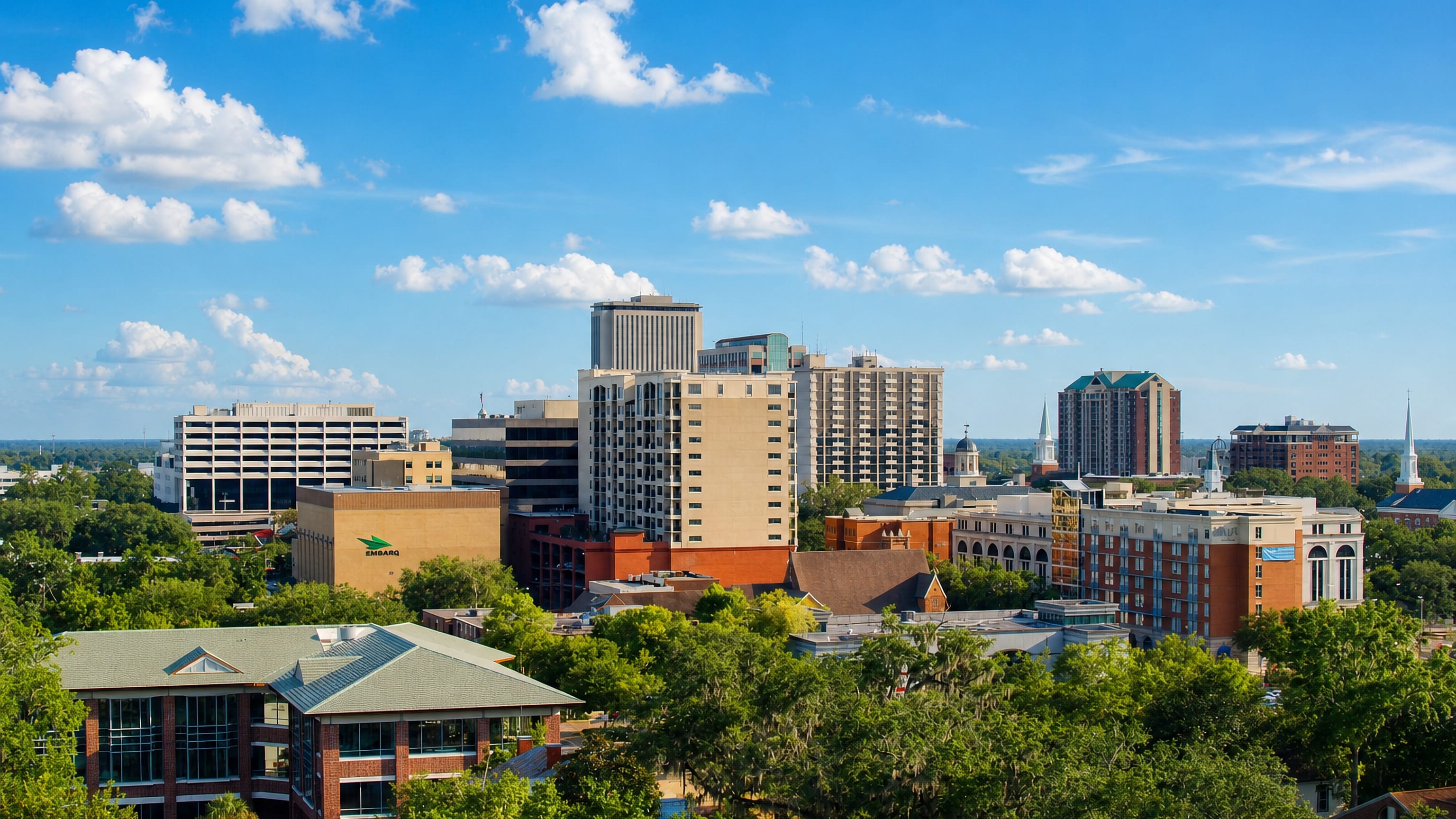
Live oaks shade the streets of Tallahassee, the capital of Florida known for the Museum of Florida History and The Columns.
Hotel links are affiliate links: booking through them may earn us a commission, at no extra cost to you. It never affects how places are ranked. How this works


Where to stay in Tallahassee
Where the beds are, and what that means for the visit.
Tallahassee spreads across low hills in northern Florida, and where you stay shapes the trip. The downtown core gathers the civic halls of the state capital, with the Museum of Florida History and the Union Bank set among the government blocks. Staying here puts the museums and the old capitol grounds within reach on foot.
It suits first-time visitors who want the sights close at hand. The centre stays compact. Around the historic quarters, oak-lined streets carry the old houses, where The Columns and the Brokaw-McDougall House keep the look of an antebellum town and the John Gilmore Riley House records another chapter of its past, a quieter base for travellers who prefer the residential streets to the government core.
Toward the campuses, the Florida State University Museum of Fine Arts and the Carnegie Library at FAMU draw students and visitors alike, and Lichgate on High Road keeps its garden and cottage among the oaks. The Grove Museum stands nearby among the older grounds. Choose your base in Tallahassee by what you came to see, from the capitol district to the shaded streets across northern Florida.
Find hotels in Tallahassee
Direct booking searches for these neighbourhoods.
Capitol district
The Museum of Florida History and the Union Bank stand among the government blocks of the Tallahassee capitol core.Find hotels in Capitol districtAntebellum houses among the treesOak-lined historic streets
The Columns and the Brokaw-McDougall House keep the look of an older town along the shaded streets of Tallahassee.Find hotels in Oak-lined historic streetsHotel links are affiliate links: booking through them may earn us a commission, at no extra cost to you. It never affects how places are ranked. How this works
Things to do in Tallahassee
Ranked by global recognition; descriptions from Wikidata (CC0).
Museums & Galleries
1- Florida State University Museum of Fine Arts
Churches & Religious Sites
3- St. John's Episcopal Church Heritage
- First Presbyterian Church Heritage
- John Wesley United Methodist Church
Stadiums & Sports
3- Mike Martin Field at Dick Howser Stadium
- JoAnne Graf Field at the Seminole Softball Complex
- Gene Cox Stadium
Landmarks & Notable Places
8- Lichgate on High Road Heritage
- Gov. John W. Martin House Heritage
- The Columns Heritage
- Brokaw-McDougall House Heritage
- Tookes House Heritage
Show 3 more →
- Lewis and Lucretia Taylor House Heritage
- Williams House Heritage
- Gaither House Heritage
worth knowingacross 4 categories in Tallahassee
About Tallahassee
What is Tallahassee known for?
Tallahassee is known as the capital of Florida, set on rolling hills in the northern reach of the state. Oaks shade its streets. The Museum of Florida History gathers the state's story, while The Columns and the Brokaw-McDougall House keep its older architecture.
The John Gilmore Riley House records the city's African American heritage, and the Union Bank stands as one of its earliest buildings. Art fills the Florida State University Museum of Fine Arts and The Mary Brogan Museum of Art and Science. The capital holds them all.
What are the main landmarks in Tallahassee?
Tallahassee's landmarks range from old houses to museums. The Museum of Florida History gathers the state's past, while The Columns and the Union Bank survive as some of the city's oldest buildings. Oaks shade them.
Antebellum homes stand among the trees, among them the Brokaw-McDougall House, the John Gilmore Riley House, and The Grove Museum. Art hangs in the Florida State University Museum of Fine Arts and The Mary Brogan Museum of Art and Science. Churches like the First Presbyterian Church and St. John's Episcopal Church rise through the historic core.
What is the history of Tallahassee?
Tallahassee was founded in 1824 on the rolling hills of northern Florida, chosen as the capital of the new territory for its ground midway between two older coastal towns. The site was a compromise. Halfway between the earlier settlements at each end of the territory, the new capital rose on the red clay hills among the oaks, and the government took root where the old capitol grounds still stand.
Early buildings went up around the centre. The Union Bank opened as one of the young town's first institutions, and antebellum homes like The Columns and the Brokaw-McDougall House were built through the decades that followed. Churches served the growing capital.
The First Presbyterian Church and St. John's Episcopal Church rose among the streets, and the John Gilmore Riley House later recorded the city's African American community. Universities reshaped the town in time, and the Carnegie Library at FAMU and the Florida State University Museum of Fine Arts grew with the campuses. The Museum of Florida History gathered the whole story downtown, while Lichgate on High Road kept its garden among the oaks.
From a compromise capital on the clay hills to a city of oaks and government, Tallahassee has grown across the north of Florida.
Where is Tallahassee?
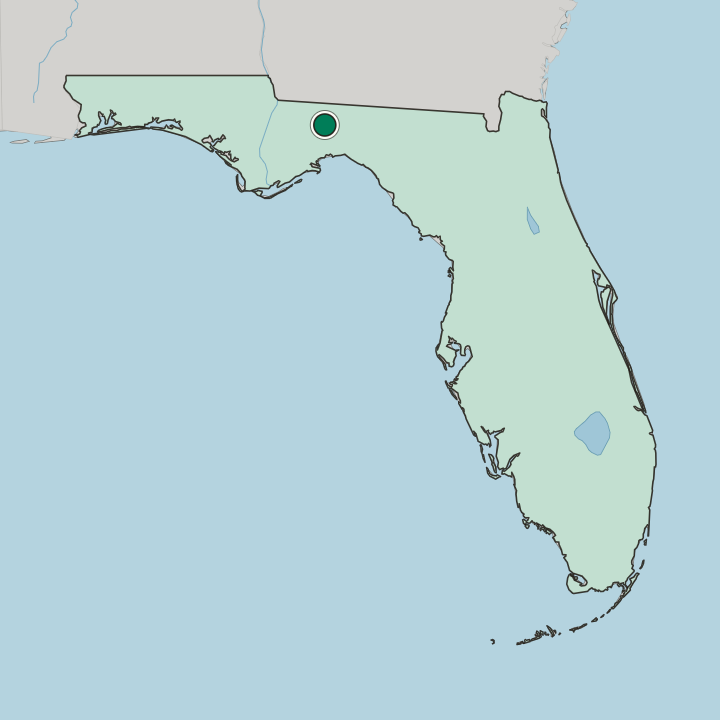
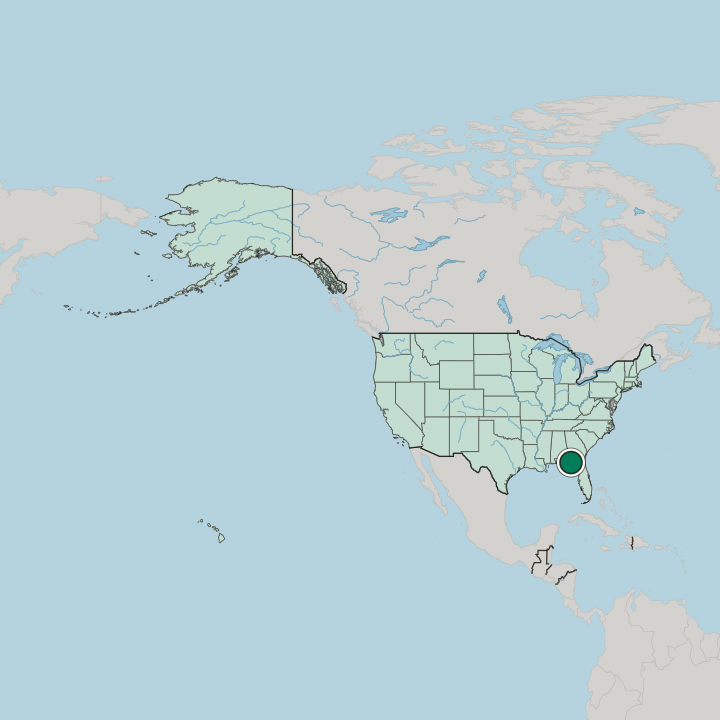
Tallahassee lies on rolling red clay hills in the northern reach of Florida, well inland from the coast. Live oaks shade the whole city. The land rises and falls in gentle ridges here, higher and more wooded than the flat peninsula to the south, and the hills carry the oaks that line the streets.
Far in the panhandle away from the sea, the capital sits among the wooded uplands of northern Florida. Hill and oak shape the whole of Tallahassee.
What is the climate of Tallahassee?
Tallahassee has a warm humid climate over the wooded hills of northern Florida. Summers turn hot and stormy. Long humid afternoons build heavy thunderstorms through the summer months, rolling across the oak-covered ridges and breaking over the city before the sky clears.
The cold season stays gentle over Tallahassee. Frost touches the higher ground more often than the coast, though snow is rare, and the oaks hold their shade through the gentle cooler months around Tallahassee.
How do you get to Tallahassee?
Most travellers reach Tallahassee by road or air. An airport serves the capital on its edge. Interstate and state highways cross the hills at Tallahassee, tying the city to the rest of Florida and the neighbouring South, and long rail lines run through the town toward the coast.
The routes climb into the uplands. Road, rail, and air all lead into the heart of the capital.
Common questions
What is the best area to stay in Tallahassee?
Capitol district: State history on foot. Oak-lined historic streets: Antebellum houses among the trees.
Good for
More cities in Florida
Updated September 2026