United States · Florida
Where to Stay in Gainesville, Florida
Brick porches and oak shade mark Gainesville, a city in Florida known for the Thomas Center and its preserved historic houses.
Hotel links are affiliate links: booking through them may earn us a commission, at no extra cost to you. It never affects how places are ranked. How this works


Where to stay in Gainesville
How the choice of base plays out on the ground.
Where you sleep in Gainesville sets the pace of the day. The blocks around the Thomas Center hold the oldest built fabric, brick and clapboard homes on shaded streets, and they suit travellers who want to walk between the preserved houses on foot. The Matheson House sits within the same few blocks.
Near the Cade Museum for Creativity and Invention the mood turns toward workshops and family outings, a good base if the museum and its inventors' theme are the reason you came. Quieter still are the streets near the A. Quinn Jones House and the Colson House, where the pace stays residential and the porches face the oaks. Choose by the walk you want.
Each pocket keeps its own texture of Gainesville in Florida, so the address decides your morning more than any distance to a single door.
Find hotels in Gainesville
Direct booking searches for these neighbourhoods.
Around the Thomas Center
The oldest brick-and-clapboard blocks gather around the Thomas Center within a few streets of the Matheson House.Find hotels in Around the Thomas CenterMuseum visits and family outingsNear the Cade Museum
Steps from the Cade Museum for Creativity and Invention and its inventors' theme rather than the historic homes.Find hotels in Near the Cade MuseumQuiet residential porchesThe Colson House streets
Oak-shaded blocks around the Colson House and the A. Quinn Jones House, where the pace stays residential.Find hotels in The Colson House streetsHotel links are affiliate links: booking through them may earn us a commission, at no extra cost to you. It never affects how places are ranked. How this works
Things to do in Gainesville
Ranked by global recognition; descriptions from Wikidata (CC0).
Museums & Galleries
1- Cade Museum for Creativity and Invention
Landmarks & Notable Places
7- Matheson House Heritage
- Thomas Center Heritage
- A. Quinn Jones House Heritage
- Maj. James B. Bailey House Heritage
- Mary Phifer McKenzie House Heritage
Show 2 more →
- Carlos and Marjorie Proctor Log House and Cottage Heritage
- Cox Family Log House Heritage
worth knowingacross 2 categories in Gainesville
About Gainesville
Gainesville is known for its old houses and its inventors.
What is Gainesville known for?
The Thomas Center anchors a cluster of preserved homes, and the Cade Museum for Creativity and Invention carries the city's name for tinkering and design. Gainesville's past sits close to the surface. The Matheson House and the A. Quinn Jones House stand among the oldest surviving homes, kept as records of Gainesville in Florida rather than as showpieces rebuilt for effect.
What are the main landmarks in Gainesville?
Gainesville keeps its landmarks in preserved wood and brick. The Thomas Center is the grandest, and the Cade Museum for Creativity and Invention is the newest draw. Older still are the homes.
The Matheson House, the Maj. James B. Bailey House, and the Mary Phifer McKenzie House survive from the town's earliest decades, alongside the log-built Cox Family Log House kept from the first settlement.
What is the history of Gainesville?
Gainesville took shape as a town in 1853. Its early families built in wood and brick, and enough of that first fabric survives that the nineteenth-century settlement still reads on the ground across this part of Florida. Log homes came first.
The Cox Family Log House and the Carlos and Marjorie Proctor Log House and Cottage were kept from the rough log-built settlement that preceded the milled-lumber town, and the Maj. James B. Bailey House and the Mary Phifer McKenzie House date from the decades that followed. Prosperity raised grander homes.
The larger houses now gathered near the Thomas Center went up as the town grew, while the A. Quinn Jones House records the separate story of the city's Black educators and their neighbourhood. The Matheson House came through the intervening years intact. Later generations in Gainesville chose preservation over replacement, keeping the surviving houses rather than clearing them, which is why so much of the early town still stands in wood and brick.
Where is Gainesville?
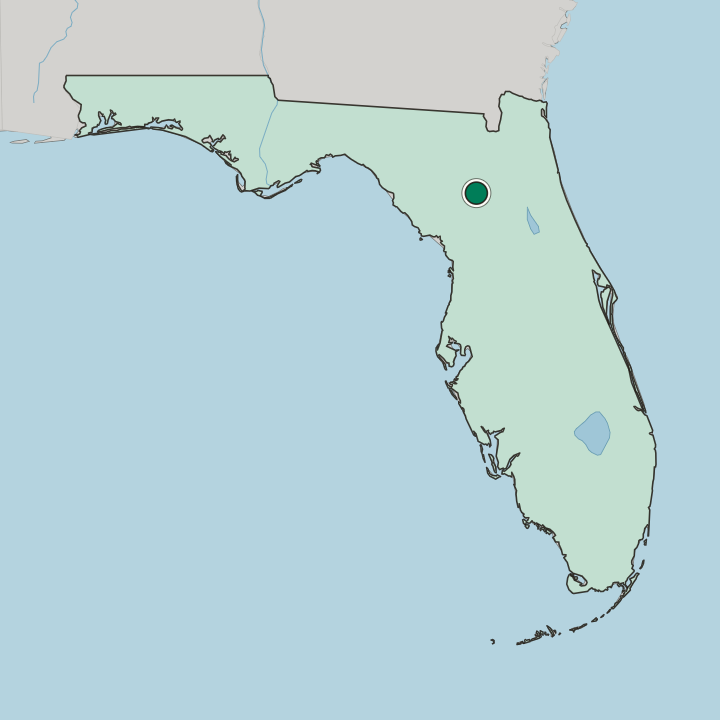
Gainesville sits on the low, subtropical ground of Florida. The land is nearly level, and live oaks shade the older streets where the preserved homes stand. Rise is gentle here.
The blocks around the Thomas Center and the Matheson House sit slightly above the flat country around them, on the mild, low-lying terrain that runs across this part of the state.
What is the climate of Gainesville?
Gainesville sits deep in the humid subtropics, warm through nearly every month. Summers are long, hot, and wet, with afternoon thunderstorms building over the low Florida country almost daily through the warmer half of the year. Gainesville's winters stay gentle.
Frost is rare and brief, and the live oaks around the Thomas Center hold their leaves through the cooler months, so the old streets keep their shade.
How do you get to Gainesville?
Gainesville is reached overland from across Florida. Well inland and away from the coast, the city draws most of its visitors by road through the flat country of the state's interior. Its preserved core is easy to find.
The Thomas Center and the Cade Museum for Creativity and Invention sit close together in town, within a short reach of one another once you arrive.
Common questions
What is the best area to stay in Gainesville?
Around the Thomas Center: Walking between Gainesville's preserved houses. Near the Cade Museum: Museum visits and family outings. The Colson House streets: Quiet residential porches.
More cities in Florida
Updated September 2026