United States · Florida
Where to Stay in Palm Coast, Florida
Palm Coast is a Flagler County city founded in 1969 on the First Coast of Florida, laid out along the Intracoastal Waterway with the ocean beyond.
Hotel links are affiliate links: booking through them may earn us a commission, at no extra cost to you. It never affects how places are ranked. How this works


Where to stay in Palm Coast
How the choice of base plays out on the ground.
The ocean front is the first decision. Rooms facing the water put the beach and the jogging trails at the door, and they are the ones that fill first once the dry season sets in over the First Coast. Scale is the complication here.
The Intracoastal Waterway divides the city, and a room on the inland side trades the sand for quicker access to the parks, the boat ramps and the roads out through Flagler County. History is a separate errand. The Mala Compra Plantation Archeological Site and the Holden House stand away from the residential grid, and the Flagler Beach Historical Museum sits along the shore, so a stay built around them means driving each morning.
Families and long-stay visitors split the beds. The city draws both younger households and people wintering for a few months, which shows in the mix of accommodation: more rented houses and apartments than a place of this size would otherwise carry. Daytona Beach, Ormond Beach and Deltona share a metropolitan area with Palm Coast, and a bed here serves visitors to any of them without the coast being more than a few minutes away.
Find hotels in Palm Coast
Direct booking searches for these neighbourhoods.
The ocean front
The seaward strip of Palm Coast, with the sand and the shore trails at the doorFind hotels in The ocean frontBoaters working the Intracoastal Waterway and its rampsThe Intracoastal Waterway side
The inland bank of the Intracoastal Waterway, closest to the boat ramps and the parks. Few places to stay nearby — book ahead.Find hotels in The Intracoastal Waterway sideDays at the Flagler Beach Historical Museum and the Mala Compra Plantation Archeological SiteToward Flagler Beach
The shore ground near the Flagler Beach Historical Museum, set apart from the subdivisions. Beds are limited here, so book early.Find hotels in Toward Flagler BeachHotel links are affiliate links: booking through them may earn us a commission, at no extra cost to you. It never affects how places are ranked. How this works
About Palm Coast
The Intracoastal Waterway runs the length of the city.
What is Palm Coast known for?
Boaters use it, joggers use the trails beside it, and the outdoor life along the water and the ocean front is the reason most people book a room here rather than for anything built or collected. Parks take up much of the rest. What history there is sits outside the subdivisions, at the Mala Compra Plantation Archeological Site, the Holden House and the Flagler Beach Historical Museum.
What are the main landmarks in Palm Coast?
The Mala Compra Plantation Archeological Site is the oldest thing here. It records a plantation on this stretch of the First Coast long before any of the modern city existed, and the ground rather than a standing building is what survives. The Holden House is the second entry.
The Flagler Beach Historical Museum holds the record for the shore alongside, and between the three of them the list is complete.
What is the history of Palm Coast?
Palm Coast dates from 1969. Before that the land carried little beyond the Mala Compra Plantation Archeological Site, which marks a working estate on this part of the First Coast, and the Holden House, older than anything the city built for itself. Streets were drawn before the houses.
Ninety-six square miles were laid out in subdivisions along the Intracoastal Waterway, and the city filled them in over the following decades rather than growing outward from a centre. Young families and people wintering for part of the year both fed the fill, and the mix of the two runs through the whole city. Water shaped what followed.
The Intracoastal Waterway gave the subdivisions their frontage and the city its recreation, and the ocean front beyond it supplied the beaches and the shore trails that still bring visitors to Flagler County. The city outgrew its neighbours. Palm Coast passed Deltona to lead the metropolitan area it shares with Daytona Beach and Ormond Beach, a change reported in 2023 and reached without any of the industry or port trade that usually explains such things.
Flagler County remains the frame for all of it, and the Flagler Beach Historical Museum is where the shore's own record is kept.
Where is Palm Coast?
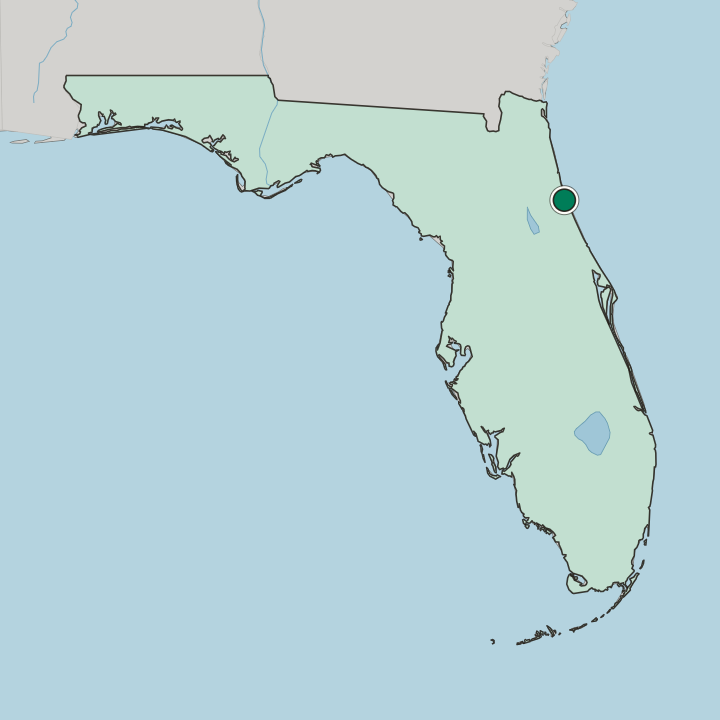
Palm Coast covers ninety-six square miles of flat, sandy ground in Flagler County, with the Intracoastal Waterway threading through the middle of it. The ocean sits on the far side. The waterway system reaches into the subdivisions, so a great many addresses have water at the back, and the First Coast shoreline runs the seaward length of the city with beach the whole way.
Nothing rises above the dunes.
What is the climate of Palm Coast?
The ocean holds the summer temperature down on the seaward side of Palm Coast, and the difference is real once a visitor moves inland past the Intracoastal Waterway. Storms come in the wet months. Winter on the First Coast is the dry, mild half of the year, which is why some visitors come for a few months of it rather than a few days.
How do you get to Palm Coast?
Palm Coast is a driving city. Arrivals come by road from Daytona Beach, Ormond Beach and the rest of the metropolitan area, and there is no other practical way in. The distances rule out walking between districts.
Once here, the Intracoastal Waterway and the ocean front give the only routes that work on foot or by boat, and everything else, the museum, the archeological site, the parks, needs the car again.
Common questions
What is the best area to stay in Palm Coast?
The ocean front: Mornings on the beach and the ocean front jogging trails. The Intracoastal Waterway side: Boaters working the Intracoastal Waterway and its ramps. Toward Flagler Beach: Days at the Flagler Beach Historical Museum and the Mala Compra Plantation Archeological Site.
Good for
More cities in Florida
Updated September 2026