United States · Florida
Where to Stay in Palm Harbor, Florida
Palm Harbor is an unincorporated coastal community in Pinellas County, Florida, ringed by the museums and old houses of Dunedin and Tarpon Springs.
Hotel links are affiliate links: booking through them may earn us a commission, at no extra cost to you. It never affects how places are ranked. How this works


Where to stay in Palm Harbor
The practical side of choosing where to sleep.
Your room will carry another town's address. Palm Harbor itself is unincorporated and spread thin, a run of low streets set back from the coast, so most visitors book in one of the small cities around it rather than here. Dunedin is the busiest of them.
TD Ballpark, the Dunedin History Museum, and the Dunedin Fine Art Center sit close enough together to fill a day on foot, and the town keeps enough restaurants and rooms to absorb a weekend crowd. The Leepa-Rattner Museum of Art gives Palm Harbor its own reason to be a base, and a room here trades walkable streets for parking and a short drive to everything else. Tarpon Springs pulls in a different direction, with St. Nicholas Greek Orthodox Church and the Tarpon Springs Aquarium anchoring a compact waterfront that fills up on weekends.
Safety Harbor is quieter still. The Safety Harbor Site marks the oldest ground in this part of Pinellas County, and the town around it stays low, with only a handful of places to sleep. Tampa Bay Downs is the outlier, a racing venue that gives some visitors a reason to take a room away from the water entirely.
Find hotels in Palm Harbor
Direct booking searches for these neighbourhoods.
Palm Harbor
Spread-out unincorporated streets with easy parking, the museum and the coast both minutes off. Few places to stay nearby — book ahead.Find hotels in Palm Harbormuseum days and an afternoon at TD BallparkDunedin
TD Ballpark, the Dunedin History Museum, and the Dunedin Fine Art Center cluster in one walkable stretch.Find hotels in DunedinGreek Orthodox heritage and a waterfront eveningTarpon Springs
St. Nicholas Greek Orthodox Church and the Tarpon Springs Aquarium anchor a compact waterfront quarter.Find hotels in Tarpon Springsthe Safety Harbor Site and a quiet, low-rise nightSafety Harbor
The Safety Harbor Site is the oldest ground on this side of Pinellas County, and beds around it are few. Lodging is scarce in this area; reserve in advance.Find hotels in Safety HarborHotel links are affiliate links: booking through them may earn us a commission, at no extra cost to you. It never affects how places are ranked. How this works
Things to do in Palm Harbor
Ranked by global recognition; descriptions from Wikidata (CC0).
Museums & Galleries
2- Leepa-Rattner Museum of Art
- Dunedin Fine Art Center
Churches & Religious Sites
3- St. Nicholas Greek Orthodox Church (Tarpon Springs, Florida)
- Holy Trinity Episcopal Church
- Living His Life Abundantly Church
Castles & Historic Sites
1- Safety Harbor Site Heritage
Stadiums & Sports
3- TD Ballpark
- Tampa Bay Downs
- Englebert Complex
Landmarks & Notable Places
3- Safford House Heritage
- J. O. Douglas House Heritage
- Willis S. Blatchley House Heritage
worth knowingacross 5 categories in Palm Harbor
About Palm Harbor
Galleries and collections carry the load here.
What is Palm Harbor known for?
The Leepa-Rattner Museum of Art, the Dunedin Fine Art Center, and the Dunedin History Museum together give this stretch of Pinellas County a denser cultural calendar than its low, spread-out streets suggest. Tampa Bay Downs adds horse racing. Baseball fills TD Ballpark, and the Tarpon Springs Aquarium keeps younger visitors busy on a hot afternoon.
What are the main landmarks in Palm Harbor?
Old houses carry the record. The Blatchley House, the Douglas House, and Safford House stand among the named heritage buildings on this stretch of Pinellas County, alongside Holy Trinity Episcopal Church and the Living His Life Abundantly Church. The Englebert Complex joins them.
Away from the buildings, the Safety Harbor Site is the one entry that reaches back before any of this, and the Leepa-Rattner Museum of Art gathers the art that no house here holds.
What is the history of Palm Harbor?
Incorporation never came. Palm Harbor grew without ever incorporating, and it still carries that status, counted by the census as a designated place inside Pinellas County rather than as a municipality with its own government. The deepest layer sits outside all that.
The Safety Harbor Site sits apart from everything else on the local heritage list, the one entry that is ground rather than architecture. Building came next. The Blatchley House, the Douglas House, and Safford House date from the older built layer of this part of Pinellas County, and Holy Trinity Episcopal Church and the Englebert Complex belong beside them.
Institutions arrived later, and they carry most of the work of telling the area's story: the Dunedin History Museum, the Leepa-Rattner Museum of Art, and the Dunedin Fine Art Center. Tarpon Springs added its own institutions on the same pattern, St. Nicholas Greek Orthodox Church for the parish and the Tarpon Springs Aquarium for the visitors who come later. Sport followed its own line.
TD Ballpark and Tampa Bay Downs give the area two fixtures on the calendar that have nothing to do with its heritage register.
Where is Palm Harbor?
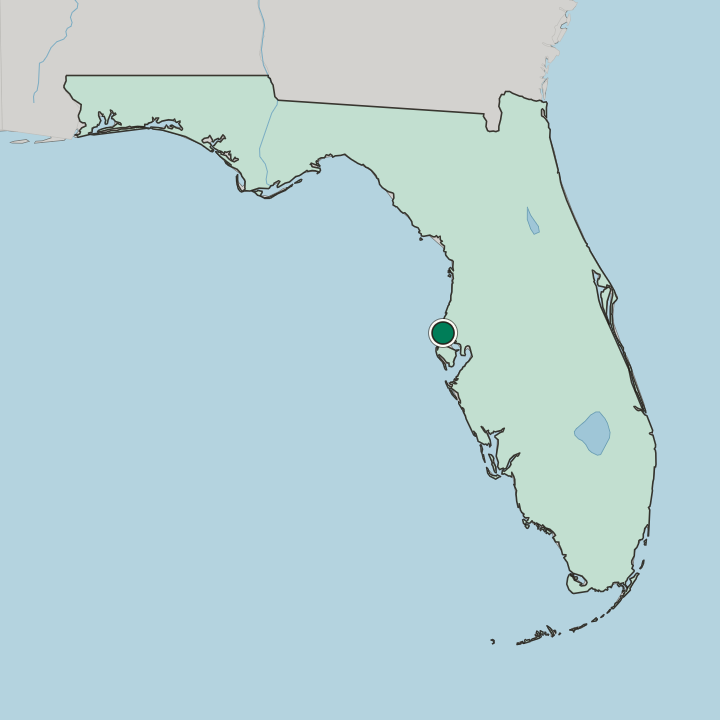
This is coastal ground. Palm Harbor lies on the Pinellas County shore, in the subtropical band of Florida, and its setting is defined by water on one side and the run of neighbouring towns on the other. Dunedin, Tarpon Springs, and Safety Harbor sit close enough that the built-up ground reads as continuous, and the boundaries between them are administrative rather than visible.
Palm Harbor has no municipal line of its own.
What is the climate of Palm Harbor?
Subtropical Florida sets the terms. Summers on the Pinellas County coast run long, humid, and heavy with afternoon thunderstorms, while the water offshore keeps winter nights milder here than they run further inland. The shoulder months are the reward.
Between the humid extremes, Palm Harbor and its neighbours around Dunedin get a long stretch of warm, dry, and comfortable weather that carries most of the visiting season.
How do you get to Palm Harbor?
Everything here runs on roads. Palm Harbor is unincorporated and spread along the coastal side of Pinellas County, so people arrive through Dunedin, Tarpon Springs, or Safety Harbor rather than at any single point. Distances inside Pinellas County are short, and TD Ballpark, Tampa Bay Downs, and the Leepa-Rattner Museum of Art all sit within an easy drive of one another.
Parking is the easy part.
Common questions
What is the best area to stay in Palm Harbor?
Palm Harbor: a low-key base within a short drive of the Leepa-Rattner Museum of Art. Dunedin: museum days and an afternoon at TD Ballpark. Tarpon Springs: Greek Orthodox heritage and a waterfront evening. Safety Harbor: the Safety Harbor Site and a quiet, low-rise night.
Good for
More cities in Florida
Updated September 2026