United States · Massachusetts
Where to Stay in Chicopee, Massachusetts
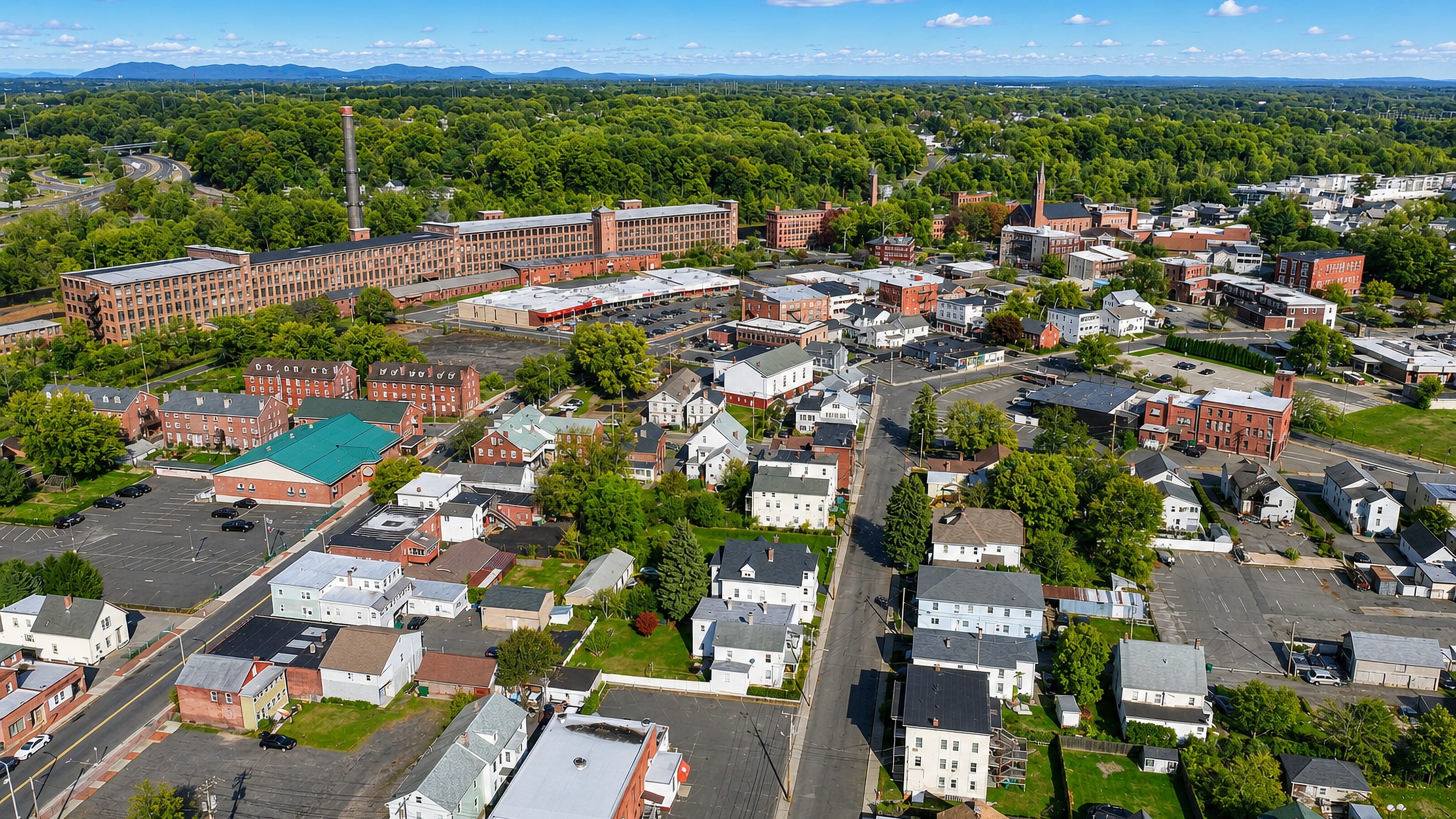
Chicopee stands on the Connecticut River in Hampden County, Massachusetts, a city settled in 1640 and built up around Chicopee Falls and Cabotville.
Hotel links are affiliate links: booking through them may earn us a commission, at no extra cost to you. It never affects how places are ranked. How this works


Where to stay in Chicopee
Where visitors usually base themselves, and why.
Chicopee Center, also called Cabotville, and Chicopee Falls are the two ends the city is described by, and the choice between them shapes how close a stay sits to the Connecticut River. Neither is large. Chicopee spreads through Willimansett, Fairview, Aldenville, Smith Highlands, Burnett Road, and Westover as much as through its two centres, and the pattern is residential rather than concentrated.
Springfield answers for range. The city belongs to the Springfield metropolitan area, so a room there sits inside the same urban block of Hampden County and reaches Chicopee quickly. The Basilica of St. Stanislaus anchors the Cabotville side.
Anyone here for the church, the Edward Bellamy House, or the Emerson Gaylord Mansion will find the walkable ground close to the old centre rather than out along Burnett Road or Smith Highlands. Westover is the other pole. It sits among the city's outer sections, away from Chicopee Center, and a stay there trades walking distance for space.
If you want the landmarks of a city settled in 1640 within reach on foot, base yourself around Chicopee Center; if the trip is really about the Springfield metropolitan area, take a room there and treat Chicopee Falls as an afternoon.
Find hotels in Chicopee
Direct booking searches for these neighbourhoods.
Chicopee Center (Cabotville)
The old centre nearest the Connecticut River, where Chicopee's churches and named houses stand close enough together to reach on foot.Find hotels in Chicopee Center (Cabotville)quieter nights near the Third Congregational Church of ChicopeeChicopee Falls
The second of Chicopee's two named centres, set apart from Cabotville with Aldenville and Fairview filling the ground between them.Find hotels in Chicopee Fallsvisitors treating Chicopee as one stop inside the Springfield metropolitan areaSpringfield
The larger city of Hampden County, where the metropolitan area's rooms concentrate and Chicopee Falls is a short run off.Find hotels in SpringfieldHotel links are affiliate links: booking through them may earn us a commission, at no extra cost to you. It never affects how places are ranked. How this works
Things to do in Chicopee
Ranked by global recognition; descriptions from Wikidata (CC0).
Churches & Religious Sites
3- Our Mother of Sorrows Monastery and Retreat Center Heritage
- Basilica of St. Stanislaus
- First Congregational Church
Landmarks & Notable Places
3- Edward Bellamy House Heritage
- Thomas D. Page House Heritage
- Emerson Gaylord Mansion
worth knowingacross 2 categories in Chicopee
About Chicopee
Seven landmarks carry the city.
What is Chicopee known for?
The Basilica of St. Stanislaus heads the roll, and beside it stand the Edward Bellamy House, the Emerson Gaylord Mansion, and the Thomas D. Page House, three houses among the landmarks recorded for Chicopee on the Connecticut River. Three churches make up the balance. The Third Congregational Church of Chicopee, the First Congregational Church, and Our Mother of Sorrows Monastery and Retreat Center complete the list for a city in Hampden County whose landmarks are mostly places of worship and family houses rather than civic monuments.
What are the main landmarks in Chicopee?
Faith built most of what survives here. The Basilica of St. Stanislaus leads them, and the Third Congregational Church of Chicopee, the First Congregational Church, and Our Mother of Sorrows Monastery and Retreat Center fill out a roll dominated by places of worship. Houses account for the rest.
The Edward Bellamy House, the Emerson Gaylord Mansion, and the Thomas D. Page House complete the roll, three houses named for the people attached to them.
What is the history of Chicopee?
Chicopee's founding year is 1640. That date sets the settlement's beginning beside the Connecticut River, on ground later organised into Hampden County in Massachusetts. The river did the organising.
Growth came in separate pieces rather than from one core, which is why the city still names Chicopee Center, or Cabotville, and Chicopee Falls as distinct places within a single municipality of the United States. The list of communities is long. Willimansett, Fairview, Aldenville, Burnett Road, Smith Highlands, and Westover all sit inside Chicopee, each with a name of its own, and together they describe a city assembled from villages rather than laid out at once.
Buildings record the same sequence. The Basilica of St. Stanislaus, the First Congregational Church, and the Third Congregational Church of Chicopee stand for the congregations that gathered as the villages filled, and Our Mother of Sorrows Monastery and Retreat Center belongs to the same religious record. Springfield sits alongside the whole story.
Chicopee forms part of the metropolitan area named for that larger neighbour, and the relationship between the two cities of Hampden County shapes how Chicopee is reached and described.
Where is Chicopee?
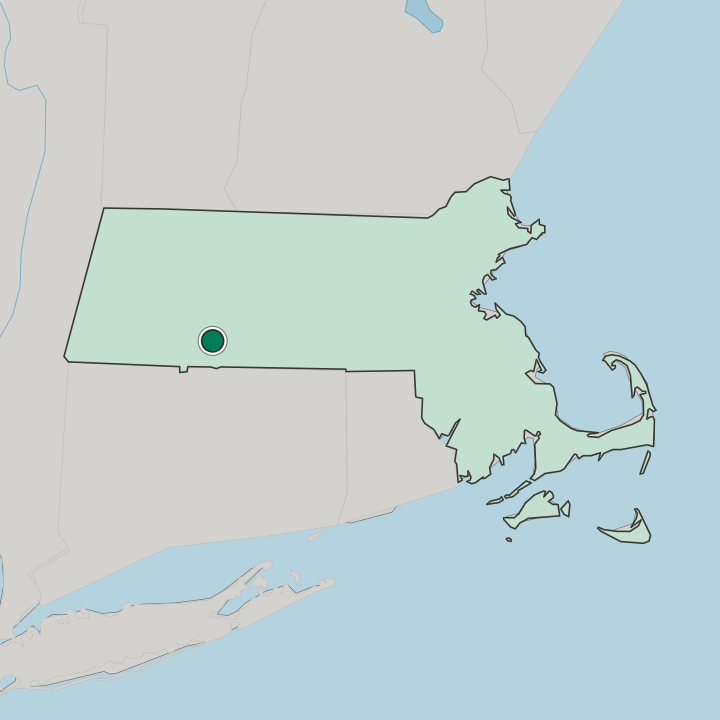
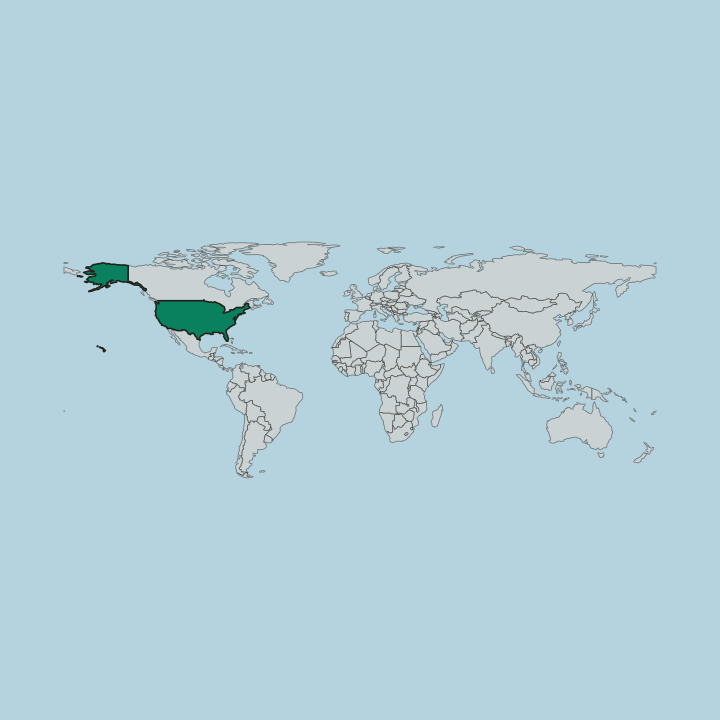
The Connecticut River runs along the city. Chicopee occupies ground in Hampden County beside that river, with Springfield the larger city of the same metropolitan area, and the built-up sections of Willimansett, Fairview, and Aldenville spread across the land between the two named centres. It is not a large area.
Chicopee Center and Chicopee Falls sit close enough to each other that the whole city reads as one continuous piece of Massachusetts riverside, with Westover, Smith Highlands, and Burnett Road at its outer edges.
What is the climate of Chicopee?
The Connecticut River valley sets the tone. Chicopee sits in the temperate band, so the year turns through a full four seasons, with the cold arriving hard enough inland from the coast of Massachusetts to matter for anyone walking between the churches. Seasons decide the walking.
The Edward Bellamy House and the Basilica of St. Stanislaus are close enough together to see on foot in mild weather, while the river sections around Willimansett are better in the warmer half of the year.
How do you get to Chicopee?
Springfield is the way in. Chicopee belongs to the metropolitan area centred on that city, so arrivals into Hampden County come through Springfield and cover the last stretch to Chicopee Center or Chicopee Falls by road. The Connecticut River is the reference point.
The city's ground follows it, and the outer sections at Burnett Road, Smith Highlands, and Westover are the parts that most clearly need a car.
Common questions
What is the best area to stay in Chicopee?
Chicopee Center (Cabotville): landmark days around the Basilica of St. Stanislaus and the Edward Bellamy House. Chicopee Falls: quieter nights near the Third Congregational Church of Chicopee. Springfield: visitors treating Chicopee as one stop inside the Springfield metropolitan area.
Good for
More cities in Massachusetts
Updated September 2026