United States · Massachusetts
Where to Stay in Waltham, Massachusetts
Waltham is a Charles River mill city in Middlesex County, Massachusetts, founded in 1634 and remade since by Brandeis University and Bentley University.
Hotel links are affiliate links: booking through them may earn us a commission, at no extra cost to you. It never affects how places are ranked. How this works


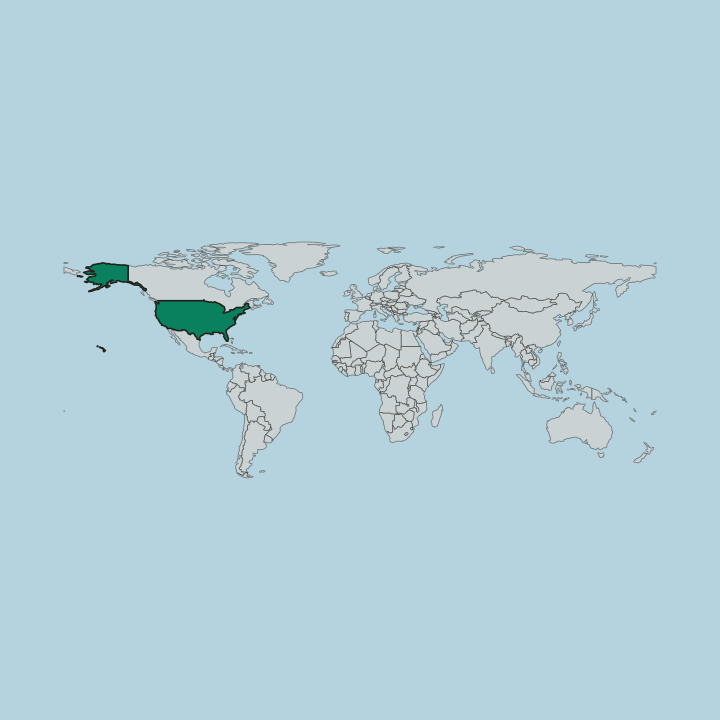
Where to stay in Waltham
How the choice of base plays out on the ground.
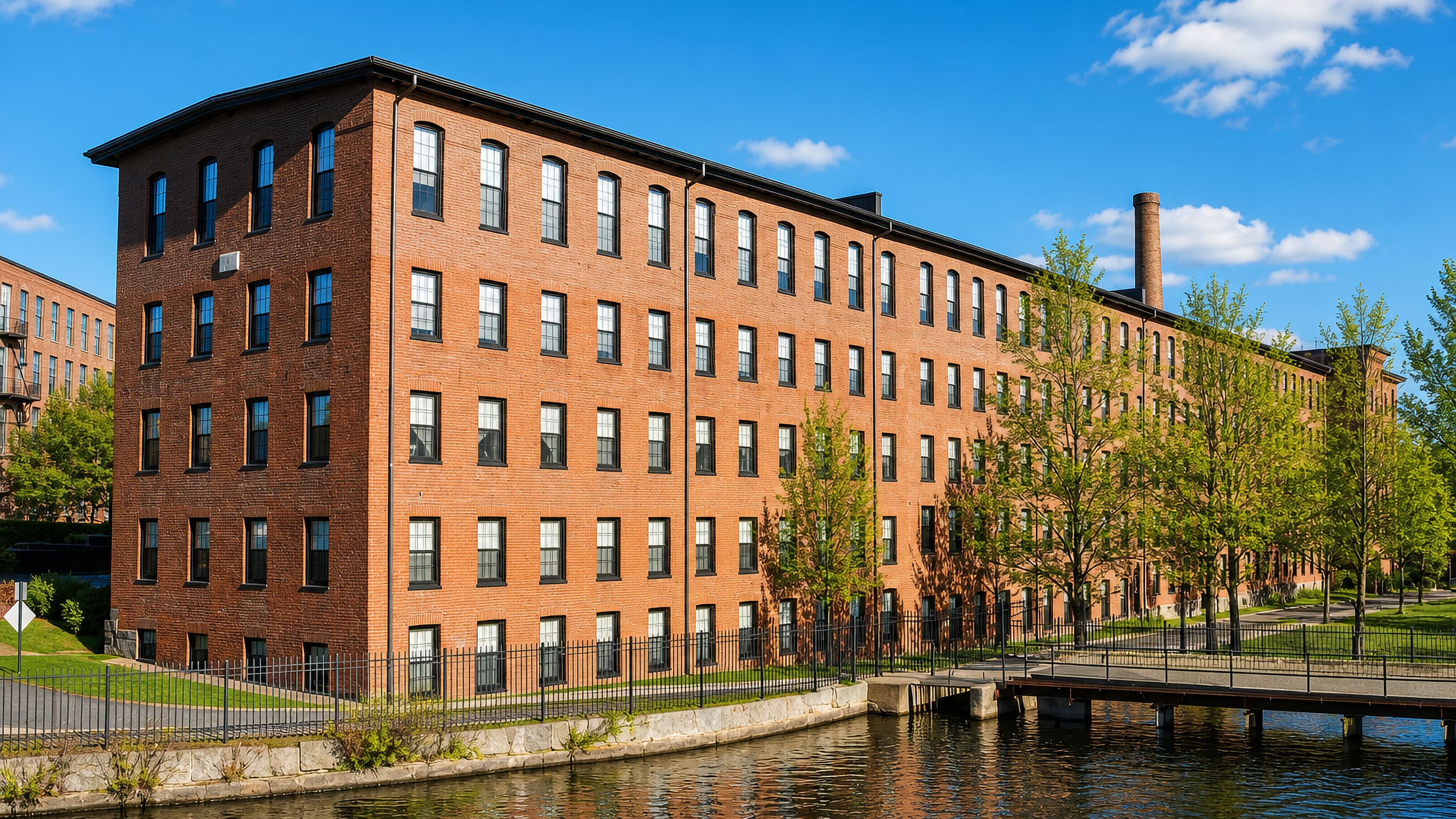
The Charles River is the reference point. Waltham's mill row follows it, the brick of the Boston Manufacturing Company and the Charles River Museum of Industry along the same short stretch, and a room there puts the industrial city within a flat walk. Beds are not spread evenly.
Rooms near Brandeis University are the ones that go first, since commencement and the opening of teaching bring families into the city in the same weeks, and anyone arriving then should expect to book far ahead. The Rose Art Museum and the National Center for Jewish Film are both on that campus, which makes it the choice for a museum-led visit. Bentley University adds its own calendar.
Gore Place changes the arithmetic for anyone driving. The estate and the older houses near it, the Browne House among them, stand away from both campuses on residential streets where a car is straightforward to keep, and the cost of that is a longer approach to everything else in Waltham. Norumbega Tower marks the quieter end.
Boston is the other option. Under ten miles of road separate the city from central Boston, so a bed in Waltham also serves a wider Greater Boston trip, with the towns of Middlesex County on either hand.
Find hotels in Waltham
Direct booking searches for these neighbourhoods.
The Charles River mill row
The mill row along the Charles River keeps the Charles River Museum of Industry and the old Boston Manufacturing Company brick on one flat riverside walk.Find hotels in The Charles River mill rowVisits pinned to the Rose Art Museum and the National Center for Jewish FilmBrandeis University campus side
Rooms by the Brandeis University campus hold the Rose Art Museum and the National Center for Jewish Film on one circuit, and commencement week takes them all. Rooms are few around here — worth securing early.Find hotels in Brandeis University campus sideDrivers who came to Waltham for Gore Place and the Browne HouseThe Gore Place approach
Gore Place and the Browne House sit on low-traffic residential ground where parking is ordinary, well back from both of Waltham's university calendars.Find hotels in The Gore Place approachHotel links are affiliate links: booking through them may earn us a commission, at no extra cost to you. It never affects how places are ranked. How this works
Things to do in Waltham
Ranked by global recognition; descriptions from Wikidata (CC0).
Museums & Galleries
2- Rose Art Museum
- Charles River Museum of Industry
Churches & Religious Sites
4- St. Charles Borromeo Church Heritage
- Christ Episcopal Church Heritage
- First Congregational Church Heritage
- Beth Eden Baptist Church Heritage
Landmarks & Notable Places
8- Gore Place Heritage
- Browne House Heritage
- William Wellington House Heritage
- Rev. Thomas Hill House Heritage
- Amos Stearns House Heritage
Show 3 more →
- Jonathan Hammond House Heritage
- Aaron Martin House Heritage
- Charles Byam House Heritage
worth knowingacross 3 categories in Waltham
About Waltham
Two industries built the reputation.
What is Waltham known for?
The Boston Manufacturing Company arrived first, putting spinning and weaving under one roof on the Charles River and setting the pattern of labour and production that became known as the Waltham-Lowell system. The Waltham Watch Company followed with precision manufacture, and the nickname Watch City stuck. That machinery is kept at the Charles River Museum of Industry.
Brandeis University holds the Rose Art Museum and the National Center for Jewish Film, and Bentley University brings a second student body into the same street grid.
What are the main landmarks in Waltham?
Gore Place heads the register. The Charles River Museum of Industry carries the mill story indoors, while the Rose Art Museum and the National Center for Jewish Film sit out on the Brandeis University campus rather than in the centre, so a museum day begins with the walk out there. Domestic architecture does the rest: the Browne House, the Jonathan Hammond House, the Galen Merriam House and the William Wellington House are all registered, scattered through residential blocks.
Churches hold the corners, among them Central Congregational Church and Christ Episcopal Church. Norumbega Tower stands off alone.
What is the history of Waltham?
Settlement dates to 1634. For two centuries the ground beside the Charles River carried farms and scattered houses, the Browne House among the survivors, and nothing in that landscape predicted the industrial experiment of the nineteenth century. The Boston Manufacturing Company changed it.
Its mill drew power from the river and gathered spinning and weaving under a single roof, and the way it organised labour, production and worker housing became known as the Waltham-Lowell system, read since as a prototype for nineteenth-century industrial city planning. Waltham counts as an early centre of the American labour movement, and the mill floor is where that began. Watchmaking followed the textiles.
The Waltham Watch Company put precision manufacture beside the mills and gave the city the second name it still answers to, Watch City. Research and teaching came last: Brandeis University and Bentley University turned a manufacturing town toward laboratories and lecture halls, and the Rose Art Museum and the National Center for Jewish Film arrived with them. Gore Place outlasted all of it.
The Charles River Museum of Industry occupies part of the ground the mills held, which is as close to a continuous thread as Middlesex County keeps.
Where is Waltham?
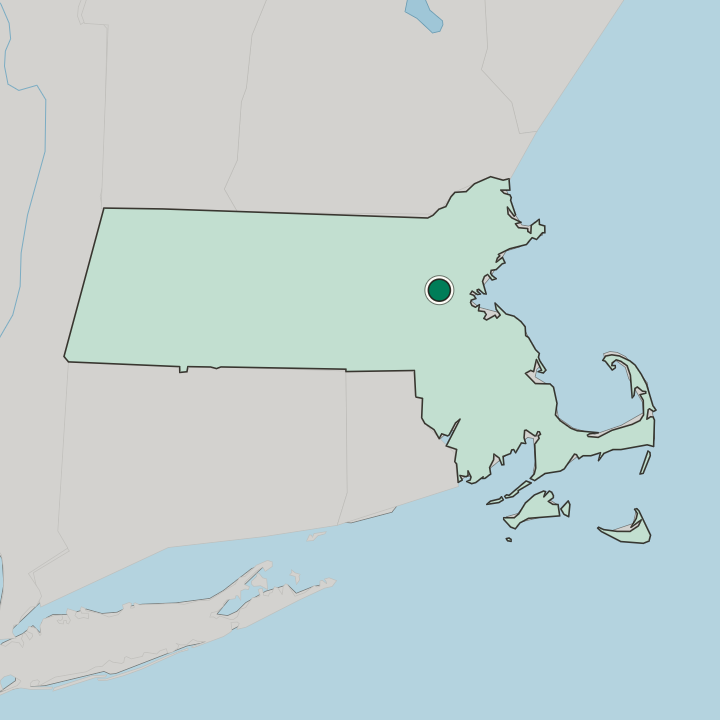
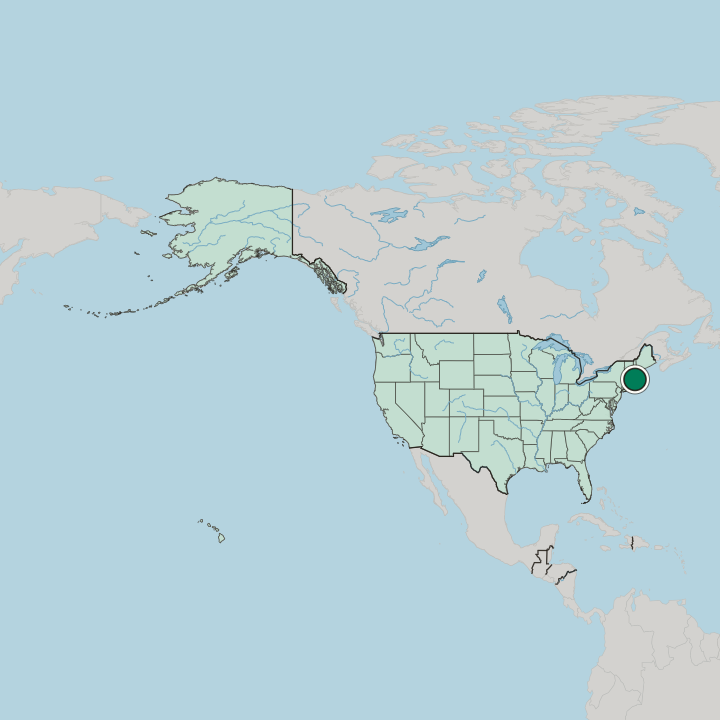
Waltham lies on the Charles River, under ten miles west of central Boston and inside the Greater Boston conurbation, close enough that the built-up fabric barely breaks between the two. The river runs through the middle. Residential blocks fill the ground on either side of it, and the city holds a compact stretch of Middlesex County rather than spreading far along the valley.
Norumbega Tower marks the water.
What is the climate of Waltham?
The Charles River sets the visible calendar. Its banks green first when the temperate year turns, and they stay the busiest ground in Waltham through a summer when both Brandeis University and Bentley University sit between terms. Winter quiets the water.
The city holds well inside the temperate band of the northern hemisphere, and the swing between the seasons is wide enough that one riverside walk reads as two different places across the year.
How do you get to Waltham?
Everything arrives by way of Boston. Waltham stands under ten miles west of the centre and inside Greater Boston, so the practical route in is whatever brings a traveller to Boston first, followed by the short run west along the Charles River. The last leg is easy.
Distances inside the city are small, and the mill row, the Brandeis University campus and Gore Place all fall within one short drive of each other on the Middlesex County road network.
Common questions
What is the best area to stay in Waltham?
The Charles River mill row: Travellers here for the Charles River Museum of Industry and the Boston Manufacturing Company mills. Brandeis University campus side: Visits pinned to the Rose Art Museum and the National Center for Jewish Film. The Gore Place approach: Drivers who came to Waltham for Gore Place and the Browne House.
Good for
More cities in Massachusetts
Updated October 2026