United States · North Carolina
Where to Stay in Greenville, North Carolina
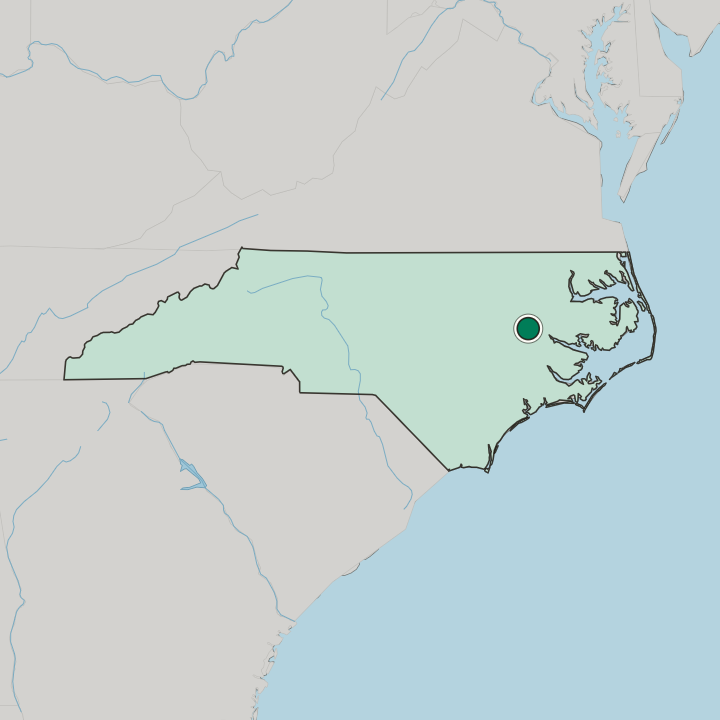
Greenville is the seat of Pitt County, North Carolina, hub of the Inner Banks, the low country east of Raleigh and west of the coast.
Hotel links are affiliate links: booking through them may earn us a commission, at no extra cost to you. It never affects how places are ranked. How this works


Where to stay in Greenville
The practical side of choosing where to sleep.
Greenville splits neatly for a visitor: the ballpark end and the landmark-house streets. Clark-LeClair Stadium draws the game-day traffic, and a bed on that side of the city keeps the crowds, the parking, and the walk to the seats within easy reach on a fixture weekend. Beds fill when the season runs.
If baseball brought you east from Raleigh, that end saves the driving. Room supply moves with the fixture list rather than any tourist season, since Greenville draws far more people for medicine and study than for sightseeing. Older Greenville reads differently.
Greenwreath, Oakmont, the Jones-Lee House, and the Robert Lee Humber House are the names a visitor with a spare morning goes looking for, and they reward a slow drive more than a hotel map. Pitt County business fills the county-seat hotels midweek, and the same rooms loosen once the clinics and county offices close for the weekend. Tidewater country begins beyond the last streets.
The Coastal Plain runs flat in every direction from here, so a car turns Greenville into a base for the Inner Banks rather than a destination hemmed in by its own edges. Two nights covers both ends of the city.
Find hotels in Greenville
Direct booking searches for these neighbourhoods.
Around Clark–LeClair Stadium
Clark–LeClair Stadium sets the rhythm of this end of Greenville, and beds here answer to the fixture list.Find hotels in Around Clark–LeClair StadiumSlow mornings among Greenwreath, Oakmont and the Jones-Lee HouseThe landmark-house side
Pitt County's county-seat streets keep the Robert Lee Humber House and the other landmark houses within one morning's circuit.Find hotels in The landmark-house sideHotel links are affiliate links: booking through them may earn us a commission, at no extra cost to you. It never affects how places are ranked. How this works
Things to do in Greenville
Ranked by global recognition; descriptions from Wikidata (CC0).
Stadiums & Sports
1- Clark–LeClair Stadium
Landmarks & Notable Places
5- Oakmont Heritage
- Greenwreath Heritage
- Robert Lee Humber House Heritage
- E. B. Ficklen House Heritage
- Jones-Lee House Heritage
worth knowingacross 2 categories in Greenville
About Greenville
What is Greenville known for?
Medicine, students, and baseball carry the name of Greenville. The city works as the health, entertainment, and educational hub of the Coastal Plain, pulling patients, undergraduates, and ballpark crowds in from every county between Raleigh and the coast. Clark-LeClair Stadium anchors the sport.
Five landmark houses hold the older side of the record, Greenwreath and Oakmont among them, alongside the Jones-Lee House and the Robert Lee Humber House.
What are the main landmarks in Greenville?
Clark-LeClair Stadium is the one address most visitors already know, a ballpark that sets Greenville's calendar once the season opens. Five houses carry the rest. Greenwreath, Oakmont, the Jones-Lee House, and the Robert Lee Humber House are the named landmarks of Pitt County's seat, and each asks for a detour rather than a queue.
What is the history of Greenville?
Greenville dates from 1786. The town took shape as the seat of Pitt County, the administrative centre for a spread of low ground that lies east of Raleigh and stops short of the North Carolina coast. County business has held it there ever since.
Six landmarks carry the city's name in the record, five of them houses and one a ballpark, a split that marks where the older Greenville spent and where the newer one does. Greenwreath, Oakmont, the Jones-Lee House, and the Robert Lee Humber House are the named houses the record keeps, a short list for a settlement founded in the seventeen-eighties. The modern city rests on medicine and teaching.
From the nineteen-nineties onward Greenville's economy turned upward, and the city settled into its role as the health, entertainment, and educational hub of the Tidewater and the Coastal Plain. Growth of that kind reshapes a county seat within a generation. Clark-LeClair Stadium carries the sporting side.
Greenville also became the principal city of its own metropolitan area, the anchor that Inner Banks counties use for hospitals, degrees, and anything a small county seat cannot supply.
Where is Greenville?
Low ground surrounds Greenville. The city stands on the Coastal Plain between Raleigh and the coast, in the belt of flat country that North Carolina calls its Inner Banks, and the Tidewater begins beyond it. Pitt County spreads around it, and Greenville holds the seat.
The coast lies to the east, far enough that Greenville counts as an inland city despite its Tidewater address.
What is the climate of Greenville?
Greenville falls in the temperate band. Its position between Raleigh and the coast puts the city under a mix of inland and maritime air, with the sea near enough to blunt the coldest nights but not near enough to rule the year. The Coastal Plain offers no shelter.
Nothing between Greenville and the water rises high enough to change what arrives, so weather crosses Pitt County much as it crosses the rest of the plain.
How do you get to Greenville?
Raleigh is the way in. Greenville stands east of Raleigh, and the drive across the Coastal Plain is how nearly everyone reaches Pitt County, whether the reason is medical, educational, or a fixture at Clark-LeClair Stadium. The coast sits on the far side, so traffic runs through Greenville between the shore and the interior rather than stopping at a terminus.
Distances stay short across flat ground.
Common questions
What is the best area to stay in Greenville?
Around Clark–LeClair Stadium: Baseball weekends and anyone driving in east from Raleigh. The landmark-house side: Slow mornings among Greenwreath, Oakmont and the Jones-Lee House.
More cities in North Carolina
Updated September 2026