United States · North Carolina
Where to Stay in Asheville, North Carolina
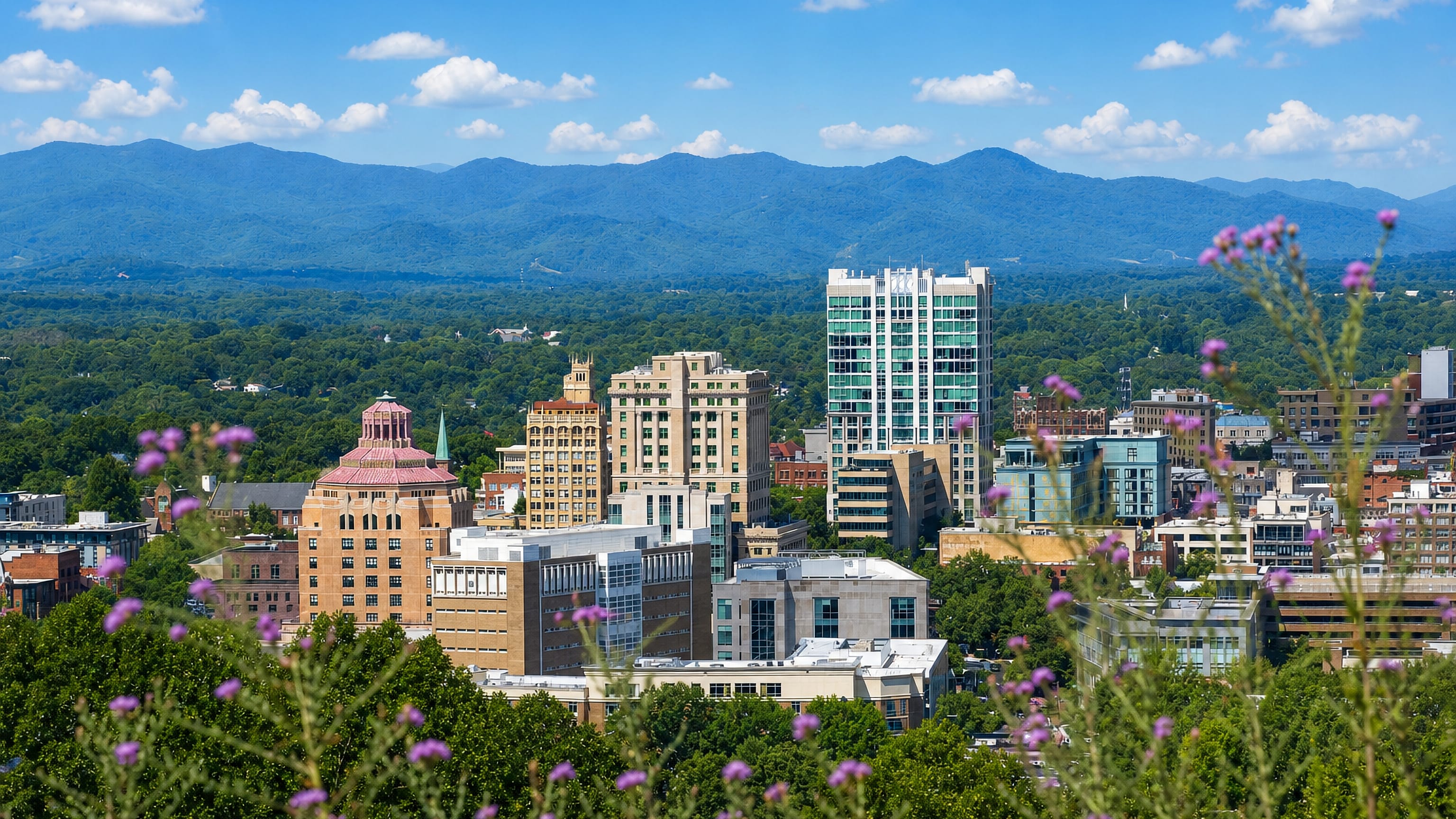
Brick and gallery light fill the streets of Asheville, a city in North Carolina, known for the Asheville Art Museum and the Thomas Wolfe House.
Hotel links are affiliate links: booking through them may earn us a commission, at no extra cost to you. It never affects how places are ranked. How this works




Where to stay in Asheville
The practical side of choosing where to sleep.
Asheville sorts its lodging by the pull of its downtown galleries and its quieter historic edges. Downtown puts you within walking reach of the Asheville Art Museum and the brick storefronts around it. Stay central.
The blocks around the Thomas Wolfe House suit visitors who want the literary heart of the city within a few minutes on foot, close to the theatres and cafes that ring the old centre. Further out, the streets near the Smith-McDowell House trade the downtown crowds for a calmer residential setting, handy for the Western North Carolina Nature Center and slower mornings. Baseball crowds gather near HomeTrust Park, a short trip from the centre, where game nights fill the surrounding streets.
For families, the ground near the Black Mountain College Museum + Arts Center pairs cultural interest with easy parking. Choose by what you came to see. Each pocket of the city keeps you close to a named landmark, so the choice is less about distance than about which part of Asheville's story you want outside your door each morning.
Find hotels in Asheville
Direct booking searches for these neighbourhoods.
Downtown Asheville
Walking distance to the Asheville Art Museum and the brick storefronts of the old centreFind hotels in Downtown AshevilleReaders tracing the city's literary heritageThomas Wolfe House quarter
Steps from the Thomas Wolfe House and the theatres ringing the old centreFind hotels in Thomas Wolfe House quarterTravellers wanting a calmer residential baseSmith-McDowell House streets
Quiet blocks by the Smith-McDowell House and the Western North Carolina Nature CenterFind hotels in Smith-McDowell House streetsHotel links are affiliate links: booking through them may earn us a commission, at no extra cost to you. It never affects how places are ranked. How this works
Things to do in Asheville
Ranked by global recognition; descriptions from Wikidata (CC0).
Museums & Galleries
2- Asheville Art Museum
- Black Mountain College Museum + Arts Center
Churches & Religious Sites
3- St. Luke's Episcopal Church Heritage
- St. Matthias Episcopal Church Heritage
- St. Mary's Episcopal Church Heritage
Stadiums & Sports
2- HomeTrust Park
- Greenwood Baseball Field
Landmarks & Notable Places
4- Thomas Wolfe House Heritage
- Overlook Castle Heritage
- Smith-McDowell House Heritage
- Seven Oaks Heritage
worth knowingacross 4 categories in Asheville
About Asheville
What is Asheville known for?
Asheville is a North Carolina city known for its art institutions and its literary heritage. Galleries fill its centre. Writers come for the Thomas Wolfe House, the boyhood home tied to the author of Look Homeward, Angel, while the Asheville Art Museum anchors a walkable downtown of studios and exhibition halls.
Nearby, the Black Mountain College Museum + Arts Center keeps alive the memory of an experimental arts college. The Smith-McDowell House adds built history.
What are the main landmarks in Asheville?
Asheville's main landmarks range from museums to historic churches and homes. The Asheville Art Museum leads the list, joined by the Thomas Wolfe House, the Smith-McDowell House, and the curious silhouette of Overlook Castle rising on the city's edge. Historic congregations mark the streets too, among them the twin Episcopal landmarks of St. Luke's Episcopal Church and St. Matthias Episcopal Church.
Museums and homes anchor the centre. Together these built landmarks give the city its walkable, layered character across the North Carolina uplands.
What is the history of Asheville?
Asheville was established in 1797, taking form as a settlement in the mountains of North Carolina. Its early growth was slow. The Smith-McDowell House, raised in the decades that followed, survives as one of the oldest brick dwellings in the county and marks the town's shift from frontier outpost toward a settled community with means.
Through the nineteenth century the town drew visitors and new settlers, and its churches multiplied. St. Luke's Episcopal Church, St. Mary's Episcopal Church, and St. Matthias Episcopal Church each rose to serve congregations across the growing town. The twentieth century brought a cultural chapter that still defines the city.
The Thomas Wolfe House gave the town a literary landmark tied to a native son. Later, the experimental spirit remembered at the Black Mountain College Museum + Arts Center placed Asheville within a wider story of American arts. From a small mountain settlement chartered in the late eighteenth century, the town became a North Carolina city whose history reads through its surviving houses, churches, and museums.
Where is Asheville?
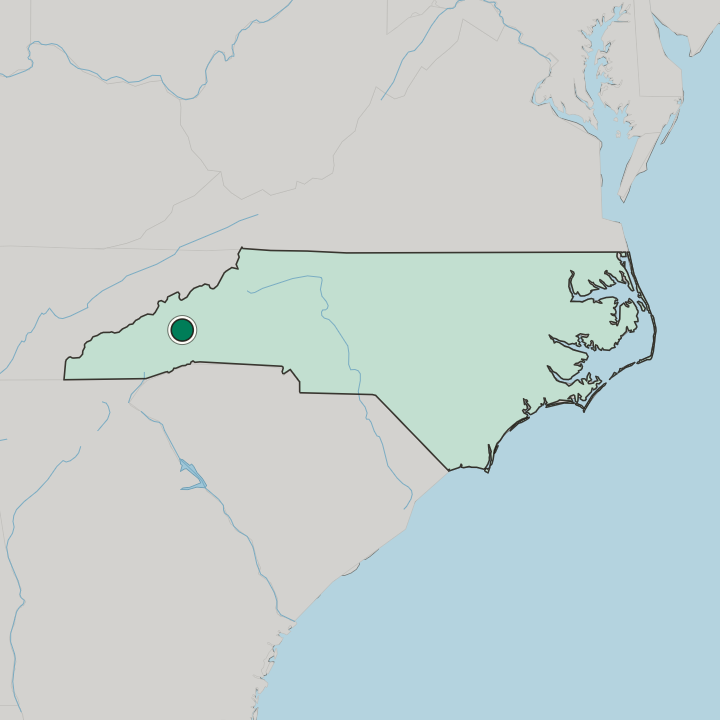
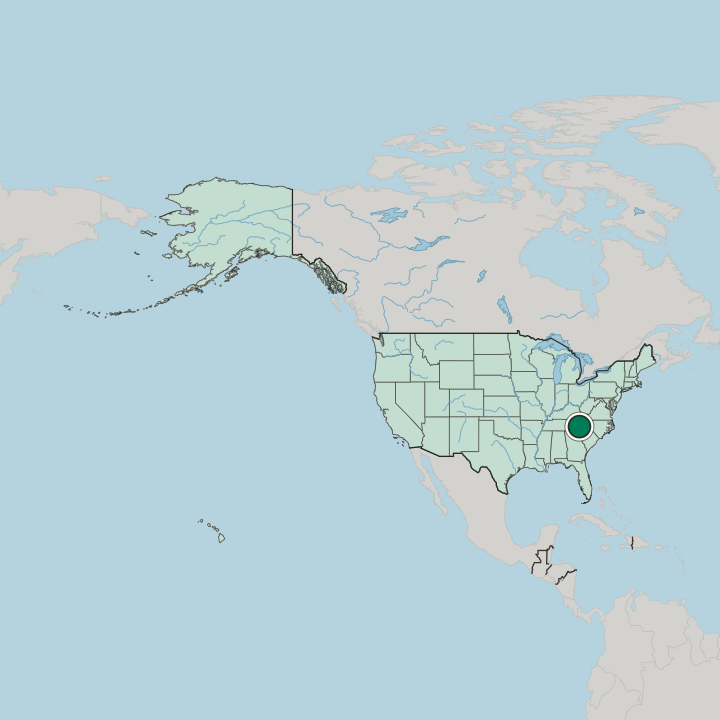
Asheville sits in the mountains of North Carolina, spread across a broad upland setting of ridges and valleys. The terrain rules the city. Its temperate position gives it four clear seasons and a hilly street plan that climbs and falls between neighbourhoods, so that walking the old centre means climbing between one block and the next.
The heart of town gathers around the Asheville Art Museum. Historic homes such as the Smith-McDowell House hold higher ground on the edges, where the ridges open toward the wider North Carolina highlands.
What is the climate of Asheville?
Asheville has a temperate mountain climate marked by four distinct seasons. Its uplands soften the heat. Summers are warm but tempered by elevation, while winters bring cold spells and the occasional snowfall that dusts the ridges of the North Carolina highlands around the city.
Spring and autumn run long and mild. The elevation keeps summer nights cooler than the lowlands to the east, giving Asheville a gentler warm season than much of the wider state.
How do you get to Asheville?
Asheville is reached by road and air from across North Carolina and beyond. Interstate highways climb into the mountains to meet the city, linking it with the lowland cities to the east. A regional airport serves travellers arriving by air.
Once in the city, the compact old centre around the Asheville Art Museum is easily walked, though the hilly street plan rewards sturdy shoes. Buses connect the outer neighbourhoods with the downtown core.
Common questions
What is the best area to stay in Asheville?
Downtown Asheville: First-time visitors who want galleries at the door. Thomas Wolfe House quarter: Readers tracing the city's literary heritage. Smith-McDowell House streets: Travellers wanting a calmer residential base.
Good for
More cities in North Carolina
Updated October 2026