Brazil · Rio Grande do Sul
Where to Stay in Pelotas, Rio Grande do Sul
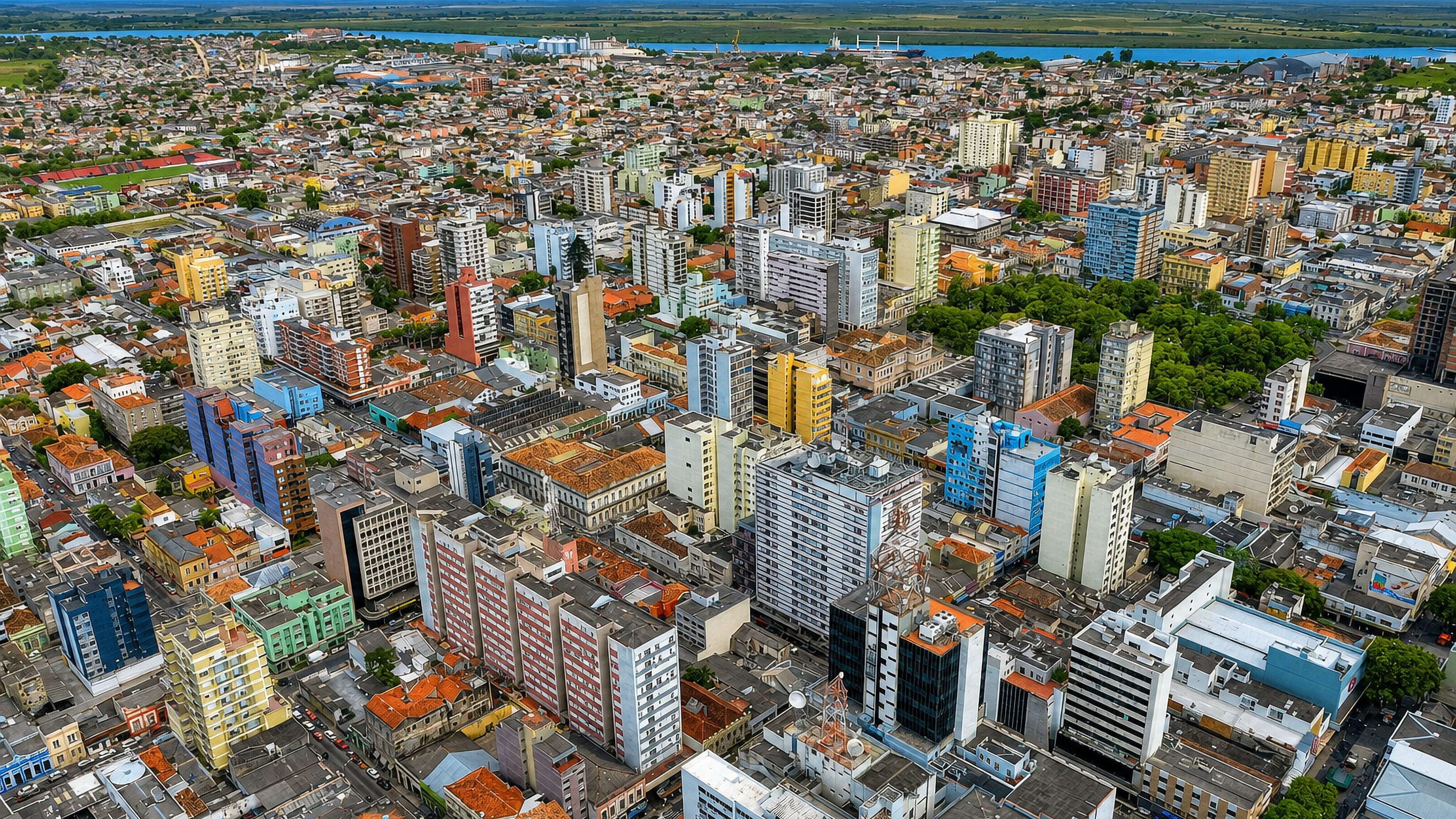
Pelotas, the National Capital of Sweets, stands west of the Lagoa dos Patos in the extreme south of Rio Grande do Sul. A lagoon city near the border.
Hotel links are affiliate links: booking through them may earn us a commission, at no extra cost to you. It never affects how places are ranked. How this works


Where to stay in Pelotas
Where the beds are, and what that means for the visit.
The old centre is the reason most people come. Praça Coronel Pedro Osório and the Igreja Matriz Sagrado Coração de Jesus stand in the middle of it, and the European-style frontages that made the city's name are on the streets around them rather than scattered across the municipality. Confectionery pulls just as hard.
Anyone whose trip is built on the National Capital of Sweets title should stay central, walk, and eat in short stages. A second base suggests itself at the Museu da Baronesa, which preserves a grand private house of the kind old Pelotas built for itself, and a room on that side trades commerce for quiet. Water is the third option.
The Lagoa dos Patos lies east of the city while the São Gonçalo Channel runs to the south toward Rio Grande, so a shore base suits anyone here for the lagoon rather than the streets, though beds thin out quickly away from the centre. Museums fill any gap in the plan. The Museu de Arte Leopoldo Gotuzzo, the Museu Farmacêutico Moura, the Museu Maçônico Rocco Felippe, and the Museu de Ciências Naturais Carlos Ritter all sit inside the same city.
Find hotels in Pelotas
Direct booking searches for these neighbourhoods.
Centro
Praça Coronel Pedro Osório and the Igreja Matriz Sagrado Coração de Jesus anchor the old centre of Pelotas, where the European-style streets are concentrated.Find hotels in Centroa quieter stay beside the villa museumMuseu da Baronesa
The Museu da Baronesa preserves a grand private house, and this side of Pelotas keeps the commerce at arm's length.Find hotels in Museu da Baronesalagoon days and the run south toward Rio GrandeLagoa dos Patos shore
The Lagoa dos Patos lies east of the city and the São Gonçalo Channel south of it, with few rooms out that way. Lodging is scarce in this area; reserve in advance.Find hotels in Lagoa dos Patos shoreHotel links are affiliate links: booking through them may earn us a commission, at no extra cost to you. It never affects how places are ranked. How this works
Things to do in Pelotas
Ranked by global recognition; descriptions from Wikidata (CC0).
Museums & Galleries
3- Museu da Baronesa Heritage
- Museu de Arte Leopoldo Gotuzzo
- Museu Farmacêutico Moura
Churches & Religious Sites
1- Igreja Matriz Sagrado Coração de Jesus Heritage
Castles & Historic Sites
1- Castelo Simões Lopes Heritage
Landmarks & Notable Places
1- Praça Coronel 2, 6 e 8 Pedro Osório Heritage
worth knowingacross 4 categories in Pelotas
About Pelotas
Sweets first.
What is Pelotas known for?
Pelotas carries the title National Capital of Sweets, and its confectionery is what the rest of Brazil knows the city for, ahead of the museums or the position on the water. European-style buildings give the older streets their look. The Museu do Charque Itinerante names the other trade.
In size it comes fourth in Rio Grande do Sul, behind Porto Alegre, Caxias do Sul, and Canoas.
What are the main landmarks in Pelotas?
Praça Coronel Pedro Osório is the centre of the picture. Around it stand the Igreja Matriz Sagrado Coração de Jesus and the European-style buildings the city is known for, while the Castelo Simões Lopes and the Museu da Baronesa carry the grander end of the same architecture. Museums run deep here.
Pelotas keeps the Museu do Charque Itinerante, the Museu de História Natural da Universidade Católica de Pelotas, and a collection inside the Colégio Municipal Pelotense.
What is the history of Pelotas?
The record starts in 1812. Pelotas grew on the west side of the Lagoa dos Patos, near enough to the water and to what is now the Uruguayan border to sit on a trading route rather than at the end of one. The charque trade is the industry the city keeps a museum for, the Museu do Charque Itinerante.
Wealth showed in the buildings. European-style frontages went up along the older streets, and the Museu da Baronesa and the Castelo Simões Lopes survive as the set pieces of that taste. Institutions came next.
The Colégio Municipal Pelotense and the Universidade Católica de Pelotas gave the city a schooling record that its own collections now curate, among them the Museu de História Natural da Universidade Católica de Pelotas. Confectionery outlasted the rest. The title National Capital of Sweets is what Pelotas carries furthest beyond Rio Grande do Sul, ahead of Porto Alegre, Caxias do Sul, and Canoas, which outrank it only in size.
The Igreja Matriz Sagrado Coração de Jesus and Praça Coronel Pedro Osório hold the centre the whole account was written around.
Where is Pelotas?
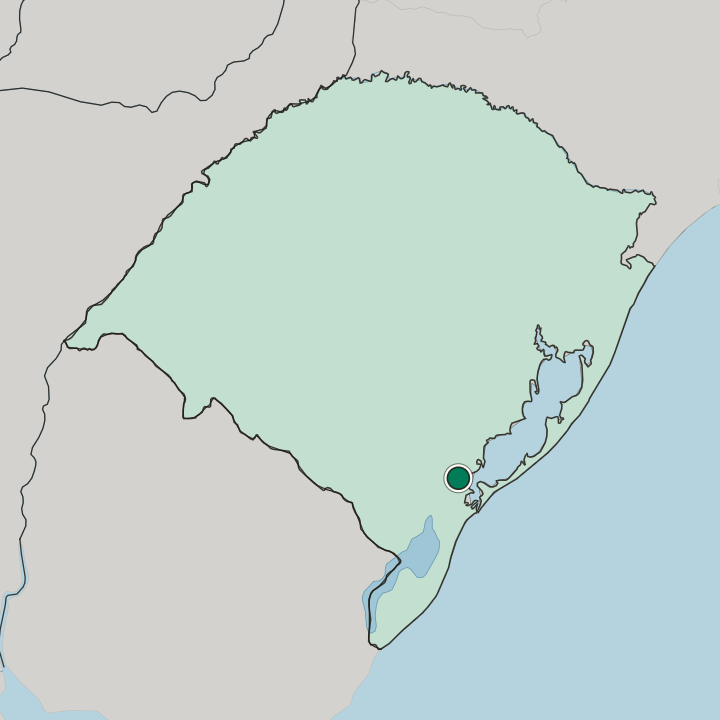
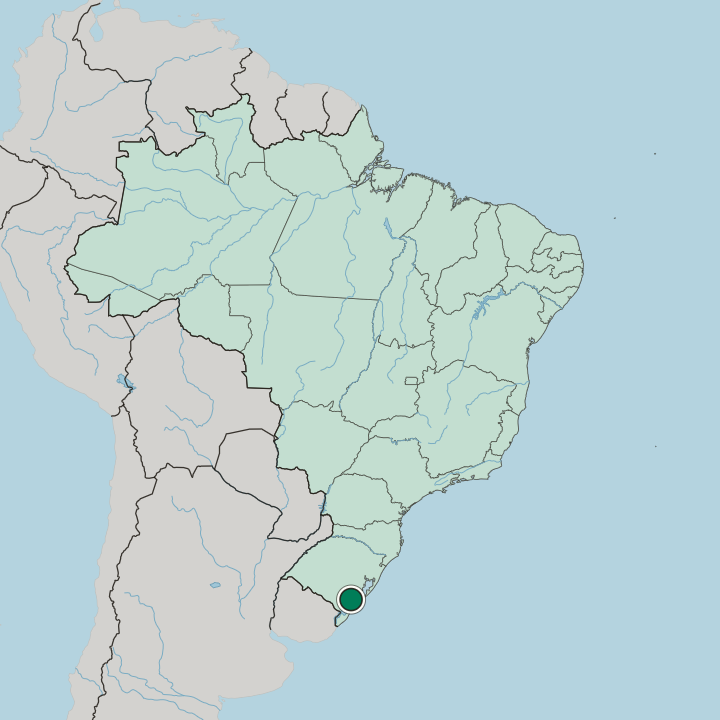
Pelotas lies in the extreme south of Rio Grande do Sul, on the west side of the Lagoa dos Patos, with the São Gonçalo Channel to the south dividing it from Rio Grande. The Uruguayan border lies some 130 kilometres off. Water sets the limits.
The municipality covers more than sixteen hundred square kilometres of ground between the lagoon and the interior, and Porto Alegre, the state capital, is 270 kilometres away.
What is the climate of Pelotas?
The Lagoa dos Patos moderates the year. Pelotas sits in the subtropical band of Brazil's southernmost state, where a body of water that size on the doorstep keeps the swing between seasons narrower than an inland city of the same band would know. Nowhere in Pelotas is far from water.
Summer and winter both arrive, neither with the force they carry further inland, which is what a lagoon does to the calendar of a coastal plain.
How do you get to Pelotas?
Porto Alegre is 270 kilometres away. That distance makes Pelotas a destination in its own right rather than a day trip from the state capital, and arrivals come down the length of Rio Grande do Sul by road. The Uruguayan border is closer, about 130 kilometres off, which puts the city on the route south.
Rio Grande sits across the São Gonçalo Channel. Inside the city the old centre is compact, so a visit built on Praça Coronel Pedro Osório and the museums needs little driving.
Common questions
What is the best area to stay in Pelotas?
Centro: sweet counters and the frontages around Praça Coronel Pedro Osório. Museu da Baronesa: a quieter stay beside the villa museum. Lagoa dos Patos shore: lagoon days and the run south toward Rio Grande.
Good for
More cities in Rio Grande do Sul
Updated October 2026