Brazil · Rio Grande do Sul
Where to Stay in Santa Maria, Rio Grande do Sul
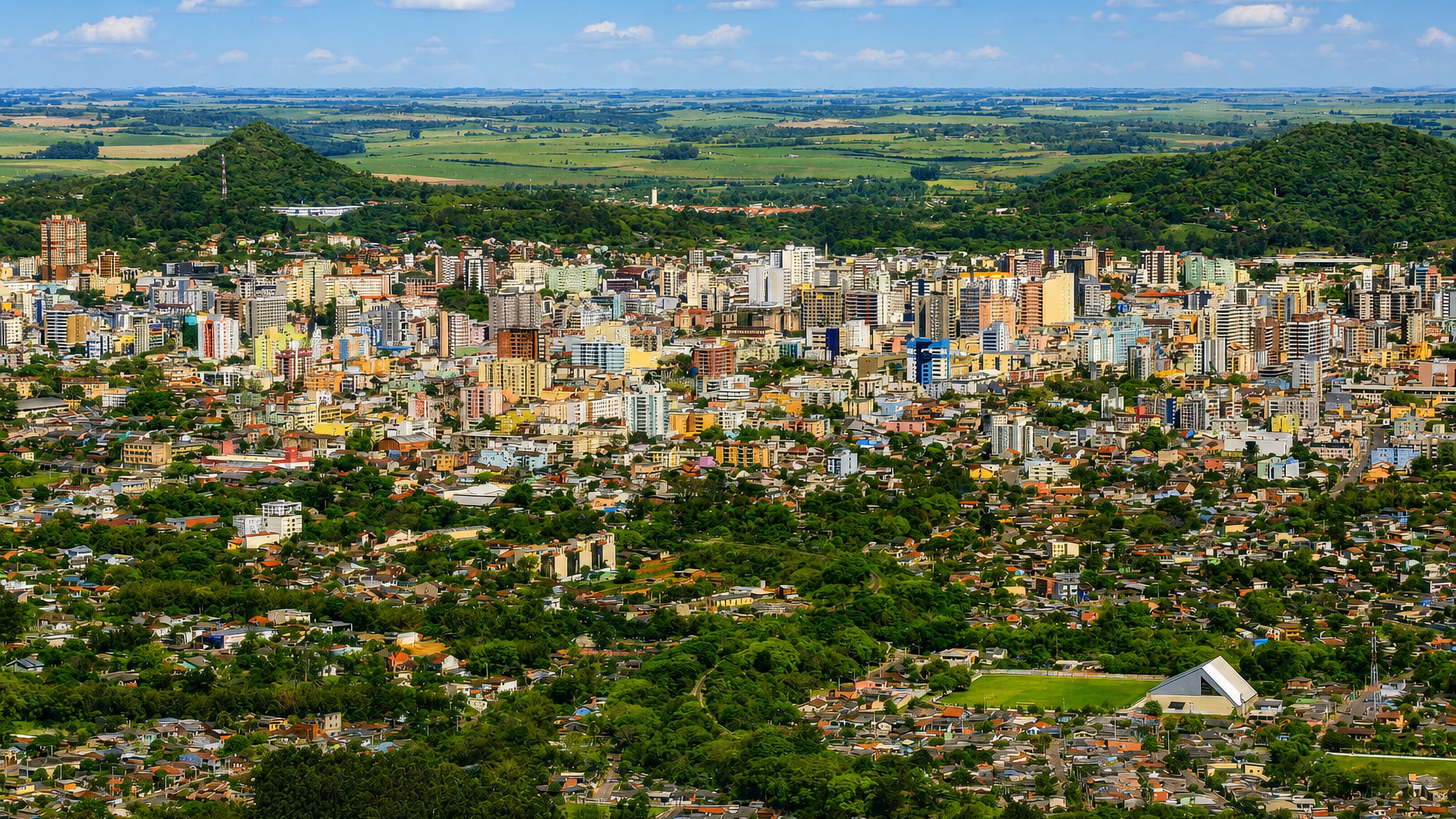
Santa Maria stands at the geographic heart of Rio Grande do Sul, a city of museums and shrines and the starting point of the Paleorrota fossil route.
Hotel links are affiliate links: booking through them may earn us a commission, at no extra cost to you. It never affects how places are ranked. How this works


Where to stay in Santa Maria
Where visitors usually base themselves, and why.
The Basilica Shrine of Our Lady Mediatrix of All Graces sets one pole of the choice and the museum streets set the other. Pilgrims come for the shrine. A room near the Memorial da Medianeira and the basilica suits anyone here for the devotion the city organised around, and it keeps the walk to a service short.
Others want the collections. The Museu de Artes de Santa Maria, the Museu Treze de Maio and the Museu Educativo Gama d'Eça sit in the older streets, where a central address covers most of a day on foot. Railway ground makes a third option.
The Museu Ferroviário de Santa Maria and the Museu Memorial Mallet mark what the lines left, and rooms near them trade the shrine for the working end of town. Beyond the streets the map empties. Paleorrota runs out into open country where the municipality keeps far more ground than buildings, so anyone driving the fossil route books a bed in the city and starts from there each morning.
Distances are real out there. Santa Maria is the largest municipality of its micro-region, and its centre carries the beds that the surrounding country does not.
Find hotels in Santa Maria
Direct booking searches for these neighbourhoods.
Around the Basilica Shrine
The Basilica Shrine of Our Lady Mediatrix of All Graces and the Memorial da Medianeira fall within the same walkFind hotels in Around the Basilica ShrineDays spent between the Museu de Artes de Santa Maria and the Museu Treze de MaioThe museum streets
A central address reaches the Museu Educativo Gama d’Eça and the Igreja de Nossa Senhora do Rosário on footFind hotels in The museum streetsTravellers drawn to what the railway left in Santa MariaBy the Museu Ferroviário
The Museu Ferroviário de Santa Maria and the Museu Memorial Mallet mark this end of the cityFind hotels in By the Museu FerroviárioDrivers working the Paleorrota fossil route by dayOut along Paleorrota
The fossil country past the municipal edge keeps open ground rather than hotels. Rooms are few around here — worth securing early.Find hotels in Out along PaleorrotaHotel links are affiliate links: booking through them may earn us a commission, at no extra cost to you. It never affects how places are ranked. How this works
Things to do in Santa Maria
Ranked by global recognition; descriptions from Wikidata (CC0).
Museums & Galleries
3- Museu Treze de Maio Heritage
- Museum Vincente Pallotti
- Acervo Histórico do Instituto Estadual de Educação Olavo Bilac
Churches & Religious Sites
2- Basilica Shrine of Our Lady Mediatrix of All Graces
- Igreja de Nossa Senhora do Rosário (Santa Maria)
worth knowingacross 2 categories in Santa Maria
About Santa Maria
The museums come first here.
What is Santa Maria known for?
Santa Maria keeps a long list of them, the Museu Ferroviário de Santa Maria, the Museu de Artes de Santa Maria, the Museu Treze de Maio and the Museu Educativo Gama d'Eça among the rest, alongside the Basilica Shrine of Our Lady Mediatrix of All Graces. Fossils bring the other traffic. The city is the entry point for Paleorrota, the paleontological route of Rio Grande do Sul, and it answers to the name of the state's geographic heart.
What are the main landmarks in Santa Maria?
The Basilica Shrine of Our Lady Mediatrix of All Graces anchors the landmark list, with the Memorial da Medianeira attached to the same devotion. Trains have theirs too. The Museu Ferroviário de Santa Maria keeps the railway record, the Museu de Artes de Santa Maria the art, and the Igreja de Nossa Senhora do Rosário stands among the parish churches of the city.
Paleorrota begins beyond the streets.
What is the history of Santa Maria?
Santa Maria dates its municipal life from 1857. What the city has kept since is legible in its institutions rather than in any single monument, and the list runs long, from teaching houses and churches to a railway collection and a dozen museums carrying the names of the people who founded them. Education left early marks.
The Acervo Histórico do Instituto Estadual de Educação Olavo Bilac and the Museu do Instituto Metodista Centenário both hold the records of teaching houses, and the Museu Educativo Gama d'Eça does the same for another. Faith accounts for much of the rest. The Basilica Shrine of Our Lady Mediatrix of All Graces and the Memorial da Medianeira stand for a devotion the city organised itself around, while the Igreja de Nossa Senhora do Rosário, the Museu de Artes Sacras - Paróquia Catedral, the Museu Diácono João Luiz Pozzobon and the Museum Vincente Pallotti each keep a piece of that record.
Rails have their own museum. The Museu Ferroviário de Santa Maria and the Museu Memorial Mallet hold what the railway left behind, and the Museu Treze de Maio and the Museu Histórico e Cultural das Irmãs Franciscanas fill in the social side. Older evidence still lies underfoot.
Paleorrota, the paleontological route the state built, starts here, and the fossil ground it follows is older than every date the municipality can claim.
Where is Santa Maria?
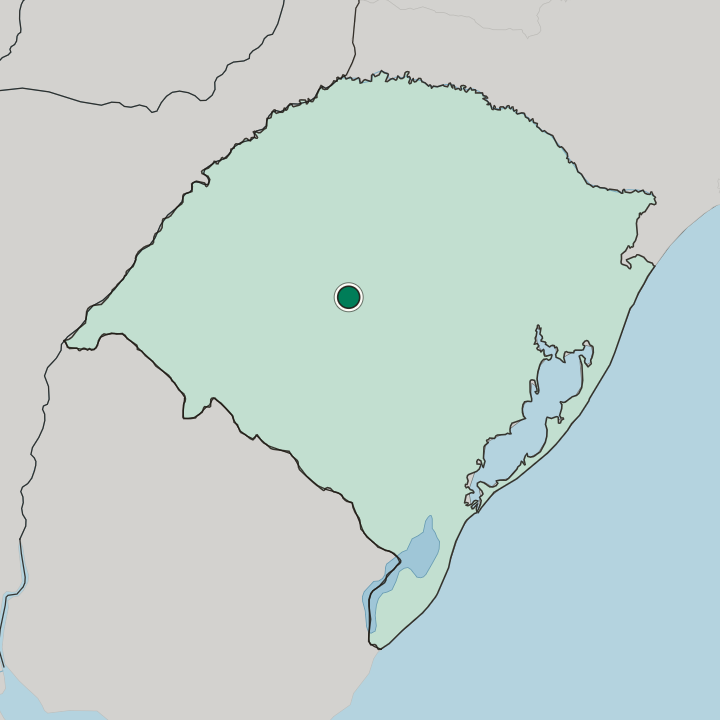
Santa Maria occupies what Rio Grande do Sul calls its geographic heart, and the municipal ground stretches well past the built-up streets into open country. Fossil beds lie out there. Paleorrota, the paleontological route of the state, runs through that country and takes the city as its entry point.
Nothing coastal touches it.
What is the climate of Santa Maria?
Inland position does the work here. Santa Maria sits away from the ocean at the heart of Rio Grande do Sul, and its year answers to that inland ground rather than to any breeze off the coast. Seasons follow the southern calendar.
Midsummer falls around the turn of the year, midwinter in the middle of it, and the Paleorrota country around the city bakes and chills on the same schedule.
How do you get to Santa Maria?
Roads carry the traffic now. Its place at the geographic heart of Rio Grande do Sul puts Santa Maria on the overland routes crossing the state, and Paleorrota takes the city as the start of its run through fossil country. The rail age is museum work.
What the lines through the city left behind is gathered in the Museu Ferroviário de Santa Maria, so arrival is by road rather than by train for nearly everyone.
Common questions
What is the best area to stay in Santa Maria?
Around the Basilica Shrine: Pilgrims making for the Medianeira devotion. The museum streets: Days spent between the Museu de Artes de Santa Maria and the Museu Treze de Maio. By the Museu Ferroviário: Travellers drawn to what the railway left in Santa Maria. Out along Paleorrota: Drivers working the Paleorrota fossil route by day.
Good for
More cities in Rio Grande do Sul
Updated October 2026