Brazil · Rio Grande do Sul
Where to Stay in Santa Cruz do Sul, Rio Grande do Sul
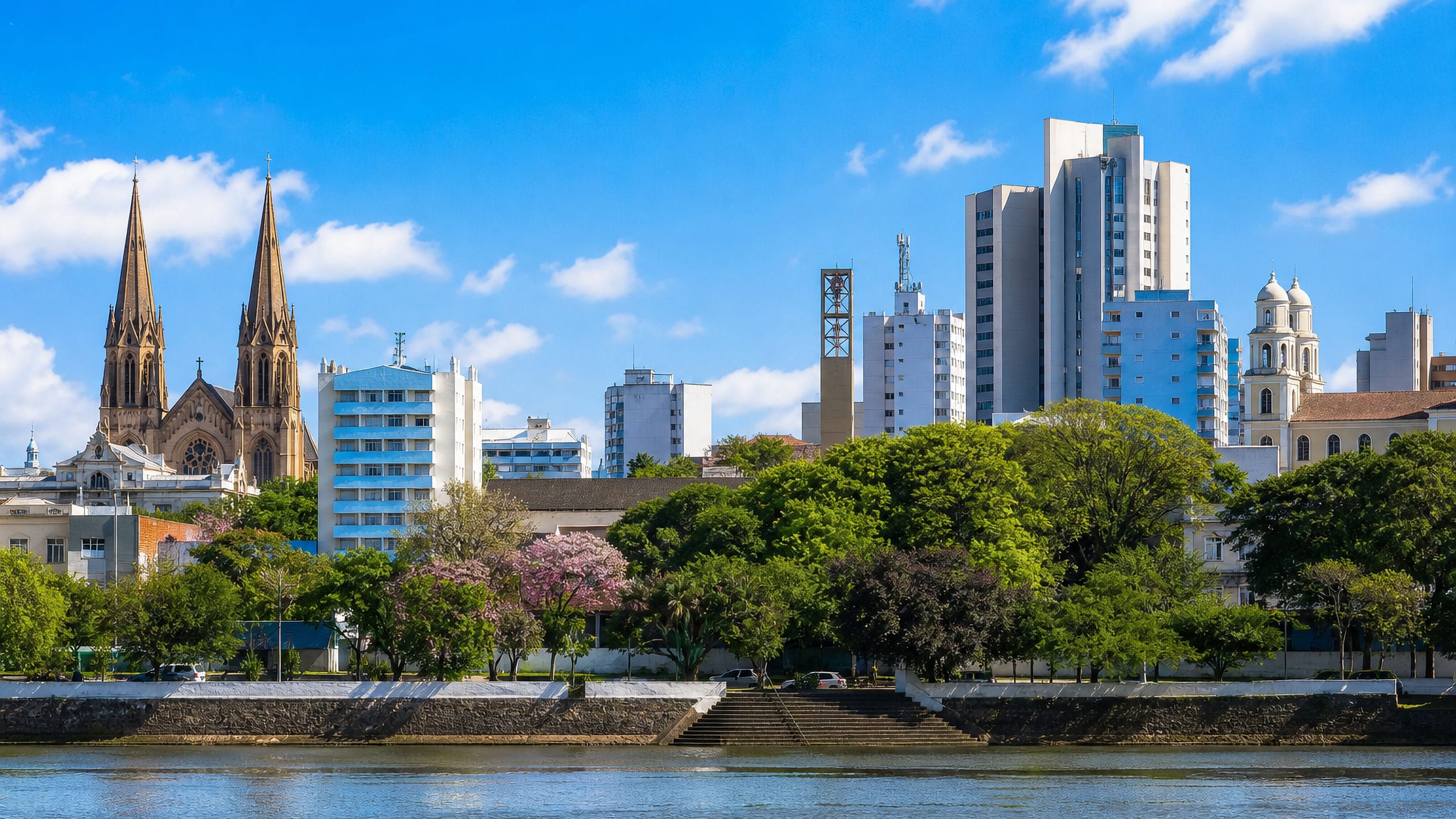
Santa Cruz do Sul holds the Vale do Rio Pardo inland from Porto Alegre, a Rio Grande do Sul city of listed civic buildings and an old railway station.
Hotel links are affiliate links: booking through them may earn us a commission, at no extra cost to you. It never affects how places are ranked. How this works


Where to stay in Santa Cruz do Sul
How the choice of base plays out on the ground.
Almost everything worth walking to is central. The Prefeitura Municipal, the Forum and the Prédio do Antigo Banrisul stand as the listed core of Santa Cruz do Sul, and a room among them puts the Museu Municipal Emílio Osmundo Assmann within the same short walk. That suits a short stay.
Anyone here for the civic buildings and the museum will spend little time in a car, since the record of the town is concentrated rather than spread over the Vale do Rio Pardo. The Antiga Estação Férrea gives the other anchor. The old station no longer works as a terminal, but it still fixes an address in the mind of anyone giving directions, and rooms near it sit at the edge of the same central grid.
Beyond the built-up ground the arithmetic changes. Vera Cruz, Sinimbu, Venâncio Aires, Rio Pardo and Passo do Sobrado ring the municipality with country rather than with hotels, so beds thin out fast once the streets end and the Atlantic Forest and Pampas take over. Porto Alegre is the alternative.
Some visitors keep a base in the capital about 155 kilometres off and come out for the day, though that trades the centre of Santa Cruz do Sul for a long road each way.
Find hotels in Santa Cruz do Sul
Direct booking searches for these neighbourhoods.
Around the Prefeitura Municipal
The Prefeitura Municipal, the Forum and the Prédio do Antigo Banrisul stand together in the listed civic centreFind hotels in Around the Prefeitura MunicipalRoad arrivals who want the listed station as their markerBy the Antiga Estação Férrea
The former Santa Cruz do Sul station marks the edge of the central grid and names the address for anyone askingFind hotels in By the Antiga Estação FérreaDrives into the Vale do Rio Pardo and the Atlantic Forest edgesOut towards Sinimbu and Vera Cruz
Rooms are a town business here and the ring of neighbouring municipalities keeps very few of them. Beds are limited here, so book early.Find hotels in Out towards Sinimbu and Vera CruzHotel links are affiliate links: booking through them may earn us a commission, at no extra cost to you. It never affects how places are ranked. How this works
About Santa Cruz do Sul
What is Santa Cruz do Sul known for?
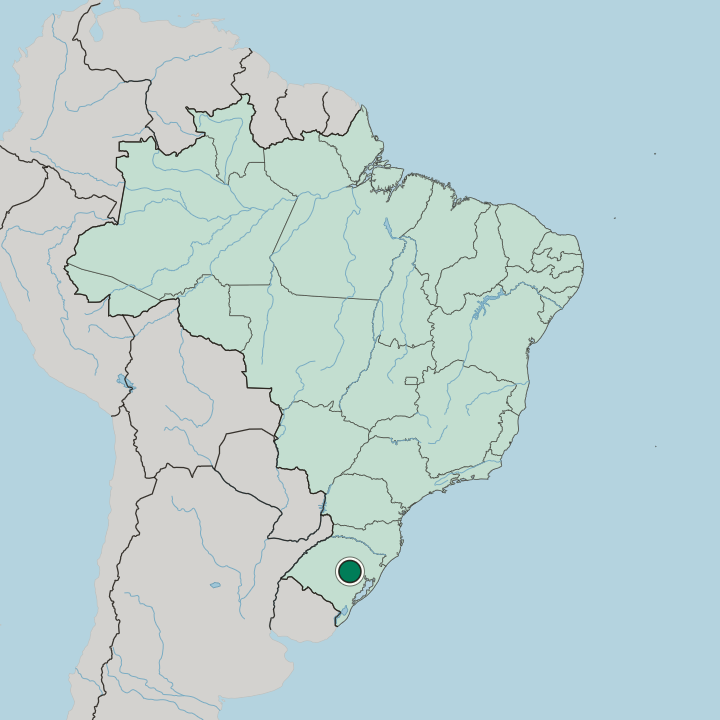
Santa Cruz do Sul carries the Vale do Rio Pardo on its shoulders, an inland municipality of Rio Grande do Sul lying about 155 kilometres from Porto Alegre and ringed by Vera Cruz, Rio Pardo and Venâncio Aires. The old railway station still stands. Its centre carries a compact set of listed public buildings, among them the Prefeitura Municipal, the Forum, the Prédio do Antigo Banrisul and the Museu Municipal Emílio Osmundo Assmann.
Ground here is volcanic.
What are the main landmarks in Santa Cruz do Sul?
Five listed buildings make the centre. The Antiga Estação Férrea de Santa Cruz do Sul, the Prefeitura Municipal, the Forum, the Prédio do Antigo Banrisul and the Museu Municipal Emílio Osmundo Assmann are what the heritage record names here, a civic set rather than a scattering of monuments. Only one of them is a museum.
The Museu Municipal Emílio Osmundo Assmann keeps the municipal collection, while the others still carry the work they were built for, or the memory of it.
What is the history of Santa Cruz do Sul?
The municipality dates from 1877. Everything older than that belongs to the wider Vale do Rio Pardo, and the boundaries drawn since have left Santa Cruz do Sul enclosed by Vera Cruz, Rio Pardo, Sinimbu, Venâncio Aires and Passo do Sobrado. The Brazilian Institute of Geography and Statistics keeps the municipal count.
Its buildings carry the dates better than any archive, the Prefeitura Municipal, the Forum and the Prédio do Antigo Banrisul all standing in the centre. Rails reached the town and later left it. The Antiga Estação Férrea de Santa Cruz do Sul is listed under exactly that name, the old station kept as a building after its working life, and it anchors the civic set the municipality has held on to.
The Museu Municipal Emílio Osmundo Assmann holds what the buildings cannot. Documents, objects and the municipal memory sit under one roof, named for a figure the town chose to honour, in a centre where a bank building and a courthouse survived alongside the station. Volcanic rock lies under all of it.
The Brazilian Highlands break down into the Central Depression across this ground, and the Atlantic Forest and Pampas that meet here predate every date the town records.
Where is Santa Cruz do Sul?
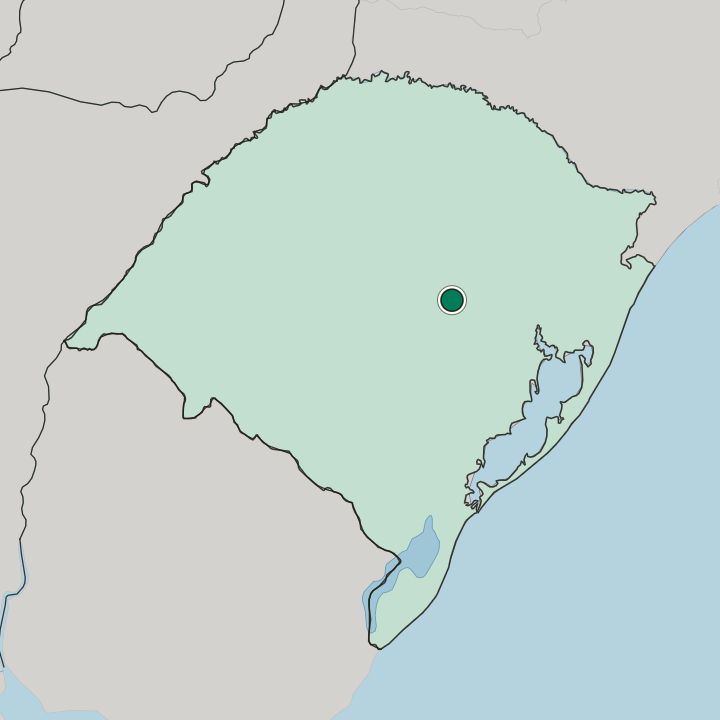
Five municipalities meet its borders. Vera Cruz, Rio Pardo, Sinimbu, Venâncio Aires and Passo do Sobrado ring Santa Cruz do Sul, whose ground covers some 733 square kilometres of the Vale do Rio Pardo. The land itself is a seam.
It falls through the transition between the Brazilian Highlands and the Central Depression, so Atlantic Forest and Pampas vegetation both take hold, over rock that is mostly volcanic.
What is the climate of Santa Cruz do Sul?
Temperate is the word the record uses. Santa Cruz do Sul sits where the Brazilian Highlands give way to the Central Depression, and that step down governs its air more than any sea does, keeping the year moderate rather than tropical. The southern hemisphere reverses the calendar here.
January runs hot and July cold, a swing felt equally by the Atlantic Forest and the Pampas vegetation that share the municipality.
How do you get to Santa Cruz do Sul?
Porto Alegre is the point of departure. The state capital lies about 155 kilometres away, and the approach crosses the Vale do Rio Pardo past neighbouring municipalities such as Venâncio Aires and Rio Pardo. Trains no longer serve it.
The station survives as the Antiga Estação Férrea de Santa Cruz do Sul, a listed building rather than a working terminal, so arrival is by road for practically everyone.
Common questions
What is the best area to stay in Santa Cruz do Sul?
Around the Prefeitura Municipal: Guests wanting the Forum, the museum and the old station on one walk. By the Antiga Estação Férrea: Road arrivals who want the listed station as their marker. Out towards Sinimbu and Vera Cruz: Drives into the Vale do Rio Pardo and the Atlantic Forest edges.
More cities in Rio Grande do Sul
Updated September 2026