Brazil · Santa Catarina
Where to Stay in Balneário Camboriú, Santa Catarina
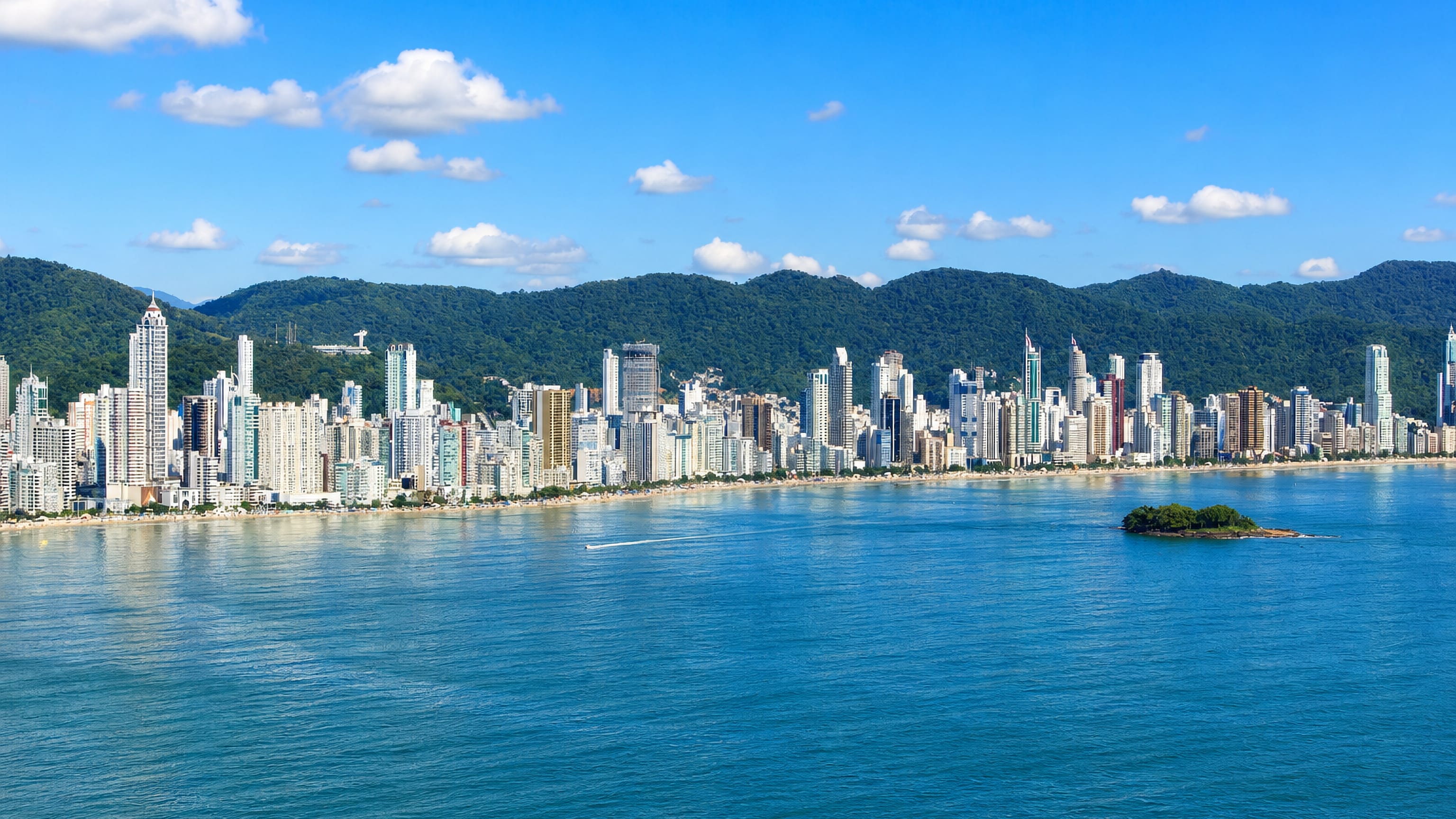
Balneário Camboriú, a resort city of Santa Catarina dating from 1964, drops from steep hills onto the sand along Avenida Atlântica.
Hotel links are affiliate links: booking through them may earn us a commission, at no extra cost to you. It never affects how places are ranked. How this works


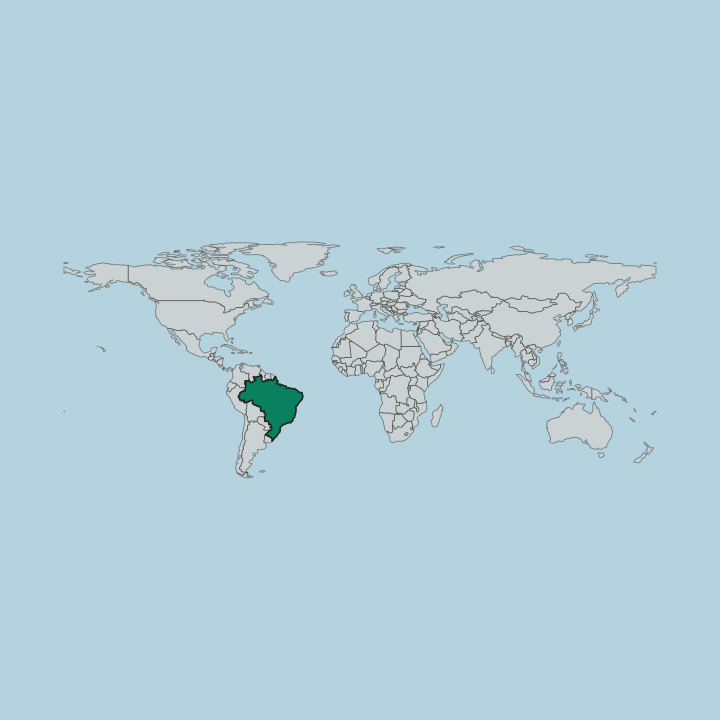
Where to stay in Balneário Camboriú
Where visitors usually base themselves, and why.
Avenida Atlântica is the default. It runs the length of the central beach, and a room on or just behind it puts the water, the promenade and the terminus of the beach-to-beach cable car within a few minutes on foot, which is the whole point of coming to Balneário Camboriú for most people. The trade-off is noise and company.
Laranjeiras, at the far end of that cable car, gives the opposite arrangement: a smaller stretch of sand reached by cable rather than by the boulevard. Height is the third option. The hills behind the beach are steep enough that the streets climbing toward Cristo Luz look down on the bay instead of across it, and the same slopes keep those blocks a short drive from the Igreja Matriz do Santíssimo Sacramento and the Casa da Cultura Dide Brandão.
Neighbouring Itajaí widens the choice. You may prefer a base 10 kilometres north, where the Museu Histórico de Itajaí and the Museu Etno-Arqueológico de Itajaí sit and the Capela de Santo Amaro carries the older religious record of this coast. Portuguese runs every desk, and beds in Santa Catarina thin out sharply in the weeks when the beaches are busiest.
Find hotels in Balneário Camboriú
Direct booking searches for these neighbourhoods.
Avenida Atlântica
Avenida Atlântica runs the length of the central beach and holds the end of the cable car that crosses to Laranjeiras.Find hotels in Avenida AtlânticaA smaller beach reached by the beach-to-beach cable carLaranjeiras
Laranjeiras lies at the far end of the cable car from the central beach, apart from the length of Avenida Atlântica. Lodging is scarce in this area; reserve in advance.Find hotels in LaranjeirasHillside rooms looking down on the bay from under Cristo LuzThe slopes below Cristo Luz
The streets climbing toward Cristo Luz take the steep ground behind the beach, within a short drive of the Igreja Matriz do Santíssimo Sacramento.Find hotels in The slopes below Cristo LuzHotel links are affiliate links: booking through them may earn us a commission, at no extra cost to you. It never affects how places are ranked. How this works
About Balneário Camboriú
One cable car joins two beaches.
What is Balneário Camboriú known for?
That line, running from the central beach across to Laranjeiras, is the single feature most visitors to Balneário Camboriú come away naming, and Avenida Atlântica supplies the address everything else is measured from. Cristo Luz holds the high ground. Summer changes the scale here, because a municipality of 46 square kilometres takes in visitors from across South America and returns to a much smaller town once the season ends.
What are the main landmarks in Balneário Camboriú?
Cristo Luz marks the skyline. Below it the built record is short and mostly religious, running from the Igreja Matriz do Santíssimo Sacramento to the Capela de Santo Amaro - Antiga Igreja Matriz de Nossa Senhora do Bonsucesso, which kept the parish before the newer church took the title. The Casa da Cultura Dide Brandão covers the civic side.
Ten kilometres north the collections are larger, with the Museu Histórico de Itajaí and the Museu Etno-Arqueológico de Itajaí holding the settlement and archaeological record that a city founded in 1964 has no room for.
What is the history of Balneário Camboriú?
The city is younger than most of its buildings. Balneário Camboriú counts from 1964, a founding date late enough that the resort came first and the municipality was drawn around it, which is why the older layer of the record belongs to a chapel rather than to a town hall. That chapel still stands.
The Capela de Santo Amaro served as the Antiga Igreja Matriz de Nossa Senhora do Bonsucesso before the Igreja Matriz do Santíssimo Sacramento took over the parish, and the two together are the longest thread the place has. Everything after that is coastal tourism. Avenida Atlântica gave the seafront a spine, the beach-to-beach cable car reached across the headland to Laranjeiras, and Cristo Luz went up on the high ground where it can be seen from the sand below.
The deeper past sits next door. Itajaí, 10 kilometres north, keeps the Museu Etno-Arqueológico de Itajaí and the Museu Histórico de Itajaí, and those collections carry the archaeology and settlement history of a shore that was inhabited long before any of the current buildings, while the Casa da Cultura Dide Brandão holds what Balneário Camboriú itself has accumulated. Distance shaped the growth too. Joinville lies 96 kilometres north and Florianópolis 80 kilometres south, close enough that the city draws on both.
Where is Balneário Camboriú?
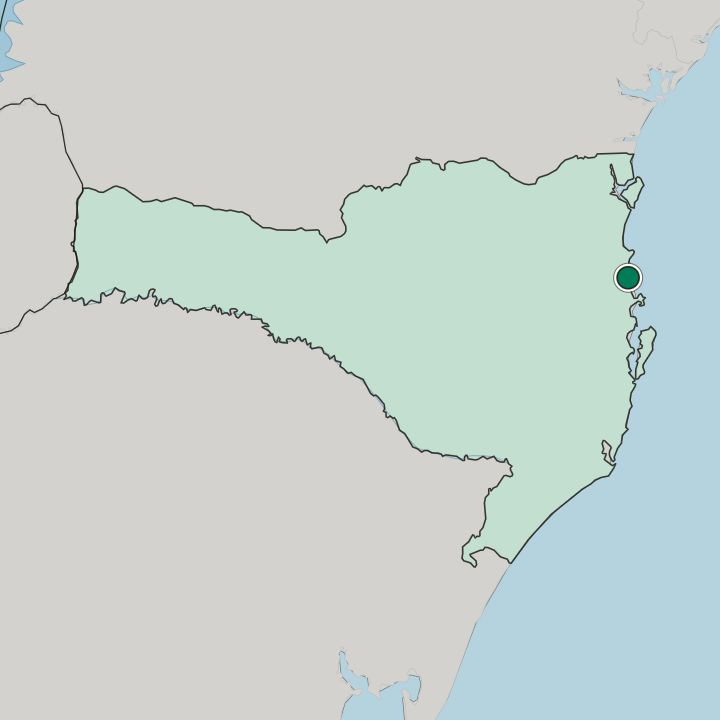
Hills come down to the water. The municipality covers about 46 square kilometres of the Santa Catarina coast, and the slope is steep enough that the built-up strip along Avenida Atlântica is squeezed between rock and sand, with Laranjeiras cut off on the far side of the high ground. Itajaí lies 10 kilometres north.
Florianópolis is 80 kilometres south and Joinville 96 kilometres north, which puts Balneário Camboriú in the middle of the most built-up stretch of this subtropical coast.
What is the climate of Balneário Camboriú?
The ocean off Avenida Atlântica moderates the year. Subtropical rather than tropical, this part of the Santa Catarina coast has a genuine cool season, so the beach empties in the middle months and fills again when the heat returns to the sand below Cristo Luz. The hills add shelter.
Laranjeiras, tucked behind the high ground, feels the wind differently from the open central beach.
How do you get to Balneário Camboriú?
Three cities frame the approach. Itajaí is only 10 kilometres north, Joinville 96 kilometres north and Florianópolis 80 kilometres south, so almost every arrival comes down or up the coast rather than out of the interior of Santa Catarina. Inside the city it is simpler.
Avenida Atlântica carries the length of the central beach and the cable car handles the crossing to Laranjeiras, which no road does as directly.
Common questions
What is the best area to stay in Balneário Camboriú?
Avenida Atlântica: Beach-front nights on the boulevard that fronts the central beach. Laranjeiras: A smaller beach reached by the beach-to-beach cable car. The slopes below Cristo Luz: Hillside rooms looking down on the bay from under Cristo Luz.
Good for
More cities in Santa Catarina
Updated October 2026