Brazil
Santa Catarina, Brazil — Towns & Travel Guide
Santa Catarina is Brazil's subtropical south: surf beaches, the Serra Geral mountains, and German, Italian and Azorean settler towns.
Hotel links are affiliate links: booking through them may earn us a commission, at no extra cost to you. It never affects how places are ranked. How this works


Towns & cities in Santa Catarina
Pick a town or city — each links to where to stay.

 Brazil
Florianópolis
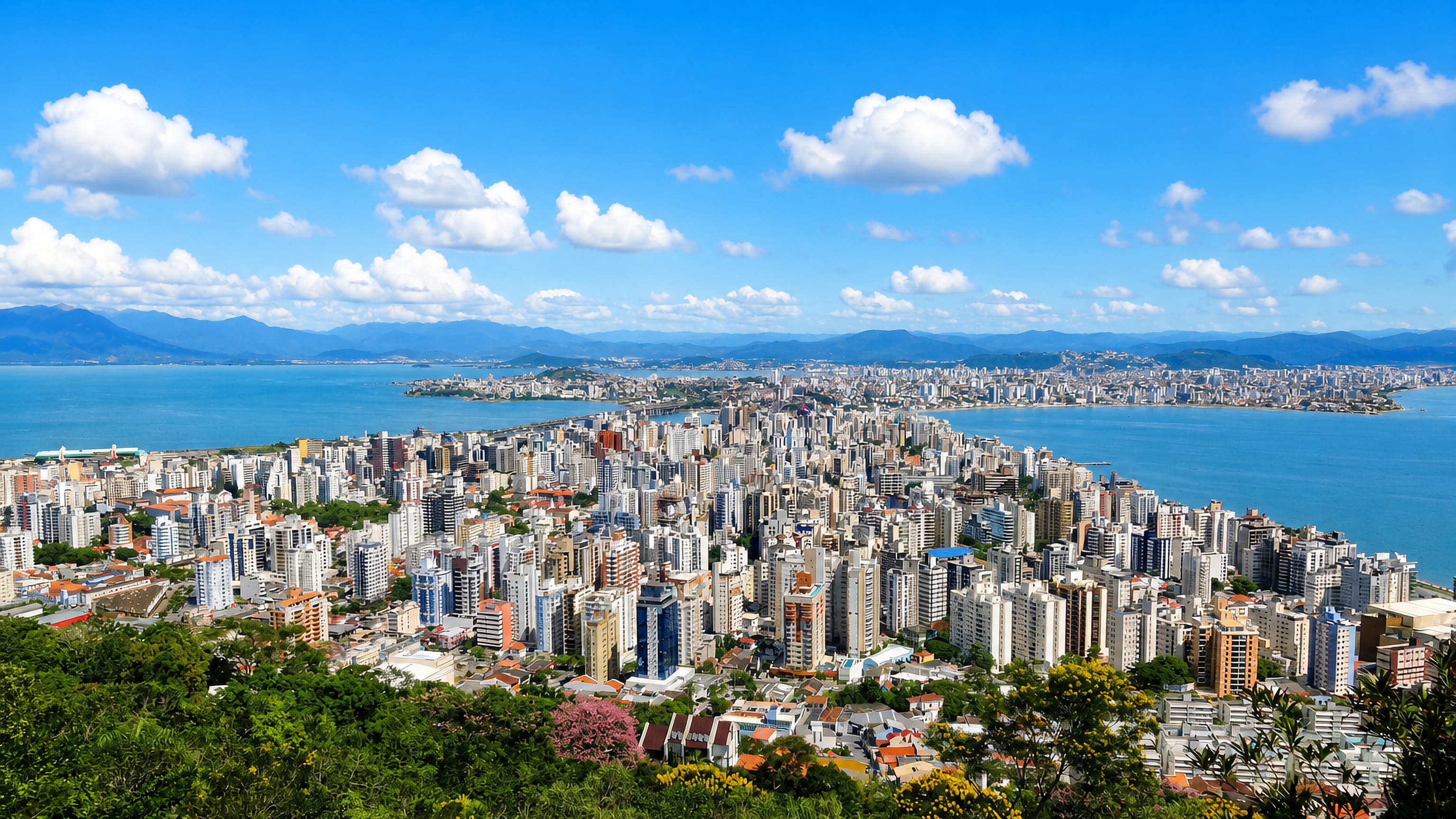
Florianópolis, founded in 1726, is the capital of Santa Catarina, spread mostly across an island of beaches and forest reached by three bridges.Where to stay →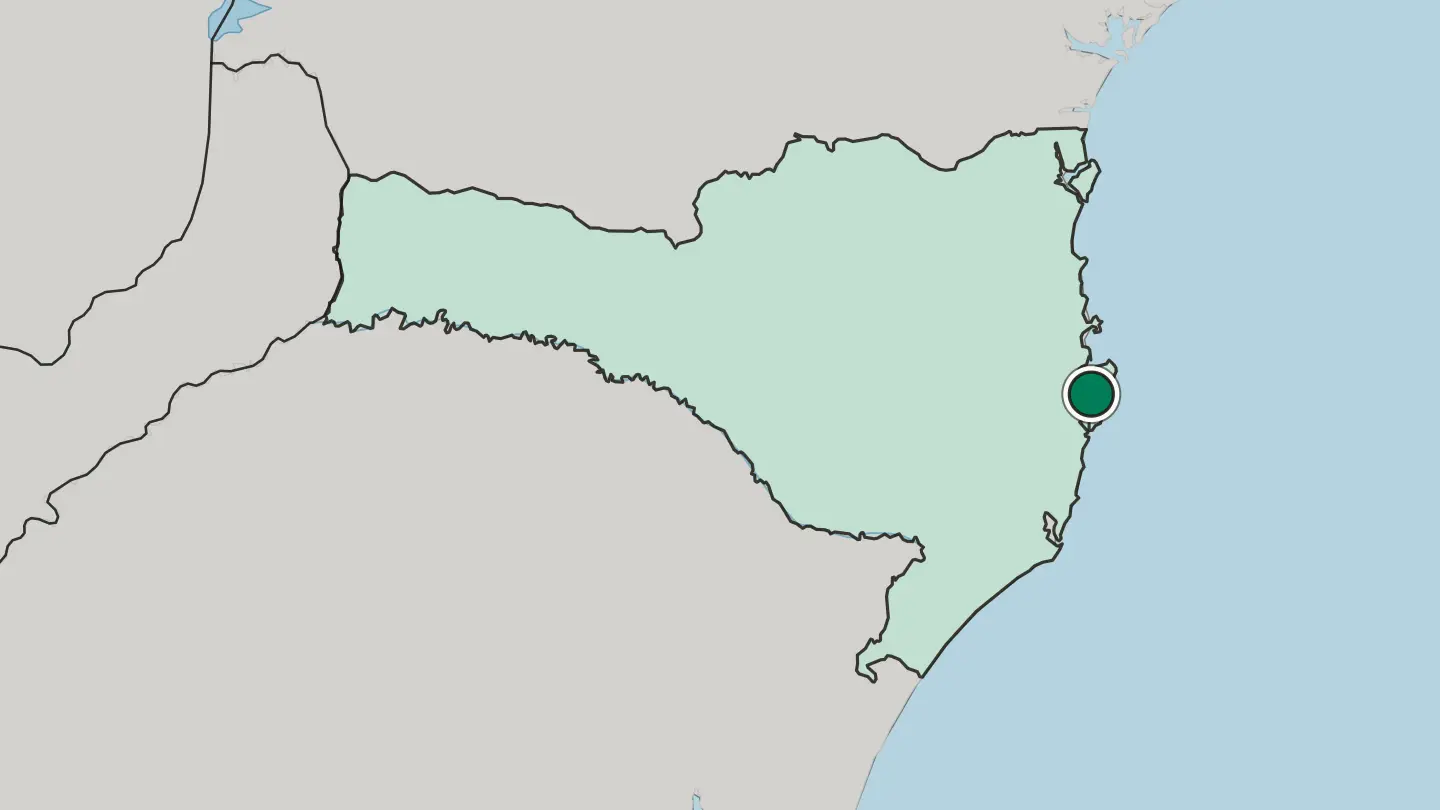
 Brazil
Joinville
Santa Catarina's largest city. Joinville grew from an 1851 German colony into a manufacturing centre packed with small museums.Where to stay →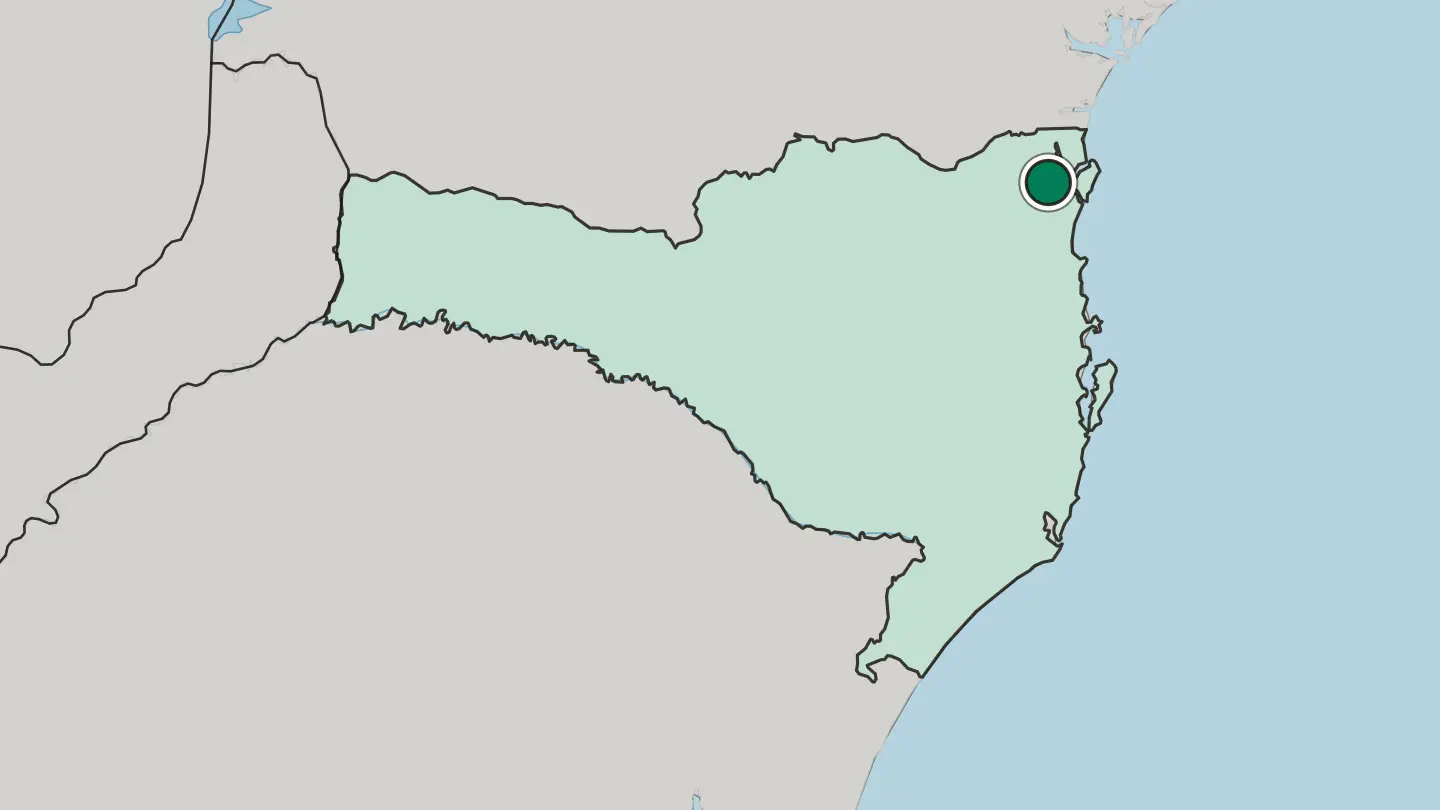
 Brazil
Blumenau
Blumenau, founded in 1852 in the Vale do Itajaí, keeps the colonial houses, brewing museum and Lutheran church of its founding families.Where to stay →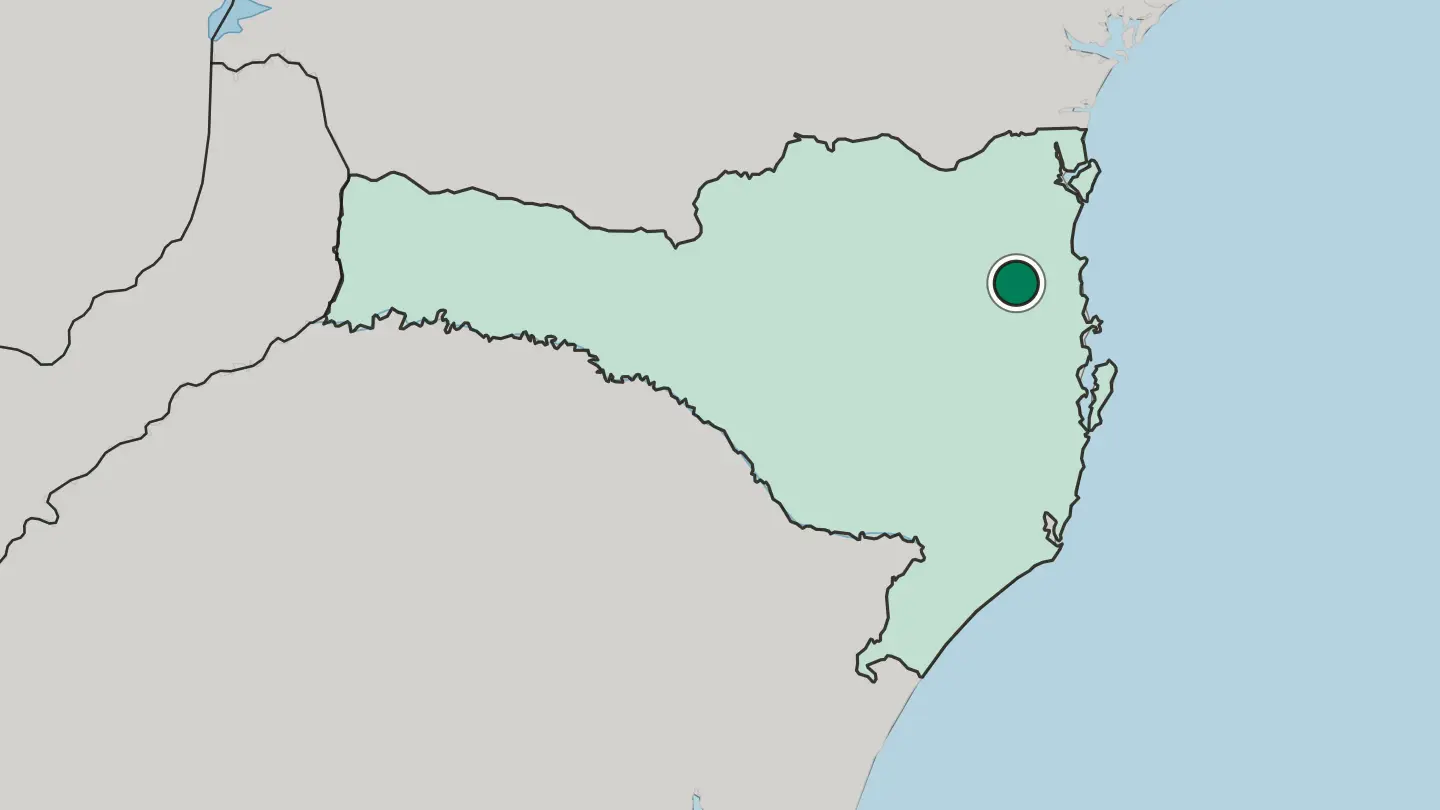
 Brazil
São José
São José goes back to 1750, a colonial town in Santa Catarina whose old core keeps four listed churches. Small ground, long record.Where to stay →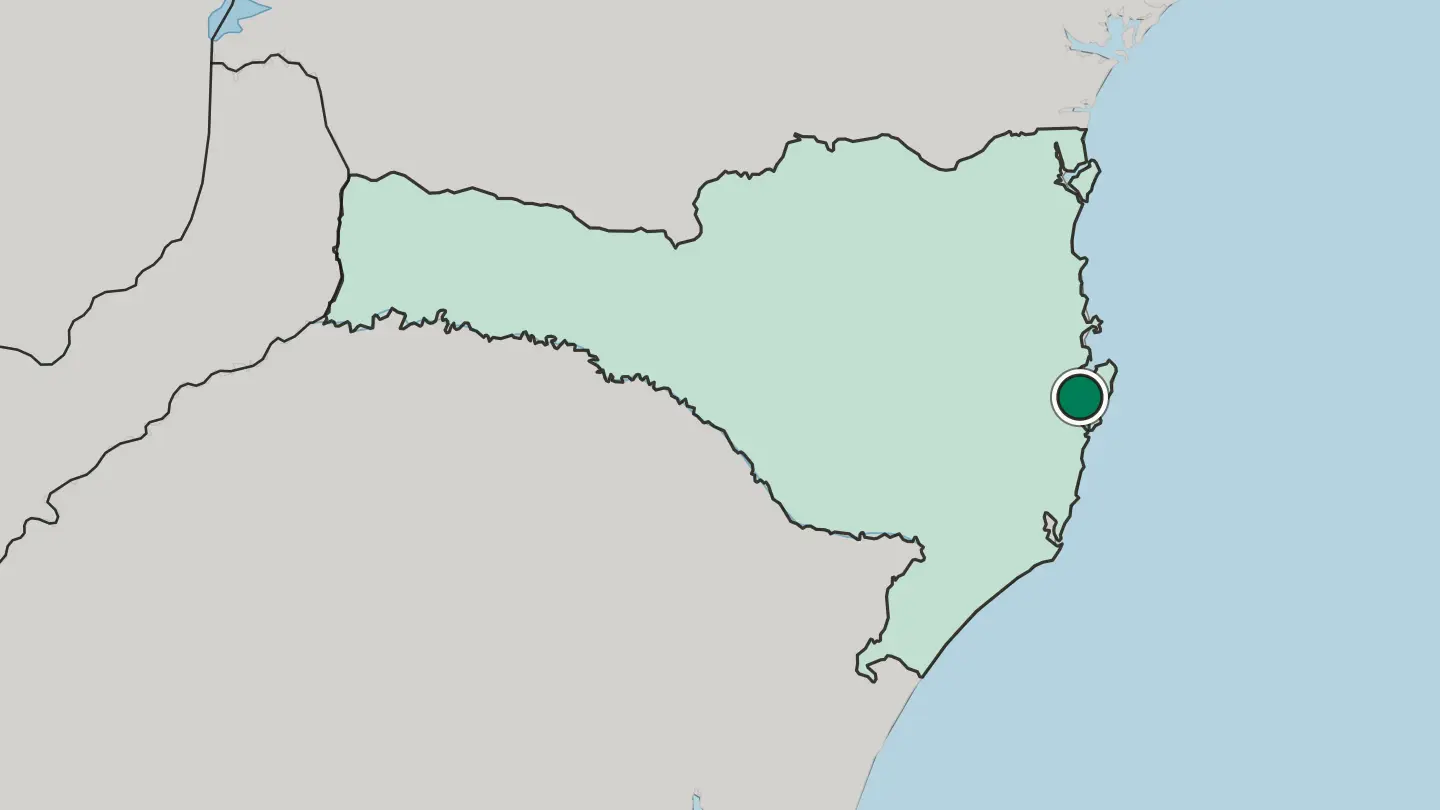
 Brazil
Jaraguá do Sul
Jaraguá do Sul, founded in 1876, is a city in the north of Santa Catarina, with a heritage list of family houses and the Arena Jaraguá.Where to stay →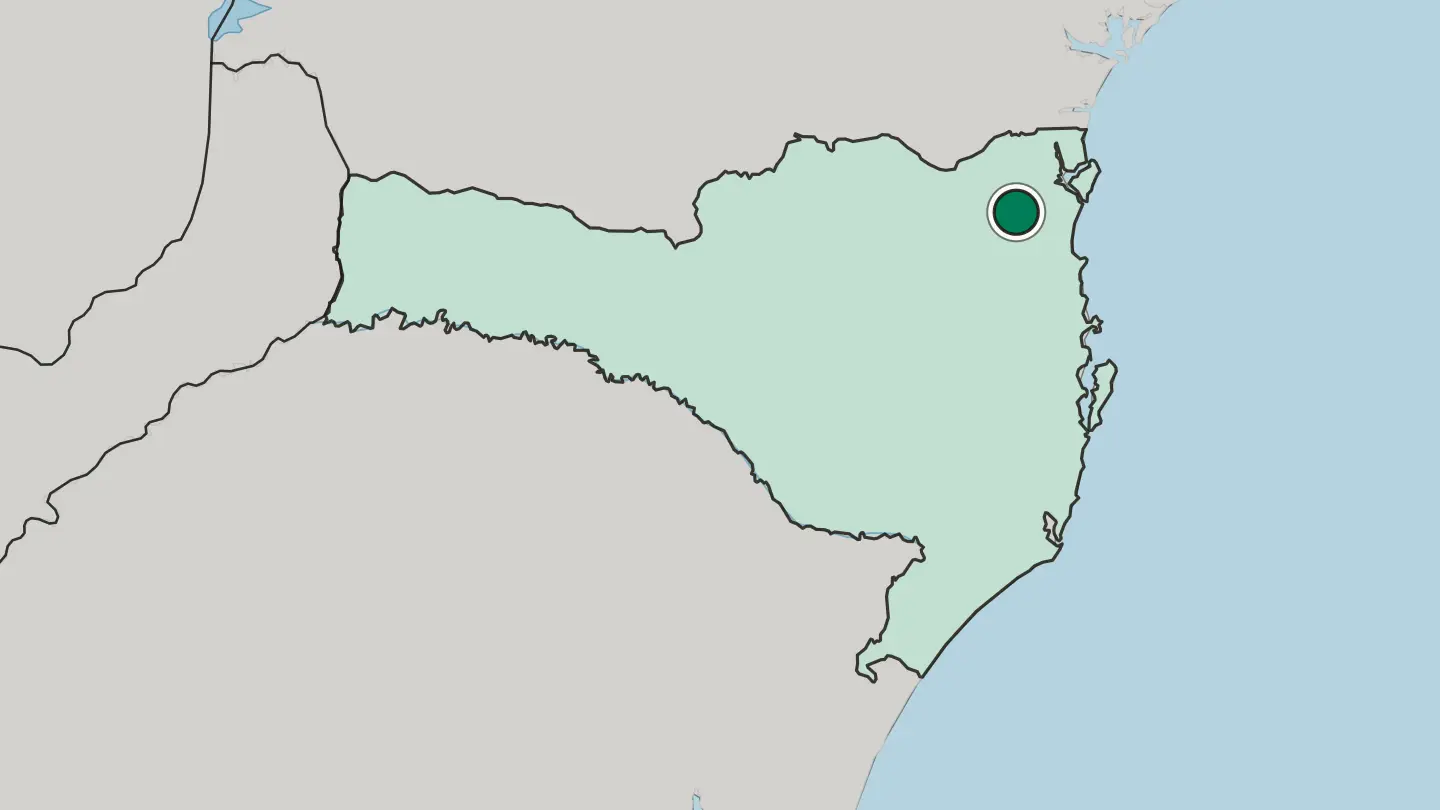
 Brazil
Lages
Lages spreads across the Planalto Serrano in central Santa Catarina, known as Brazil's national capital of rural tourism. Founded in 1766.Where to stay →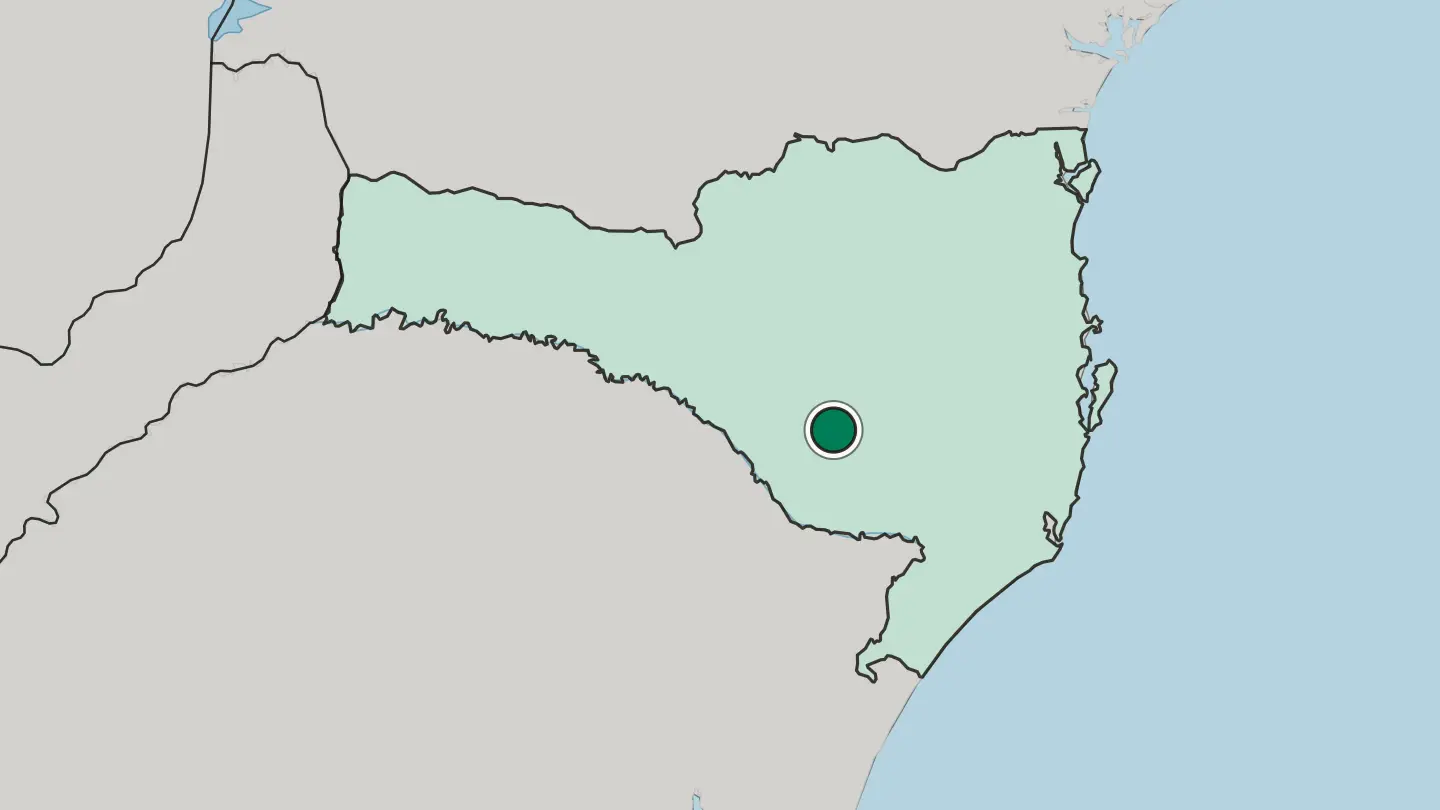
 Brazil
Criciúma
Criciúma, a city of southern Santa Catarina founded in 1880, centres Brazil's flooring and home materials industry and keeps a mine open to visitors.Where to stay →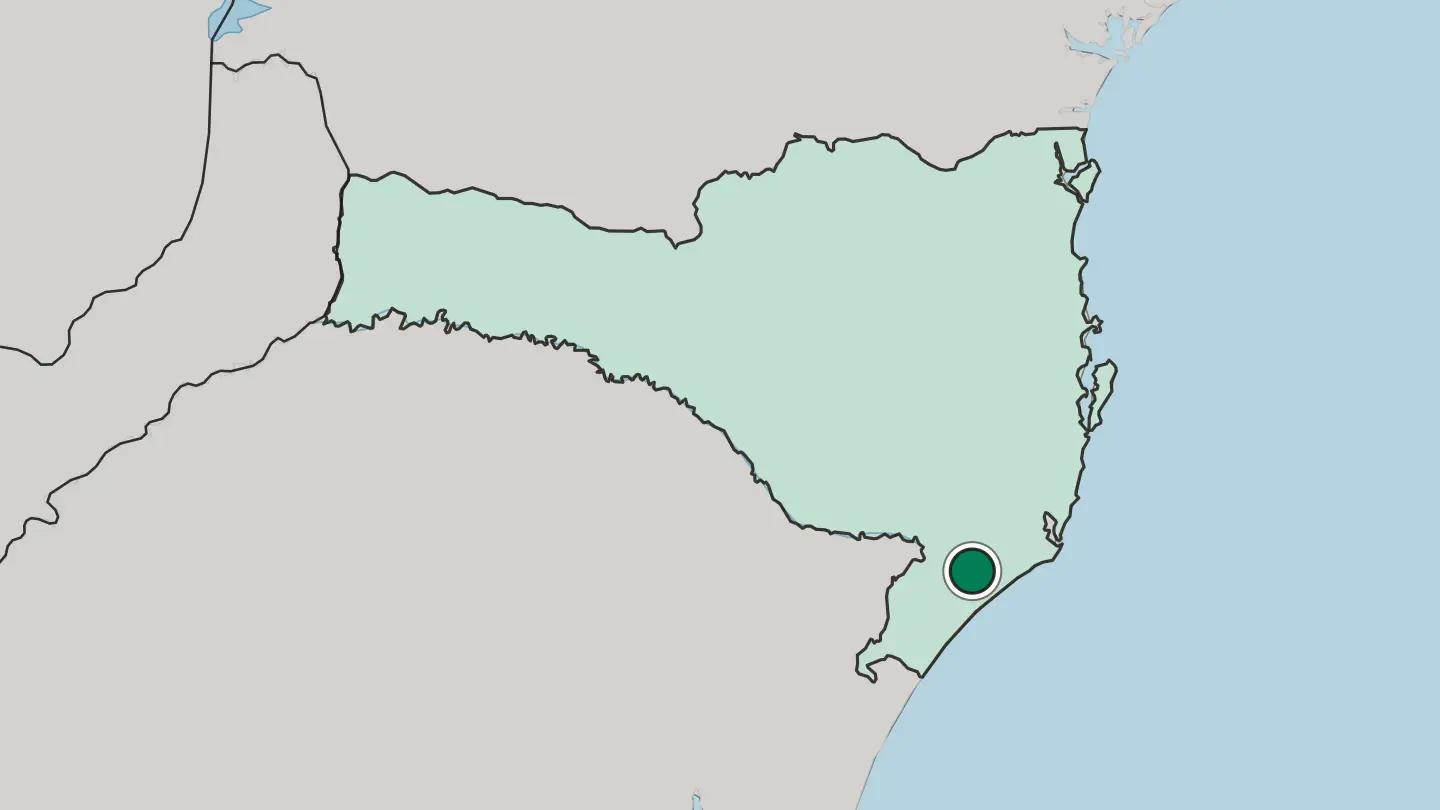
 Brazil
Chapecó
Chapecó, founded in 1917, is the main transport hub of western Santa Catarina and a centre of industry, finance and education in Brazil.Where to stay →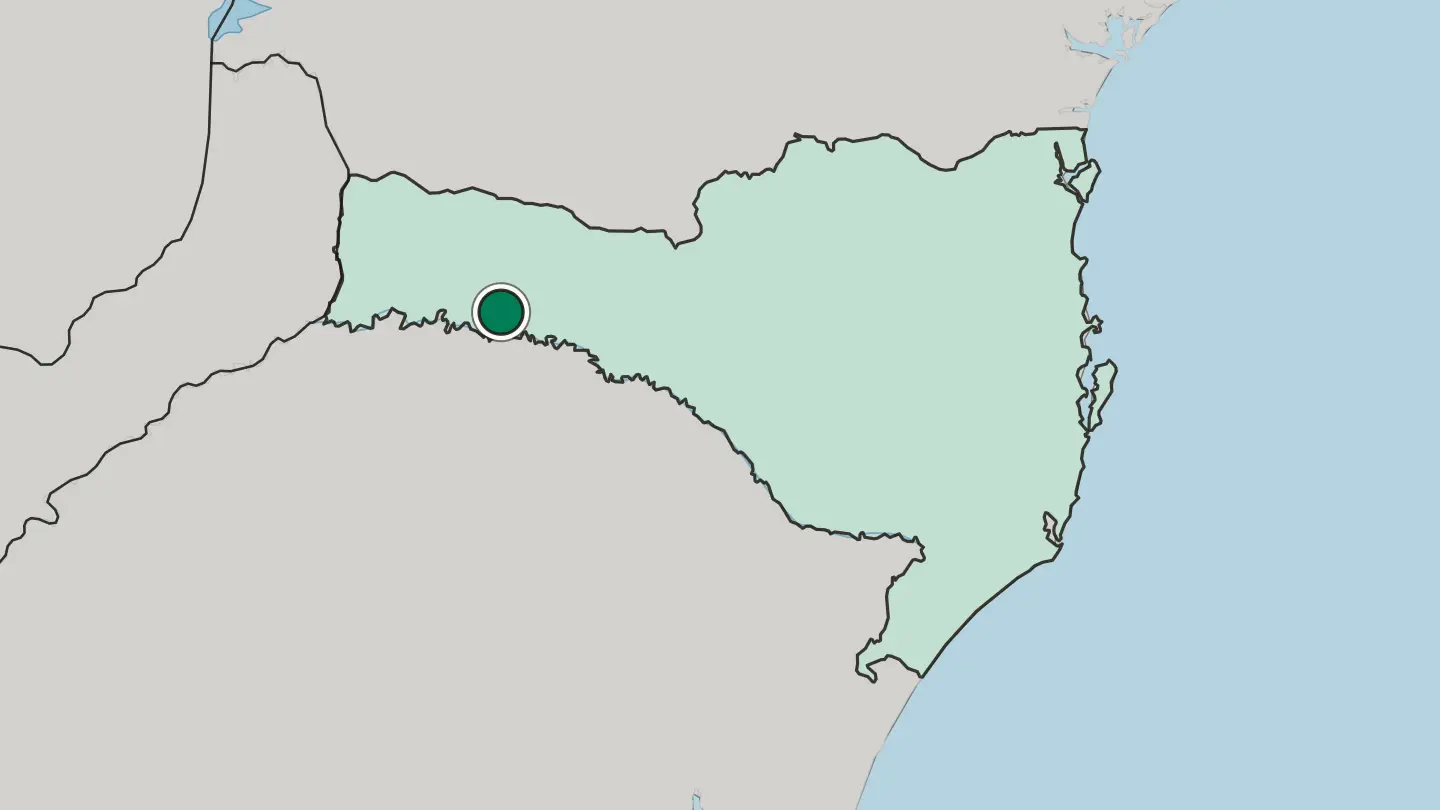
All towns & cities (14)
 Brazil
Itajaí
Itajaí, founded in 1860, stands on the right bank at the mouth of the Itajaí-Açu, a port town on the coast of Santa Catarina in Brazil.Where to stay →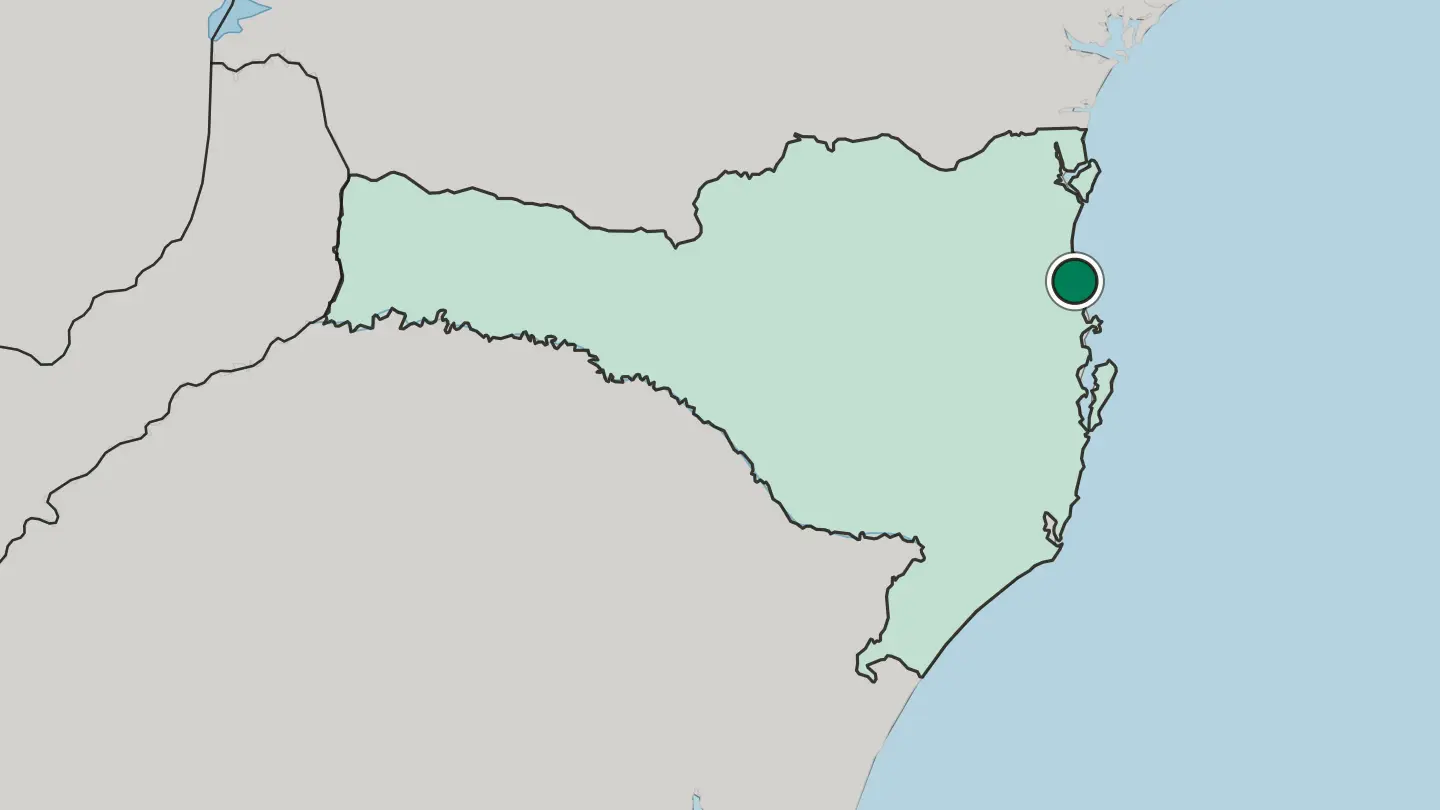
 Brazil
Brusque
Brusque, in Santa Catarina, was founded on 4 August 1860 by 55 German immigrants and keeps the Igreja Matriz de Brusque at its centre.Where to stay →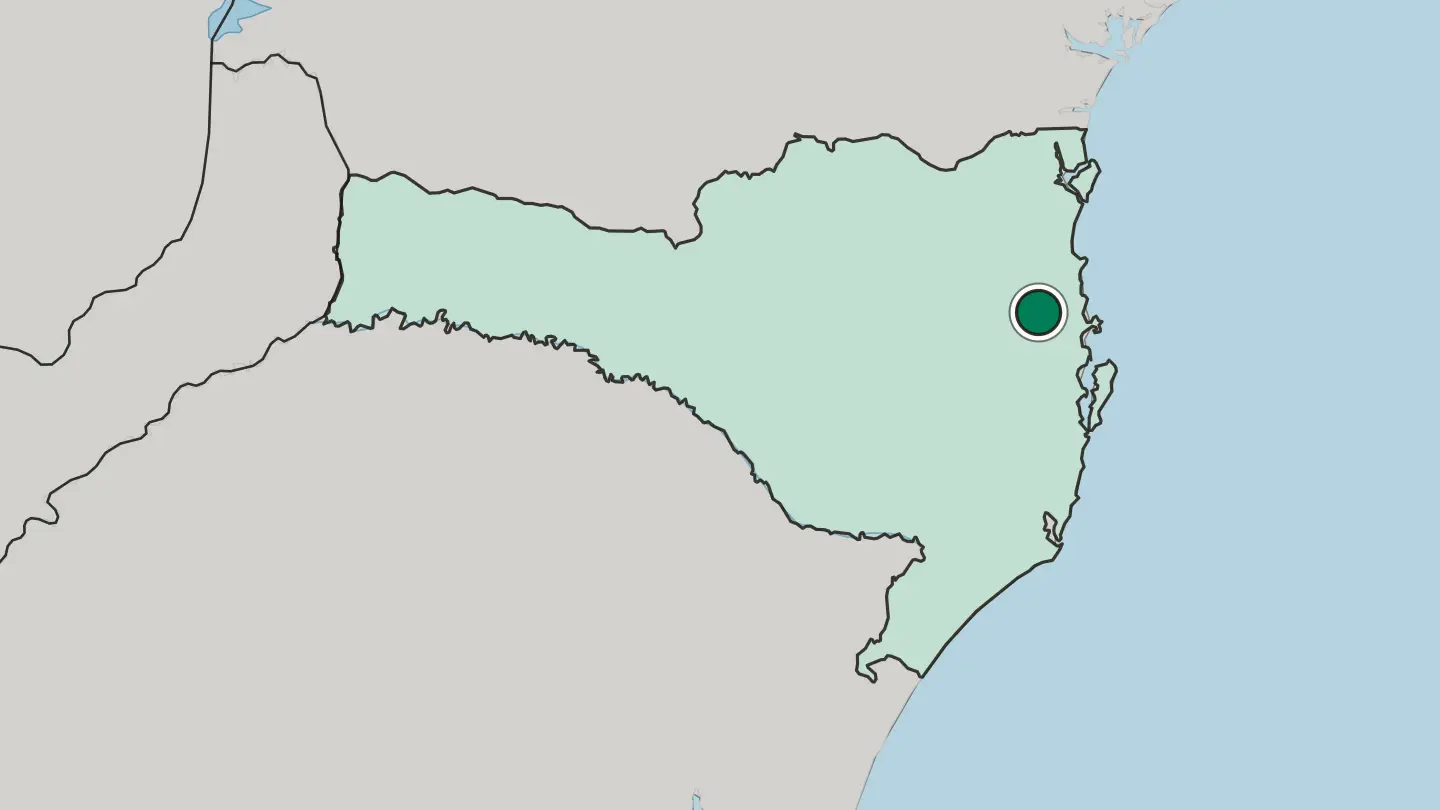
 Brazil
Balneário Camboriú
Balneário Camboriú, a resort city of Santa Catarina dating from 1964, drops from steep hills onto the sand along Avenida Atlântica.Where to stay →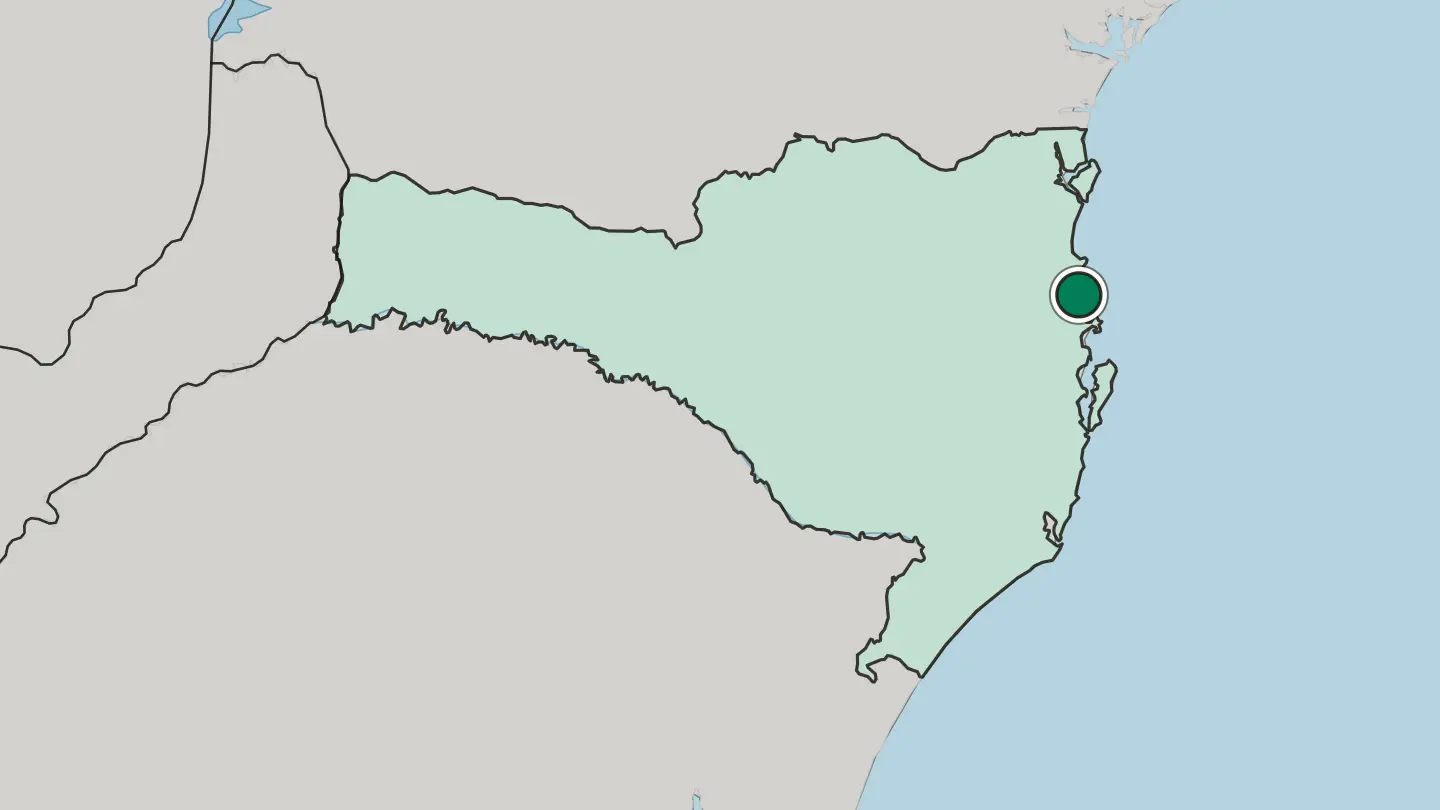 Brazil
Tubarão
Tubarão anchors the river basin that carries its name in the southern part of Santa Catarina. The town dates from 1870.Where to stay →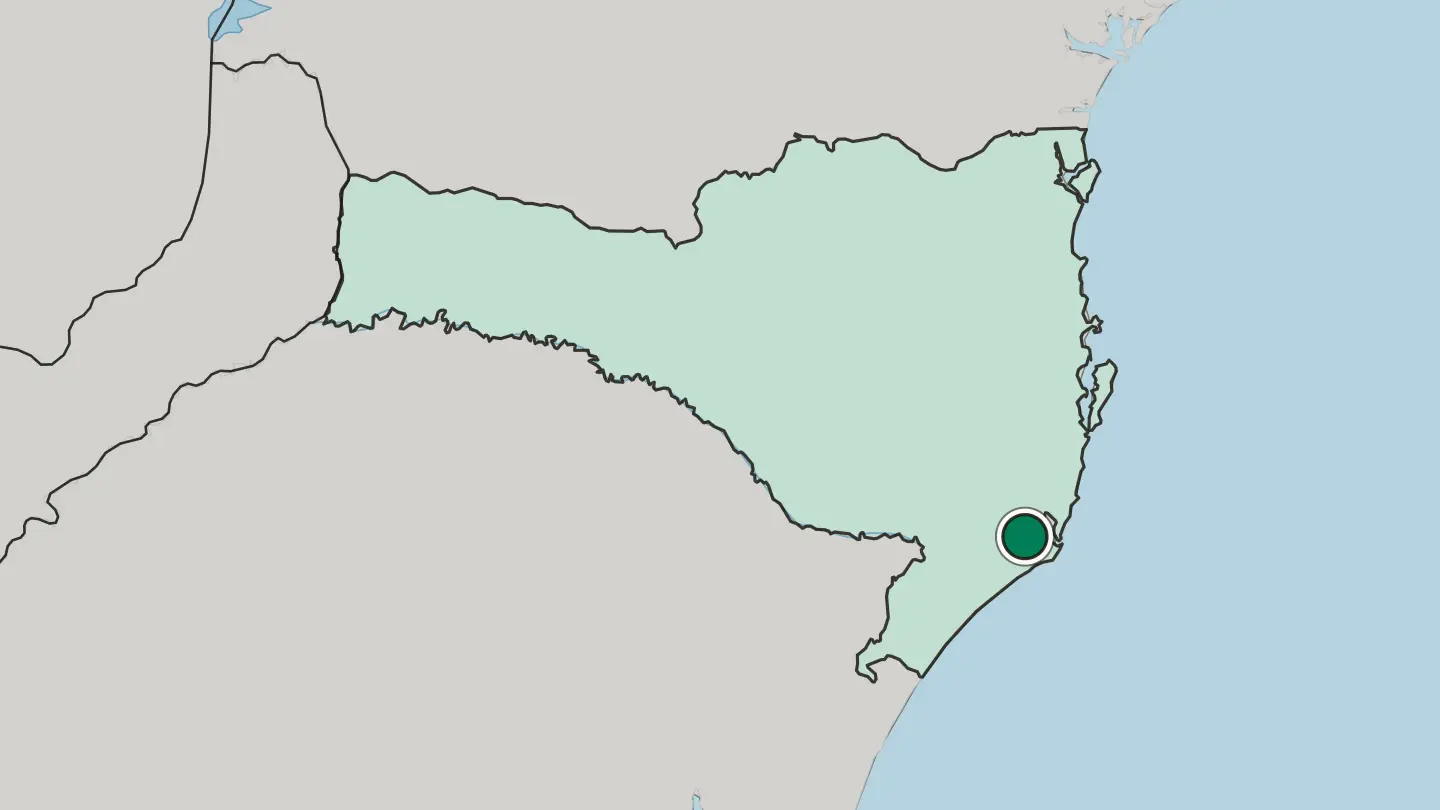
 Brazil
Itapema
Itapema is a compact city in the Itajaí Valley of Santa Catarina, Brazil, keeping the Museu Engenho do Sertão and the Capela de Santo Amaro.Where to stay →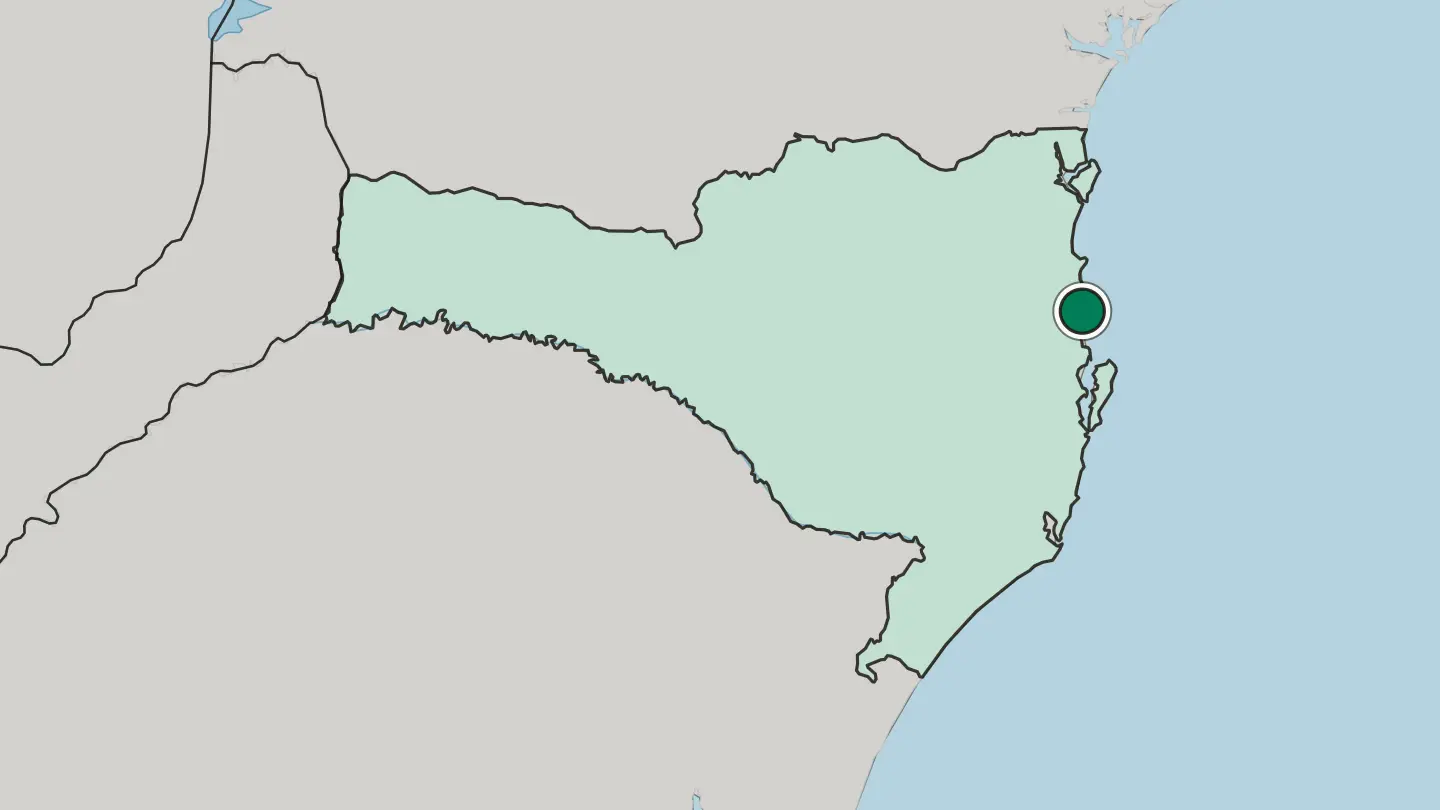
 Brazil
São Francisco do Sul
A colonial port with a listed core. São Francisco do Sul dates from 1658 and keeps Brazil's sea history in the Museu Nacional do Mar.Where to stay →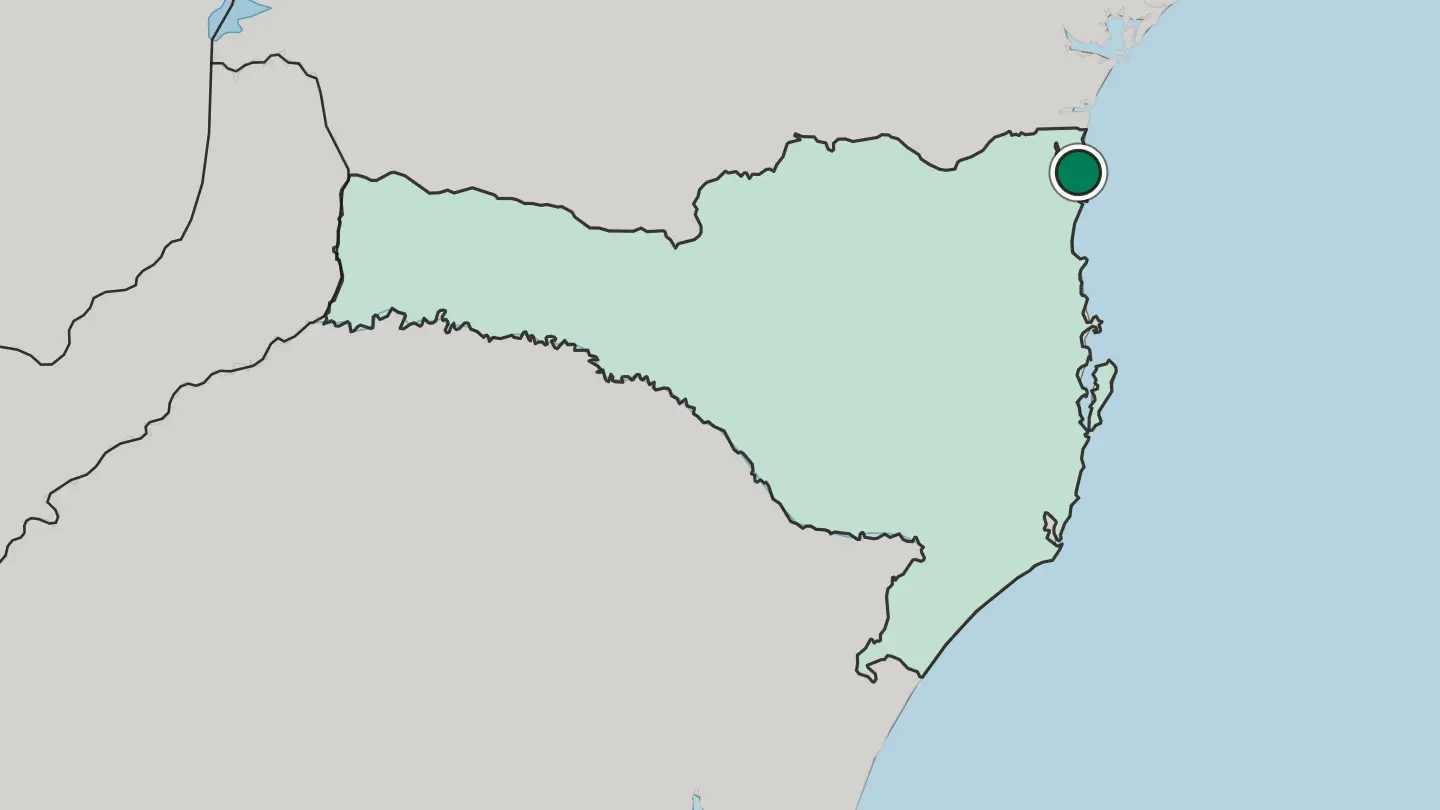
Hotel links are affiliate links: booking through them may earn us a commission, at no extra cost to you. It never affects how places are ranked. How this works
About Santa Catarina
Two things define the state.
What is Santa Catarina known for?
The coast draws Brazilian holidaymakers to the surf beaches of Florianópolis, the island capital, and to the high-rise seafront of Balneário Camboriú just up the shore. Inland, the story is European: Blumenau throws the largest Oktoberfest in the Americas, and the towns of the Itajaí valley keep the German that their settlers brought. Joinville builds and manufactures.
Up on the plateau around São Joaquim, frost and the occasional snowfall make a corner of Brazil that grows apples and shivers through winter.
Where is Santa Catarina?
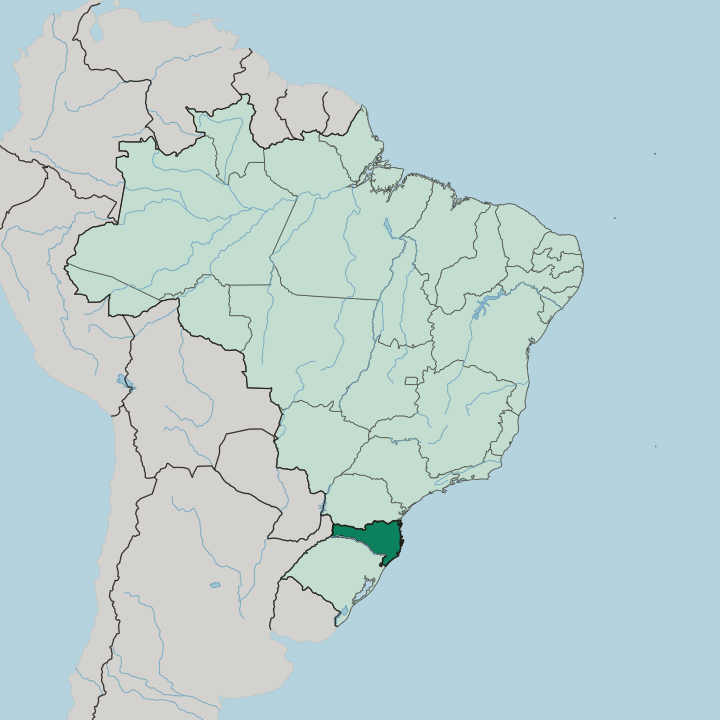
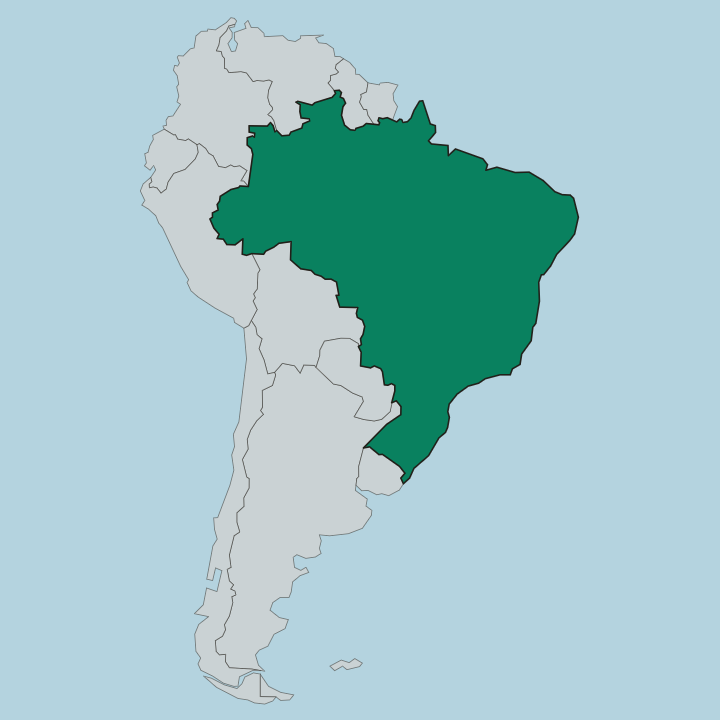
Santa Catarina occupies a slice of far southern Brazil. Paraná lies to the north and Rio Grande do Sul to the south. The Atlantic Ocean forms the whole eastern edge, and away to the west the land runs up against Argentina. The Uruguay River draws much of that western and southern boundary, and its confluence with the Pepiri-Guaçu marks the start of the frontier with Argentina.
It is a compact state. Everything sits within a day's drive of the sea. The relief is simple.
A steep escarpment, the Serra do Mar in the north and the Serra Geral to the south, rises just behind the shore and splits the state in two. Below it runs a narrow coastal plain of beaches, lagoons and river mouths, where Florianópolis sits on its own island and reaches the mainland by bridge. Above it spreads a cool, high plateau of pine and pasture that tilts westward toward the Uruguay valley.
The coast is warm and Atlantic. The interior is another country of cattle towns, apple orchards and the coldest winters in Brazil. Deep-water ports crowd the northern coast at Itajaí, Navegantes and São Francisco do Sul.
What is Santa Catarina like?
Santa Catarina is Brazil built by immigrants. Three strands run through it. Along the coast are the Azoreans, whose families came from the Atlantic islands of Portugal in the eighteenth century and left a legacy of lacework, whaling churches and the manezinho accent of Florianópolis.
In the northern towns are the Germans, who founded Blumenau, Pomerode and Joinville and kept their language, half-timbered houses and beer festivals. The south is Italian, in wine towns such as Nova Veneza and Urussanga. Each kept its own kitchen.
Food carries the memory best. The coast farms oysters in the bays around Florianópolis and eats them by the dozen with sequência de camarão, plates of fried shrimp served in courses. Inland the table turns German and Italian, all sausage and sauerkraut, polenta and dark bread.
The festival calendar is huge, from the Oktoberfest of Blumenau to the Azorean boi-de-mamão dances of the coast. Football matters, as it does everywhere in Brazil, and the state sends Avaí, Figueirense and the Chapecoense of Chapecó into the national league. Portuguese is the language throughout.
But it is spoken with a lilt on the island that Brazilians recognise at once.
What is the history of Santa Catarina?
Portuguese settlers from the Azores began populating the island and its coast in 1748, planting the fishing villages that would grow into the city of Florianópolis. German and Italian colonists followed inland through the nineteenth century, founding Blumenau and the towns of the valleys. The old province became a state in 1889, when Brazil turned republic.
Five years later a state law replaced the capital's colonial name of Desterro with Florianópolis, honouring Marshal Floriano Peixoto. From 1912 a bitter backland revolt, the Contestado War, tore through the pine forests as Paraná and Santa Catarina fought over the border. The border held after 1916.
What is the climate of Santa Catarina?
Santa Catarina is subtropical, not tropical. The coast stays warm and humid, with hot summers on the beaches of Florianópolis and rain spread evenly across the year rather than falling in one wet season. Climb the escarpment and the air cools fast.
On the high plateau the towns of São Joaquim, Urubici and Urupema see frost through winter and, on a handful of mornings, snow. The town of Caçador once logged the coldest temperature officially recorded in Brazil. Few places in the country do winter like this.
How do you get to Santa Catarina?
Flying into Santa Catarina is the way most visitors arrive. The Hercílio Luz airport on the island of Florianópolis takes most of the coastal traffic, while Navegantes handles Balneário Camboriú and the northern beaches and the airports at Joinville and Chapecó serve the factory and farm towns inland. By road, the BR-101 runs the full length of the shore and links the state north into Paraná and south toward Rio Grande do Sul.
Coaches grind along it day and night. A rental car is what unlocks the Serra.
Common questions
What is the best area to stay in Santa Catarina?
Florianópolis: a first base on the Santa Catarina coast. Balneário Camboriú: a built-up beach-resort break. Blumenau: German heritage and beer halls inland. The Serra highlands: cool mountain nights and a chance of snow.
Good for
More regions in Brazil
Updated September 2026