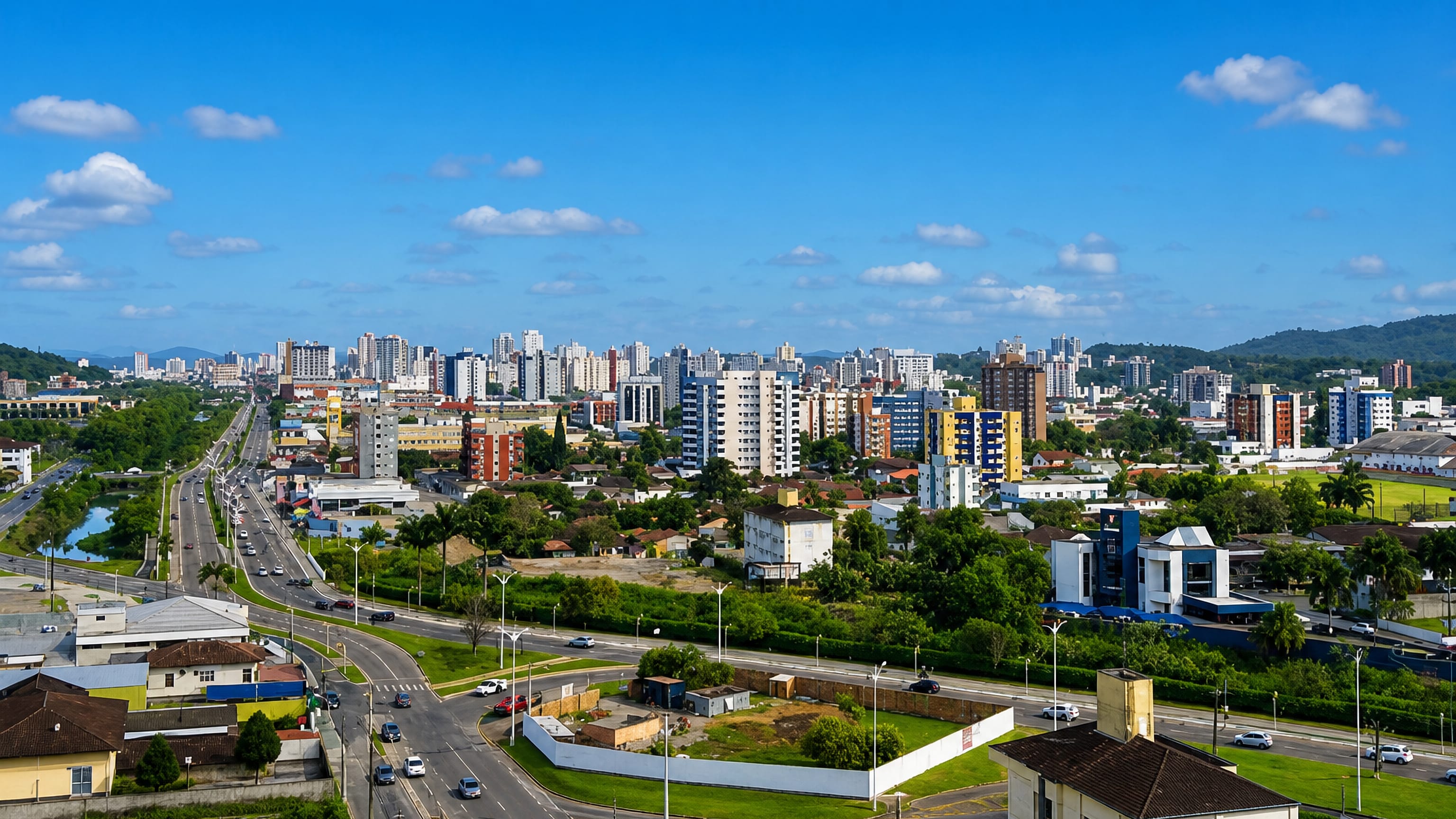
Brazil · Santa Catarina
Where to Stay in Joinville, Santa Catarina
Santa Catarina's largest city. Joinville grew from an 1851 German colony into a manufacturing centre packed with small museums.
Hotel links are affiliate links: booking through them may earn us a commission, at no extra cost to you. It never affects how places are ranked. How this works


Where to stay in Joinville
The practical side of choosing where to sleep.
Beds cluster near the Joinville Art Museum. Blocks in that quarter put the Museu Nacional de Imigração e Colonização and the rest of the indoor circuit inside a walk, keep restaurants close after closing time, and sit clear of the through routes that industrial traffic favours. Most people book that quarter.
It suits you if the collections are the reason you came. Estação da Memória anchors the quieter alternative. Rooms in that direction trade some walking convenience for calm streets and easier parking, and the way back into the museum blocks stays short enough that an evening out needs no car.
Morro do Ouro is the other pole. Stays on that side are green and quiet, and they suit you if space and a garden matter more than a doorstep full of galleries. Industry shapes the calendar.
Business travel fills mid-week rooms in a manufacturing centre of this scale, so weekends often come easier than Tuesdays, and anyone arriving without a booking should expect the museum blocks to fill first. Casa da Memória e Cemitério do Imigrante de Joinville sits within reach of all three areas. Distances inside the municipality are the real constraint.
Find hotels in Joinville
Direct booking searches for these neighbourhoods.
Joinville Art Museum quarter
The Joinville Art Museum, the Museu Nacional de Imigração e Colonização and the evening restaurants all fall inside one walk.Find hotels in Joinville Art Museum quarterQuiet streets and parking beside Estação da MemóriaEstação da Memória side
The old station district is calmer and easier to park in, with the museum blocks still a short walk off.Find hotels in Estação da Memória sideGreen space on the Morro do Ouro side of JoinvilleMorro do Ouro fringe
Room to spread out under Morro do Ouro, at the cost of driving in for every collection.Find hotels in Morro do Ouro fringeHotel links are affiliate links: booking through them may earn us a commission, at no extra cost to you. It never affects how places are ranked. How this works
Things to do in Joinville
Ranked by global recognition; descriptions from Wikidata (CC0).
Museums & Galleries
3- Joinville Art Museum Heritage
- Museu Casa Fritz Alt Heritage
- Museu Nacional de Imigração e Colonização
Castles & Historic Sites
1- Morro do Ouro
worth knowingacross 2 categories in Joinville
About Joinville
Factories pay for this city.
What is Joinville known for?
Metalworking and manufacturing plants make Joinville a financial and commercial centre for Santa Catarina, and that working economy sits alongside an unusually dense cluster of small, specific museums that few cities of its size sustain. The Museu Nacional de Imigração e Colonização keeps the German settlement record. The Museu da Bicicleta de Joinville and the Museu do Ferro de Passar collect objects most places throw away.
Art hangs at the Joinville Art Museum.
What are the main landmarks in Joinville?
Morro do Ouro marks the skyline. Its slope gives the clearest read of how Joinville sits between high ground and flat, and the walk up is the standard alternative to another afternoon indoors among collections. Indoors is where the city keeps its best.
Canvases at the Joinville Art Museum, immigration papers at the Museu Nacional de Imigração e Colonização, and the platforms of Estação da Memória form a circuit that a visitor can finish on foot. The Museu do Ferro de Passar sits at the odd end of that list.
What is the history of Joinville?
Colonists landed in 1851. The settlement that became Joinville was laid out as a German-speaking colony, and the families who cleared its first lots left their names on the streets, the cemetery, and eventually on a run of museums that no other city in Santa Catarina can match. Casa da Memória e Cemitério do Imigrante de Joinville holds the burial ground of that first generation.
The Museu Nacional de Imigração e Colonização sets the same story out in rooms. Prehistory runs deeper than the colony. The Museu Arqueológico de Sambaqui de Joinville keeps the record of the shell mounds raised long before any colonist arrived.
Industry followed the railway. Estação da Memória preserves the station building that anchored the freight age, and the workshops and foundries that grew around such lines turned a colonial town into the manufacturing centre that Santa Catarina still leans on. Two capitals still stand larger.
Curitiba and Porto Alegre aside, no municipality in the region ranks above it. Domestic life has its own keeper: Museu Casa Fritz Alt preserves the rooms of the household whose name it carries. Smaller collections record smaller trades: the Museu do Ferro de Passar for the iron, the Museu Nacional do Bombeiro Voluntário for the volunteer fire companies, and the Museu da Bicicleta de Joinville for the bicycle.
Where is Joinville?
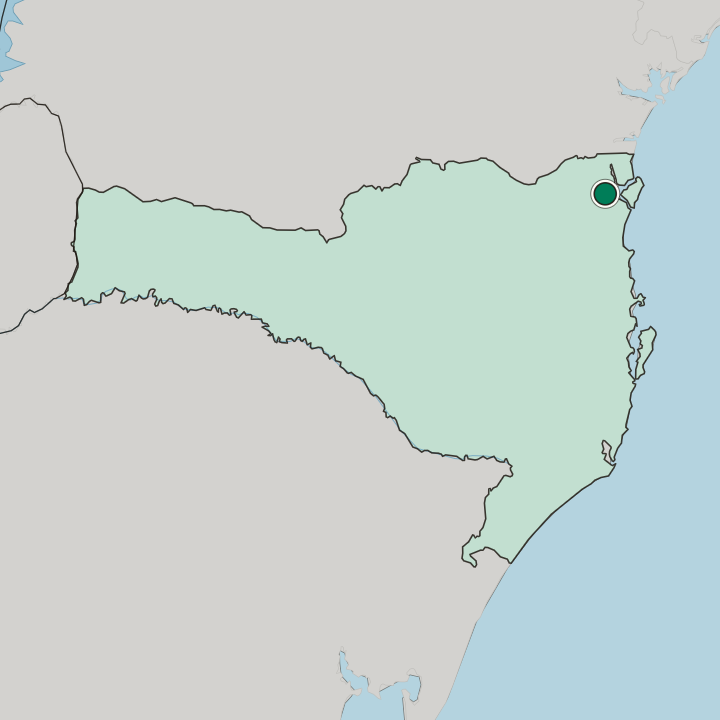
Hills interrupt the plain. Morro do Ouro rises at the city's edge, and the ground between such rises and the flats below gives Joinville room that its built-up core has never filled, because the municipal limits reach far past the last street. Santa Catarina wraps it on every side.
The setting is subtropical, humid, and green for most of the year.
What is the climate of Joinville?
Seasons run inverted here. January falls in high summer and July is the cool end of the year, the southern-hemisphere pattern that governs every town in Santa Catarina, and the subtropical band keeps frost out of the reckoning most winters. Humidity is the real subject.
Warm months bring heavy afternoon rain, and the greenery around Morro do Ouro stays dense through them.
How do you get to Joinville?
Trains stopped calling long ago. Estação da Memória keeps the old station as an exhibit rather than a platform, so arrival now means the road, whether that road runs in from elsewhere in Santa Catarina or in from Curitiba. Buses do the regional work.
Inside the municipality, distances stretch, because the city limits enclose far more ground than the built-up centre, and a car earns its keep for anyone heading out toward Morro do Ouro.
Common questions
What is the best area to stay in Joinville?
Joinville Art Museum quarter: Walking the Joinville Art Museum and immigration-museum circuit. Estação da Memória side: Quiet streets and parking beside Estação da Memória. Morro do Ouro fringe: Green space on the Morro do Ouro side of Joinville.
Good for
More cities in Santa Catarina
Updated October 2026