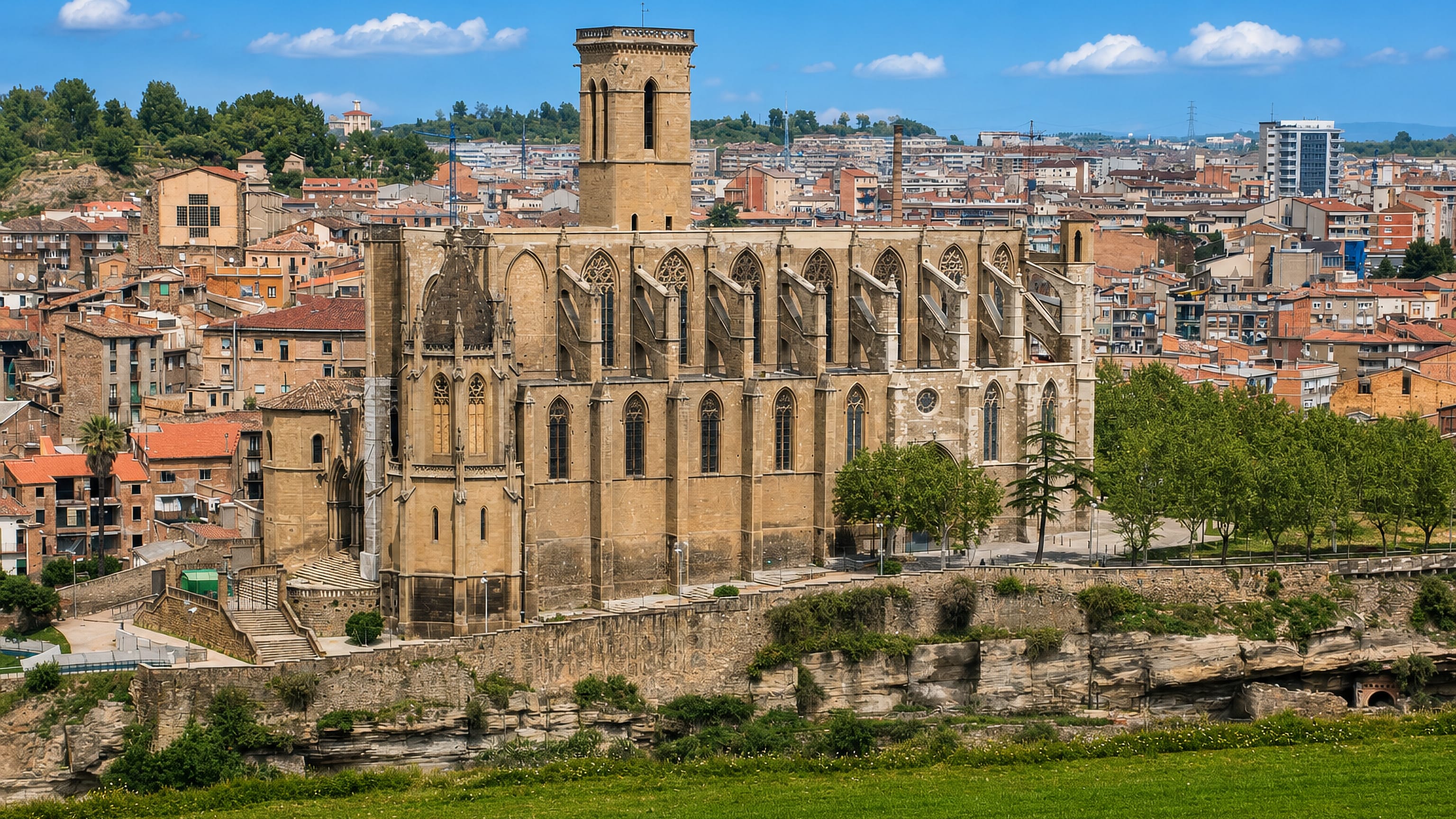
Spain · Catalunya
Where to Stay in Manresa, Catalunya
Manresa is the capital of Bages, standing in the central region of Catalonia near Montserrat and on the Catalan Way of St. James.
Hotel links are affiliate links: booking through them may earn us a commission, at no extra cost to you. It never affects how places are ranked. How this works


Where to stay in Manresa
Where the beds are, and what that means for the visit.
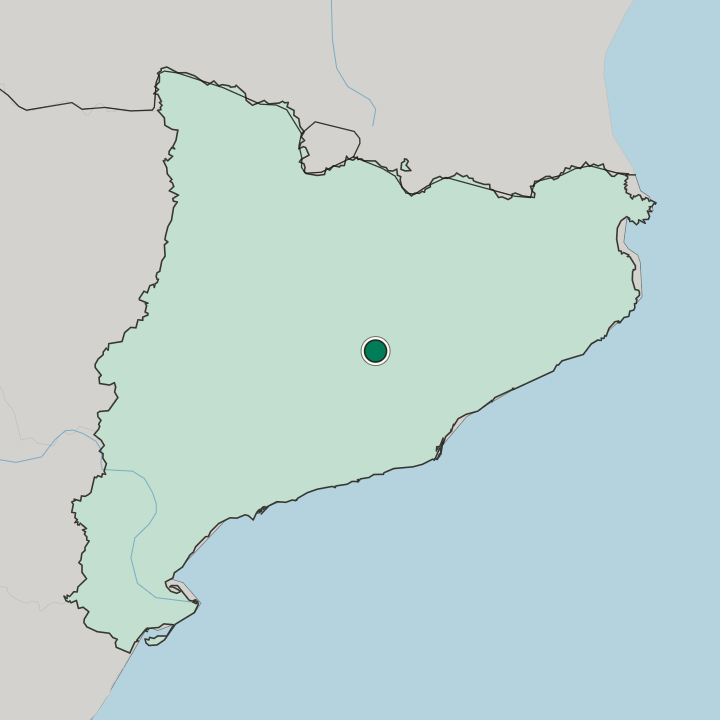
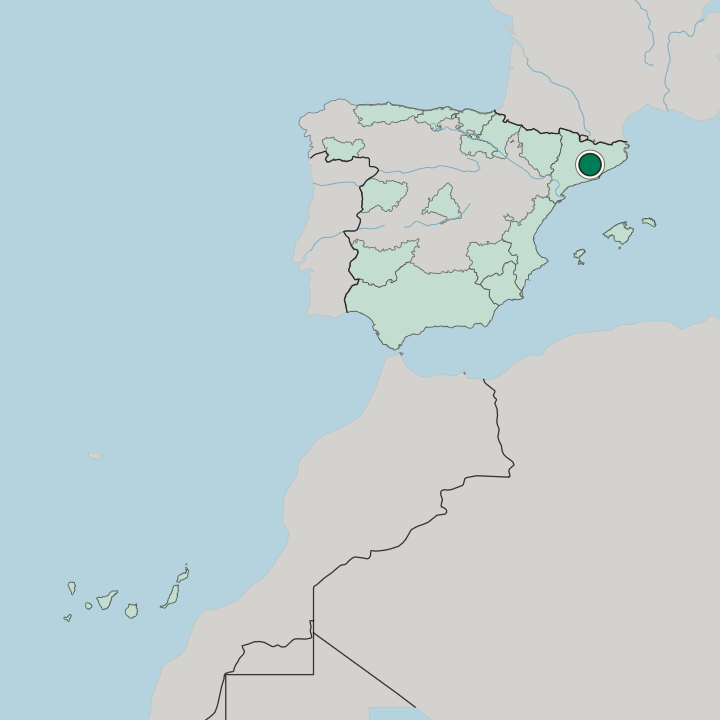
Montserrat pulls half the traffic. Manresa stands 57 kilometres from Barcelona in the middle of Catalonia, close enough to Montserrat that a good share of the beds here are taken by people making the trip out to the mountain rather than for the town itself. Bages is farming country around it, and the county capital's own draw is the monumental ensemble that travel writing describes rather than any single sight.
The old centre answers the other half. Streets around the Museu Comarcal de Manresa and the Convent de Santa Clara put that ensemble on the doorstep, with the Cave of Saint Ignatius close to them and Església del Carme de Manresa a few corners away. Casa Lluvià, Casa Torra and Casa Arderiu line the same quarter.
Pick it for the walking. The outskirts read differently. Santa Maria de Viladordis and Sant Marc de Manresa sit out among the fields towards the rim of a municipality of some 41.6 square kilometres, and a bed on that side trades company for quiet and a longer trip back in.
Mare de Déu de la Guia stands out there as well. Pilgrims walking the Catalan Way of St. James generally want the centre, since the route and the older churches share the same few streets.
Find hotels in Manresa
Direct booking searches for these neighbourhoods.
The monumental core
The Museu Comarcal de Manresa, the Convent de Santa Clara and Casa Lluvià stand within the same few blocks of the old town.Find hotels in The monumental corePilgrims taking the Catalan Way of St. James through BagesBy the Cave of Saint Ignatius
The Cave of Saint Ignatius is the one site in Manresa that brings visitors in its own right.Find hotels in By the Cave of Saint IgnatiusQuiet nights out towards Santa Maria de Viladordis and the Bages fieldsThe Viladordis edge
Santa Maria de Viladordis and Sant Marc de Manresa sit at the rural rim of the municipality, well away from the centre. Rooms are few around here — worth securing early.Find hotels in The Viladordis edgeHotel links are affiliate links: booking through them may earn us a commission, at no extra cost to you. It never affects how places are ranked. How this works
Things to do in Manresa
Ranked by global recognition; descriptions from Wikidata (CC0).
Museums & Galleries
2- Museu Comarcal de Manresa Heritage
- Museu de Geologia Valentí Masachs
Churches & Religious Sites
8- Cave of Saint Ignatius Heritage
- Convent de Santa Clara Heritage
- Església del Carme de Manresa Heritage
- Santa Maria de Viladordis Heritage
- Sant Iscle i Santa Victòria de Bages Heritage
Show 3 more →
- Mare de Déu de la Guia Heritage
- Sant Marc de Manresa Heritage
- Església de Montserrat (Manresa) Heritage
Stadiums & Sports
1- Pavelló Nou Congost
Landmarks & Notable Places
8- Casa Lluvià Heritage
- Casa Torra Heritage
- Casa Soler Casolleras Heritage
- Casa Matamala (Manresa) Heritage
- Casa Gabernet Espanyol Heritage
Show 3 more →
- Casa Arderiu Heritage
- Casa Fornells (Manresa) Heritage
- Casa Padró-Domènech Heritage
worth knowingacross 4 categories in Manresa
About Manresa
Pilgrim routes cross here.
What is Manresa known for?
Manresa is a stage on the Catalan Way of St. James, and the Cave of Saint Ignatius adds a second devotional draw to a town already thick with churches and chapels. Museums fill the civic side. The Museu Comarcal de Manresa keeps the record of Bages, while the Museu de Geologia Valentí Masachs works through the rock of the country around it.
Sport takes the Pavelló Nou Congost.
What are the main landmarks in Manresa?
More of Manresa's landmarks are churches than anything else. Església del Carme de Manresa, the Convent de Santa Clara, Santa Maria de Viladordis and Sant Iscle i Santa Victòria de Bages carry the ecclesiastical weight, and the Cave of Saint Ignatius sits among them as the best-known single site. Merchant houses follow.
Casa Lluvià, Casa Torra, Casa Arderiu and Casa Soler Casolleras hold the street fronts of the old town. Two museums and the Pavelló Nou Congost round out the list.
What is the history of Manresa?
Bages made Manresa its capital. That role fixed the county's institutions in one town in the central region of Catalonia, and the Museu Comarcal de Manresa still holds the record for the whole comarca rather than for the city alone. Religion shaped the rest.
The Convent de Santa Clara, Església del Carme de Manresa and Sant Iscle i Santa Victòria de Bages mark a long ecclesiastical presence, and the Cave of Saint Ignatius carries the name that brings visitors from well outside Catalonia. Pilgrimage came with it. The Catalan Way of St. James runs through the town, which makes it a stage rather than an end point for walkers, and Mare de Déu de la Guia and Sant Marc de Manresa stand among the smaller shrines scattered along the approaches.
Trade left its own layer. Casa Lluvià, Casa Arderiu, Casa Bosch and Casa Padró-Domènech survive as the houses of a merchant town, and their façades explain why travel writing reaches for the phrase monumental ensemble instead of naming one building. Montserrat sits close by.
Nearness to the mountain shaped how outsiders read the place, though Santa Maria de Viladordis and the Església de Montserrat kept devotion inside the municipality as well.
Where is Manresa?
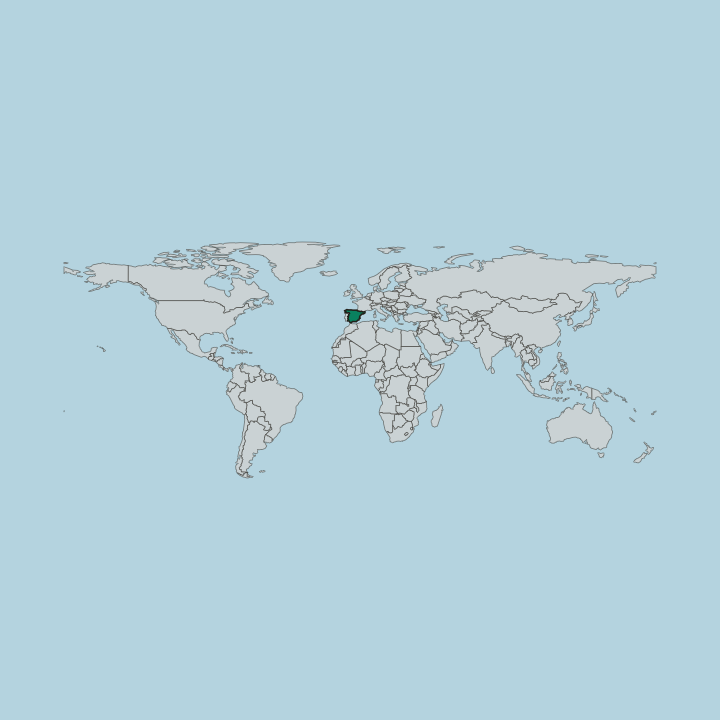
The county centre sits inland. Manresa covers roughly 41.6 square kilometres in the geographical centre of Catalonia, 57 kilometres from Barcelona, and Montserrat rises close by in the country around it. Bages spreads out from there.
Santa Maria de Viladordis and Sant Marc de Manresa stand at the rural edge of the municipality.
What is the climate of Manresa?
Distance from the coast tells. Manresa lies inland in the central region of Catalonia rather than on the Barcelona shore, and that remove widens the swing between its seasons in a way the coastal towns of the province never feel. Walking weather holds for much of the year.
The Cave of Saint Ignatius and the Museu Comarcal de Manresa stand close enough together that a wet afternoon costs little.
How do you get to Manresa?
Barcelona is 57 kilometres away. That distance puts Manresa within easy reach of the provincial capital, and its position at the centre of Catalonia makes it a natural stop for anyone crossing Bages between the coast and the interior. Some arrive on foot.
The Catalan Way of St. James passes through, and walkers on it reach the Cave of Saint Ignatius and the streets around Casa Torra without any transport at all.
Common questions
What is the best area to stay in Manresa?
The monumental core: Walkers who want the Convent de Santa Clara and Casa Lluvià on the doorstep. By the Cave of Saint Ignatius: Pilgrims taking the Catalan Way of St. James through Bages. The Viladordis edge: Quiet nights out towards Santa Maria de Viladordis and the Bages fields.
Good for
More cities in Catalunya
Updated October 2026