France · Île-de-France
Where to Stay in Saint-Denis, Île-de-France
Saint-Denis is a commune of some twelve square kilometres just north of Paris, dense, industrial in origin and busy with sport.
Hotel links are affiliate links: booking through them may earn us a commission, at no extra cost to you. It never affects how places are ranked. How this works


Where to stay in Saint-Denis
One neighbourhood here has its own guide — here's what it is best for.
 Saint-DenisFrance
Pleyel
Pleyel is a quarter of Saint-Denis, sharing its name with Ignaz Joseph Pleyel, the composer and piano builder who settled in France.Where to stay →Hotel links are affiliate links: booking through them may earn us a commission, at no extra cost to you. It never affects how places are ranked. How this works
Find hotels in Saint-Denis
Direct booking searches for these neighbourhoods.
Around the Musée d'art et d'histoire
The oldest streets of the commune, where the Musée d'art et d'histoire de Saint-Denis and the Église Saint-Denis-de-l'Estrée stand a few minutes apart. Beds are limited here, so book early.Find hotels in Around the Musée d'art et d'histoirea fixture at the Stade de Paris or the vélodrome de Saint-DenisBy the Stade de Paris
The sporting side of Saint-Denis, where the Auguste Delaune Sports Park and the Stade Géo-André set the rhythm of a booking week.Find hotels in By the Stade de Parisa base within reach of the patinoire de Saint-OuenThe Saint-Ouen edge
The border with Saint-Ouen, where the Church of Saint-Ouen-le-Vieux and the Centre sportif municipal de Saint-Ouen lie just beyond the commune line.Find hotels in The Saint-Ouen edgeHotel links are affiliate links: booking through them may earn us a commission, at no extra cost to you. It never affects how places are ranked. How this works
Things to do in Saint-Denis
Ranked by global recognition; descriptions from Wikidata (CC0).
Museums & Galleries
1- Musée d'art et d'histoire de Saint-Denis Heritage
Churches & Religious Sites
7- Église Saint-Denis-de-l'Estrée Heritage
- Church of Saint-Ouen-le-Vieux Heritage
- Church of Our Lady of the Assumption, Stains Heritage
- Église Saint-Joseph de Villeneuve-la-Garenne Heritage
- église des Trois-Patrons Heritage
Show 2 more →
- église Sainte-Thérèse des Joncherolles Heritage
- Chapelle Sainte-Jeanne-d'Arc de Gennevilliers Heritage
Castles & Historic Sites
1- Monument Boussingault in St. Denis
Stadiums & Sports
3- Centre sportif municipal de Saint-Ouen Heritage
- Gymnase des Sapeurs-Pompiers Heritage
- Stade de Paris
Landmarks & Notable Places
4- Maison de François Coignet Heritage
- Maison de logement des ouvriers de l'usine Coignet Heritage
- Maison des Arbalétriers Heritage
- Maison des Masques Heritage
worth knowingacross 5 categories in Saint-Denis
About Saint-Denis
Paris is right there.
What is Saint-Denis known for?
Saint-Denis works as a tightly built commune just north of the capital, where the Musée d'art et d'histoire de Saint-Denis and the Maison des Masques give a visitor a reason to stop rather than pass through. Sport is the other draw. The Stade de Paris, the vélodrome de Saint-Denis and the Auguste Delaune Sports Park fall within the same few kilometres, and the Pariseko Eskual Etxea - La Maison Basque de Paris is the least expected address of the lot.
What are the main landmarks in Saint-Denis?
Two houses head the list. The Maison des Arbalétriers and the Maison des Masques are the survivals a walker notices, and the Maison de François Coignet and the Maison de logement des ouvriers de l'usine Coignet record the factory that once set the commune's hours. Churches fill in around them.
The Église Saint-Denis-de-l'Estrée and the église des Trois-Patrons stand inside Saint-Denis, while the Monument Boussingault holds a name in the open air.
What is the history of Saint-Denis?
Two houses carry the older town. The Maison des Arbalétriers and the Maison des Masques survive in a commune that later rebuilt most of itself, and the Église Saint-Denis-de-l'Estrée stands for the parish that organised the ground before any of the works arrived. Then came the factories.
The Maison de François Coignet and the Maison de logement des ouvriers de l'usine Coignet make an exact pair, the manufacturer's own house and the block put up for the people who worked in his plant. That pairing explains the commune better than any monument does. Industry drew in labour, labour filled the streets north of Paris, and the église des Trois-Patrons and the Monument Boussingault belong to the same crowded decades of building.
Growth ran past the boundary. Aubervilliers, Saint-Ouen, Stains, Villeneuve-la-Garenne and Gennevilliers thickened at the same time, which is why the Church of Notre-Dame-des-Vertus, Aubervilliers, the Church of Our Lady of the Assumption, Stains and the Église Saint-Joseph de Villeneuve-la-Garenne read as one story rather than five. Sport took the open ground that was left.
The Stade de Paris, the vélodrome de Saint-Denis, the Stade Géo-André, the Auguste Delaune Sports Park and the Gymnase des Sapeurs-Pompiers all found room inside twelve square kilometres, with the Centre sportif des Poissonniers and the patinoire de Saint-Ouen nearby. Parks came late and small. The square Diderot and the parc Marcel Cachin are what the blocks gave back, and the Musée d'art et d'histoire de Saint-Denis is where the whole sequence is kept on record.
Where is Saint-Denis?
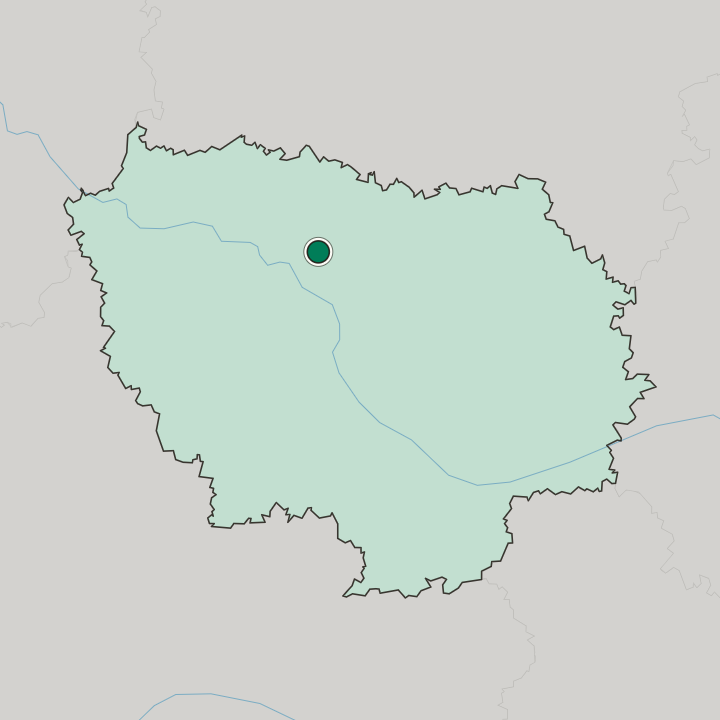
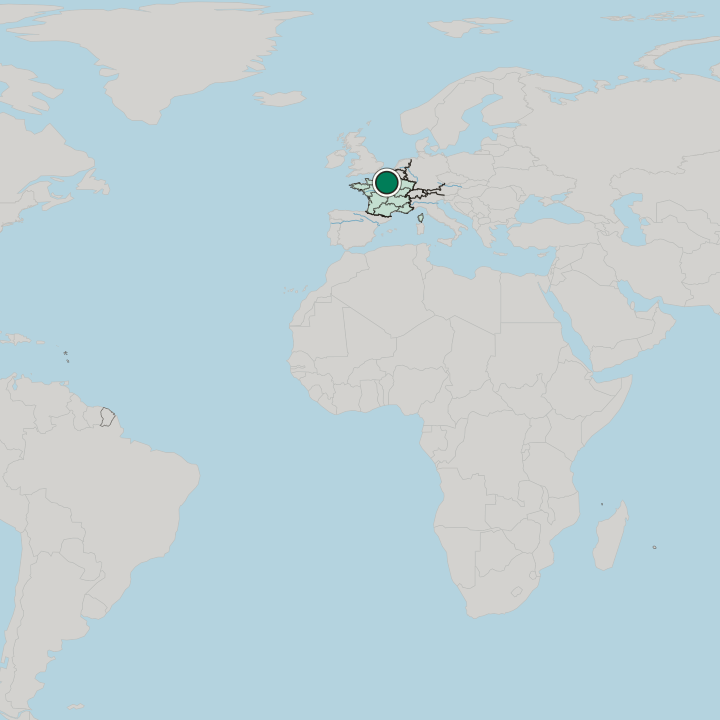
Twelve square kilometres, and little of it empty. Saint-Denis lies just north of Paris in Île-de-France, packed close enough that Saint-Ouen, Aubervilliers, Stains, Villeneuve-la-Garenne and Gennevilliers are all part of the same continuous built-up ground. Open space is rationed.
The square Diderot and the parc Marcel Cachin account for much of what is not built on, while the Auguste Delaune Sports Park takes another slice of it.
What is the climate of Saint-Denis?
Paris sets the pattern, which means a temperate year without much at either extreme and rain spread thinly through it rather than saved up for one season. Winters run grey. Built ground holds the summer heat well into the evening, and the square Diderot and the parc Marcel Cachin are where the commune goes when it does.
Snow seldom lasts.
How do you get to Saint-Denis?
Almost everyone arrives from Paris, since Saint-Denis lies just north of the capital and the journey is measured in minutes rather than hours. Distances inside are walkable. The Musée d'art et d'histoire de Saint-Denis, the Maison des Arbalétriers and the Église Saint-Denis-de-l'Estrée stand within a few streets of one another, while the Stade de Paris and the Auguste Delaune Sports Park pull the traffic on event days.
Saint-Ouen and Aubervilliers are minutes off in their own right.
Common questions
What is the best area to stay in Saint-Denis?
Around the Musée d'art et d'histoire: walking between the Maison des Arbalétriers and the Maison des Masques. By the Stade de Paris: a fixture at the Stade de Paris or the vélodrome de Saint-Denis. The Saint-Ouen edge: a base within reach of the patinoire de Saint-Ouen.
Good for
More cities in Île-de-France
Updated October 2026